Showing posts with label mobility. Show all posts

Wednesday, January 19, 2022

Fixed Wireless As Fiber Backup

By: John Shepler

You need large amounts of rock solid bandwidth to enable your business systems, including telephone, conferencing and business process software in the cloud. Normally, that says fiber optic connectivity. But what if that fiber gets cut (it happens) or just can’t be installed soon enough or the construction is just too expensive? Then what? If you happen to be located in the right areas, fixed wireless can be your best solution.
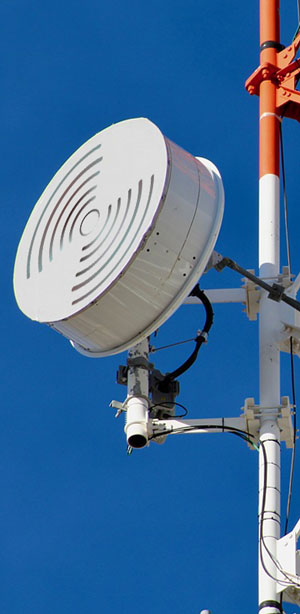
Take a look at fixed wireless microwave as a backup or substitute for fiber optic connectivity.What is Fixed Wireless?
Cell phones have brought mobility to all of us, including having both a phone and a small computer in our pockets. This is wireless mobility. Each device has a modem and radio that communicates with the nearest cell tower. As you move, the session keeps getting handed off to the next towers as you get closer to them. All of this is imperceptible to you, the user. The complexities of handling mobile signals is hidden in the cellular network.

Perhaps you’ve tethered your phone to your PC to keep working when your cable or landline Internet service was interrupted. That’s an example of fixed wireless. It’s the same as mobile wireless, but you’re not moving.

Cellular Fixed Wireless
Ideally, you’d like to tether your entire network to your phone during an outage rather than just one PC. Some phones allow this by acting as WiFI hotspots. In a small business, you may find this work-around to be just fine for short periods of time. Not being able to walk away with your phone can be a real inconvenience. Running out of minutes and getting cut off or big overage charges can be an even bigger inconvenience.

Fortunately, there are fixed cellular services designed for exactly this use. The box you receive looks something like a Wi-Fi router. It has better antennas than your phone, an Ethernet jack to feed your network, and, perhaps, built in WiFi routing. Some have provisions for mounting an antenna outside in weak signal areas.

Best of all, fixed cellular wireless services for business know that you can’t get by with a few Gigabytes a month. You can order 100 GB and more, even unlimited (within reason) usage. Services include 4G LTE and, now, 5G to give you the speed you need to run your business.

Microwave Fixed Wireless
The big brother to cellular is point to point microwave fixed wireless. This is a modern version of the old telco point to point microwave relay. You get a small dish or other microwave antenna that attaches to the side of your building or sits on the roof. It points directly at the provider’s antenna at their central location. This is a line of sight service and generally limited to metropolitan areas.

A major advantages of this type of service is that it is private and dedicated to business use. You won’t be competing with everybody else’s cell phones for bandwidth. The bandwidths can be as high as 1 Gbps or even 10 Gbps. They can also be symmetrical, unlike cellular. With many services your upload and download speeds are the same and your bandwidth is guaranteed. Usage limits? Not usually an issue.

You might even think of microwave fixed wireless as fiber optic without the fiber. Ditching the physical fiber means fewer construction headaches and delays. It is possible that you can have service installed in as little as a few days compared with weeks or months if your building isn’t already lit for fiber.

An unexpected benefit is that fixed wireless can have lower latencies than fiber services with the same bandwidth. That’s because the wireless signal is a direct beam from provider to you. Fiber systems tend to weave all over town with lots of switching gear in the path. Lower latency is critical to some businesses, especially in financial trading. It’s a boon for improving the quality of VoIP phone calls and video conferencing, and for interactive processes running in the cloud.

Cellular broadband uses the Internet and whatever latencies and congestion exist. Fixed Wireless can avoid the Internet and its limitations, or be connected to the Internet so that you can easily connect to customers and suppliers.

Why Not The Best of Both Fiber and Wireless?
Perhaps the best arrangement for your business is a combination of fiber optic service and fixed wireless service. Why both? One reason is to get service started fast with fixed wireless and then add fiber when you can get it installed.

Once you have both running, consider keeping your fixed wireless as a backup to the fiber. Fiber interruptions, often caused by the cable being cut during unrelated construction work, can take days to repair, leaving you high and dry. With automatic failover installed, your traffic will simply move to the wireless link without interruption. When the fiber comes back online, the system will switch back.

Note that fixed wireless offers a true diversity path to fiber. That means fiber and wireless are very unlikely to exhibit failures at the same time. Some businesses think they have this in place by ordering redundant fiber lines or even fiber services from two separate providers. What they don’t realize is that all the fiber serving their location runs in the same bundle or conduit and can all be taken out at the same time by one accident.

Do you need fast installation of high speed business connectivity and/or a robust backup to the fiber you already have? Consider microwave fixed wireless service for your bandwidth needs.


Click to check pricing and features or get support from a Telarus product specialist.


Follow Telexplainer on Twitter


Monday, May 12, 2014

Non-PBX Telephone Solutions

By: John Shepler

We all know what business telephone systems look like. The very smallest consist of a single desk set or a cordless system with multiple handsets but still one line. Next up are key telephone systems where each phone has buttons to access 2 to 6 outside lines. Beyond that is the realm of the Private Branch Exchange or PBX. This is the standard for most business office applications… or at least it was.

Non-PBX telephone systems for your organization.Why PBX?
What made PBX systems popular was the opportunity to get away from having to pay the telephone company for internal calls and lines that mostly sat idle. Yes, there was a time when every phone had its own line to the telco and its own incoming phone number. If you wanted to call someone down the hall, you had to place a local phone call just like if you called someone across town. Each of those calls rang the register at the local phone company.

Direct Connections
It seems obvious today that calls from desk to desk inside your own building should be direct connections. There’s no need to use an outside line to go down to the telco switch and another line to come right back. A simple connection between the two local phones works just fine. What’s needed is a switch like the one at the telephone company office, but for inside the business only. That’s what a PBX is. It’s a miniature telephone exchange switch. That’s the “private” in Private Branch Exchange.

Why PBX Seemed Ideal
All internal calls are managed by the PBX on its own wiring. There are no per-call charges. The PBX also manages outside lines that are used for calls that come in to or leave the premises. There are almost always fewer outside lines than phones because many calls are internal and most phone sit idle while other work is being done. This optimizes the cost of telephone service for the business, right?

Escalating Costs
That was true when PBX was the only game in town. The one fly in the ointment is the cost of the PBX system including maintenance and repairs, and the everyday effort needed for moves, adds and changes. That PBX is just a machine. It doesn’t know that you moved your phone to another location until you tell it to use a different set of wires.

Flexibility Issues
PBX systems aren’t all that flexible, either. Each machine has a capacity. Sure, you can upgrade to add more phones… up to a point. Then you have to install a much larger system when your business grows beyond what your current equipment will support. That’s a major capital investment.

What’s a Better AlternativeToday?
Like many innovations in information technology, moving your phone system to the cloud offers a number of advantages. Yes, there is still something that provides the same function as your old PBX. But, it is a largely software driven system that is located remotely, has nearly unlimited expansion capacity and, best of all, you don’t have to pay for it. You only pay to use the system.. and that’s pay as you go.

How Cloud Communications Works
Cloud communications, also called Hosted PBX or Hosted VoIP, is a virtual PBX system offered as a service. What you have in-house are telephones that plug into your local area network instead of standard telephone jacks. The connection from the network to the service provider is called a SIP trunk. It serves the same function as the analog or digital lines to the phone company that you have now.

What You Gain With a Hosted Solution
The beauty of a hosted PBX solution is that you can move phones around at will without any wiring changes. Just plug the phone into another network jack and the system will recognize it and know who it is assigned to. Adding or removing phones from the system is done through a simple browser interface. Some cloud suppliers will even provide you with business phone sets as you need them. It’s included in the “per seat” cost of your service.

Day to Day Operations
How does this work on a day to day basis? Your phones still act like normal telephones. You can make internal calls with no per-minute charges, often even if the other phone is at a branch office on the other side of the country. Only calls that have to go over the public telephone system will still have per-minute charges, like you pay today.

Advanced Calling Features
Hosted PBX systems are always up to date and have advanced calling features you may not enjoy today, such as the ability to include mobile phones within the system. They have a dedicated staff to keep the switching equipment working 24/7. In the rare event that tornado or flood destroys your office, your phone system will still work. You just need some working phones and a network connection to the cloud to be back in business.

Check Out The Value of Non-PBX Solutions
Are you looking at a new business phone system or facing a costly upgrade cycle? Before you go the PBX route, take a look at what a hosted PBX solution offers in the way of performance and cost control for your organization.

Click to check pricing and features or get support from a Telarus product specialist.


Follow Telexplainer on Twitter

Tuesday, August 17, 2010

The Importance Of Buying Ernest

If you are a company with dozens, hundreds or thousands of locations, what you’d really like to deal with is a national local phone company for your telecom needs. But national local is an oxymoron, right? Can there even be such a company?

Get multi-location voice, data and mobility service. Click to inquire.There is and it’s called Ernest Communications. This organization is unlike no telephone company you’ve dealt with. It’s focus is large nationwide multi-location accounts needing telephone lines, data lines, wireless mobile, or all of these.

What type of businesses fall into this category? National or regional chain stores come to mind immediately. Also, hotels, motels, gas stations, financial services, healthcare, real estate offices, insurance companies, entertainment venues such as theaters, and quick service restaurants. You can probably think of more categories, including the business you are in.

Any company depending on franchises, branch offices or service centers is in the business of supporting a multitude of small local operations. Every one of them has communications needs. Now, would you like to deal with a hundred or thousand separate local service providers or one larger company that has the staffing, expertise and products to handle all your business. Not only does this make your life easier by having a single point of contact, but you’ll likely save money due to the economy of scale.

Ernest Communications has taken advantage of the Telecommunications Act of 1996 to gain access to the nearly 200 million local lines that make up the Public Switched Telephone Network. Ernest provides your local telephone service plus they include most of the common custom calling features such as Call Waiting and Caller ID. Directory Assistance and IntraLATA toll charges are included in flat rate and blended rate plans. They’ll block all 3rd party and casual billing charges. Long distance rates are competitive.

Nearly all locations now require reliable broadband as well as telephone services. Ernest can provide high speed Internet access with speeds from 1.5 Mbps to 45 Mbps with performance governed by Service Level Agreements (SLA). You’ll get professional installation and 24/7/365 monitoring, which is not always the case with other providers.

Does your company have enough employees at one or more locations that you use a key telephone system or in-house PBX? Ernest can provide you with the ISDN PRI digital telephone lines that you need.

Many companies also now depend on wireless communications as well as line services to get the job done. Think about field service and sales people. Ernest has perhaps the only nationwide wireless solution designed specifically for business use. You’ll be able to choose from a variety of handsets, smartphones and mobile data devices, including BlackBerry devices. You also have your choice of shared, pooled, bundled and pay-per-use plans.

Getting your telecom services from a single provider has the advantage of giving you a single bill that combines all your voice, mobility and data services. Plus you have the ease of management that comes from having a single point of contact for moves, adds, changes and deletes that are part of normal business activity.

Could your regional or national multi-location business simplify operations and save money by working with a nationwide communications company? Why not get a competitive quote for your voice, data and mobility services and see for yourself. Our Telarus consultants can help you with this, plus any of your higher bandwidth or international communications needs.

Click to check pricing and features or get support from a Telarus product specialist.


Follow Telexplainer on Twitter