Showing posts with label multi-cloud. Show all posts

Monday, October 05, 2026

Wavelengths for Multi-Clouds & AI Workloads

By: John Shepler

Are your connectivity demands so stringent that even Gigabit and 10GigE fiber optic lines are inadequate? Rather that simply adding additional point to point or Internet connections, you should seriously consider moving up to wavelength services.

Find wavelength services available for your location.What is a Wavelength?
Unlike traditional copper MAN and WAN circuits that directly carry electrical signals, fiber optics first converts those pulses to bursts of laser light that travel down glass fibers to a termination where they are reconverted back to electrical signals.

A fiber circuit can use a single laster at a particular frequency or color. Multiple lasers can also use the same fiber at the same time as long as they are running at different frequencies or colors. Another designation for the frequency is in terms of wavelength of the color.

These aren’t colors you can see. They are in the infrared spectrum. A device called a dense wavelength division multiplexer (DWDM) does the conversion, assigns signals to particular wavelengths, and creates the composite laser beam that feeds the fiber. There may be dozens to hundreds of wavelengths on each fiber strand.


Advantages of Wavelength Services
Think of a wavelength as your own private path from one point to another. There may be other signals on other wavelengths on the same fiber, but they have no access to your particular wavelength. This naturally increases the security of your transmission. If you need even more security the data can be encrypted prior to transmission and decrypted at the far end.

Wavelengths are a Layer 1 service. That is, they run at the physical level. There are no routers or switches in the path. The wavelength simply goes from one point to another unimpeded. Over very long distances, optical amplification may be used to keep the beam intense, but it stays optical. A big advantage of wavelengths compared to other transmission systems is that latency is very, very low. It’s really determined by the speed of light over the path distance.

Wavelengths are protocol independent. The beam doesn’t care about the format of the data and you are not dealing with switches or routers in the path. Your protocol is determined by the equipment you have at each end.

Wavelength service speeds have increased from the early days of multiplexing so you can typically achieve 10 Gbps, 100 Gbps, 400 Gbps per channel. Future improvements will include 800 Gbps and 1.4 Tbps.

Wavelengths also tend to be highly reliable, as there is less equipment in the path from end to end. Service Level Agreements to 5-nines or 99.999% up-time are available.

Applications That Benefit From Wavelengths
Bandwidths that would have been unthinkable even a few years ago are now simply not enough. One reason is the mass migration from local data centers to the cloud. Larger companies now use multi-clouds to handle their workload. Any shortage of bandwidth or congestion on the line slow performance and productivity.

Wavelengths are great for cloud on-ramps or direct cloud connections. They offer the speed, security, dedicated access, reliability and low latency needed to make the cloud act like it is right next door. Wavelengths can also be used as dedicated on-ramps to the Internet, completely bypassing the “first mile” congestion common with other Internet access.

Data center interconnects can benefit from wavelength services to synchronize databases, perform backups and replicate data in real time. Likewise, wavelengths are high performance dedicated lines between company locations in the metro area or nationwide.

Artificial Intelligence workload are the latest high demand application and their needs are nearly insatiable. Wavelengths provide the bandwidth and low latency to keep up with the processing speed of AI.

Financial services particularly benefit from wavelength services ultra low latency as well as high capacity. As trading speeds increase, each millisecond of delay eliminated translates directly into dollars.

Could your enterprise benefit by moving up to wavelength services? Discover the choices and pricing available for your business locations.


Click to check pricing and features or get support from an expert technology specialist.


Follow Telexplainer on Twitter


Friday, November 10, 2023

When It Comes to Computer Networks, Trust No One and No Thing

By: John Shepler

Network security is a major headache for business. It almost makes one long for the days of one computer per desk and nothing connected to anything else.

Almost. Those air-gapped computers weren’t all that secure either. Sneaker networks, meaning running around with floppy discs, allowed malware to spread and sensitive files to be copied. It’s just that today’s networks with LANs, local data centers, multi-clouds, and the Internet make it really hard to know who’s sneaking in where and what they are up to.

One breach in a corporate network can run up a cost in the millions. If ransomware is involved, the bill can be a lot higher… and a lot more disruptive. What can you do? Don’t be so trustful. Make sure your system is suspicious of everybody and everything all the time. The buzzword for that is “zero trust security.”

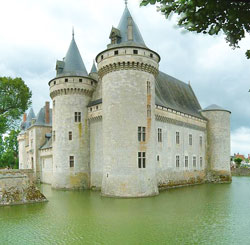
Protect your castle with better network securityWhat is Zero Trust and How is it Different?
Traditional network security is sometimes compared to a castle with a moat. The castle is your corporate network. Everybody inside the castle is considered to be friendly and trustworthy. Everybody beyond that moat is suspected to be an enemy. The drawbridge is your firewall. It works to keep the bad actors away from the castle while allowing trustworthy visitors access. It assumes that everything bad is going to come through the Internet.

There are a couple of weak links with this approach. First is that some bad actors can already be inside the castle. There are spies and infiltrators and even trusted employees that have turned rogue. Of course we want to trust our colleagues, and that’s how we get in trouble. Even worse when we automatically trust our vendors and customers.

Then there is the famous tale of the Trojan Horse. Gee, it sure looks safe enough. Let’s open the firewall and bring it in. You can just imagine some well-meaning but naive individual in your company doing just that. Of course the gullible Trojans got the worst of that deal since once the Greeks were inside they had the run of the city.

Moral of the story: It’s too easy to have your organization destroyed by one little misstep. Trust no one and no thing. Network security is not an insult to your integrity. It’s a way to make everyone more secure and prevent little slips from becoming major disasters. That means high security processes both inside and outside the network.

What Makes Zero Trust Work?
It starts with having everybody and every thing, meaning anything attached to the network, prove that it is approved for access and what they are approved for. You can’t really say that because someone has been cleared by, say, logging-on, that they should be able to access all the files and every peripheral on the net.

Oh, no. You must have a need to know for everything you want to access. That leads to segmenting the network into much small pieces that each have to be accessed separately. You may have access to one set of information to be able to do your job, but no way are you getting into some of the companies trade secrets or even financial data. Access to HR files? Fat chance… unless you are specifically authorized to see them.

Each use and each device will have a profile constructed that says what they can do and where they can do it. These lists will be used by the network administration to grant or refuse access. You may find that your access times out and you have to log in again to keep using a particular resource. Multi-Factor Authentication, like password plus a code sent to a mobile phone or a hardware key that must be plugged-in, is especially valuable for access through the Internet or to highly sensitive data.

Zero Trust Security does take some doing to implement and maintain, but it can also be the means that keeps hackers and scammers of all sorts from stealing your information or damaging your systems. Are you feeling vulnerable? Learn more about how to secure and safeguard your network and get a complementary quote appropriate for your business.

Click to check pricing and features or get support from a Telarus product specialist.


Follow Telexplainer on Twitter