Showing posts with label Metro Ethernet. Show all posts

Wednesday, January 10, 2024

Advantages of Dedicated Point to Point Fiber

By: John Shepler

If you are running a business and your broadband connections are driving you crazy, you may want to take a look at an alternate solution called dedicated point to point lines. Let’s have a look at what they are and what they can do for you.
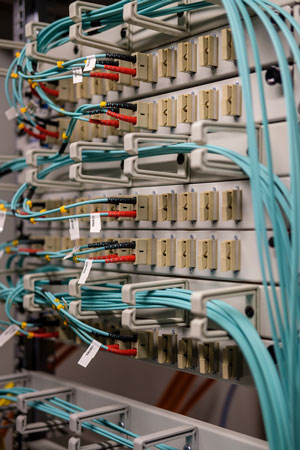
Connect you business locations with dedicated point to point fiber.What Does Dedicated Mean?
Dedicated means that the bandwidth you are paying for is dedicated to your operations only.

But isn’t all bandwidth dedicated if you pay for it?

This is where it gets a little tricky. If you look closely at what broadband providers offer, they say something like “bandwidth up to 300 Mbps” or a similar disclaimer. Yes, the service you bought is capable of running at 300 Mbps. When you run a speed test, you may well see it clock-in at 300 Mbps… but not necessarily every time you test.

Why is that? It is because the bandwidth you got for such a bargain price is shared, not dedicated. You and multiple other users, including other businesses and consumers, are all connected to the same access line. When demand is low, you get screaming speeds. When everybody wants to download or upload files at the same time, that available bandwidth will be divvied up fairly so that everybody gets a share but nobody gets the line all to themselves. You might be waiting a bit.

If you want the line all to yourself and your business, you need to order a dedicated service. With dedicated bandwidth there won’t be other users outside of your organization competing for your line bandwidth. Whatever you aren’t using at the moment simply sits there idle for the time being.

You can greatly improve the stability of your Internet service with what is called DIA or Dedicated Internet Access. That’s a dedicated line from your company to your Internet Service Provider, where it connects to the Internet itself.

Will that guarantee smooth performance? Not really. Remember that the Internet is a shared service by its nature. There will be congestion and failure points from time to time no matter how you connect. The next step up is dedicated point to point fiber service.

Dedicated Point to Point Fiber
Dedicated lines have been available for decades using copper pairs and legacy telecom fiber called SONET for Synchronous Optical NETwork. Nowadays the best value is Ethernet over Fiber or EOF.

Fiber optic Ethernet services, sometimes called Metro Ethernet Fiber, are directly compatible with your servers using standard Ethernet interfaces. Unlike the Internet, you specify what two locations you want connected. The provider installs ports at each location and you have an always-on dedicated point to point fiber connection between them. You can order service starting at 10 Mbps or 100 Mbps and go up to 10 Gbps easily. In metro areas 100 Gbps bandwidth is available if you need it.

Advantages of dedicated point to point or P2P lines include solid bandwidth that is not affected by what other customers are doing. The link is inherently more secure than the Internet because there is no public access. Your bandwidth is usually symmetrical, meaning that it is the same for upload and download. That’s important if you are accessing remote servers to upload and download large files. Most shared bandwidth services are asymmetrical with download speeds typically 10x what you get for upload.

What are good uses for dedicated P2P fiber? The traditional application is linking multiple business locations. You may want to connect your headquarters and branch offices on the same private network so that someone across the country seems like they are just down the hall. Remote servers in colocation facilities or your own remote data center can also benefit from “extending the LAN” using dedicated P2P. Today that’s extended to the cloud, be it public, private or hybrid cloud services.

Do you need the stability and performance that dedicated point to point fiber line services can provide? If so, find out what fiber optic services are available for your business locations.


Click to check pricing and features or get support from a Telarus product specialist.


Follow Telexplainer on Twitter


Wednesday, July 27, 2022

Copper Decommissioning Expands Demand for Metro Ethernet

By: John Shepler

If you are still getting by with last mile Internet over DSL, T1 lines, or Ethernet over Copper, you should take a serious look at Metro Ethernet over Fiber. You’ll get more bandwidth, better pricing and… it will continue to be available.

Metro Ethernet gives you the bandwidth you need at an affordable price.Copper Decommissioning is Now
Copper based telecom services have been the go-to technology for the last century, but not this century. The ubiquitous twisted pair telephone line has supported our needs from the introduction of the telephone through the fevered growth of the commercial Internet. But, like cellphones the size of a brick, the technology has run its course. Copper just can’t keep up with today’s and tomorrow’s needs.

The phone companies know this. The network operators know this. They are well aware that we are way past “peak copper”. As you read this, copper lines nationwide are being retired or “decommissioned”. In some cases the copper is physically ripped out of conduits so that fiber optic cables can be pulled right back in. In other cases the copper bundles in the ground are simply disconnected and left to rust away on their own. In the coming years there will be fewer and fewer copper options available to order, until a copper wireline is as rare as a cranked telephone set.

Fiber is the Future AND the Present
The replacements for copper telco right now are Cable in the form of hybrid fiber/copper systems, Fixed Wireless Access, and Fiber Optic bandwidth. Fiber in cities is also called Metro Fiber or Metro Ethernet. Most urban, suburban and even small town businesses now have access to Metro Ethernet and its flexible options.

Fiber is your most flexible option for several reasons. First, fiber optic strands offer extremely high bandwidths, to 10 Gbps or more. With wavelength division multiplexing, you might get a dozen or more 10 Gbps lambdas, each a virtual fiber in itself. Now, consider that nearly all fiber cables have multiple strands, even dozens, and you can see how fiber bandwidth is nearly unlimited. Once installed, that fiber will likely last as long as you need.

Second, fiber, unlike cable or most wireless, can provide exclusive dedicated line services. You can order private point to point connections and have all of the bandwidth available for your traffic. Compare that to the consumer-oriented broadband services that share bandwidth among many users to keep the cost down. With dedicated Internet access or private point to point lines, you won’t be competing with everybody else for limited resources at high traffic times. This can be especially valuable in connecting your network to a distant cloud provider that hosts business critical applications.

In addition to massive available bandwidth, fiber service is also very scalable. You can typically start off as low as 10 Mbps at pricing comparable with a current T1 line, but with over 6x the bandwidth. Many smaller businesses find that 100 Mbps is plenty, but Gigabit bandwidth is easy to come by and very affordable. If your applications demand it or your workforce is substantial, 10 Gbps is easily available on fiber. Even 100 Gbps is now being offered to larger companies and hospital complexes, content developers, etc.

Why Ethernet over Fiber
The earlier implementations of fiber optic service were based on a telephone company standard called SONET that offered fixed bandwidth levels and was designed for voice calls, not data. While protocol conversion circuitry made SONET the backbone of the Internet, Carrier Ethernet is now the standard to be embraced. This is the same switched Ethernet that runs on your local network, but extended to transport packets over hundreds or thousands of miles.

Metro Ethernet uses the Carrier Ethernet standard running over fiber optic cabling. This makes it virtually plug-and-play with your network. You can even set it up so that your business locations all over the state or country act like they are on one big network. Metro Fiber Ethernet is the new standard for business connections. Network connections within the metro area are often referred to as MAN or Metropolitan Area Network, while those more distant are referred to as WAN or Wide Area Network.

Are you ready to replace aging T1, DS3, DSL or other network services with something more modern that is future-proof and likely less expensive? Check your Metro Fiber Ethernet options for one or more business locations now.

Click to check pricing and features or get support from a Telarus product specialist.


Follow Telexplainer on Twitter


Monday, January 06, 2014

How Fiber Optic Metro Ethernet Works

By: John Shepler

Are you paying a small fortune for all the lines you need to connect your multiple business locations? Would you like more flexibility in scaling bandwidth when needed along with guaranteed dedicated bandwidth that is low in latency, jitter and packet loss? You may be missing out by not using this important network connection service. Let’s have a look at a what fiber optic Metro Ethernet connections can do for your business:


Did you notice the big cost advantage in having one service provider in charge of the core network and the last mile connections to each location? Major Metro Ethernet providers have this capability and can offer you a cost savings by using their facilities rather than having to lease portions of the links from the local telephone company.

There are also network services available that aren’t offered by legacy SONET/SDH connections. Most useful is probably Ethernet LAN service. This standardized Carrier Ethernet service creates a fully meshed layer 2 bridge LAN that ties together the in-house networks at each location. Employees perceive that they are all on the same network regardless of where they are located.

This would be a good time to learn more about Ethernet bandwidth options for your business with free consultation, solutions tailored to your particular needs and rapid price quotes that you’ll find very attractive for your IT budget.

Click to check pricing and features or get support from a Telarus product specialist.


Follow Telexplainer on Twitter

Monday, December 23, 2013

Why Fiber Optic Metro Ethernet Makes So Much Sense

By: John Shepler

You know that there are multiple options for connecting your headquarters, branch offices, warehouses, factories, stores, schools or medical centers. Are you sure that you have an optimum solution for the network performance you need? Let’s take a closer look at at Metro Ethernet networks and see why they might be exactly what you need.

Metro Ethernet or Metro E networks are a special implementation of Metro Area Networks (MAN). MEN instead of MAN give you two big advantages or other networking options. First is that your network protocol remains as Ethernet from end to end. Second is the pricing advantage that optical Metro Ethernet networks have over other solutions.

The Ethernet in Metro Ethernet is also called Carrier Ethernet. It’s the same switched Ethernet protocol that you have running on your local area networks, but extended for transport over longer distances. The big difference between LANs and MANs or WANs is that once the traffic leaves the network you own, it needs a telecom carrier to get it across town or across the country. You can’t provide this transport on your own. You need to contract with a carrier or service provider that has the long distance connectivity.

If you have been using T1 lines, DS3 bandwidth or SONET/SDH fiber optic services to carry your traffic, you know that a protocol conversion is involved. These telecom services are based on circuit switched technology rather than the packet switched technology running on your network.

The protocol conversion is done inside an appliance or, more often, a plug-in module for your network edge router. This makes the MAN setup unique to the service and bandwidth level that’s engineered for your specific needs. Anytime you need to change something, like make a bandwidth increase, equipment and perhaps network design needs to change. This takes a lot of time and sometimes a bundle of money to implement.

Metro Ethernet networks take a different approach. The core network is IP or MPLS (Multi-Protocol Label Switching) so that it can easily transport Ethernet packets without having to convert to and from one of the TDM (Time Division Multiplexing) protocols. This opens up the opportunity to connect your networks at the layer 2 switching rather than the layer 3 routing level.

The three layer 2 Ethernet services you should be aware of are Ethernet Line (E-Line), Ethernet LAN (E-LAN) and Ethernet Tree (E-Tree). Ethernet Line is a private line connection from point A to point B. This can directly replace older technology T1, DS3 or OCx connections.

E-LAN is a meshed multipoint to multipoint service that is often the best answer for how to easily and securely connect multiple business locations on a single private network. All locations can talk to each other but each location only needs a last mile connection to the Metro Ethernet network.

E-Tree is a special service of interest to service or content providers. It is a one to many network topology that transfers files form your root out to dozens or hundreds or thousands of “leaves” that can communicate with you but not each other.

Metro Ethernet networks have a cost advantage over dedicated point to point services when you need more than a single line. You pay for use of the multi-tenant metro network plus the last mile connectivity for each location. There is another valuable cost and performance savings that comes from all-fiber solutions.

Remember that traditional Metropolitan Area Network connections are set up specifically for a certain bandwidth level. It’s hard to scale much because of equipment changes that are needed when you jump from one standard bandwidth to another. Carrier Ethernet works differently. An Ethernet connection can handle any bandwidth up to the maximum speed of the installed port. If you have a 10 Mbps port, you can have any bandwidth up to and including 10 Mbps. A 100 Mbps port will handle all bandwidth levels up to 100 Mbps. The service levels are easily scalable, often in increments as small as 1 Mbps.

What this means is that you don’t have to order all the bandwidth you think you’ll ever need just to be sure that you can quickly accommodate increases in business levels. You simply order ports (10 Mbps, 100 Mbps, 1000 Mbps or 10,000 Mbps) to support your expected requirements. Then order the bandwidth you need now with the knowledge that your ports have the reserve to quickly scale up later.

Why do all-optical Metro Ethernet solutions make sense? One advantage is that fiber can easily handle any bandwidth you require now or in the future. Another, more subtle, reason is that many service providers can connect you on fiber they own rather than something they have to lease from the local phone companies. This one-provider solution offers a significant cost savings as well as a single responsible service provider for all issues.

Do you need connectivity to multiple locations within one or more metropolitan areas? Learn more about your available Metro Ethernet options and pricing now.

Click to check pricing and features or get support from a Telarus product specialist.

Note: Photo of city lights courtesy of Wikipedia Commons.


Follow Telexplainer on Twitter

Monday, June 10, 2013

CloudEthernet Forum Ensures Ethernet Will Dominate

After 40 years you’d think that Ethernet pretty much owns the network space. You’d be right. Token Ring...gone. Token Bus...gone. Fibre Channel... not so fast. SONET... alive and well. T-Carrier...still going strong. It’s not an Ethernet world yet, but it will be if some disrupting technology like, say, the cloud doesn’t spoil the party.

Cloud communications services for your business.This is the impetus to the formation of a new industry standards group called CloudEthernet Forum. Founded just last month, this spinoff of the highly successful Metro Ethernet Forum (MEF) looks to “address the need for scaling and enhancing Ethernet technology to meet the stringent demands of delivering cloud services.”

What’s threatening to derail Ethernet-everything is something that Bob Metcalfe couldn’t have foreseen back in the 70’s. It’s the massive expansion of networks from hundreds to thousands to millions to billions of machines all talking at the same time. In the case of virtual machines, they are all talking within the same data center. The rise of the “Internet of Things” is only making this situation worse. Pretty soon everything manufactured will have intelligence, even if it is subtly hidden from view.

The old collision domain Ethernet protocol has long given way to a collision-free topology implemented with switches and routers. This eliminated the throughput degradation caused by all those crashing packets and had the additional advantage of doubling network capacity in full duplex mode. Physical layer Ethernet has evolved from thick coaxial cables to unshielded twisted pair telephone-type wiring to fiber optic strands. The next desperately needed improvement was allowing Ethernet to escape from the LAN into the MAN and the WAN.

This is where the Metro Ethernet Forum came into being. The MEF is an industry standards group comprised of over 200 stakeholders including telecommunications service providers, cable MSO’s, network equipment manufacturers, software developers, semiconductor producers and testing companies. Their 10 year mission has been to extend the Ethernet standards to get past the distance limitations needed to extend Ethernet outside the building or campus. They’ve been so successful that Carrier Ethernet services are now common in Metropolitan Area Networks, nationwide fiber optic networks and worldwide communications. The E-NNI or Ethernet Network to Network Interface ensures that carriers can seamlessly exchange traffic, expanding the service footprints of all participants.

What’s been good for the MAN and WAN is surely good in the cloud, where multi-tenant data centers are rapidly replacing in-house server racks. While it’s possible to build a small cloud with a few racks of equipment, what’s really happening is the building of exponentially larger data centers that need to be located near available sources of power to ensure that they can get the electricity they need to operate. These secure facilities house thousands upon thousands of physical servers that morph into millions and millions of virtual machines. Start of the art Ethernet networks are in danger of straining under the new loads.

What sort of improvements does the CloudEthernet Forum expect to make? VLAN scaling, past the current 4,096 VLAN number limit is on the list. The forum intends to recommend enhancements to minimize the effort required to setup and operate virtual machines. They’ll also work on increasing layer 2 performance that can be degraded by broadcast multicast and unicast traffic. Another initiative will be to support cloud storage requiring connections that are highly resilient with extremely low latency. The big plan is to enable millions of virtual servers and storage devices to work effectively over regional and global networks.

The initial members of the CloudEthernet Forum include Alcatel-Lucent, Verizon, Tata Communications, Spirent, PCCW, Juniper Networks, HP, Equinix and Avaya. This august group will no doubt be expanding soon as standards work gets underway.

What can we expect from Ethernet in the future? Right now the switchover from telecom-based standards such as T1, DS3 and SONET to Ethernet, Fast Ethernet and Gigabit Ethernet is accelerating. There are big advantages in linking multiple business sites with Ethernet services that can create a single bridged LAN for the entire corporation. Scalable Ethernet connections allow companies to order the bandwidth they need today while knowing that they can quickly ramp up their WAN speed when the need arises.

Ethernet is proving itself as a reliable connection to the cloud when high speed and low latency are necessary to maintain productivity. The CloudEthernet Forum will no doubt ensure that communications to and within the cloud are able to expand as fast as needed to meet the growing demands of information technology.

Are you missing out on the performance improvements and cost savings offered by Ethernet connections? Check out the expanded services and pricing available for your business locations.

Click to check pricing and features or get support from a Telarus product specialist.


Follow Telexplainer on Twitter

Friday, November 30, 2012

Instant Metro Ethernet Provider Maps

Metro Ethernet (Metro E) services have big advantages for businesses and organizations. These include higher bandwidths, lower costs and special services such as meshed WAN connections. The big question is what Metro E services are available for your business. For that, you need a Metro Ethernet provider map.

Check for Ethernet availability at your location in a matter of seconds...Why bother mapping out Ethernet availability? This service is so new that it is not yet universally available. You can call up just about any major carrier and ask about T1 service with the expectation that you can get one or more T1 lines anytime you want them. If you want Metro Ethernet, however, you may well find that your usual provider has no Ethernet capability as of yet or that they don’t service your business location.

Besides the newness of the service, there are a couple of other tricky aspects to Metro E. First, there are several methods of providing service. High bandwidth connections, say 50 Mbps and above, almost always require fiber optic lines. It is estimated that fewer than 30% of all business locations are currently “lit” for fiber optic service. If you don’t have it, or have service from a carrier that only deals in the older SONET protocol, there may be costs and/or time delays in getting your building connected.

Your odds of getting the Metro Ethernet service you want increase dramatically when you include a multitude of competitive service providers in your assessment. The problem is that the time honored ways of looking for service providers in the phone book or industrial directories may miss many good opportunities. What you really want is a service that specializes in business bandwidth. That service is readily available at no cost through a bandwidth services broker.

One of the best in the business is Telarus, Inc. They’ve made available a self-service mapping tool called GeoQuote (tm). The GeoQuote search requires only some basic location information such as street address, city and state of the location you want to check. The patented system then searches a massive database and even accesses carrier IT systems to gather information on the Ethernet services at or near your building. The results are presented on a standard street map plus a listing of distance and capability of each service available. If you wish, you can then go on to get a detailed real-time price quote by entering your contact information.

By knowing where high bandwidth fiber is already installed, you can then get competitive quotes and see just what the construction costs are. You may get lucky and find that your building is “on-net” for one or more providers. That means there is already fiber in the building and it only has to be installed to your offices.

What if there is no fiber nearby? You may still be able to get Ethernet bandwidths from 3 to 50 Mbps using a technology called “Ethernet over Copper (EoC).” This service uses the same twisted pair telco wiring that bring in multi-line phone service and T1. The technology is a bit different and requires that the central office where your copper lines are connected has the specialized interface equipment needed for EoC. Many, many COs now have that capability. The speed of the service depends highly on how far you are away from the CO. If you are located nearby, you can get EoC bandwidth that rivals entry level fiber services. If farther away, you may be limited to 10 or 20 Mbps or not be able to get service at all.

Even if Ethernet over Copper is unavailable, there is a chance that a related technology called EoDS1 can work for your situation. This involves using multiple T1 lines to bring in the Ethernet signal. Distance isn’t an issue for this approach, although you are limited to 10 or 12 Mbps max.

Are you curious now about the fiber and copper based Ethernet services available to your business? Try using the GeoQuote instant Metro Ethernet provider maps and get complete price quotes for each competitive service.

Click to check pricing and features or get support from a Telarus product specialist.


Follow Telexplainer on Twitter

Monday, November 05, 2012

Why Cloud Data Centers Are Multiplying

You’ve probably noticed that there are a lot more offers for cloud based services than there were even a year ago. It seems like nearly everyone in the telecom and IT services space has a new cloud offering. Some offers are only new for a few days or weeks before being replaced with an even better offer. Have you wondered what’s driving this frenzy and how it’s all being implemented behind the scenes?

Find enterprise grade cloud computing and networking services now...There are two big pieces to implementing cloud computing services. The first is a robust data center that is sized to hold all of the equipment anticipated, and supported by an ecosystem of cooling, backup power and security. The second is connectivity. If you don’t have a reliable way to deliver your cloud services, it doesn’t matter how groundbreaking they are. Enterprise customers need to know that they can count of the system being available and functioning at all times without slowdowns or dropouts.

This gives the network bandwidth providers a leg up in making their case for high performance cloud solutions. A good example is EarthLink Business. They were in the metro and long haul network business long before clouds started to appear. EarthLink operates a high speed nationwide network that spans 28,00 fiber route miles with 90 metro fiber rings. This network supports six classes of service for MPLS over Ethernet, T-1 and DSL connections. Class of Service (CoS) is honored from edge to edge over the entire network.

Why is that important? Today’s converged networks are only effective if they can handle data, voice and video seamlessly. Voice over network communications, like VoIP telephony, is especially sensitive to latency, jitter and dropped packets. You need CoS to provide a fast lane for real-time two-way services like VoIP so they aren’t destroyed by mundane file transfers and backups hogging all the bandwidth.

This argues for a high performance privately operated network over taking your chances on the public Internet. A private network operator can carefully allocate resources to ensure that every packet stream is supported to ensure high quality operations. On the Internet, there are no such guarantees. You launch your packets and you take your chances. For one way video, email and Web browsing this is perfectly adequate most of the time. It tends to fall short for enterprise VoIP, video conferencing and cloud access.

Why is connectivity with the cloud so fussy? If all you are doing is backing up files in a background process, you may never notice any issues. However, if you have moved from your own data center to the cloud and are your applications are now running as SaaS (Software as a Service), any delays in response through the network will be frustrating at least and a detriment to productivity at worst. You moved to the cloud to save money. It’s a shame if poor network performance eats up those cost savings with reduced employee productivity.

EarthLink Business and other fiber optic network owners see the competitive advantage they have by providing both the cloud resources and connectivity as a single vendor. That’s why you’re seeing them expand into the cloud space as fast as they can. EarthLink is building four more data centers to support its next generation cloud hosting platform. These will be located in San Jose, Chicago, Dallas and South Florida. An existing data center in Rochester, NY will be updated early next year.

The fiber network is also being expanded to accommodate higher traffic levels anticipated by cloud users. These include key East Coast markets such as Ashburn, Atlanta, Charlotte and Orlando plus new capacity for the Texas cities of Austin, Dallas, San Antonio and Houston. The entire network is being beefed up to support the new native benchmark of 100 Gbps. Businesses today can typically get fiber optic service up to 10 Gbps in major metro areas.

Do you see the advantages of moving your IT operations to the cloud, but worry that you’ll lose performance in the process? Take a closer look at enterprise grade cloud computing and networking services and see how they have raised the bar on cloud performance.

Click to check pricing and features or get support from a Telarus product specialist.


Follow Telexplainer on Twitter

Wednesday, June 27, 2012

All My Access Is In Texas

If the state of Texas is where you do business, you’ll want to be aware of Alpheus Communications and their regional network connecting the major cities in Texas. In addition, they have colocation data center facilities in the Lone Star State. This gives you the advantage of security, reliability and low cost connectivity while keeping everything reasonably nearby.

Find metro and long haul network connections in Texas...The Alpheus regional fiber optic network offers high bandwidth and low latency between Dallas, Fort Worth, Waco, Bryan, Austin, San Antonio, Laredo, McAllen, Harlingen, Corpus Christi, Victoria and Houston. Long haul connections can take your traffic anywhere in North America at bandwidth speeds ranging from DS-1 (1.5 Mbps) up to OC-192 (10 Gbps).

Network connectivity is available in a wide range of options. These include Dedicated Internet Access (DIA), Metro Ethernet, Private Line and Managed Wavelength. Alpheus clients can connect with each other through a cross connect arrangement called Metrolocity. You can choose from bandwidth speeds ranging from DS-1 to OC-12 (622 Mbps) and peer with other enterprises and competitive communications service providers. You do not have to colocate or build facilities to other carriers to make these connections. They’re provided by Alpheus as part of their Metrolocity peering.

Alpheus operates four hub facilities in Houston, Dallas, Austin and San Antonio. Their network operations center (NOC) is also located in Houston. The Austin and Houston data centers are SAS 70 Type II Audit Certified to meet the demanding needs of enterprise clients. These data centers give you the security, reliability and scalability you need to host enterprise applications, disaster recover solutions, high performance websites, Software as a Service (SaaS) applications and general IT operations infrastructure. You’ll find hubbed and point to point service from DS-1 to OC-192, Gigabit Ethernet and 10 Gbps managed wavelengths.

Some clients find even SONET, GigE and wavelength services too limiting. To meet their needs, Alpheus Communications offers dark fiber solutions. With dark fiber, capacity is determined by the terminal equipment, usually DWDM (Dense Wavelength Division Multiplexing). In essence, you become operator of your own fiber optic network. That means you have the ability to transport any protocol or multiple protocols at once. Leverage wavelengths to create massive bandwidth for transporting near-limitless amounts of information.

Perhaps a Gigabit Ethernet connection is enough to meet your needs. Alpheus is set up to connect you across the metro markets in Texas or across the country. You can choose from point to point or point to multipoint GigE connectivity. Bandwidth options vary from 51 Mbps on up to 1 Gbps if you don’t need the full 1,000 Mbps right away. Rate limiting is flexible. There are three different classes of service available. The highest is load sharing. With this, Alpheus provides two physically diverse unprotected connections and you have two client interfaces. You take care of the protection switching. The other grades are Network Protection, which does have network protection features but no client protection, and completely unprotected service.

Are you interested in Texas Metro Ethernet service? If so, Alpheus can give you layer 2 networking services that include point to point, point to multipoint and any to any WAN connectivity. This connectivity takes place over a redundant MPLS network on a self-healing DWDM fiber backbone. Your port interfaces include 10/100 Mbps FastE, 1000 Mbps GigE and 10 Gbps Ethernet. Alpheus has last mile connectivity solutions that include Ethernet over Copper, Ethernet over NxT1 and Ethernet over NxDS3 plus Ethernet over Wireless to get you connected no matter where you happen to be.

Do you need network access in Texas? You’re in luck. Get pricing, features and availability of Texas metro and long haul network connections from Alpheus and other high quality network service providers.

Click to check pricing and features or get support from a Telarus product specialist.


Note: Map of Texas courtesy of WikimediaCommons.


Follow Telexplainer on Twitter

Wednesday, March 07, 2012

Mix and Match Interconnection Services With Telx

In the cloud, it’s all about connectivity. In fact, connectivity is becoming the weak link in the chain as cloud service providers establish larger, faster, more robust clouds. You may be able to compute at Terabits per second, but that doesn’t help if you can’t get the data in and the results out fast enough. Inadequate connections threaten to stifle innovation in the cloud. That threat is being met by a new suite of service options from Telx called the Connect Portfolio.

Find high performance connection services for your high performance applicationsTelx made its name in colocation. Their 17 data centers nationwide offer world-class facilities for space & power, HVAC protection, redundancy, security & access controls. If Telx had remained a colocation center, they would be among the top choices for outsourcing data center facilities. But what Telx saw, that others are only now starting to realize, is how the cloud would so quickly become the service model of choice.

The other core competency that Telx has developed is connectivity. They were into connectivity before most companies realized how critical it would become in cloud-centric world. The original impetus for Telx’s connectivity portfolio was in support of their colocation customers. Moving your servers to a colo facility gets you off the hook for providing your own backup power, environmental control and security. You still need to worry about how you will connect to the world. That’s where having an extensive suite of connectivity options gives colocation a leg up on private data centers. The bigger the colo, the more carriers want access to the meet-me room. How many carriers are going to establish POPs in your company’s communications closet?

In a sense, Telx has captured the cloud. Instead of being satisfied with being a high bandwidth switchboard that connects many companies to many bandwidth providers, Telx has invited cloud service providers to move in to Telx facilities. With a suite of cloud providers in-house, businesses needing high performance cloud access are invited to do the logical thing and move right on into Telx facilities also. It doesn’t take long before there is a big cloud of providers and a large field of users that interconnect without ever leaving the building.

What’s the advantage of that? The big one is minimal latency along with nearly unlimited bandwidth. Connectivity is short runs of copper and fiber cabling run through a central patch panel. Latencies are measured in nanoseconds and microseconds. All the switch, router, regenerator claptrap associated with long haul networks is eliminated.

Another advantage is cost. Within a Telx facility there are multiple service providers for everything vying for your business. That’s a lot different from trying to convince a carrier to build out a fiber run to your facility and have them eat the cost. With the effort of in-house connections being almost trivial, construction costs disappear from the decision process. It’s then a buyer’s market for companies who’s equipment racks are surrounded by service providers.

So important is the cloud, that Telx has rebranded its colo facilities as C3 Cloud Connection Centers. Within those centers, customers can choose from a suite of connectivity options in the Telx Connect Portfolio. These are divided into four categories. Dynamic Connect includes EtherConnect, Video Conferencing Connect and Carrier Connect. The Direct Connect option offers ultra low latency connectivity through use of passive Cross Connect interconnection panels. The IP Connect option focuses on IP networks within the Telx C3 data centers, accessed through the Telx Internet Exchange and Dedicated Internet Access products. The Network Connect option lets businesses establish multiple location connectivity, including a Metro Connect option that connects multiple data centers within the same geographical area.

Are you frustrated with the limited connectivity options available to your company? You may be a candidate for high performance interconnection services from Telx and other high performance service providers.


Click to check pricing and features or get support from a Telarus product specialist.


Follow Telexplainer on Twitter

Wednesday, February 29, 2012

New Low Latency Fiber Optic Services For Atlanta

Atlanta, Georgia is a major hub for fiber optic traffic serving the United States and International destinations. It’s also the home of many Fortune 500 companies and thousands of enterprises in need of high performance bandwidth services. AboveNet has recognized a growing need in the Atlanta metro market and is making a major expansion of its low latency fiber optic routes for downtown Atlanta, Alpharetta, Buckhead and Norcross.

Find high bandwidth fiber optic services for the Atlanta, Georgia metro area...AboveNet is a highly competitive carrier that focuses on high bandwidth connectivity. They operate about 2.3 million fiber miles in top US and European markets feeding more than 2,800 optically-enabled commercial buildings. Their major hubs in the SouthEast are Atlanta and Miami, with others in Houston, Austin, Dallas, Phoenix, Los Angeles, San Francisco / San Jose, Portland, Seattle, Denver, Chicago, Boston Philadelphia, Baltimore, The New York Metro Area and the Washington DC Corridor. In addition, AboveNet connects to Asia in Tokyo, Japan and to Europe in London, Amsterdam, Frankfurt and Paris.

These AboveNet hubs are connected by DWDM (Dense Wavelength Division Multiplexing) equipment that terminates the fiber runs. Most backbone trunks offer 10 Gbps, with individual city locations providing up to 40 Gbps connectivity for carriers and companies that need this capacity.

AboveNet is making its complete suite of high performance bandwidth services available to businesses in the Atlanta metropolitan area. These include both Metro Area Network (MAN) and Wide Area Network (WAN), plus WDM Wavelength Services, Metro Ethernet, WAN Ethernet and IP Transit.

Few providers can offer wavelength services for MAN users. These include standardized Carrier Ethernet services that have the MEF 9 and MEF 14 certificates. Single wavelength service offers a 40 Gbps, 10 Gbps, 2.5 Gbps or 1 Gbps wave service to extend your corporate LAN/WAN to multiple metro area locations. Data mirroring can be done with a Fiber Channel, ESCON or FICON wave. Both protected and unprotected options are available.

Metro WDM applications include virtualization and the serverless office, real time transactions backup and high speed business continuity, streaming multimedia, Storage Area Network (SAN), delivering mission critical enterprise data and applications, and e-commerce transactions. There are basic, enhanced and custom wave solutions to meet any business requirement up to 40 Gbps.

WAN services allow you to reach beyond your metro area to connect with other metro locations are around the world. eXpressWave long haul optical transport is a point to point inter-city connection service that supports voice, data and video between more than 78 city pair combinations. Bandwidth options include 1 Gbps, 2.5 Gbps and 10 Gbps going from POP to POP. Metro connectivity is available in top US and European cities for companies with national and international business locations.

Do you have a business in the Atlanta metro area or other major city in the US that needs very high performance connectivity for metropolitan, national or international business needs? If so, get pricing and features for the fiber optic bandwidth solutions you need from AboveNet and other high performance carriers.


Click to check pricing and features or get support from a Telarus product specialist.


Note: Photo of downtown Atlanta at twilight courtesy of Wikimedia Commons.


Follow Telexplainer on Twitter

Thursday, December 15, 2011

Handle Big Data With Big Bandwidth

We are said to be entering the age of big data. Just what is big data, why is it different than any other type of data, and what are the ramifications of having big data on our networks?

Big data is exactly what it sounds like. It refers to datasets that are so huge that they overwhelm normal database management tools. We’re not talking megabytes or gigabytes here. Those are easily handled by off the shelf tools. Big data is terabytes, petabytes, exabytes and zettabytes. If you don’t know what those are, just know that each named step up in size represents an increase of 1,000 times.

Where is all this big data coming from? It’s not the sort of thing you generate typing on your PC. Big data comes from computer generated simulations, process and financial modeling, research projects and sensor data acquisition and processing. Computer animation and video processing in high definition and beyond can spit out terabytes faster than you know what to do with them.

What is all this big data going to do to your network, especially your WAN network? Check out this video from Level 3 Communications to get a feel for what’s on the way and how you can deal with it...


As you can see, WAN bandwidth is likely to be the big choke point for big data. It’s because we’re used to dealing with relatively small files and modest applications such as video conferencing and VoIP. We're also used to handling incremental growth in bandwidth needs by scaling up bandwidth services we are already using.

Big data is going to change that. Instead of incremental change, we’re talking step changes. Bonding more T1 lines or moving up to a DS3 service isn’t going to do the trick. You’ll need fiber, and likely a fiber optic solution that has a lot of room for growth.

Fortunately, there a lot more fiber options available today than even a short while ago. These include Ethernet over Fiber to 1 Gbps, 10 Gbps and even 40 Gbps. Carrier core networks are now moving to 100 Gbps as quickly as they can. Other options include wavelength services over Dense Wavelength Division Modulation (DWDM) at up to 10 Gbps per wavelength and dark fiber that you can light yourself.

Are you feeling the pinch of too little WAN bandwidth right now, or see it coming in the near future? If so, this is a good time to check out your options from carriers that have the capacity to support your big data network needs. Get competitive fiber optic bandwidth options and prices for whatever capacity your business needs.

Click to check pricing and features or get support from a Telarus product specialist.


Follow Telexplainer on Twitter

Friday, October 21, 2011

Metro Ethernet vs MPLS Networking

In addition to dedicated Internet access, many companies also need point to point private lines and/or multipoint network connections. The classic way to accomplish this has been to lease private lines to create your own wide area network setup. There are two other methods available that can give you the same results for considerably less cost.

Metro Ethernet vs MPLS Network solutionsMetro Ethernet service has been seen as a way to get point to point connections in town at a lower cost than leasing dedicated line services, such as DS3 or OC3. This service is called E-Line or Ethernet Line. It’s is standardized by the MEF (Metro Ethernet Forum) so you can compare E-Line services from multiple vendors and know that you are getting the same product.

What’s the difference between ordering an E-Line connection at 50 Mbps versus a DS3 dedicated line at 45 Mbps? When you order a dedicated line, you can envision having a pair of wires going from your headquarters, through a cross-connect at the telco central office and then out to your branch office. That’s probably true for a T1 line provisioned on two twisted copper pair. When you get into DS3 and higher bandwidths, your connection will probably be carried via SONET fiber optic service using an add/drop multiplexer. Along the way, your signal will be traveling with many other who share the same fiber strand.

Here’s what’s important: Unless you actually go out and construct or lease the copper or fiber transmission medium, you are using a shared or multi-tenant service. It’s true with Metro Ethernet and MPLS Networks. It’s also true with dedicated line services. The difference is that MPLS and Metro Ethernet are packet switched networks while T-Carrier and SONET services are circuit switched. With circuit switching, the circuit is used only for your traffic on a single path that is “nailed up” for the time you hold the lease. With packet switching, other traffic can share common paths through the network. That does two things. It lowers the price of the service and it makes some additional services possible.

Metro Ethernet has both an Ethernet Private Line and Ethernet Virtual Private Line service available. The virtualization means that you only need to install one Carrier Ethernet port to have connections with two or more locations. The actual physical line is shared among your own traffic. You may have ten or more branch offices, retail stores or other locations in town. With EVPL you can have point to point connections to many locations coming in through one UNI (User Network Interface).

Here’s another service you can get with Metro Ethernet. It’s called E-LAN or Ethernet LAN service. This is a meshed network that lets many locations all communicate without going through a single point. E-LAN is popular for interconnecting a company’s many independent LANs in the same geographical area. This can be done at the layer 2 level so that the entire network looks like one giant bridged network.

Interconnecting multiple locations is also the domain of MPLS or Multi-Protocol Label Switching networks. Many of these have regional, national or even international service footprints so that all of your far flung locations can interact on the same network. MPLS may be the solution of choice for covering geographical areas larger than a single city and its suburbs. MPLS can also be used to create point to point connections for only two locations. When those locations are located on opposite coasts or in different countries, MPLS can be a better deal than Ethernet Line service or point to point dedicated line services.

Since Ethernet and MPLS services overlap to some extent, what criteria do you use to make a choice? I’d recommend getting price quotes for these, plus dedicated lines, and comparing the total lease cost for the same bandwidth and other requirements. You can get networking bandwidth quotes from multiple service providers quickly and easily using the GeoQuote tool. In fact, many line services to 1 Gbps quote automatically online.

Click to check pricing and features or get support from a Telarus product specialist.


Follow Telexplainer on Twitter

Thursday, October 20, 2011

EarthLink Means Business With 10 GigE Fiber

Most of us remember EarthLink from land rush days of the Internet when anyone and everyone just had to get on the net now, and dial-up 56K service was the best you could get. EarthLink is still a viable ISP for consumers with both dial-up and broadband access available. But there’s another side to this famous company. EarthLink Business is a facilities-based competitive carrier serving everything from SMB to enterprise needs with over 28,000 miles of fiber installed and more in the works. They’re in the process of installing two new 10 Gigabit Ethernet fiber rings in Ohio and Eastern Pennsylvania. There’s also a new high speed fiber route going in between Philadelphia and Pittsburgh.

Find high bandwidth connections and cloud services for business operations...What’s with all the new high-bandwidth construction by EarthLink and others? In case you haven’t heard, business is automating like crazy and heading to the cloud. The enduring slowdown in economic expansion has given corporations a chance to re-examine their operations and re-engineer for what they’ll need in the future. One thing they’ve found is that office automation can be as big an enabler of employee productivity as the factory automation of decades past. That means more computers, more processing and more communication between business sites, vendors, customers and remote employees. Any business that has outsourced overseas has found that a key to making this work efficiently is to tie together the far flung operations as if they were right next door. You can’t do that physically, of course, but you can do it virtually if you have the right networking.

The cloud is also seen as a game changer in a world where it’s hard to predict what resources you’ll need next season or even next month. Traditional in-house data center construction is a capital and time intensive approach. If what you are doing will run just as well in a remote data center, you gain the advantages of avoiding capital investments and buying what you need by the moment with the knowledge that additional resources are always available when you need to scale up. Scaling up is the expected path as a company grows over the years. Now you have the option to scale up and scale down as business fluctuates so you never have idle resources running up expenses.

The one thing that process automation, outsourcing and cloud operations have in common is that they are bandwidth intensive. That bandwidth was fairly easy to come by when everything was on your local network. Now you need the same big conduit going between cities, across the country and perhaps overseas.

SONET is the proven core network technology for fiber optic WAN networks. You can certainly run legacy OC3, OC12 and OC 48 fiber optic connections for your business connectivity. But today it’s Ethernet services that are hot. No problem. Ethernet runs over SONET just fine. In fact, many advertised Ethernet fiber optic networks are really running SONET at their core. OC-192 is a good match for 10 Gigabit Ethernet, with a special WAN-PHY protocol designed especially to transport 10 GigE on a OC-192 optical carrier.

EarthLink is expanding their nationwide fiber network and their suite of business telecom services that include MPLS networking, full and fractional DS3, EVDO 3G wireless, SIP trunking and Metro Fiber Ethernet. They added three new data centers in Rochester, NY, Marlborough, MA and Columbia, SC with 10 Gigabit fiber rings connecting each location to the network backbone. Such high bandwidth connections allows them to offer real time data replication and cloud services to interested companies.

Is your business re-engineering for higher productivity and more agile operations? If so, you may benefit from some of the new cloud services and high bandwidth network connections that have become recently available. Even your current operations can cut costs while retaining the same performance with competitive telecom services.

Click to check pricing and features or get support from a Telarus product specialist.


Follow Telexplainer on Twitter

Thursday, September 22, 2011

Disruptive Metro Ethernet over Fiber Pricing Arrives

Ethernet over Fiber (EoF) has been gaining popularity with large organizations as a replacement for more expensive SONET fiber optic services. For smaller and medium size companies, the mere mention of the term “fiber” suggests pricing that is way over budget. Today that’s all changed. The era of affordable fiber optic bandwidth has arrived.

Disruptive Ethernet over Fiber pricing as arrived to your benefit...What’s responsible for prices per Mbps or Gbps that can be half of what you’d expect to pay or less? It’s a source you would never expect... Cable TV. Cable? Isn’t that for consumers?

Yes it is. But behind the scenes there’s another Cable network you probably didn’t know even existed. It’s a professional fiber optic core network that’s the equal of any carrier and with a service footprint larger than most.

When we think of Cable TV, we think of the coaxial wire that plugs into a set top box or cable modem. At one time, all cable networks were constructed almost completely of copper coax strung on poles around town and trenched through the back yard. That was the era of Analog Cable. What’s happened over the years is that this network architecture has evolved into a combination of fiber optic and copper called HFC or Hybrid Fiber Coax that supports the newer digital services.

HFC uses fiber optics for the long runs that bring service into a business or residential neighborhood. It also runs between cities for large Cable MSOs (Multi-System Operators) like Comcast. Most of the traffic on that fiber is television video, but there is so much bandwidth available that it also easily transports data from 10 Mbps on up to 10 Gbps.

Comcast has recognized that their nationwide network runs past businesses as well as consumers. Many smaller businesses take advantage of the excellent pricing on Cable broadband brought in on coaxial cable to a cable modem. It’s quite possible to get 50 Mbps or even 100 Mbps asymmetrical shared bandwidth for the same pice as a T1 line.

Asymmetrical means that the download speed is much higher than the upload speed. Typically that’s a 10x bandwidth difference. This is common for Internet access, but different from business telecom services that are generally symmetrical or the same speed for both upload and download.

Comcast’s Ethernet over Fiber bandwidth services are symmetrical and intended for Enterprise applications. There are 4 services you’ll be interested in. They are Ethernet Dedicated Internet (EDI), Ethernet Private Line (EPL), Ethernet Virtual Private Line (EVPL) and Ethernet Data Network / Meshed Network (EDN). All of these services are available in bandwidths from 10 Mbps to 10 Gbps.

Ethernet Dedicated Internet gives you the Internet access you need to support large employee user bases and connectivity with customers worldwide. Dedicated means that the bandwidth you order is always available for your use. That differs from shared bandwidth that is common for consumer services and wireline cable modems.

Ethernet Private Line (EPL) is a point to point connection service. You may be using T1 lines for linking two business locations now and wishing you had more bandwidth. EPL using Ethernet over Fiber can give you the higher bandwidth you need immediately with nearly unlimited growth potential for the future.

Ethernet Virtual Private Line (EVPL) is another Ethernet private line service. It is similar to EPL, but allows multiple Ethernet services on the same physical line and UNI (User Network Interface). These come in on EVCs or Ethernet Virtual Connections. What the virtualization does is let you run Ethernet Private Lines out to each of several business locations without having to pay for multiple fiber or wireline terminations at headquarters.

Ethernet Data Network / Meshed Network (EDN) lets you establish a large Metro or Wide Area Network to interconnect LANs for your branch offices or other business locations. As a meshed network, you have any to any connectivity. This is similar to might set up with a Frame Relay or MPLS network.

Are you ready for fiber optic bandwidths but not fiber optic service prices? Depending on locations, you may be in position to benefit from the enormous cost advantage of HFC based Ethernet over Fiber bandwidth services. Get pricing and availability before you sign up for anything else.

Click to check pricing and features or get support from a Telarus product specialist.


Follow Telexplainer on Twitter

Thursday, May 19, 2011

Fiber Buildings Offer High Bandwidth

Are you looking to increase your bandwidth connections from the low to medium speeds you can get delivered over twisted pair copper or fixed wireless, on up to the high speeds available only over fiber optic cabling? Would you like to do that while avoiding the often prohibitive construction cost of bringing in new fiber service? Then what you need is a fiber building.

Click to find Ethernet buildings near you.In this case, a fiber building isn’t one that’s made out of carbon fiber construction or anything exotic like that. Fiber doesn’t refer to the construction materials of the structure itself. It refers to the type of telecom services already installed. A fiber building is one that already has fiber optic service brought in and operating. That’s why you often hear them referred to as fiber lit buildings. Lit means that there is laser light shining down those fiber strands and carrying digital payloads.

So, how do you find a fiber building? Peeking in windows after dark won’t work and will probably get you in trouble. You could start calling all the office and industrial buildings in the area and mark the lit building locations on a map. Or you can take the easy approach and use an automated online tool that will do all that legwork for you. It’s called the “Lit Building Locator.” You simply enter the street address of the building you are in now and you’ll get a map of lit buildings in the area and how far they are from you.

The most popular fiber optic bandwidth service being requested now is Metro or Carrier Ethernet. The beauty of Ethernet is that it is the same protocol that you are already running on your corporate LAN. That makes interfacing very easy. Fiber optic Ethernet services include Fast Ethernet at 100 Mbps, Gigabit Ethernet (GigE) at 1,000 Mbps and 10 Gigabit Ethernet (GigE) at 10,000 Mbps. In some cases 40 Gigabit Ethernet is also available for the most demanding applications.

You should be aware that there is another type of fiber optic service that is also installed in “lit” buildings. This is the traditional telecom service called SONET for Synchronous Optical NETwork. Bandwidth services include OC-3 at 155 Mbps, OC-12 at 622 Mbps, OC-24 at 1.2 Gbps and OC-48 at 2.4 Mbps. Higher speeds include OC-192 at 9.95 Mbps that is compatible with 10 GigE WAN-PHY and OC-768 running at 40 Gbps.

Which fiber service should you choose? There may or may not be a choice. Once a fiber service is brought into a building, competing services generally choose other buildings to light up. Any particular building may be lit for SONET or Ethernet. There is a service called Ethernet over SONET, including 10 GigE WAN-PHY, that can give you the protocol you want even if your building is set up to legacy telco standards. Another reason that customers are asking for Ethernet is that it tends to be less expensive per Mbps than SONET services, where available.

Are you looking for more bandwidth? Why not check for fiber buildings and see if yours or one nearby is lit? If close, you may be able to get a carrier to make the necessary installation with no or discounted construction costs if you will be ordering a high bandwidth level. Perhaps you can find other tenants and pool your request to make the installation even more attractive.

Click to check pricing and features or get support from a Telarus product specialist.


Note: Photo courtesy of Diego Silvestre on Wikimedia Commons.


Follow Telexplainer on Twitter

Monday, February 14, 2011

Will You Save With Fractional Line Services?

If you need and want professional-grade telecom line services but don’t need the full line rates, can you save by ordering fractional rates? Conventional wisdom says yes. Reality may be different.

Compare fractional line services to Ethernet scalability.The idea behind fractional bandwidth is that it ought to be cheaper to buy less than the full line rated bandwidth. For instance, the smallest line service you can generally get with dedicated bandwidth and a service level agreement is the T1 line. These used to be very expensive and cost over $1,000 even in metro areas. At the same time, bandwidth demands in many smaller companies weren’t all that high. Something like 500 or 750 Kbps was plenty for email and text file transfers. Seemed a shame to have to pay for 1.5 Mbps and not make full use of it.

That’s where the idea of fractional T1 lines came from. If you don’t need and can’t afford 1.5 Mbps, then why not order a T1 line but only have it deliver a fraction of the full bandwidth? There should be a cost savings, since the service provider didn’t need as large a backbone network to serve many customers who are only running fractional T1 lines.

Well, yes and no. It’s true that Internet access has a port cost of so much per Mbps. But what about point to point dedicated lines? Is there really any savings to throttling back a line that’s used for only one customer? Plus there is the basic cost of the line itself. A T1 line runs synchronously at 1.544 Mbps whether it is carrying any traffic or not. That’s the basic technology. The pipe, if you will, has a certain diameter regardless of how much is flowing through it.

At any rate, many telecom service providers have offered fractional T1 lines and fractional DS3 service to accommodate customers who can’t pony up the cost of full line speed. This may have as much to do with marketing as anything else. The cost has never been scaled as much as the fraction of maximum rate. In other words, you can order a half-speed fractional T1 line but pay three-fourths or more of the price for a full T1 line.

Now it’s becoming more expensive in some areas to get fractional line speeds as it is to simply order a full T1 line. Why? It’s because a T1 line is a standard product and the fractional service is a special order that needs additional engineering. In that case, you might as well order the full T1 line and just not use all the capacity. It’s cheaper.

Traditional switched circuit telecom services such as T1 lines, DS3 connections, OC3 fiber optic service and the like never were very scalable. They were designed as a technology family with large standard increments between the service levels. But there is a newer service that may be just what you are look for in the way of bandwidth scalability. That’s Carrier Ethernet.

Carrier Ethernet, also called Metro Ethernet, was designed from the beginning to be highly scalable. There are standard network speeds, such as 10 Mbps, 100 Mbps and 1000 Mbps, but there are a plethora of in-between bandwidth levels available. Popular Ethernet service levels are 2 Mbps, 5 Mbps, 10 Mbps, 20 Mbps, 50 Mbps, 100 Mbps and above.

What’s important with Ethernet is to have a port installed that can handle the maximum speed you expect to want. Then buy just the bandwidth you need right now and upgrade later. If you’ve got the right port in place, you can often upgrade your bandwidth quickly and easily with just a phone call to your service provider.

Are you looking to get just the bandwidth you need and not pay extra for unused capacity? Compare pricing for fractional T1, DS3 and OC3 services with Ethernet over Copper and Ethernet over Fiber and see what is most cost effective for your applications. Prices will vary with location, so you need a specific quote for your business address.

Click to check pricing and features or get support from a Telarus product specialist.


Note: Image of fraction dice courtesy of Arjan on Wikimedia Commons.


Follow Telexplainer on Twitter

Friday, February 11, 2011

What is Metro Ethernet?

We’re all familiar with Ethernet, the packet switched network standard that runs on our LANs. But what is Metro Ethernet and how does it differ from Carrier Ethernet? Is Metro Ethernet the same protocol running on local networks but just going longer distances?

Check Metro Ethernet Network pricing and availability to see how much you can save.From a users standpoint, Metro Ethernet really is just like local Ethernet. In fact, the connection to the Metro Ethernet Network is a standard Ethernet connector. There are no special interface modules needed to convert protocols or establish signal levels. You simply plug one network into the local Metro Ethernet connection and another network into the Metro Ethernet connection across town and they are connected together.

Actually, it has taken quite a bit of effort to make Metro Ethernet so simple. That work has been done by the Metro Ethernet Forum (MEF), a industry standards group. The beauty of standards is that both providers and users know exactly what they are dealing with. There aren’t the ugly surprises that come from trying to engineer basically incompatible products and services.

The terms Metro Ethernet and Carrier Ethernet tend to be used interchangeably. Carrier Ethernet is meant to describe standard switched Ethernet adapted for use over much longer spans than within a building or corporate campus. Carrier Ethernet can be deployed on IP core networks, over SONET/SDH, or over MPLS networks. The end user isn’t generally aware of the transport mechanism. From the customer’s standpoint, it’s just Ethernet ports at each location.

Metro Ethernet is the term that is used to refer to Ethernet services limited to a particular city or metropolitan area of city and suburbs. It’s a popular service for companies that have two or more separate business locations locally. Medical groups consisting of several hospitals, diagnostic centers and clinics are also find Metro Ethernet attractive because of its high bandwidths, ease of connection and lower costs compared to traditional telecom line services.

The customer service connection is made at a User-Network Interface (UNI) installed by the service provider. On one side is the Customer Equipment (CE) and on the other side is the Metro Ethernet Network (MEN). The path between UNIs is made through an Ethernet Virtual Connection (EVC). The EVC maintains the Ethernet MAC address and frame contents unaltered, so it is possible to establish Layer 2 connectivity between locations. It also ensures that traffic goes between the proper UNIs and nowhere else. Think of an EVC as similar in function to a “wired” network connection between two locations.

There are two Metro Ethernet services you’ll be interested in. One is Ethernet Line or E-Line service. This is the equivalent of point to point private line service using T1 or DS3. The other is Ethernet LAN or E-LAN service. This is a multipoint to multipoint service that can be used in place of private proprietary networks, Frame Relay, or MPLS networks to connect multiple locations in a mesh network. Both of these services are suitable for linking offices, factories, warehouses, data centers and other sites within a metropolitan area.

Could your organization benefit from Metro Ethernet? If you have need to connect two or more locations within a city or small geographical area, you may be able to get more bandwidth for less money than you can with other connectivity solutions. To find out, check Metro Ethernet Network availability and pricing for your business locations.

Click to check pricing and features or get support from a Telarus product specialist.


Follow Telexplainer on Twitter

Friday, January 28, 2011

Metro Ethernet MPLS Combo

Two of the hottest networking technologies now are Metro Ethernet and MPLS networks. We normally think of using one or the other. But what advantages are gained when you combine the two?

Metro Ethernet and MPLS network services for your business applications.Metro Ethernet is the familiar Ethernet protocol that we’ve come to know and love on our LAN networks. It’s not exactly the same, because it needs to be adapted to work over longer distances than typical building and campus runs.

This, and other service enhancements, have been standardized by the Metro Ethernet Forum (MEF), an industry group comprised of over 170 companies and more than 75 service providers. The MEF has defined five attributes that distinguish what they call Carrier Ethernet from the familiar LAN based Ethernet. These are standardized services, scalability, reliability, service management and quality of service.

What carriers get is a set of certified network elements that work to connect users on a local or worldwide basis. They also have services that can be transported over whatever physical networks they have available, including legacy TDM networks originally designed for telephony.

Metro Ethernet is Carrier Ethernet implemented within a city or metropolitan area. Two of the popular standardized services are Ethernet Line Service, a point to point connection, and Ethernet LAN Service, a multipoint connection. Companies use Metro Ethernet to link branch office buildings, factories, warehouses, data centers and other locations in the area.

Ethernet can also be used as a last mile access connection to larger private networks or the public Internet. These links have traditionally been T1 lines, DS3 connections, or SONET/SDH fiber optic services. Ethernet is growing in popularity as a network access service because it is lower in cost and more scalable than legacy telecom services.

At the same time that Carrier Ethernet has soared in popularity, MPLS networks have seen a similar growth in demand. Most networks have a defined protocol that they run. This can be TDM, IP, Frame Relay, or something else. The beauty of MPLS networks is that they are designed to support all protocols. Hence, the name Multi-Protocol Label Switching. The label switching part has to do with a tagging system that is used to encapsulate and route packets while they are on the network. Since the MPLS network doesn’t need to use the internal packet structure for routing, it doesn’t matter what those labels are attached to.

Most new large scale networks are based on MPLS. It doesn’t matter what’s running as the core network. It might be IP. It might be SONET. What the user sees is a privately run network that can securely transport voice, data, video or converged network traffic within a city, between cities or around the world. MPLS networks have all but completely replaced the older Frame Relay networks that were once used to link computers over wide areas.

What you probably have guessed is that Ethernet and MPLS are very compatible. Many carriers have nationwide or international MPLS network service footprints. You can combine Ethernet access with a large MPLS network and create a very cost effective way to link your geographically diverse business locations.

Large scale Carrier Ethernet networks are also on the ascendency. A new interconnection standard called ENNI or Ethernet Network to Network Interface connects Carrier Ethernet service providers so they can share traffic and effectively increase their service footprints. The underlying transport networks may or may not be MPLS networks themselves.

What’s combination of Ethernet and MPLS offers the highest performance at the lowest cost for your applications? There are network consultants available right now to provide you with Metro Ethernet and MPLS service options and pricing at no charge for serious business and organizational users.

Click to check pricing and features or get support from a Telarus product specialist.


Follow Telexplainer on Twitter