Showing posts with label Ethernet over Fiber. Show all posts

Friday, May 30, 2025

10000 Mbps Business Internet is Available

By: John Shepler

Growing businesses seem to always be running out of bandwidth. No matter how much you have, it doesn’t take long and you’re starting to push against that upper limit. That’s where the conversation gets a bit difficult. Is there more bandwidth to be had? If so, will it be even remotely affordable?

Good news! Behind the scenes, the infrastructure of Internet access has been moving fast. You are no longer stuck with what copper pair wiring will carry or the jaw dropping cost of telecom oriented fiber optic protocols. There are reasonably priced options available right now for your business that stretch to 10000 Mbps or even higher.

Business Internet bandwidth to 10000 Mbps Why Such a Need For Speed?
Today’s bandwidth isn’t yesterday’s bandwidth. Everything has changed and it has happened seemingly overnight. What’s driving changes to the networking industry is the way businesses and consumers have evolved in their use of the Internet. What started out as a simple way to send electronic messages between computer centers has morphed into a life support system for an all-digital environment.

Take your business, for instance. In fact, take any business. Nobody logs onto the Internet anymore. It’s just there, running all the time. It is probably running processes for you in the background even when your screens are dark and everybody goes home. Turn off your PC. It doesn’t matter. The programs aren’t running on your PC. They’re on the network somewhere. That used to mean a server in the back room. Now it’s a server in a colocation facility or a server cluster in a cloud service provider.

Today’s business processes are large and often customized packages from a provider who offers everything you need from sales to inventory to customer service. Your office telephones are probably integrated with the computers and also any mobile devices including smartphones. Communications run the gamut from text messages to traditional email to in-app messaging to video conferences. All of these have a bandwidth demand, with video needing the most and being the most sensitive to interference from other applications.

Oh, and then there are your customers. Do they all just walk in? Sure, some do. Especially in businesses where face to face service is necessary or customary. Other business may derive most of their sales online and not even have a showroom or client conference room. Those online customers need to connect to your business instantly and without glitches. If they have trouble, they’ll go somewhere else. After all, your competitors are just as easy to get to as you are.

Add it all up and you can see that a digitally oriented business environment demands a support structure that is far more robust and seamless than they days when the Internet was just an accessory tool to a legacy bricks and mortar operation.

How Much Bandwidth Is Enough
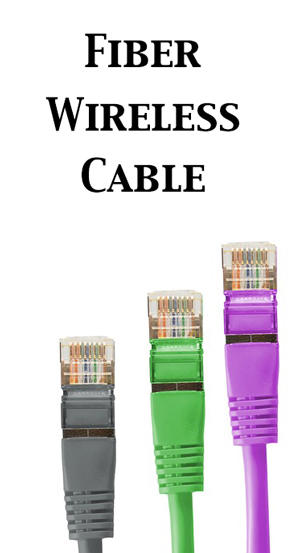
Every business type has its unique set of demands. Similar size companies in similar industries will likely have more or less similar demands. Large and small companies will have large and small demands. Some applications, like content delivery or medical imaging may have enormous needs. Most all of these can be accommodated with a combination of fiber and wireless bandwidth, and perhaps cable broadband.

Ethernet over Fiber has become the de-facto connectivity for demanding business applications. Copper-based services like T1 and DS3 are on the wane. They probably won’t be with us too much longer as the telecoms are decommissioning the facilities. In most cases it doesn’t matter. The limited bandwidth of these services has been eclipsed by newer technologies.

The older SONET fiber services developed by the telephone industry and adapted to business metropolitan and wide area networks is also going by the waysides. It may still be at the core of many networks, but is less and less offered to businesses directly. Ethernet over Fiber directly connects to business Local Area Networks without the need for any proprietary protocol conversion.

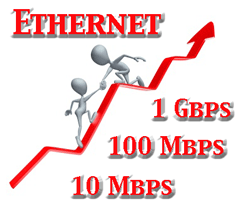
A major advantage of standardized Ethernet over Fiber infrastructure is that it accommodates a wide range of bandwidths using the same protocol. 10 to 100 Mbps is entry level, with 1000 Mbps a typical standard offering. Gigabit Ethernet, also known as GigE, seemed the most anyone would need not so long ago. Nowadays, the need for increased speed goes beyond a gigabit per second.

Bandwidth You Can Afford
If you are nearing the end of a three year contract or have just been paying month to month for years, you owe it to yourself and your company to get fresh quotes for the bandwidth you need right now and into the foreseeable future. As long as you have a port installed that will handle your anticipated growing needs, you don’t need to pay for the maximum bandwidth right now. Most providers will lease you the capacity you need today with the understanding that you can easily upgrade at any time on just a phone call or even through a Web portal.

What’s available? Fiber serves the lion’s share of today’s business locations. It’s been quietly installed without much fanfare. You can likely get any bandwidth you need from 10 Mbps on up to 10 Gbps (that’s 10000 Mbps) quickly and easily… and for less cost than you might think. If your demands are really stringent, 100 gbps or 100000 Mbps is not available in many metropolitan and suburban business districts. Cable and wireless broadband up to 1000 Mbps is also often a reasonable option.

Go ahead. It doesn’t cost anything to simply ask for current pricing. You may be surprised at the business Internet that is available to you.


Click to check pricing and features or get support from a Telarus product specialist.


Follow Telexplainer on Twitter


Thursday, January 16, 2025

The Cable vs Fiber Broadband War

By: John Shepler

There’s a broadband battle underway right now. It pits cable business broadband against Ethernet fiber optic bandwidth. These are the two leading technologies that will dominate business Internet now and for the foreseeable future. There is also a third contender warming up that we’ll discuss a bit later. Let’s see what the two big players have to offer.

Cable Broadband and Fiber Optic Bandwidth vie for your business. Get quotes now!Fiber Takes Over From Copper
The first century of telecommunications was dominated by twisted pair copper wires that provided the last mile for landline telephones, multi-line business phones, point to point computer connections and, when it started developing, the nascent Internet. The ground is chock-full of multi-pair cables. Some will be pulled out and recycled. Others will be left to slowly disintegrate.

Their technological replacement is fiber optic cables. Glass fibers take the place of plastic coated copper strands. Optical fibers have tremendously more bandwidth carrying capacity. A copper T1 line can deliver 1.5 Mbps. A fiber can deliver a Gigabit per second up to at least 10 Gbps. It’s no longer uncommon to have 100 Gbps fiber optic service available for business use.

Fiber itself has undergone a technical evolution in protocol from the early SONET telecom standard to Carrier Ethernet, otherwise known as Ethernet over Fiber. This upgrade made sense as telecom traffic changed from largely audio phone calls to digital computer packets.

What Fiber Optic Service Can Provide
Fiber broadband is readily available and can offer 10 Mbps to 10 Gbps bandwidth. This bandwidth is usually symmetrical, meaning the same speed for upload and download. It is also generally dedicated. That means you don’t share your fiber capacity with any other businesses. It’s all your traffic from your building to where it joins the Internet. This makes for much more consistent Internet performance.

Many companies have been moving from having their own in-house data centers to hosting that equipment at a co-location facility or leasing the same capability from a cloud provider. If your business software is running remotely, it often makes sense to have a direct connection from your offices, factories and warehouses to the cloud provider and avoid any potential congestion from the Internet.

Direct connections are also useful between company facilities, such as branch offices and any owned data center facilities. Essentially, you are extending your LAN out to include all your locations.

How Can Cable Compete with Fiber?
Cable got its start as a community antenna that fed a small town or city. Like fiber, cable has come a long way technically. Analog has transformed into digital. Still, isn’t cable a bandwidth limited copper connection?

Less than you might think. The drop or final connection to your business is still the familiar coaxial copper cable. The innards of the system have long ago upgraded to fiber, just like the telecom industry. That means most of the distance travelled is over fiber optic cables, some with as many as 100 fibers. The TV and Internet signal is converted to drive a copper drop cable just before it reaches your building. This system is referred to as HFC or Hybrid Fiber Coax.

The other big advance in Cable broadband has been the upgrading of cable modems using the DOCSIS standard. Most modems are now DOCSIS 3.1 that has the ability to support downstream data speeds of up to 10 Gbps and upstream speeds of 1 Gbps.

DOCSIS 4.0 is in the process of being deployed. This equipment upgrade will support downstream speeds of 10 Gbps plus upstream speeds of 6 Gbps.

Clearly, today’s cable broadband is easily a match for all but the most demanding fiber speeds. One difference between Ethernet fiber and cable broadband is that cable is usually asymmetrical to match the typical usage of retail customers on the Internet. In other words, the demand for download speed is usually more than the demand for upload speed. Often download is 10 times as fast as upload.

Another difference is that cable broadband is a shared access service in the last mile. This means that some heavy users may impact the performance of other users from time to time. For consumers, this is usually not a problem. For a business that depends of steady high performance for employee productivity using cloud services, it could present an issue.

Why Pick One Service Over the Other?
For consumers and many smaller businesses, cost is tie-breaker. Cable business broadband is generally less costly than Ethernet over Fiber for similar bandwidths. However, if you need symmetrical bandwidth, dedicated Internet access, dedicated point to point connections, or a dedicated line to your cloud provider, fiber optic connections can be well worth the added monthly cost. It should also be mentioned that some Cable companies are now offering access to their internal fiber optic networks as a premium bandwidth service.

Wireless is the Next Competitor
There is a new entry to the broadband wars that is also worthy of consideration. That is fixed wireless broadband. Once a niche service over very small areas, fixed wireless is now being offered by the major cellular carriers. What has made this possible is the advancement to 4G LTE and 5G. Mobile phones with 300 Mbps or more Internet service are now common. By providing a high performance modem without the telephone features but including Wi-Fi or LAN connection, carriers can deliver high speed broadband over their wireless networks already in place. Advantages include very reasonable pricing and little or no construction cost. You pick up the modem at the cellular store or have it shipped to you and install it yourself right away. It’s also perfect for pop-up stores and construction sites that are only temporary locations.

Which is best for your business? Cable broadband? Ethernet over Fiber? Fixed Wireless? Get pricing and availability for each of these bandwidth options and then choose the right solution for you.

Click to check pricing and features or get support from a Telarus product specialist.


Follow Telexplainer on Twitter


Monday, October 21, 2024

Dark and Lit Private Lines

By: John Shepler

The Internet is a marvelous network. It enables all of us to connect to any of us anywhere in the world and at a very reasonable cost. Why wouldn’t you use the Internet for all your communications? Much of the time we do, both for personal and business needs. It works great… well, it works just fine a lot of the time. There are a few snags, though.

See what private network options are available for your business.Network Priority
One is priority for highly sensitive applications like interactive voice and video. Say, telephone calls. There is no priority. Your voice packets get the same treatment as your next door neighbors video stream or someone backup up files to the cloud. Get in line and take your turn. When things get too busy, called network congestion, your real-time stream may break up or stop completely for a short time.

Cloud Critical Applications
The same is true for business critical applications running in the cloud. If you are taking orders, interacting with a customer or needing fast answers to deal with rapidly moving situations you may be drumming your fingers as you wait for the system to respond. Trying to make a quick financial trade in the market? Maybe it executes immediately. Maybe not. You may or may not get the price you had in mind.

Network Security
Another issue is security on the Internet. There is none. If you want security, you need to add it yourself. That means encryption. A popular way to encrypt your traffic when out of the office is by using a VPN or virtual private network. This is end to end encryption that makes it safer to use public access points like WiFi in coffee shops or send sensitive documents across the Internet. SSL or, now, TLS encryption has made possible online shopping and banking with confidence using web browers over the Internet with or without a VPN.

Improving Performance with Private Lines
You can get better network performance with private lines. Think private road versus crowded superhighway. The idea is to limit the competition from other people’s traffic.

You can still use the Internet but make it run better with a private line called DIA or dedicated Internet access. This gives you a private, not shared, connection between your location and your Internet service provider. Of course the Internet core itself is still a shared resource, but most of the congestion is in the last mile where you and hundreds or thousands of other users share the same connection to the service provider.

Direct to the Cloud
A direct cloud connection is a private line between you and your cloud service provider. Since you are the only user on that line, your cloud services should run much more like they would if the servers were right down the hall in your building. This type of connection avoids the Internet and its vagaries completely.

Why not expand that concept to your own private WAN or wide area network? This means private lines to connect your offices, factories, data centers and branch locations or retail outlets. Think of it like having your LAN expand to include all of your other business locations. You have control of the traffic and no interference from other outside users. Both privacy and performance are improved.

Dark and Lit Fiber
So far we are talking about fiber optic services, likely Ethernet over Fiber, which is the most popular connection method today. These are “lit” fiber connections where the laser equipment that maintains the signal is owned and operated by a service provider. The ultimate in performance and privacy over metropolitan and wider areas is using “dark” fiber. Dark means the fiber strands that you lease have no termination equipment at either end. You are responsible for providing the equipment that “lights” the fiber and sets the protocol. Since the glass fiber strands have nearly unlimited bandwidth, you have tremendous ability to send traffic from point to point dependent only on your budget and technical staff.

Wireless Private Lines
Finally, there is a new type of wireless service called 5G private networking or 5G network slice that lets you have the advantage of private lines while portable or mobile. It’s something like your own private corporate WiFi, but over much wider distances. Coupled with fiber optic private lines for most of your traffic, private wireless can give you a comprehensive business network wherever you are.

Is private networking right for your business? Find out what private network and security options are available now.

Click to check pricing and features or get support from a Telarus product specialist.


Follow Telexplainer on Twitter


Friday, June 21, 2024

AI Is Going to Eat Your Bandwidth

By: John Shepler

We may be nearing the end of the age of person to person communications, or at least human communication dominating the use of telecom resources. The decline began when computers started using our phone lines to exchange data. It’s only accelerated since nearly all computers are now connected to the Internet at broadband speeds. Even so, much of that computer activity is in the service of people accessing websites, messaging and sending email, posting on social media, watching videos, backing up their files and doing their jobs. Not for long. Pretty soon machines will cut us out of the loop and simply talk among themselves.

Beware the Internet of Things. Join the fun!The Rise of Artificial Intelligence
The scary thing about artificial intelligence, or AI, is how insidious it is. It’s actually been creeping in for decades, probably since the start of the computer age. There’s a lot of AI in search engines, although we may not think of it that way. Most software, in fact, has been adding analytical and decision making capability deep under the hood. You may not be specifically asked your preferences, but that doesn’t mean the program isn’t figuring things out or selecting what information to display and how.

More recently we’ve seen an explosion of “chat bots”, intelligent assistants such as Siri and Alexa, and some quirky writing and photo capabilities in ChatGPT. In fact, it’s the last one that has fueled an explosion of interest and investment in what is called Generative AI, the tech that “creates” all that new content at the push of a button.

NVIDIA can’t make big enough processors on a large enough scale to sate the demand. Data centers are expanding to host more and more servers and new centers are rapidly under construction. One big worry is where all the energy is going to come from to feed the exponentially demanding power-hungry AI processes. Some data centers are being built right next to power plants to grab and many megawatts as they can.

How Nuts is This Going to Get?
One might suspect that we’re in an AI mania combined with a speculative bubble in anticipation that artificial intelligence will render pitiful human capabilities and their jobs obsolete in the matter of a few years… or less. The computer age has certainly eliminated or greatly reduced some roles, like telephone operators and adding machine clerks (human computers), but added new ones as fast or faster. The new AI fever sees the elimination of writers, graphic artists, analysts, software coders, customer service representatives and even law clerks as imminent.

Not so fast. The chat bots I’ve dealt with are complete simpletons that can’t solve much of any real problem. The writing is tedious. The artwork is artificial at best, and inane at worst (how many extra fingers can you add to a person’s hand?). Self driving trucks? Look out when they come barreling around a curve during an ice storm.

I suspect the AI crazy has hyped up expectations far beyond what is really going to work anytime soon. However, that doesn’t mean there isn’t a real germ of innovation underway. One example is the “Internet of Things” that is being touted as the real driver of 5G wireless. Better, faster, cheaper and smaller electronics makes it possible to add both processing and communications to any device. That can be any tool, any monitor, any control system, and most products. It is only logical that these “things” will communicate with other “things”, including computer systems, without our constant knowledge or intervention. The more of these “robots” that are deployed, the more sophisticated the software needed to keep them employed efficiently.

What to Likely Expect
Yes, technology marches on in the name of progress. We’re not going back to living in mud huts or slaving in dingy factories, and the nature of what we do at work will continue to evolve. The increase in productivity should improve our standard of living if we’re smart about it as a society. At any rate, the demands on technical infrastructure are surely going to accelerate.

You can expect more devices on every network, talking faster and demanding faster results. The “cloud” may become an “overcast.” Both fiber optic and wireless bandwidth requirements will move up another order of magnitude or more. A 100 Mbps connection may have been plenty not long ago. Now we clamor for a Gigabit line, with 10 Gbps an emerging business standard. How long before 100 Gbps is routine and 1 Tbps starts looking like a requirement? Within the data center, this could be tomorrow. For access, maybe the day after tomorrow.

How about your business? Are new tools, processes and devices straining the capability of your data center or WAN network? We can help. Get pricing and support on bandwidth and hosting for your current and future needs right now, before those needs become a crisis.

Click to check pricing and features or get support from a Telarus product specialist.


Follow Telexplainer on Twitter


Note: This article was not generated by any AI. It was written by one human (myself) who only worries about the machines scraping the Internet and regurgitating copyrighted material far and wide without any thought of compensation to the author, a real and present danger.

Wednesday, April 17, 2024

Is 5G Bandwidth Slicing The New Private Network?

By: John Shepler

The Internet is a wonderful way to connect… except when it isn’t. Oh, it works great for much of what we need: universal connectivity, rock bottom cost, and support for most applications. It’s when we need higher than usual performance or extreme reliability that our broadband connections can fall short. Latency, packet loss, and congestion can degrade interactive applications or make them impossible to implement. What to do? Switch to private networks.

5G bandwidth slicing for private networks.What is a Private Network?
The Internet is what is known as a public network. It’s accessible by just about everyone, everywhere. All you need is an account at an ISP, cable company or cell phone provider and you’re connected with always-on broadband.

The beauty of this public network is that it has been built out over several decades so that it literally covers the world. Everyone has equal standing on the Internet. The average user’s traffic gets the same priority as a major corporation, research institute or any of the billions of “things” that are now connected online. This is what is known as network neutrality. The only preferences you can pay up for is a more direct connection to the backbone of the Internet and the amount of bandwidth you have access to.

All this equality sounds great, doesn’t it? Most of the time it serves everyone well. But, if you are trying to have a videoconference at the same time as everyone else is streaming a popular concert or engaged in an important phone call when the rest of the world is doing backups to the cloud, your connection may start to degrade. It’s much worse for high speed interactive gaming, remote surgery, high frequency stock and options trading, or control of an electric vehicle. These applications have a low tolerance for hiccups and delays.

The alternative to the public network is the private network. Your company LAN is a private network. It isn’t shared with every other company or consumers watching online TV. Chances are that it has all the low latency bandwidth you need all the time.

Now, extend that LAN across town or across the country. Can you do that? Yes, you can, but you won’t be building it yourself. Instead, you’ll contract with a network provider that offers private point to point connections. There will be other customers sharing their extensive facilities, but they won’t interfere with you. You will be guaranteed the bandwidth and other network characteristics, such as latency and packet loss, that you contract for.

Types of Private Networks
In the past, nailed-up twisted pair wires, T1 lines and SONET fiber were the way to go. Today, Ethernet over Fiber is the most popular along with MPLS networks.

Ethernet connections use the same protocol as your LAN, so they are easy to interface. You can also order direct point to point, point to multipoint, or mesh networks that connect multiple locations. Ethernet over Fiber offers bandwidths from 10 Mbps up to 10 Gbps, with 100 Gbps becoming more common.

Some popular uses for these Ethernet services include direct connections to cloud providers, interconnecting multiple business locations, and content delivery.

MPLS networks are a specialized technology that offers connectivity over wide areas, including the entire country or even Internationally. MPLS uses its own unique protocol, making it more secure than IP networks. These are multi-user networks, but are managed so that each customer has the bandwidth promised at all times. MPLS networks with Ethernet on-ramps can give you tremendous coverage at less cost than multiple private lines.

5G Slicing as the New Private Network
More and more applications are portable and mobile these days. That means a wired connection just won’t do. Instead, we settle for wireless Internet services, usually over the extensive cellular networks. This started becoming popular when 3G networks were implemented and really took off with 4G LTE. It’s only continued at a faster pace with 5G networks.

The limitation with even 5G is that you are still dealing with Internet broadband and its foibles. Bandwidth is more limited than with fiber and congestion can bring your applications to a crawl during busy times in crowded areas. A feature designed into 5G offers a way around this for an extra charge.

5G slicing technology allows carriers to partition or “slice” off a part of the available bandwidth for private use. Everybody is clogged up on the freeway, but you get to zip along on your own private road. Pretty nice, right?

5G slicing can give you a more direct connection to the Internet for better performance or can remain as a private network or connection to a private fiber network. It’s like your LAN, but with the freedom of being wireless over wide areas.

On their own campuses, some companies are implementing private 5G networks to gain the same advantages. 5G slicing takes this a step further to give you connectivity anywhere you go. That includes moving vehicles as well as smartphones, tablets and all those “things” the need connectivity but don’t perform well on the Internet.

Issues with 5G Slicing
The implementation of 5G slicing is just starting to roll out, so you may or may not be able to find this service yet. One concern is how much slicing can there be if everybody wants a private piece of the spectrum. While 5G bandwidth, especially on the new higher frequencies, is more plentiful, there are practical limits to how much traffic can be carried over the air. This is why there is still a mad scramble to make more frequencies available for 5G, including some spectrum currently assigned to the military.

Another potential bug-a-boo is the old network neutrality issue. How can a network be neutral when you can pay up for a private box seat? For now, regulators seem to be OK with 5G slicing as long as the main core of the network used for Internet is not prioritized, or that some services aren’t being throttled for competitive advantage. As more and more of the wireless spectrum goes private, it remains to be seen how much pushback there will be.

Would private networking be an advantage for your business? Find out what bandwidth services are available now for your business locations.

Click to check pricing and features or get support from a Telarus product specialist.


Follow Telexplainer on Twitter


Wednesday, January 10, 2024

Advantages of Dedicated Point to Point Fiber

By: John Shepler

If you are running a business and your broadband connections are driving you crazy, you may want to take a look at an alternate solution called dedicated point to point lines. Let’s have a look at what they are and what they can do for you.

Connect you business locations with dedicated point to point fiber.What Does Dedicated Mean?
Dedicated means that the bandwidth you are paying for is dedicated to your operations only.

But isn’t all bandwidth dedicated if you pay for it?

This is where it gets a little tricky. If you look closely at what broadband providers offer, they say something like “bandwidth up to 300 Mbps” or a similar disclaimer. Yes, the service you bought is capable of running at 300 Mbps. When you run a speed test, you may well see it clock-in at 300 Mbps… but not necessarily every time you test.

Why is that? It is because the bandwidth you got for such a bargain price is shared, not dedicated. You and multiple other users, including other businesses and consumers, are all connected to the same access line. When demand is low, you get screaming speeds. When everybody wants to download or upload files at the same time, that available bandwidth will be divvied up fairly so that everybody gets a share but nobody gets the line all to themselves. You might be waiting a bit.

If you want the line all to yourself and your business, you need to order a dedicated service. With dedicated bandwidth there won’t be other users outside of your organization competing for your line bandwidth. Whatever you aren’t using at the moment simply sits there idle for the time being.

You can greatly improve the stability of your Internet service with what is called DIA or Dedicated Internet Access. That’s a dedicated line from your company to your Internet Service Provider, where it connects to the Internet itself.

Will that guarantee smooth performance? Not really. Remember that the Internet is a shared service by its nature. There will be congestion and failure points from time to time no matter how you connect. The next step up is dedicated point to point fiber service.

Dedicated Point to Point Fiber
Dedicated lines have been available for decades using copper pairs and legacy telecom fiber called SONET for Synchronous Optical NETwork. Nowadays the best value is Ethernet over Fiber or EOF.

Fiber optic Ethernet services, sometimes called Metro Ethernet Fiber, are directly compatible with your servers using standard Ethernet interfaces. Unlike the Internet, you specify what two locations you want connected. The provider installs ports at each location and you have an always-on dedicated point to point fiber connection between them. You can order service starting at 10 Mbps or 100 Mbps and go up to 10 Gbps easily. In metro areas 100 Gbps bandwidth is available if you need it.

Advantages of dedicated point to point or P2P lines include solid bandwidth that is not affected by what other customers are doing. The link is inherently more secure than the Internet because there is no public access. Your bandwidth is usually symmetrical, meaning that it is the same for upload and download. That’s important if you are accessing remote servers to upload and download large files. Most shared bandwidth services are asymmetrical with download speeds typically 10x what you get for upload.

What are good uses for dedicated P2P fiber? The traditional application is linking multiple business locations. You may want to connect your headquarters and branch offices on the same private network so that someone across the country seems like they are just down the hall. Remote servers in colocation facilities or your own remote data center can also benefit from “extending the LAN” using dedicated P2P. Today that’s extended to the cloud, be it public, private or hybrid cloud services.

Do you need the stability and performance that dedicated point to point fiber line services can provide? If so, find out what fiber optic services are available for your business locations.

Click to check pricing and features or get support from a Telarus product specialist.


Follow Telexplainer on Twitter


Monday, December 18, 2023

Cost Saving Shared Fiber, Wireless and Coax

By: John Shepler

You need connectivity but are feeling the pinch of inflation. Is there any way to get a business online and not break the bank? Sure there is. If they work for you, shared bandwidth wireless, cable coax and fiber optic connections are available at bargain prices. Let’s have a look at these.

Low cost shared bandwidth options for your business.What is Shared Bandwidth?
You are probably too young to remember telephone party lines, but how about roommates at school? That’s the sharing economy. It’s based on the idea that if something is expensive you can still have it as long as you join with others to foot the bill.

Internet connections can be had the same way. A fully dedicated high speed symmetrical fiber optic link can run into the big bucks every month. If that’s what you must have, then you’ll just have to come up with the lease fee. But, if your usage isn’t all that demanding, you can probably share the line with others, not limited to users within your company, to split the cost.

Now, this is where shared bandwidth services differ from the old party lines. Back in the day, a single analog phone line would serve multiple households in the same area. When you picked up the handset, you might hear a dial tone or you might hear someone else’s conversation already in progress.

The polite thing to do was hang up and wait awhile before you tried again. More often that not, curious individuals would simply cover the mouthpiece and eavesdrop on the call.

Shared bandwidth isn’t really like that… for the most part. You and another customer aren’t going to see each other’s traffic on your screen. The routing in the system keeps your data streams separate. However, all your bits are intermingled on the same line. A clever hacker can figure out how to monitor whatever traffic they can access.

The way around that limitation is encryption. Encrypt all your traffic and you’ve created a secure tunnel through the public Internet. That’s critical for using WiFi hotspots, but important for any shared access or easily tapped-into connection. Most websites and email services have gone to secure connections that are encrypted, but all your file transfers should also have this layer of security.

Shared Bandwidth Via Coax
Cable broadband is the originator of the coaxial copper connection. This standard was originally designed for analog cable TV and community antennas. Eventually a cable connector came standard on the back of TV sets. Later, Cable providers became Internet Service Providers by developing a modem that could connect to their coaxial line and share the bandwidth between TV and Internet.

The modem technology that does this is called DOCSIS for Data Over Cable Service Interface Specification. The most common version is 3.1, which is capable of multiple Gigabits on the downline side. The newest is 4.0, which can support 10 Gbps downstream and 6 Gbps upstream.

Shared Bandwidth Via Wireless
Smartphones have had excellent Internet service starting with 3G and 4G LTE. The small screen requirements are easily supported and were quite useful even with the old 2G standard. The standards also serve tablet computers, laptops and in some cases desktop computers, especially when other ISPs are offline. The bandwidth is often enough from a shared smartphone connection. The one limitation for desktop usage is that you might run up against monthly data limits.

With 5G service, cellular providers have begun promoting the use of their Internet service at fixed locations. They even have a name for this: Fixed Wireless Access. Instead of sharing your phone with your desktop, you buy a 5G gateway that may offer an Ethernet port for your network or WiFi hotspot. It connects to the provider like a phone, but without the mobility or voice service. There is simply an incremental charge to your cellphone bill each month. If you have good signal strength, you may get bandwidth of a hundred or two hundred Mbps without a wired connection.

Shared Bandwidth Via Fiber
Fiber optic service used to be only for major corporations and priced accordingly. Now fiber is so widespread that you can get Ethernet over Fiber Dedicated Internet Access in most reasonably populated areas. Bandwidths are available from 10 Mbps up to 10 Gbps and even 100 Gbps in major metro locations.

Fiber Internet is highly desirable and prices have dropped dramatically over the years. Even so, you may still want a lower cost option. Did you know that you can still have fiber for a bargain price? The technology involved is called PON or Passive Optical Networking. The provider takes that high bandwidth dedicated fiber line and divvies it up among 32 users using a passive splitter. Each customer still gets a fiber line, but the bandwidth on that line is being shared among multiple users just like cable broadband. In fact, cable companies are pioneers in building out this technology. You get fiber bandwidths, but with pricing that is more similar to cable services.

Limitations of Shared Bandwidth
While you won’t be seeing your neighbors messages popping up on your screen, you will likely still feel the effects of sharing. During periods of heavy usage, the service slows down. You might even detect congestion that brings everything to a crawl and then, just like with traffic jams, magically disappears. VoIP phone calls can break up. Video conferences can stutter or freeze. Cloud applications can become sluggish.

Another characteristic of shared bandwidth connections is that they are usually asymmetrical. That means that the download speed is much higher than the upload speed. Typically, a factor of ten or so. For Internet browsing or email, this may make no difference. It could impact video conferences and large file transfers up to cloud storage.

You can improve on this with a dedicated Internet access or with a software defined wide area network or SD-WAN. This is a technique for combining multiple Internet connections. The SD-WAN controller assigns traffic to the most appropriate link, with sensitive applications like phone calls getting the highest priority on the fastest paths. SD-WAN can let you combine a fast shared and low cost line with a small dedicated line. The result can be a service that gives you all the performance you need at a lower cost than a high speed dedicated fiber line.

What bandwidth service is most appropriate for your business? Find out what shared and dedicated Internet and private line services are available at better prices for your particular location.

Click to check pricing and features or get support from a Telarus product specialist.


Follow Telexplainer on Twitter


Tuesday, December 14, 2021

From Megabit Copper to Gigabit Fiber

By: John Shepler

You know it’s time to upgrade your WAN bandwidth. There are two major forces at work to make this a necessity. First, the load on your network connections is steadily increasing. Second, legacy copper services that have worked so well for decades are being phased out by the carriers. It’s the right time to make a move to gigabit fiber.

Your path to gigabit Ethernet is here. See what is available now.What’s Driving The Need to Upgrade
Information technology is a different animal than it was in years past. If you’ve been working in technology for ages, you probably remember when computers, their peripherals, and software were all in-house. Connections to the outside were for communication between locations and to the Internet. When there weren’t that many resources to access outside, there wasn’t a need for very high bandwidth.

That’s all changed. The entire IT architecture has been turned on its head. Now, there is very little computing done in-house and a crying need for massive connectivity to the cloud where the computers, storage, and software reside. The Internet has evolved from a simple messaging system to an almost infinitely deep well of resources on all subjects. Communications via the Internet are much more demanding due to the heavy concentration of massive files and high resolution video.

Even small businesses need what used to be considered extremely high bandwidth. Medium and larger companies can’t live without the throughput of high speed fiber optic connections.

Why Copper Connections are Disappearing
Until just a few years ago, twisted pair copper cables connected to a telephone company central office were considered standard fare for both voice and data. That was before the migration away from POTS (Plain Old Telephone Service) landlines. The replacement is VoIP telephony running on the same computer network that interconnects desktop computers, network storage, printers and servers. The in-house telephone switch, called the PBX, has suffered the same fate as most in-house servers. It has moved to the cloud.

The other use for these twisted pair cables was point to point and dedicated Internet connections at 1.5 Mbps. Those T1 lines have faded in popularity as speed demands exceeded their capacity long ago. The upgrade, DS3 delivered on coaxial copper cables, travelled most of the distance multiplexed on SONET fiber optic cable. Only the connection from the curb was copper.

Faced with a waning demand for copper-based telecom services that are ordered less often by businesses and are too slow to support 4G LTE and 5G cellular stations, the telephone companies that own the copper are either ripping it up for recycling or letting it corrode in the ground. It won’t be long and you’ll have to upgrade even if you don’t need the additional bandwidth.

The New Standard is Fiber Optic Ethernet WAN
The majority of telecom traffic now is Ethernet packets. Rather that convert the protocol to and from legacy telco services, Ethernet over Fiber is the new WAN standard.

Bandwidths are typically available from 10 Mbps at the low end to 10 Gbps at the high end, with 100 Gbps available in some major areas.

Like earlier copper telecom solutions, you have the option of setting up point to point private lines or dedicated Internet access. Both are supported by Ethernet over Fiber. Private lines offer dedicated bandwidth so you don’t have to compete with other companies for the capacity of the line. Dedicated Internet Access also gives you exclusive use of last mile connectivity. Of course, the Internet itself is a shared medium.

How about availability? Fiber optic lines are becoming almost ubiquitous these days. The exception is rural areas or remote business and industrial parks that aren’t served by fiber yet. Sometimes you can get near-fiber performance by cable broadband solutions that can reach 1 Gbps of shared bandwidth at bargain prices. If you are located remotely, you can often get 4G LTE and 5G wireless business solutions that many not offer the ultimate in bandwidth, but are often great solutions to replace obsolete copper lines.

Is your business running short on bandwidth or have you been notified that your copper bandwidth options are being discontinued? If so, now is the perfect time to check out prices and availability of gigabit fiber optic bandwidth for your business locations.

Click to check pricing and features or get support from a Telarus product specialist.


Follow Telexplainer on Twitter


Friday, August 23, 2019

T1, T3 and Ethernet Bandwidth

By: John Shepler

Are you considering new or additional bandwidth for your business office, retail store, or other commercial location? Professional grade options include high performance T1 lines, T3 (DS3) lines, and Ethernet options over copper and fiber optic cables.

Find T1, T3, DS3 and Ethernet bandwidth options now.T1 Lines
T1 Lines have been the mainstay of many, many businesses for decades. They still are, although for more special situations. The big advantage of T1 lines is that they are provisioned over standard twisted pair copper telephone wiring. If you can get landline phone service installed, it’s likely you can also get T1 service. That includes rural areas where there isn’t much else to pick from.

T1 lines are highly reliable, get fast service if something goes wrong, and are dedicated to your use only. The bandwidth is symmetrical. That is, the upload and download speeds are identical. That’s important if you exchange large data files or back them up to the cloud.

T1 lines can be configured for dedicated Internet access or point to point connections. They support ISDN PRI telephone trunks for multi-line phone and PBX systems. Their one limitation is the bandwidth, which is fixed at 1.5 Mbps. That’s rather slow in broadband terms, but perfectly useful for small business point of sale terminals, email and casual web browsing. Additional T1 lines can be bonded to increase the bandwidth to 3, 4.5, 6 or even 10 Mbps.

Ethernet over Copper Lines
Ethernet over Copper (EoC) is a modern technical upgrade to legacy T1. It uses the same copper telephone lines, but can support higher speeds. Bandwidths of 10 or 20 Mbps are common within metro areas. Some support is also available for rural businesses, but not as ubiquitous as T1 service. Additionally, EoC is generally less expensive per Mbps than traditional T1 lines. You can often get twice or more bandwidth for the same monthly lease cost.

T3 Lines
T3 lines are in the same technology family as T1 lines. The bandwidth is much higher, 45 Mbps vs 1.5 Mbps. T3 refers to the actual lines, which are coaxial, waveguide or microwave relay. These days T3 is delivered as a service on SONET fiber optic lines and referred to as DS3. Like T1, T3 or DS3 service is highly reliable, dedicated and symmetrical.

Ethernet over Fiber Lines
Ethernet over Fiber (EoF) is the modern technical upgrade to SONET fiber optic service. As such, EoF replaces T3 and DS3 with the same bandwidth at a better price. Unlike T3 and DS3, Ethernet over Fiber offers a wide range of bandwidth choices instead of the fixed 45 Mbps service. You can typically get EoF service from 10 Mbps on the low end up to 10 Gbps or even 100 Gbps. You also have the option of changing your mind at any time to upgrade or downgrade your service. Usually, no hardware changes are required. You are billed for the bandwidth level you order rather than a fixed 45 Mbps.

Until recently, fiber optic service was limited to major metropolitan areas and rather expensive. The entrance of competitive service providers and the high demand to supply cell towers to support 4G and 5G broadband has vastly increased the amount of fiber optic services available. Most offices, business parks and retail locations now have the option for competitive fiber bandwidth pricing. Some lines are even available to rural locations.

You have a wide range of possibilities for your business bandwidth that include T1, T3 (DS3) and Ethernet over Copper and Fiber. Check pricing and availability now.

Click to check pricing and features or get support from a Telarus product specialist.


Follow Telexplainer on Twitter

Tuesday, July 16, 2019

Fiber Optic Ethernet Transport Offers Huge Advantages

By: John Shepler

There are many ways to transport your data from one place to another. The new gold standard has become Fiber Optic Ethernet lines, also known as EoF or Ethernet over Fiber. You’ll have a hard time beating this solution on a cost/performance basis.

Check prices and availability of Fiber Optic Ethernet service now.What is Fiber Optic Ethernet Transport?
Ethernet wasn’t part of the equation when fiber optic lines started to be buried in the ground and strung of utility poles for the telecom industry. The original standard was SONET (Synchronous Optical NETworking). This standard was designed to be backwards compatible with existing DS1 and DS3 multiplexed telephone calls in order to carry them on fiber. Why fiber? There's much more bandwidth in a single pair of optic fibers compared with legacy copper twisted pair, microwave and coaxial copper line.

Ethernet was born in the computer industry for local area networking. Transmitting this data outside the wired building or campus required a protocol conversion so that T-carrier and SONET fiber could carry packets instead of digitized phone calls. Decades later the efficiency of carrying Ethernet directly instead of first converting to an older protocol was standardized. Two varieties emerged. Ethernet over Copper and Ethernet over Fiber. For shorter distances, wireless Ethernet over line of sight microwave, laser, and radio systems such as WiFi and WiMAX were also developed.

The Immense Advantage of Fiber Optic Ethernet
Carrier Ethernet has been adopted by competitive telecom providers as well as the legacy telco companies. The first advantage is that it is directly compatible with computer networks. It’s Ethernet, after all. There is no need to deal with the inefficiency of converting back and forth between some other protocol. Just plug in your network and go. If you order a service such as E-LAN, you can interconnect your LANs at multiple locations as if they were on one big network.

The second big advantage is that Ethernet is easily scalable. When you order traditional MAN (Metropolitan Area Network) or WAN (Wide Area Network) services, you get a line with a fixed speed. T1 is 1.5 Mbps, DS3 is 45 Mbps and OC3 is 155 Mbps. That speed determines how much data you can transmit per unit of time and it also determines the price you pay. What’s more, if you outgrow your line service, you have to upgrade to another line standard and get all new termination equipment. A higher speed service may or may not even be available for upgrade.

With Fiber Ethernet you really don’t have an upper limit. Each fiber strand can carry maybe 10 Gbps and could be wavelength multiplexed with dozens or even hundreds of 10 Gbps channels. Fibers are so small that cable bundles might have over a hundred fiber strands. It’s going to be pretty hard to run out of capacity.

The nice part is that you don’t have to pay for all of that capacity. You order a service level, say 100 Mbps or 1 Gbps, and that’s what you are charged for. If you find that you need more, you can get upgraded to a higher service level with a phone call or even with an online portal. You can get as much bandwidth as the port capacity that is installed at your location. That’s typically 1 Gbps minimum, with options for 10 Gbps or even 100 Gbps.

Best Advantage of All
Thanks to competition in the marketplace and the enormous inherent capacity of optic fibers, the price you pay per Mbps is lower than it has ever been, and usually far better than with older SONET technology. That price is for highly reliable circuits, often with service level guarantees. The bandwidth is both symmetrical, same upload and download speed, and dedicated for your use only.

Competing Bandwidth Options
If you only need bandwidths of 10 or 25 Mbps, Ethernet over Copper can give you similar advantages to Ethernet over Fiber. At lower speeds, 1.5 or 3 Mbps, a T1 line is still attractive.

The bargain basement bandwidth options include business cable broadband, wireless Internet service providers, Satellite broadband, telephone DSL lines, and cellular broadband. All of these were developed for the price sensitive consumer market and then offered to small businesses with needs that aren’t too demanding. Prices per Mbps are very attractive. Most of this comes from the fact that bandwidth is shared among users and not dedicated to a single customer. Bandwidth is also non-symmetrical. Download speeds are typically 10x upload speeds.

Wireless services tend to have pretty restrictive usage limits and are not suitable for downloading big software updates or transferring large files. Satellite is available nearly everywhere, but has latency issues that make it difficult to use for telephone and other real-time services.

Note that these services are almost always Internet access only. Fiber Ethernet can be set up as dedicated Internet access or point to point private lines.

What bandwidth service is best for your business? You have many more options that you may realize and pricing that could be better than expected. Find out now, what Fiber Optic Ethernet services are available for your business locations.

Click to check pricing and features or get support from a Telarus product specialist.


Follow Telexplainer on Twitter

Wednesday, June 26, 2019

How to Feed a Hungry WISP

By: John Shepler

We’re a wired nation, except when it comes to locations that are a bit off the beaten path. That includes farms, rural households, businesses beyond the city limits, new subdivisions and some industrial parks. While they may have telephone, thanks to universal service, the availability of broadband Internet access is less of a sure thing. This is where the wireless broadband supplier or WISP fills the gap.

Get the best bandwidth pricing for your WISP.Why WISPs?
WISP or Wireless Internet Service Provider is similar to a cell phone provider, except specializing in high speed Internet access. While even 4G cell service has fairly low usage limits, WISP services are much more generous and try to emulate the type of service you’d get from cable, telco or even fiber optic lines. The real cost to hooking up less populated areas is trenching cable bundles or flying them on utility poles. The WISP eliminates the wires and their associated cost. The tradeoff is that you generally need a small dish antenna and receiver outside to pick up the signal from the WISP tower.

Where Do WISPs Get Their Broadband?
While the WISP distributes broadband much like WiFi, the broadband they serve must come from somewhere. When the Internet was young, T1 lines did an excellent job of feeding the WISP, just like they did feeding cell towers out in the countryside. The beauty of T1 is that it can be sent virtually any distance over standard twisted pair telephone wiring. The downside is that the bandwidth is fixed at 1.5 Mbps per T1 line. Higher speeds can be accomplished by adding or bonding additional lines to double, triple or quadruple the speed. The practical limit is around 10 to 12 Mbps. Pricing goes up linearly as you add each line.

Higher Speed Copper Lines
A newer technology that also runs over twisted pair copper is Ethernet over Copper (EoC). This service offers higher speeds, say 20 or 30 Mbps or even higher. Transmission is distance limited, but EoC is now more available beyond the city limits. Cost is much more attractive per Mbps than T1, if moderate speeds are adequate for what you need.

Business Cable Broadband can provide hundreds of Mbps these days but has suffered from very limited deployment outside of metro areas. That has changed somewhat as the cable has been extended to outlying subdivisions and business parks. If you can get this service and the Cable Company is OK with using it for a WISP, the cost will be very attractive.

Fiber Optic Service
The new gold standard of bandwidth service is fiber optic lines. These used to be few and far between, but provider competition has made them far more common even in rural areas. You can thank 4G cellular for providing the incentive to trench fiber conduits into rural areas. Prices have come down dramatically with Ethernet over Fiber (EoF) services. These are highly reliable and easily scalable up and down in bandwidth to meet your needs. Bandwidths of 10 Gbps up to 100 Gbps are common now.

Microwave Transmission
Why not feed wireless with wireless? That’s not a crazy idea and is being used more and more as telco companies upgrade to 5G towers. Microwave is a point to point wireless service. You mount a small dish on your tower and point it toward the service provider. It’s like fiber but without the fiber.

SDN Combines Bandwidth
What if you need more bandwidth than any one supplier can provide? One option is to combine them using a technique called SDN or Software Defined Network, also known as SD-WAN or Software Defined Wide Area Network. The SDN controller manages traffic to get the best performance for each packet. You can combine T1, EoC, cable broadband, microwave, fiber optic lines and even satellite Internet to create a higher speed robust feed for your WISP tower.

Do you operate a WISP service or have one in the planning stage? Find out what bandwidths and pricing are available for your desired locations now. A friendly consultant will help you sort through the options.

Click to check pricing and features or get support from a Telarus product specialist.


Follow Telexplainer on Twitter


Wednesday, March 20, 2019

Increase Your Bandwidth Beyond T1

By: John Shepler

You’e had your faithful T1 line service for years, maybe even decades. You love the reliability, solid bandwidth, low latency and the fact that prices have even declined from contract to contract. The one limitation that’s becoming a real bottleneck is the bandwidth. While 1.5 Mbps was plenty a decade ago, it’s not keeping up anymore. Is there any way to keep the performance of T1 but goose up the speed? Most definitely!

Find products with this theme that you can customize...What Makes a Good T1 line Replacement
When you first took out your T1 contract, you chose this technology for good reasons. DSL was popular for business at the time, but notoriously unreliable. T1 had the advantage of being a service that was developed by the telephone companies for the telephone companies. That meant it was professional grade from the beginning and not a “consumer” service being offered for business as a cheap option.

T1’s fixed 1.5 Mbps bandwidth was dictated by the need to multiplex or combine 24 individual analog phone lines into a single digital equivalent that maintained all the voice quality, including minimal latency. T1 also had to run on existing twisted pair telco lines no matter how far they stretched. That’s why T1 is available far out into rural areas beyond the reach of other options.

T1 is still used to provide multiple phone lines for key telephone and PBX systems. It has been expanded to support packet-based digital networks including point to point dedicated lines and dedicated Internet access. Many T1 lines come with a Service Level Agreement (SLA) that provides a guarantee of availability and performance from the service provider.

Bonded T1
One way to increase the bandwidth of T1 lines is to simply add more of them. Most companies want that bandwidth combined, which is easily done by carriers using a process called bonding. All of the T1s you want bonded must be from the same provider. Two T1 lines gives you 3 Mbps, 4 lines give 6 Mbps and so on. You can go up to 10 or 12 bonded T1 lines, but the cost gets prohibitive unless this is your only option.

Ethernet over Copper
Ethernet over Copper uses the same twisted pair infrastructure as T1, but a newer modulation technology. You lose the unlimited distance advantage but gain much higher bandwidths, generally up to 10 or 20 Mbps, at more reasonable prices. If you are located in a populated area, EoC can give you the service you want at a fraction of the cost of bonded T1 lines.

DS3 Bandwidth
DS3 is part of the T-Carrier specification that also defines T1. DS3 offers 45 Mbps, enough for many businesses. Low latency, dedicated lines and reliable service are similar to T1 lines. The only wrinkle is that the higher bandwidth of DS3 isn’t supported over twisted pair copper. Instead, DS3 rides a fiber optic backbone to the curb and then a pair of small diameter coaxial copper lines to your router DS3 interface card.

Fiber Optic Service
Fiber service used to be well beyond the financial reach of most companies even if it was available… and it often wasn’t. That’s all changed. SONET technology, which transports DS3 and the higher bandwidth services like OC3, OC 12, and OC48, has become more available and less expensive. Ethernet over Fiber is the newer technology and it is much less expensive for the same high quality service. Many, many companies order 10 Mbps Ethernet over Fiber service and then easily upgrade to 50 or 100 Mbps as they need it. Bandwidths are readily available to 1 Gbps and even 10 Gbps in many areas.

What about Cable, Satellite, Wireless, Etc?
These less expensive services are shared, not dedicated bandwidth. That’s a major reason they are less expensive. Most are asymmetrical, meaning that upload speed is only a fraction of download speed. Satellite has tremendous latency effects and both satellite and wireless tend to have data caps. That said, a lot of businesses are saving a lot of money each month, especially if they combine a couple of low cost broadband services in a SD-WAN or Software Defined Wide Area Network. It all depends on how demanding your applications are and whether you prefer to avoid the Internet to connect locations. Get some expert advice and then pick the best bandwidth option appropriate for your business needs.

Click to check pricing and features or get support from a Telarus product specialist.


Follow Telexplainer on Twitter

Thursday, November 08, 2018

Is It Time To Go Fiber Optic Internet?

By: John Shepler

You’ve outgrown the Internet service that has served you well all these years. Business has changed and yours has expanded to the point that your Internet connection is getting in the way. Everyone would be more productive and less frustrated with a connection that didn’t impose limits. So, what should you do?

Should you get fiber optic Internet? Check your options now.More Choices, Less Cost
You might be cringing at the thought of shopping for better Internet access. The last time you did that, pickings were slim. Few providers offering few services, most of which were very expensive. You may have wound up with a T1 line or DSL from your telephone company or a business cable offering from your Cable TV company. Has anything changed?

Oh, yes. Pretty much everything has changed. Actually, the choices have expanded and gotten cheaper across the board. You can still still order T1 lines. Today you’ll find there are more providers vying for your business and the prices may be a fraction of what you paid to sign your service contract years ago. Other than cost, though, T1 is still a 1.5 Mbps service. It may be adequate for the smallest businesses, but most everyone else will find the 1.5 Mbps limit stifling.

A more expansive option may be Ethernet over Copper. This is newer technology running on the same twisted pair telco lines. Bandwidth options vary from 1 Mbps up to typically 15 or 20 Mbps. Pricing is maybe half the cost of T1 per Mbps.

How about business cable? Yes, it’s still here but better. Modems have been upgraded a couple of times and now easily offer 100 Mbps, 300 Mbps and even 1,000 Mbps on the same coaxial cable. You may even get that 1,000 Mbps for the what you are paying for the old T1 line. Just be aware that the bandwidth on the cable line is shared and may vary during the day. Upload speeds are maybe a tenth of the download speeds.

How About Fiber?
Fiber optic Internet service was beyond the reach of all but the largest companies for decades. No more. A technology improvement from the old telco SONET to competitive Ethernet over Fiber has caused prices to plummet and options to multiply. You can pretty much dictate your bandwidth from 10 Mbps to 10 Gbps and order what you need without over paying. Later, when your needs expand, you can scale up your line speed, usually without changing hardware.

Ethernet over Fiber has the options of speeds as high as 100 Gbps that are easily scalable, highly reliable, dedicated and symmetrical. More and more, those options include ready availability from one and often several vendors. Most providers are aggressively building out their networks and may be able to minimize or even waive construction costs. It just depends on what’s available near your location and how much competition there is.

I Want Fiber. How Do I Get It?
You’ll probably never regret taking the plunge on fiber optic Internet service. Unlike older copper-based technologies, fiber is pretty much future proof as well as minimizing limitations such as latency, packet loss and jitter. It’s the transparent connection you are longing for.

Now, how to get service. Your best option is to work with a bandwidth broker like Telarus. They have contracts with dozens of providers serving the nation with connections that can go around the world. Your cost will be no higher than if you found a particular carrier yourself and probably less, since there are often multiple providers to choose from. Want to see what’s available right now? Get a quick budgetary quote online now and followup with possible special deals that aren’t advertised.

Click to check pricing and features or get support from a Telarus product specialist.


Follow Telexplainer on Twitter

Monday, October 15, 2018

Lit Buildings Have Near Infinite Bandwidth

By: John Shepler

Among the many opportunities for locating your business, one group of buildings is special. These are the lit buildings, otherwise known as fiber lit buildings. Find one of these and your bandwidth woes will be over.

Lit Building Definition
What is a lit building? In this case, it’s not a building with all the lights turned on. The lit building meaning is that this particular facility is already “lit” for fiber optic Internet and, likely, point to point bandwidth service. The light this is referring to is the laser beam that shines down the glass fibers to transport digital signals at high speeds.

What’s So Great About Fiber Lit Buildings?
Pretty much every business today, from the smallest hamburger stand to the largest multinational corporation has a need to communicate electronically. Do you or any of your employees ever use a computer? Obviously, you have a need for connectivity. Even the smallest retail businesses have to process credit cards and likely need to place Internet orders, send and receive emails. and perhaps run a website. If you are not online, you are probably not in business.

Seems obvious, until you move into a new facility and find out there is no Internet in the place. If it’s a stand alone building or you are the first tenant in a strip center, office building or warehouse, you’ll be the one who has to order service and have it installed. It’s then that you find out that there are construction costs involved in bringing in the cabling and having the termination equipment set up and working with the provider. That’s all before you can plug-in your network.

Lit buildings take most of that grief away because the expensive and time consuming construction work has already been done. All you need to do is contract with the carrier who has lit the building to add an account for your business. Then just plug in your router to the termination point they give you and… Voila! … you are up and running.

What Services Are Available in Lit Buildings?
The advantage that fiber optic connections have over traditional landlines and even cable is that they can support nearly infinite bandwidth. Oh, there are technical limits to how many Gigabits or Terabits per second you can cram through a fiber strand, but they are pretty hard to breach. The modulation and multiplexing techniques are getting more sophisticated every day, leading to new upper limits on bandwidth through even a single fiber strand. A 10 Gbps service is no challenge. Now 100 Gbps is getting easy to come by. If that’s not enough to support an industrial park or office campus, fiber cables can bundle 100 or more individual strands that each operate independently.

The range of services available spans pretty much everything you can ask for. Most popular is Ethernet over Fiber, which is directly compatible in nearly all LANs. Bandwidth is easily scalable from 10 Mbps to 10 Gbps and beyond. Many carriers are now giving users portal access so they can adjust service bandwidth at will. Traditional SONET services like OC3 to OC48 may also be available. These can even be demultiplexed to provide traditional T1 line or ISDN PRI phone service. SIP trunking for VoIP and direct cloud connections are generally a standard offering.

Why NOT Go With Fiber?
Fiber is a truly transparent bandwidth transport in the literal sense of the word. It’s future proof and easily scales to meet your needs as your business grows. The only hangup may be that fiber is often not the least expensive solution for very small businesses and tight budgets. For that, the service of choice is business cable broadband. As long as the cable passes your location, you can probably get hooked up with 1000 Mbps of asymmetrical shared bandwidth at a bargain price. Many times there isn’t even a construction fee. Also, availability of cable is completely unrelated to whether the building is already lit for fiber.

Are you considering a move? Before signing a lease, make sure your bandwidth needs will be met now and for as long as you’ll stay there. Check for lit building fiber optic services and cable broadband availability now, to be sure.

Click to check pricing and features or get support from a Telarus product specialist.


Follow Telexplainer on Twitter

Wednesday, May 23, 2018

Metro Fiber Ethernet Handles Just About Everything

By: John Shepler

When it comes to a “one size fits all” network service, Metro Fiber Ethernet seems to be closest to meeting the criteria of a universal solution. Let’s see why that is and what Metro Fiber Ethernet can do for your business.

Metro Fiber Ethernet is available for most business locations.The Panoply of Connectivity
Telecommunications network transport services have evolved through a rich set of technical options that can be generally classed into copper, fiber optic and wireless.

Amazingly, copper-based telephone and broadband lines are still based on twisted pairs of small wires that can run for miles between a telephone company’s central office and the business location where they terminate. Copper can also include coaxial cable that is primarily used for cable broadband, often as part of a hybrid fiber coax network.

Wireless involves microwave, cellular and satellite. A major application for wireless is portable and mobile operations where any type of physical connection just won’t do.

Fiber has gone through its own evolution from a proprietary long distance telephone trunking system to the modern packet switched protocol that forms the heart of the Internet. It has also become the connection of choice for most business applications.

Why Metro Fiber Ethernet?
The beauty of Ethernet over Fiber is that it perfectly mirrors the now universal Ethernet protocol running on local area networks. As you might suspect, it is pretty much seamless to connect your LAN to a Ethernet transport service to the Internet or to another LAN hundreds or thousands of miles away.

Metro Fiber Ethernet is the name given to Carrier Ethernet over Fiber within populated areas. Ironically, perhaps, the growth of 4G and soon 5G cellular wireless has prompted a major deployment of metro fiber to cell towers well beyond the city limits. Traditional copper solutions just don’t have the bandwidth to support high speed broadband. Fiber has as much as you need… once you have the cables in place.

Don’t assume that just because your business isn’t located in the downtown business district of a major metropolitan area that you can’t get fiber optic service. Fiber is become more and more ubiquitous, even in smaller towns and some rural areas.

What Service Levels Are Available?
Unlike T-Carrier or SONET fiber technologies pioneered by the telephone companies, fiber optic Ethernet doesn’t require changing hardware every time to want to move up a level in speed. Most network equipment now supports 10/100/1000 Mbps, with some capable of 10 Gbps or 100 Gbps. These same service levels are available with Metro Fiber Ethernet.

Ease of Scaling Service
A typical fiber installation will include an edge switch or router with a Fast Ethernet (100 Mbps) or Gigabit Ethernet (1000 Mbps) port. The port speed determines the maximum, but not the minimum, speed of your connection. You order the bandwidth level you want and the carrier will rate limit the connection speed to that level, say 50 Mbps. If you find you need a faster connection, a quick phone call or online control panel change can increase that to 100 Mbps. If you have a Gigabit Ethernet port installed, you can change the speed to 250, 500, 750 or 1,000 Mbps at will. Of course, the price of your service will depend on the speed you select.

Other Characteristics of Metro Fiber Ethernet
This is commercial, not consumer, grade service. Regardless of speed, your fiber service will have high reliability, low latency, low packet loss and low jitter characteristics. Many carriers will spell out and guarantee the line performance in a SLA or Service Level Agreement.

Ethernet service is also dedicated, not shared like cable or wireless broadband. You have exclusive use of the bandwidth so there is no congestion caused by competing with other businesses on a common line. This gives you consistently high performance that is important for mission critical applications. There are no data caps. You can use as much or as little of the maximum line capacity as your wish.

Applications
Metro Fiber Ethernet can be thought of as a fast, nearly transparent, pipe. It can be your high speed connection to the Internet, a dedicated link to your cloud service provider, or a point to point line between two business locations. it can also be an “on ramp” to a larger MPLS network for linking multiple locations on a semi-private network that can include locations around the world.

Metro Fiber Ethernet is being rapidly deployed to support 4G and 5G cell towers. It can easily provide the Internet service connection for a WISP or Wireless Internet Service Provider as well. This offers a business opportunity in areas not well served by telco DSL or cable broadband.

Is your business being limited by inadequate Internet service or needing dedicated links to other locations? If so, you will likely be surprised by the cost and performance of Metro Fiber Ethernet service to your building.

Click to check pricing and features or get support from a Telarus product specialist.


Follow Telexplainer on Twitter

Monday, April 16, 2018

Private Lines and Virtual Private Networks

By: John Shepler

Businesses often have need for a private line to communicate between headquarters and branch offices, factories & warehouses, retail franchises or suppliers. What’s important is reliable connections with security and transparency. The ideal private line gives you the same experience as your local area network.

Find private line and virtual private network solutionsClassic Point to Point Private Lines
Telephone companies have offered private lines since the analog days. Security systems and radio station studio to transmitter links are examples of private lines that were often little more than pairs of wires that ran directly from one location to another via the central office.

Digital communication introduced the T1 point to point private line that serves the same purpose. Bits go in one end and come out the other. T1 lines at 1.5 Mbps, DS3 at 45 Mbps and OC3 at 155 Mbps all offer private line service. Latency and packet loss are low. Speeds are fixed at the capacity of the line.

These private lines work well for connecting a central headquarters as a hub to branch offices as spokes. It takes one line per branch with the central switch or router directing traffic. The lines themselves serve as very, very long network wires to interconnect the LANs at the various locations.

Ethernet Private Lines
Since Ethernet is the protocol used on virtually all local networks today, it makes sense to have the private line running the same protocol. The telco solutions already mentioned require a protocol conversion module to convert between Ethernet and the proprietary protocol that runs on the lines themselves.

Carrier Ethernet private lines run the Ethernet protocol on the line itself. Carrier Ethernet is available as Ethernet over Copper for lower speed connections and Ethernet over Fiber for 10 Mbps to 10 Gbps, with 100 Gbps becoming more available.

Ethernet services have more carriers competing for business which tends to reduce prices per Mbps. The cost per Mbps is almost always less for Ethernet and scalability is much easier. You can have a Gigabit Ethernet port installed and order any bandwidth from 10 Mbps up to 1000 Mbps. When you want an increase or decrease in capacity, a simple phone call to the carrier will make that happen quickly with no equipment changes required.

MPLS Networks
Private lines are a great solution if you only need to interconnect a few locations in a small geographical area. As the number of locations and their distance from headquarters increases, the cost goes up quickly. Each line has a charge and it varies with distance.

A popular alternative is the MPLS or Multi-Protocol Label Switching network. This is a privately run network that uses a proprietary protocol called label switching instead of the more common TCP/IP. The fact that access is limited to subscribers only and the uniqueness of the LS protocol provide a level of security even though you are sharing the network with other users.

MPLS operators work to ensure that you have no awareness of other traffic. Bandwidth, latency, jitter and packet loss are carefully managed to meet the needs of all subscribers with extra margin for bandwidth bursting when needed.

MPLS is also known a MPLS VPN or Virtual Private Network. That’s because it isn’t truly private and fully dedicated to your use like a private line. If you are feel that you need a additional level of security, you do have the option to encrypt your data before it enters the MPLS network.

Why choose MPLS? It’s a big money saver over long distances where private lines get expensive. All you need is a short private line connection to the network at each location and instructions to the operator as to how to route your traffic.

Internet VPN Solutions
The Internet is the least cost wide area networking solution with highest geographic connectivity. Performance can vary widely. It’s also the least secure network you can find. Anyone and everyone can easily get a connection, and they do.

How can you make the Internet act like a private line? You provide your own encryption from point to point. Two popular approaches are IPsec based on software installed on each computer and SSL or Secure Socket Layer that is already built into web browsers.

Choosing a Private Line Solution
Which approach is best? It depends highly on how many locations you have, where they are, what traffic you intend to send, and what level of performance you require.
There are cost/benefit tradeoffs to each of the above solutions. What’s right for you? An expert consultant will be happy to review your private line or VPN network needs and provide one or more solutions that can do what your business needs done.

Click to check pricing and features or get support from a Telarus product specialist.


Follow Telexplainer on Twitter

Thursday, February 15, 2018

Business Internet Service For Everyone

By: John Shepler

Unlike consumer Internet access, business Internet service has the reputation of being prohibitively expensive and sometimes hard to get, especially in rural areas. Much of that reputation goes back to a time when the incumbent telephone companies were the only provider available. Your choices were, indeed, limited and pricing could make your eyes bug out. Today’s deregulated environment has matured to the point where any business that needs and wants an Internet connection can get one… and at prices that won’t bust the budget.

Find your best small business Internet service options now.Best Options for SOHO, Small Office, Home Office
The smallest businesses are the sole proprietors. Often, these are one person consultancies, remote workers, "gig" workers or web designers who work from home offices. When at the client, they’re carrying a laptop or tablet, plus a smartphone. Budgets are tight, so they want to minimize the cost of Internet access… just as long as it gets the job done.

The lowest cost option for bootstrap operations is residential cable broadband at the home office and 4G LTE cellular on the road. You can pair your tablet and laptop with your smartphone where WiFi is not available. It doesn’t get cheaper than this. Note: Contact your local Cable company for residential broadband.

If you have special requirements such as static IP addresses, any type of server or symmetrical bandwidth, you'll be needing to look at Internet services designed for commercial operations.

Professional Offices
When your business needs a commercial office, you’re probably supporting more than one person. Insurance sales agents, physicians, and any business that wants walk-in clients fits this category. You won’t be able to get residential broadband at a commercial address, but you can get basically the same service branded as “business broadband.” Cable is still an excellent option, with bandwidths up to 100 Mbps common and more than adequate to support a small team. You may even set up a guest WiFi network for clients or bundle television service for waiting rooms.

Higher Tech Offices
Businesses that are tech oriented support such niceties as in-house servers, call centers, and mission critical cloud applications. If you do as much or more uploading as downloading or run a server, cable broadband with its shared bandwidth may be too limiting. Better choices include dedicated Internet access provisioned on Ethernet over Copper at 10 to 50 Mbps or Ethernet over Fiber at 10 Mbps to 10 Gbps. Fiber gives you more options, but isn’t always available, even with construction costs added. Costs are at least several times higher than cable, but performance is more robust for sensitive applications like VoIP telephony and cloud access.

Retail
Most restaurants and bars find the business cable bundles of Internet, television and telephone compelling. It’s a package that is more than adequate and well priced. Special circumstances involve pop-up retail stores that show up just in time for holidays or are located at special events. Wireless 4G is a good fit here. This service works like a smartphone but is built into a special access point that includes a high performance antenna to ensure a strong signal. You can plug in a wired network or WiFi router depending on your needs.

Out In The Boonies
Rural businesses, including retail, agribusiness, machine shops, farms and ranches, gas stations, and so on have needs like their city counterparts, but no wires or fiber nearby. Wireless 4G may work if you can live with the usage limits, which are similar to phone services. If not, high speed satellite can be a better option. Bandwidths up to 100 Mbps are readily available with 1 Gbps coming. Location is unimportant as long as you can point the dish at the bird in the Southern sky with a clear view. The newer satellites have a lot more capacity, meaning that you can get much higher usage limits that fit the needs of many businesses. Pricing is similar to cable and lower speed fiber.

Is Anyone Still Using T1?
Because it was designed to work using the same cable as analog telephone service, you can still get T1 just about anywhere you can get a landline phone. The bandwidth is only 1.5 Mbps, but it is rock solid and reliable. T1 works for applications like credit card verification, email, and light web browsing. Performance is similar to 3G cellular. Prices on T1 lines have fallen so much in recent years that this legacy service is still a good choice in some circumstances.

More Options Than You Think
Are you a small business owner or or an IT consultant serving small clients? You may be surprised at the variety of Business Internet Service Options available now at the locations you need.

Click to check pricing and features or get support from a Telarus product specialist.


Follow Telexplainer on Twitter