Showing posts with label hosting. Show all posts

Friday, April 10, 2026

Data Center Opportunities For Your Business

By: John Shepler

Data centers are certainly in the news these days. Most of it focused on the near-viral expansion of AI hyperscale facilities that are overwhelming local power and water utilities, resulting in a contentious standoff between concerned citizens and massive tech innovators. But that’s just a small part of the data center industry. Your business is unlikely to go hyperscale, but you can still benefit from data center services. In fact, it’s likely you need them.
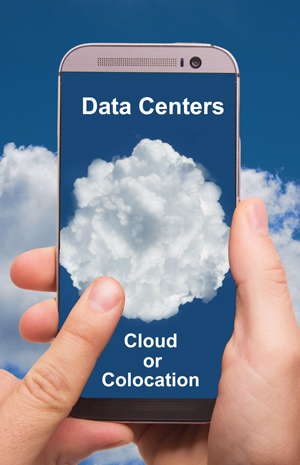
Choose your data center services, cloud or coloWhat is a Data Center?
A data center is where you find data, right? That’s correct. But it’s also where you find the computing, storage, networking and facilities to store and make use of that data. If all you have and use is a single computer, the data center is right inside. But, if you need to support a website, sell online, interconnect multiple computers or process files too big for a single machine, you’ll be using a data center. Even that single computer might want online backup.

Types of Company Data Centers
Data centers come in various sizes, depending on your needs. The simplest is an in-house data center, once called the server closet. It may be as simple as a single rack with a few servers, network disk storage, backup power supply and ventilation or cooling. Security is a lock on the door.

Larger companies create whole rooms or special buildings dedicated to their computing resources. These are enterprise data centers. They are under the control of a single company and dedicated to its needs. Often this facility will be in the same building or on the same campus as other company buildings. However, it may make sense to locate the enterprise data center a distance away for protection from disasters such as fires, floods and earthquakes.

When you get this much equipment, you’ll likely need larger scale HVAC environmental control, fire suppression, security monitoring, and building maintenance. Now the question is whether to provide all this yourself or outsource it. A managed data center is an enterprise data center that is run by a third party. This operator may own the facility and provide the staff. They may also handle IT tasks such as software updates and server maintenance.

Moving Out to a Colo Data Center
A colo or colocation data center is a multi-tenant version of the single company enterprise data center. The colo operator provides the facility, security, environmental control, backup batteries and generators, rack and cage space, and wiring. They also generally have multiple carriers with a presence in the building. You get easy access to massive amounts of bandwidth that might be harder to come by where you are located. That includes fiber, wavelength, and dark fiber services depending on your needs.

The advantage of colocation is that you are saving money vs running and/or owning the facility yourself. That’s the upside of sharing costs. It likely won’t affect a small to medium scale business because you’ll have your own racks and perhaps a cage to house them in for security. When you need to make updates, you just visit the facility.

Some colo companies offer extended services. They will maintain the servers, patch the software, add disks and so on using their in-house tech staff. They may also offer to lease you servers, disks, switches and the like so you don’t have to bear the capital expense. Pick and choose the level of support you want. That’s especially great for smaller companies that don’t have large tech staffs.

Cloud Data Centers
They say there is no cloud. It’s only somebody else’s server. That’s about right. The thing we call the cloud looks a lot like a colocation data center. The difference is that the cloud operator owns and runs everything. Resources are shared among tenants but not segregated like in a colo. Instead, most everything is virtualized. You don’t necessarily know what server is running your process or what disk your data is stored on. It’s likely that many companies are sharing all the facilities.

The cloud might offer even greater cost savings than colo. The massive facilities also have reserve capacity so that you can easily scale up or down as your needs change. It is possible to make this automatic or “elastic” so that you pay for what you use on a moment by moment basis.

This is what is known as the public cloud. There are also special versions of cloud data centers. A private cloud uses the same virtualization as the public cloud, but all resources are dedicated to one company. That can be located within your own facilities or in a third party location that might have many other private clouds physically separate in the same building. A hybrid cloud is a mixture of public and private clouds that share data and applications. You may want privacy for sensitive data but a public cloud for web traffic.

What type of data center is the best match for your business? Compare capabilities and costs for general hosting, managed, colocation and cloud data centers to see what works for you.


Click to check pricing and features or get support from an expert technology specialist.


Follow Telexplainer on Twitter


Friday, July 25, 2025

Bandwidth to Support Your Data Center

By: John Shepler

Data centers are hot these days. Oh, not just the temperature of the air exiting the servers. Data centers are hot business. As businesses are transformed digitally and AI is implemented to improve productivity, all eyes are on the data center and what it takes to gain the benefits of this technology.

Get data center connections at great prices.Not Yesterday’s Server Closet
You can see advances in data center technology as information tech has grown in importance. Once a company is big enough to have more than one PC, it needs networking to interconnect computers and shared resources such as storage, printers and servers. Hot and noisy racks of equipment are quickly moved out of the office and into their own room, which might be the size of a broom closet. Hence, the server closet.

Little rooms soon become big ones with lots of equipment, special floors and ceilings for wiring, uninterruptible power and heavy duty HVAC. This is the genesis of the data center. Today’s businesses are dependent more and more on information technology and require substantial data centers and staff to process and serve that data 24/7.

Some companies still choose to maintain their own data centers in-house or at remote facilities. Others outsource that function to colocation facilities or cloud service providers. Still others see the skyrocketing demand for data center services to support crypto and AI and look to get a piece of the action.

What Connections Do You Need?
Even if you keep everything in-house, you’ll need external connections. That’s at least broadband Internet and telephone connections. If you have other locations in the same area, you can’t go trenching your own cables. You’ll need carrier connections from point to point or connect everything via the Internet.

There are two flavors of Internet access. They are called dedicated and shared. Dedicated Internet Access or DIA offers the highest performance. Dedicated means that the connection is for your use only and no other company is on the same circuit… at least until you get to the core of the Internet. Since most of the congestion occurs in that first mile, DIA can avoid many slowdowns during peak usage times. Fiber optic DIA is available from 10 Mbps to 10 Gbps, with 100 Gbps available in some areas.

Shared Internet Access is what is available with Cable broadband and Fixed Wireless Access. Your cost is lower because you are not the only one using the line. How well this works depends on how sensitive you are to interruptions and how many high volume users are sharing the same link.

Your data center servers will also likely need Internet access. Most colocation and cloud facilities have multiple carriers serving their facilities. This give you the option to have redundant connections so that if one goes down, another service provider is unlikely to be out at the same time. You can set up an arrangement like this for your own in-house data center. Just be sure that the two or more Internet Service Providers are not sharing the same fiber or other facilities or you may lose all service with a single point failure.

You can also get dedicated Ethernet point to point fiber optic service between two or more of your own locations. This gives you high performance networking without the security issues and variable performance seen on the Internet.

Connecting to the Data Center
If you choose to place your equipment in a colocation facility or contract for cloud services, you’ll need a way to connect from your company building to the remote data center. Some companies choose to do this through the Internet, but you can get much higher performance and better security with a dedicated point to point line also called direct cloud access. This is a private fiber optic circuit that runs from your facilities to the cloud service provider no matter how far away. You’ll generally have lower latency and more consistent performance than connectivity via the Internet.

Do you need a high performance connection to a data center or cloud service or Internet service to the Internet? If so, get highly competitive prices and availability of connection services for your business locations now.

Click to check pricing and features or get support from a Telarus product specialist.


Follow Telexplainer on Twitter


Friday, June 21, 2024

AI Is Going to Eat Your Bandwidth

By: John Shepler

We may be nearing the end of the age of person to person communications, or at least human communication dominating the use of telecom resources. The decline began when computers started using our phone lines to exchange data. It’s only accelerated since nearly all computers are now connected to the Internet at broadband speeds. Even so, much of that computer activity is in the service of people accessing websites, messaging and sending email, posting on social media, watching videos, backing up their files and doing their jobs. Not for long. Pretty soon machines will cut us out of the loop and simply talk among themselves.

Beware the Internet of Things. Join the fun!The Rise of Artificial Intelligence
The scary thing about artificial intelligence, or AI, is how insidious it is. It’s actually been creeping in for decades, probably since the start of the computer age. There’s a lot of AI in search engines, although we may not think of it that way. Most software, in fact, has been adding analytical and decision making capability deep under the hood. You may not be specifically asked your preferences, but that doesn’t mean the program isn’t figuring things out or selecting what information to display and how.

More recently we’ve seen an explosion of “chat bots”, intelligent assistants such as Siri and Alexa, and some quirky writing and photo capabilities in ChatGPT. In fact, it’s the last one that has fueled an explosion of interest and investment in what is called Generative AI, the tech that “creates” all that new content at the push of a button.

NVIDIA can’t make big enough processors on a large enough scale to sate the demand. Data centers are expanding to host more and more servers and new centers are rapidly under construction. One big worry is where all the energy is going to come from to feed the exponentially demanding power-hungry AI processes. Some data centers are being built right next to power plants to grab and many megawatts as they can.

How Nuts is This Going to Get?
One might suspect that we’re in an AI mania combined with a speculative bubble in anticipation that artificial intelligence will render pitiful human capabilities and their jobs obsolete in the matter of a few years… or less. The computer age has certainly eliminated or greatly reduced some roles, like telephone operators and adding machine clerks (human computers), but added new ones as fast or faster. The new AI fever sees the elimination of writers, graphic artists, analysts, software coders, customer service representatives and even law clerks as imminent.

Not so fast. The chat bots I’ve dealt with are complete simpletons that can’t solve much of any real problem. The writing is tedious. The artwork is artificial at best, and inane at worst (how many extra fingers can you add to a person’s hand?). Self driving trucks? Look out when they come barreling around a curve during an ice storm.

I suspect the AI crazy has hyped up expectations far beyond what is really going to work anytime soon. However, that doesn’t mean there isn’t a real germ of innovation underway. One example is the “Internet of Things” that is being touted as the real driver of 5G wireless. Better, faster, cheaper and smaller electronics makes it possible to add both processing and communications to any device. That can be any tool, any monitor, any control system, and most products. It is only logical that these “things” will communicate with other “things”, including computer systems, without our constant knowledge or intervention. The more of these “robots” that are deployed, the more sophisticated the software needed to keep them employed efficiently.

What to Likely Expect
Yes, technology marches on in the name of progress. We’re not going back to living in mud huts or slaving in dingy factories, and the nature of what we do at work will continue to evolve. The increase in productivity should improve our standard of living if we’re smart about it as a society. At any rate, the demands on technical infrastructure are surely going to accelerate.

You can expect more devices on every network, talking faster and demanding faster results. The “cloud” may become an “overcast.” Both fiber optic and wireless bandwidth requirements will move up another order of magnitude or more. A 100 Mbps connection may have been plenty not long ago. Now we clamor for a Gigabit line, with 10 Gbps an emerging business standard. How long before 100 Gbps is routine and 1 Tbps starts looking like a requirement? Within the data center, this could be tomorrow. For access, maybe the day after tomorrow.

How about your business? Are new tools, processes and devices straining the capability of your data center or WAN network? We can help. Get pricing and support on bandwidth and hosting for your current and future needs right now, before those needs become a crisis.

Click to check pricing and features or get support from a Telarus product specialist.


Follow Telexplainer on Twitter


Note: This article was not generated by any AI. It was written by one human (myself) who only worries about the machines scraping the Internet and regurgitating copyrighted material far and wide without any thought of compensation to the author, a real and present danger.

Wednesday, February 21, 2024

Colocation Hosting Offers Lower Costs and More

By: John Shepler

Traditionally, having your own data center has been the way to go for medium and larger businesses. It may still be the best answer for your needs. However, there are advantages to moving at least some of your equipment and data to a colocation hosting facility. Let’s have a look at why this might be a great idea.

Colocation Hosting offers advantages for your business. Just What is Colocation?
Colocation sounds like it means having two or more operations in one location. That’s pretty much it. Colocation facilities were originally called carrier hotels. Multiple service providers would locate equipment in the same building run by one of the carriers or a third party who provided common services such as HVAC, AC power, backup generator power, and connectivity as needed. It was a way for carriers to easily exchange traffic on neutral turf and not have to each pay for their own building.

Nowadays colocation facilities or “colos” serve businesses as well as carriers. They are still a great way to connect to the Internet with as much bandwidth as you need at the best prices and connect to various carriers who also happen to be in the facility. Compare that with trying to get 10 Gbps or 100 Gbps out in the boonies.

In addition to bandwidth, colocation centers offer rack space, cabinets, cages and the power, cooling and connections to go with them. You generally bring your own servers and storage and take responsibility for maintaining your equipment. Many colos also now offer expanded tech services to monitor and service equipment 24/7 and may even lease you servers and other equipment you would normally buy.

Why Pay Someone Else to Host My Servers?
It may seem logical to keep everything under one roof, but that doesn’t necessarily give you everything you need. For one thing, you have no redundancy in the event of a disaster. A tornado, hurricane, earthquake or flood can wipe out your data center and you’ll be out of business for awhile. If you keep all your backups in the same data center, that could take a long while and very expensive to recreate all the data you need.

By having at least some of your servers and storage offsite, you gain the advantage of redundant facilities. It works even better if your sites are geographically dispersed.

As mentioned previously, you’ll likely find much better connectivity at better prices in a colocation center. Carriers go where many potential customers are clustered so that they can quickly and easily provide service. It’s just a cable run in the colo.

Are you able to provide tech service 24/7? Most colocation facilities have their own tech staffs available round the clock to handle their equipment and often provide a suite of services to their customers.

Think about the cost of expansion. If you are running out of space now, you have a make or buy decision to face. Making means building or leasing a larger facility to accommodate your growing needs, including more backup power, tech support, and security. Buying means avoiding the capital investment in facilities and leasing from a colo, likely at much lower cost that doing it all yourself.

Another area where colos shine is being physically close to your customers to reduce transmission latency. That’s more important if you have latency sensitive real-time applications and if you are selling your service nationwide or worldwide. Some of the larger colos have multiple sites so that you can disperse your equipment as needed.

Is your business growing and creating a need for additional data center capacity or would you simply prefer to lease rather than buy the IT facilities you need? If so, consider the advantages of colocation hosting and get competitive quotes now.

Click to check pricing and features or get support from a Telarus product specialist.


Follow Telexplainer on Twitter


Tuesday, February 21, 2023

Colocation Hosting vs Cloud Data Centers

By: John Shepler

You’ve run your own in-house data center for years, but business is growing and you’ve hit the limit on what your server room can support. Now you’ve got a choice to make. Lease new space for the additional servers, storage and other appliances you need or consider moving everything to the cloud. It’s a big decision and one that needs careful consideration before funds are committed.

Choose colocation instead of cloud hosting.Isn’t Everyone in the Cloud?
If you read the tech headlines and articles, it looks like everyone is clearing out the old server room and simply leasing cloud services. That does have a lot of attraction. With your data and applications deep within the cloud, you no longer have any capital investment, no power bills, no physical security worries, no HVAC worries, and perhaps less IT support staffing. If you need more bandwidth, server processing or storage, you simply ask the cloud to increase your allowance, perhaps even automaticlly.

Why Wouldn’t You Join the Stampede to the Cloud?
Perhaps you’re feeling a little uncomfortable. You’ve heard that joke: “There is no cloud. It’s just somebody else’s computer.” What it really amounts to is somebody else’s thousands of computers, all nicely divvied-up to share among thousands or millions of clients. The promise of the cloud is that it looks to you like you have your own computing resources all by themselves.

Does that sound exciting or does it give you a bit of a twinge? After all, you’re really happy with how responsive your IT staff is and the control you have over all the equipment and software. There are no other companies sharing your facilities. Security involves keeping bad actors out of the building and on the far side of the firewall. So, is your only choice to bite the bullet and lease a new building for expansion?

Consider the Colo Option
Perhaps a third option is best. Lease space in someone else’s specialized building but keep your computing resources to yourself. This is the idea behind Colo or colocation hosting. These facilities were once called carrier hotels when their tenants were primarily telecom carriers. Now colo is popular with businesses of all sizes.

A colocation facility provides the physical building with controlled access and security personnel. It is staffed 24/7, which may even be more than you are able to provide now. Massive redundant power lines feed the facility so there is never a question of having enough amps to power new equipment. Moreover, that power is backed up by emergency generators and often batteries to keep things running no matter what.

With all that power, you are also going to need to get rid of the heat generated by the electronics. That is handled by redundant HVAC equipment to provide cooling air to the servers and other equipment. Air filters keep the facility dust-free.

What about connectivity? That’s one reason why companies move out of their own facilities and to a colocation center. With so many clients wanting so much bandwidth, major carriers have a presence in the colo. Often you have multiple carriers to choose from and they each have multiple fiber links for dedicated access and Internet service. Not every business is served with high bandwidth fiber yet, but the colocation centers are. They’ll get you as many Gbps as you need along with IP addresses.

Moving to a Colo Facility
When you move to a colo, you lease racks with power and cooling plus connections for bandwidth. Want more security? You can have those racks installed within a locked cage that keeps everybody but your staff out. Your people can come and install their own equipment, do maintenance, and make upgrades as needed.

Many colo facilities also offer additional services if you want them. You can have the colo tech staff monitor, troubleshoot and repair your equipment. You can even lease servers and storage from the colo instead of buying them yourself.

Are you outgrowing your tech facilities but want to explore options other than simply relocating to a cloud? Consider colocation data center facilities as an option that gives you more control but saves money compared to leasing your own dedicated buildings.

Click to check pricing and features or get support from a Telarus product specialist.


Follow Telexplainer on Twitter


Tuesday, July 10, 2012

Virtual Computing, Storage and Security for Latin America

Infrastructure as a Service (IaaS) and managed hosting have experienced rapid adoption by enterprise users in North America and Europe. Level 3 Communications is now offering a new set of data center services to enterprises in Latin America.

cloud computing and high performance conections for Latin America...The countries of Latin America span North America (Mexico), Central America, the Caribbean and the continent of South America. This is an area of over 8 million square miles and 14% of the land surface of the globe that’s home to a population of almost 600 million. It’s also a region where major economic sectors include, banking, agriculture, manufacturing, commodities and tourism.

Level 3 Communications has a major commitment in Latin America, with operations in Argentina, Brazil, Chile, Columbia, Ecuador, Panama, Peru, Mexico, Venezuela, the United States (Florida) and the Caribbean region. They already have 15 world-class data centers located in the main business centers of Latin America. The connectivity is in place to support communications in-country, between countries and to the rest of the global community. Options include SDH Private Line, Wavelengths and Ethernet Wavelengths, Ethernet Transport, IP VPN, high speed Internet Protocol and more.

What’s exciting now is the opportunity for virtualized services in the cloud to replace local data center operations. Cloud computing, storage and security have the advantages of being quickly scaled, and paid for as an operating rather than capital expense.

Level 3 Dynamic Enterprise Computing offers virtual computing, storage and security elements with dynamic pricing based on resource consumption. Resource availability is assured, but not limited. You can rapidly scale, or burst, to cover unforeseen business activities. All the while, you are paying for what you actually use, rather than having to provision resources that may sit idle just to ensure that you have enough online to keep up with demand peaks.

Level 3 is a major force in cloud computing with the advantage of also being a major worldwide telecom carrier. You have a choice of public, private or hybrid cloud arrangements. You also have the connectivity you need. You can connect to the public cloud through Level 3’s core Internet backbone. For a private cloud, Level 3 offers MPLS, private line and wavelength connections.

One thing you might want to consider is converging your network to support both voice and data. This has the advantage of eliminating the redundant telephone network, but the options it opens up go far beyond simple wiring. Once you’ve substituted IP phones for the analog desk sets you have now, your voice communications will all take place over your local network and the WAN connections you have in place with branch offices and other remote business locations. This lets you bypass the telephone industry toll charges for interoffice calls.

The biggest change of all comes when you abandon the large and expensive in-house PBX telephone system in favor of a hosted PBX solution in the cloud. It works like a virtual server, only for voice communications. The service provider takes care of trunk lines to the public telephone system. All other calls stay on-net. You also have the option of integrating your smartphones and other mobile devices into a unified communications system. You’ll have the same services available in the field as you do in the office.

Do you do business in Latin America, North America or elsewhere in the world and need the high performance connectivity and data center services that help make an enterprise successful? If so, have a look at the suites of cloud computing and networking services available from Level 3 Communications and other top rate service providers.

Click to check pricing and features or get support from a Telarus product specialist.


Note: Map of Latin America image courtesy of Wikimedia Commons.


Follow Telexplainer on Twitter

Monday, August 08, 2011

Cloud Based Services With Free Trial Offers

Many businesses are looking to the clouds as an opportunity to save capital investment and ongoing operating and maintenance costs. This is a hot field, with vendors scrambling to get in and establish themselves in the space. But how do you know what services are right for your needs?

Before you buy, take a free trial offer...It’s especially important for small businesses with limited resources to be sure they are getting the most for their IT and telephone dollars. One way to be sure is to try before you buy. With that in mind, we’ve complied a selection of cloud based services that offer a free trial period before you make a commitment.

Atlantic.Net offers a free trial of cloud hosting as an alternative to virtual private servers. Their platform is designed to let you build, test and deploy Windows or Linux servers in the cloud in a matter of seconds. You can run whatever software you need and pay by the hour for only the resources that you use. Atlantic.Net is committed to 100% uptime on their SAS 70 certified hosting solution.

BrowserMob offers a free trial of website load testing in the cloud. It’s important to know what your ecommerce or other web properties can handle before you miss an important sales opportunity because your site crashed from too much traffic. Run concurrent tests with real browsers, not simply HTTP requests. This service scales up to 5,000 concurrent browsers and 500,000 users with over 6,000 Mbps maximum data throughput to to handle the largest sites. Responsive expert testing advice helps you get results quickly.

Do spend a lot of time and money sending documents out for signature? RightSignature offers a 5 document free trial of their cloud-based document signature service. Rather than faxing or overnight mailing paper documents and waiting for them to be signed and returned, signers go online and create legally valid electronic signatures. You simply create your documents using standard office tools and then upload them to RightSignature. Then send out an email message with a link to your online document. The system creates a document signature certificate with signer information, audit long and unique ID number. Archiving is online, too, so you never have to hunt for a document again.

The rest of your paper documents also belong in the cloud. Shoeboxed offers a free trial of their document scanning and storage service in the cloud. This is perfect for anyone in business who deals with expense report receipts, business cards and other day to day documents that pile up on the desk. You can scan and file it yourself or Shoeboxed will do it for a very reasonable price. You just drop your papers in a secure mailer and soon they’ll show up on a secure online database. More than mere scanning, the actual information on the page is loaded into the database where you can export it to Excel, Salesforce, Outlook or other program of your choice.

Customer service is important for any company. Assistly offer a free trial of their customer service cloud solution. You get a month to see if it isn’t far better than your current methods of finding and responding to customer queries. This system includes social networks like Facebook and Twitter, as well as traditional email and toll free number contacts. As an integrated solution, everything you need is right there at the operator’s station in one easy to use tool.

Other services, from online meetings to toll free telephone, also offer free trial periods. Watch for free trial opportunities any time you shop online for business services. These are a great way to become confident that you are getting the right service at the right price.


Follow Telexplainer on Twitter

Friday, June 10, 2011

How to Get a Web Presence For Your Business

Are you new in business or wanting to bring your established bricks and mortar business online? Start researching all the options and your head can begin to swim. Is this more trouble than it’s worth?

Oh, not at all. People who have built their online presence will tell you it has been well worth it. Why not make the process much easier and enjoyable with some experienced support? I’d suggest just sitting back and taking a minute to watch this amusing introductory video from Network Solutions...


Well, what do you think? Does it make more sense now? Your task can be made much easier if you get started with a company like Network Solutions that provides one stop shopping for all the elements you need to launch your online presence. You can order your domain name, web hosting package and marketing services on the same site.

In fact, to make it easy for the legion of new businesses that want to go online every year, Network Solutions even has special getting started features integrated into their website to lead you successfully through the process.

Network Solutions has been around for the last 30 years and is highly respected by Internet veterans. Since moving beyond domain name registration, the company has grown to offer a comprehensive set of resources that include domain names of all types, web hosting packages for sites you create yourself or for your WordPress Blog, and easy to build template based websites. They look professional and don’t require buying any software. Just use the online Website Builder Tool.

Ready for something more advanced? Network Solutions offers e-commerce packages with designs that are compatible with Dreamweaver, FrontPage and Photoshop software. The price depends on how many products you want to place in your store, from a maximum of 25 right on up to 100,000. Is that a bit intimidating? No problem. Network Solutions offers complete design services where they’ll build a store to your specifications.

If viewing this video and considering the possibilities has you salivating for your own online presence, perhaps with e-commerce options, check out the latest deals from Network Solutions Take advantage while this special is available.


Follow Telexplainer on Twitter

Thursday, May 26, 2011

The Rush To Cloud Service Data Centers

There’s a major migration afoot. It’s a move, almost a stampede, from in-house server rooms to public data centers worldwide. Let’s take a look at what this trend is all about and where it may be leading.

The move is on to data centers offering colocation and cloud services. Click for pricing and availability.The original reason for companies to consider data center colocation was cost savings. The tradeoff is fairly simple. Instead of your organization building and operating its own data center, you ship your servers, switches, routers and network appliances off to a colo facility. That facility offers cost savings through economy of scale. Instead of each business having to come up with environmentally controlled real estate, fire suppression, backup generator power and high bandwidth connectivity, the larger colocation company provides these facilities for hundreds or thousands of customers.

A colo or “carrier hotel”, as they were originally called when the main customers were competitive local exchange carriers, can provide the 24/7 technical staffing that you may not be able to afford. They’ve expanded their suite of services to rent not just rack and cage space, but servers themselves. You no longer have to buy and ship your own equipment. You can rent what you need and have it all set up for you. Even ongoing maintenance can be outsourced to the colo so that your only responsible for the applications you are running.

There is a blending of missions between colocation data centers and hosting companies. The colocation centers have become hosts with the addition of dedicated servers and even virtual servers.

The latest trend in IT is cloud computing and this is where colocation data centers are headed. One good example is PAETEC, a competitive telecom carrier with a national service footprint. PAETEC is known for it’s voice and data services that include T1 lines, DS3, SIP trunking, MPLS networks, OCx fiber optic bandwidth, and Ethernet over copper and fiber connections. Now PAETEC is on a major building spree to nearly triple its 7 data centers spread across the country.

What’s prompting this expansion? It’s all about the cloud. Corporate America has discovered cloud services as a way to control costs, increase flexibility and avoid sometimes unavailable capital investments in infrastructure. The idea of the cloud is very much like the concept of the colocation center with some capability expansions. Infrastructure as a Service (IaaS) allows you to rent all the servers and their related facilities that you need. The difference is that the architecture of the cloud is about making it easy to add and subtract resources rapidly. You can do that when servers are virtual and there are massive amounts of networked disk storage to draw from.

PAETEC is offering cloud-based products in their data centers that include dedicated servers, virtual servers, managed storage on demand and more. Hosted Exchange gives companies a Microsoft Exchange E-Mail server with PAETEC technicians and engineers available for support.

Is it time for your company to consider a move to the cloud or relocation to a colocation center to reduce costs and gain access to more resources as needed? If so, get pricing and availability of Cloud and Colocation Data Center Services near your location.

Click to check pricing and features or get support from a Telarus product specialist.


Note: Photo of clouds and building courtesy of Wikimedia Commons.


Follow Telexplainer on Twitter