Showing posts with label hybrid cloud. Show all posts

Friday, April 10, 2026

Data Center Opportunities For Your Business

By: John Shepler

Data centers are certainly in the news these days. Most of it focused on the near-viral expansion of AI hyperscale facilities that are overwhelming local power and water utilities, resulting in a contentious standoff between concerned citizens and massive tech innovators. But that’s just a small part of the data center industry. Your business is unlikely to go hyperscale, but you can still benefit from data center services. In fact, it’s likely you need them.
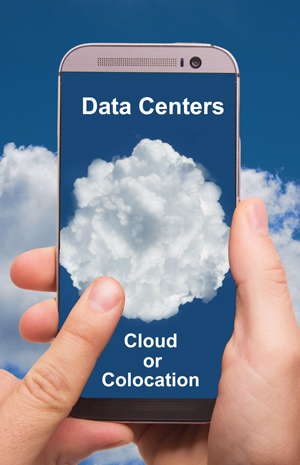
Choose your data center services, cloud or coloWhat is a Data Center?
A data center is where you find data, right? That’s correct. But it’s also where you find the computing, storage, networking and facilities to store and make use of that data. If all you have and use is a single computer, the data center is right inside. But, if you need to support a website, sell online, interconnect multiple computers or process files too big for a single machine, you’ll be using a data center. Even that single computer might want online backup.

Types of Company Data Centers
Data centers come in various sizes, depending on your needs. The simplest is an in-house data center, once called the server closet. It may be as simple as a single rack with a few servers, network disk storage, backup power supply and ventilation or cooling. Security is a lock on the door.

Larger companies create whole rooms or special buildings dedicated to their computing resources. These are enterprise data centers. They are under the control of a single company and dedicated to its needs. Often this facility will be in the same building or on the same campus as other company buildings. However, it may make sense to locate the enterprise data center a distance away for protection from disasters such as fires, floods and earthquakes.

When you get this much equipment, you’ll likely need larger scale HVAC environmental control, fire suppression, security monitoring, and building maintenance. Now the question is whether to provide all this yourself or outsource it. A managed data center is an enterprise data center that is run by a third party. This operator may own the facility and provide the staff. They may also handle IT tasks such as software updates and server maintenance.

Moving Out to a Colo Data Center
A colo or colocation data center is a multi-tenant version of the single company enterprise data center. The colo operator provides the facility, security, environmental control, backup batteries and generators, rack and cage space, and wiring. They also generally have multiple carriers with a presence in the building. You get easy access to massive amounts of bandwidth that might be harder to come by where you are located. That includes fiber, wavelength, and dark fiber services depending on your needs.

The advantage of colocation is that you are saving money vs running and/or owning the facility yourself. That’s the upside of sharing costs. It likely won’t affect a small to medium scale business because you’ll have your own racks and perhaps a cage to house them in for security. When you need to make updates, you just visit the facility.

Some colo companies offer extended services. They will maintain the servers, patch the software, add disks and so on using their in-house tech staff. They may also offer to lease you servers, disks, switches and the like so you don’t have to bear the capital expense. Pick and choose the level of support you want. That’s especially great for smaller companies that don’t have large tech staffs.

Cloud Data Centers
They say there is no cloud. It’s only somebody else’s server. That’s about right. The thing we call the cloud looks a lot like a colocation data center. The difference is that the cloud operator owns and runs everything. Resources are shared among tenants but not segregated like in a colo. Instead, most everything is virtualized. You don’t necessarily know what server is running your process or what disk your data is stored on. It’s likely that many companies are sharing all the facilities.

The cloud might offer even greater cost savings than colo. The massive facilities also have reserve capacity so that you can easily scale up or down as your needs change. It is possible to make this automatic or “elastic” so that you pay for what you use on a moment by moment basis.

This is what is known as the public cloud. There are also special versions of cloud data centers. A private cloud uses the same virtualization as the public cloud, but all resources are dedicated to one company. That can be located within your own facilities or in a third party location that might have many other private clouds physically separate in the same building. A hybrid cloud is a mixture of public and private clouds that share data and applications. You may want privacy for sensitive data but a public cloud for web traffic.

What type of data center is the best match for your business? Compare capabilities and costs for general hosting, managed, colocation and cloud data centers to see what works for you.


Click to check pricing and features or get support from an expert technology specialist.


Follow Telexplainer on Twitter


Thursday, March 16, 2023

On Ramps That Improve Cloud Performance

By: John Shepler

IT infrastructure is now key to your business. It’s a lot more than a few servers in a closet down the hall these days. Chances are that you are using Software as a Service (SaaS) running on popular public clouds like Amazon Web Services (AWS) or Microsoft Azure plus your own private data center. What once was an easy interconnect to everything on a company LAN is now a worrying mix of local and remote connections. Are you stuck with performance that varies constantly and nightmares of security breaches, or is there a much better solution?

Cloud On-Ramps boost performanceWeak Links In The Chain
When equipment or services are remotely located, the first thing everybody thinks of is connecting through the Internet. Broadband is readily available nearly everywhere and very reasonably priced. This is especially true if you just connect through a Cable broadband service. Reliability of HFC (Hybrid Fiber Cable) networks has gotten very good and prices are as low as you’ll find.

The massive adoption of consumer broadband is what has kept prices low even for business broadband. The tradeoff is that you are sharing that connection with dozens or even hundreds of other users. You can’t see them, but you can feel the effect as the Internet speeds up and slows down.

Dedicated Access Improves Performance
The Internet is an amazing data superhighway, but the on and off ramps are where a lot of the congestion is. A good solution is get a private ramp, called Dedicated Internet Access or DIA, between you and your Internet service provider. This is most likely a fiber Ethernet connection but could be Fixed Wireless as long as the path you are using is dedicated for your use only.

Why Not All Private Access?
The next step up is a completely private line from your local network to your cloud service provider. Once again, this would be a fiber optic Ethernet running 100 Mbps to 100 Gbps with guaranteed performance. This is like having your own highway with no traffic other than your company data. It’s the closest thing to a LAN that stretches across the country to include your cloud services.

The drawback to dedicated private lines is the cost, as you might suspect. There is no one else sharing the pipe, so there is no one else helping to pay for it. You have all the bandwidth and the security of a walled-off connection, but you have all the costs too.

An intermediate solution that maintains connection performance and offers high security over long distances is the MPLS network with dedicated access lines. The MPLS or Multi-Protocol Label Switching network is a private Wide Area Network with costs that are shared among many subscribers, but with performance guarantees instead of the “best effort” you get on the Internet. Security is better than the Internet because the network uses a proprietary label switching protocol and not the easier to hack TCP/IP.

Move Next Door To Really Improve Performance
Remember how easily it was to get all the network performance you needed when everything was in the same building and all you needed was runs of Ethernet cabling? You can replicate that by choosing to move your equipment to a colocation center that also houses your software service providers or has dedicated cloud on-ramps.

This is an example of a hybrid cloud. Your servers and storage are in racks in the colo building that supplies power and cooling. It also has direct cable or fiber connections to service providers housed in the same building. Other direct connections go to points of presence for large public cloud services that are located in multiple data centers around the world. By accessing one of these cloud on-ramps you avoid the vagaries of the Internet and connect your private cloud to their public cloud to create the hybrid cloud arrangement.

Of course, this can be expanded to include multiple services providers as long as they have a physical presence or on-ramps available in the data center. Connect to as many as make sense to create a multi-cloud that give you all the services you need. The connection to your business is then through a dedicated private line or Dedicated Internet Access from your colocated equipment back to your offices. This is considerably more cost effective than having many dedicated private lines to widely scattered service providers.

Do you need higher performance than your current connections can provide or have a requirement to interconnect multiple service providers? If so, find out what mix of dedicated, dedicated access and cloud on-ramps would work best for your company.

Click to check pricing and features or get support from a Telarus product specialist.


Follow Telexplainer on Twitter


Monday, March 24, 2014

What’s to Become of Data Centers?

Both large scale colocation centers and traditional in-house company data centers are being challenged by cost and technology. Here’s a quick graphical look at what’s going on right now in this infographic courtesy of David Vellante on Wikibon:

The Future of the Data Center

Your Data Center Options
Are you thinking that it may not make sense to invest in a new data center or continue running the one you have now? There are a wide range of options available from colocation at a major commercial data center to cloud hosted services to choose from. Call now toll free at (888) 848-8749 to speak with a product specialist who can recommend everything from WAN connectivity up to complete IT outsourcing or describe your data center needs for quick quotes on appropriate services.

Click to check pricing and features or get support from a Telarus product specialist.


Follow Telexplainer on Twitter