Showing posts with label colocation. Show all posts

Friday, April 10, 2026

Data Center Opportunities For Your Business

By: John Shepler

Data centers are certainly in the news these days. Most of it focused on the near-viral expansion of AI hyperscale facilities that are overwhelming local power and water utilities, resulting in a contentious standoff between concerned citizens and massive tech innovators. But that’s just a small part of the data center industry. Your business is unlikely to go hyperscale, but you can still benefit from data center services. In fact, it’s likely you need them.
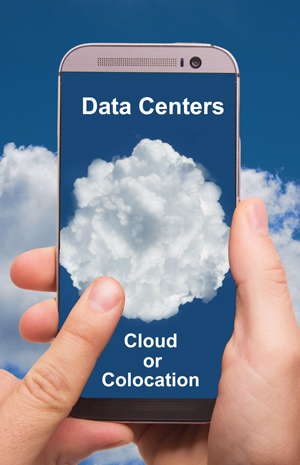
Choose your data center services, cloud or coloWhat is a Data Center?
A data center is where you find data, right? That’s correct. But it’s also where you find the computing, storage, networking and facilities to store and make use of that data. If all you have and use is a single computer, the data center is right inside. But, if you need to support a website, sell online, interconnect multiple computers or process files too big for a single machine, you’ll be using a data center. Even that single computer might want online backup.

Types of Company Data Centers
Data centers come in various sizes, depending on your needs. The simplest is an in-house data center, once called the server closet. It may be as simple as a single rack with a few servers, network disk storage, backup power supply and ventilation or cooling. Security is a lock on the door.

Larger companies create whole rooms or special buildings dedicated to their computing resources. These are enterprise data centers. They are under the control of a single company and dedicated to its needs. Often this facility will be in the same building or on the same campus as other company buildings. However, it may make sense to locate the enterprise data center a distance away for protection from disasters such as fires, floods and earthquakes.

When you get this much equipment, you’ll likely need larger scale HVAC environmental control, fire suppression, security monitoring, and building maintenance. Now the question is whether to provide all this yourself or outsource it. A managed data center is an enterprise data center that is run by a third party. This operator may own the facility and provide the staff. They may also handle IT tasks such as software updates and server maintenance.

Moving Out to a Colo Data Center
A colo or colocation data center is a multi-tenant version of the single company enterprise data center. The colo operator provides the facility, security, environmental control, backup batteries and generators, rack and cage space, and wiring. They also generally have multiple carriers with a presence in the building. You get easy access to massive amounts of bandwidth that might be harder to come by where you are located. That includes fiber, wavelength, and dark fiber services depending on your needs.

The advantage of colocation is that you are saving money vs running and/or owning the facility yourself. That’s the upside of sharing costs. It likely won’t affect a small to medium scale business because you’ll have your own racks and perhaps a cage to house them in for security. When you need to make updates, you just visit the facility.

Some colo companies offer extended services. They will maintain the servers, patch the software, add disks and so on using their in-house tech staff. They may also offer to lease you servers, disks, switches and the like so you don’t have to bear the capital expense. Pick and choose the level of support you want. That’s especially great for smaller companies that don’t have large tech staffs.

Cloud Data Centers
They say there is no cloud. It’s only somebody else’s server. That’s about right. The thing we call the cloud looks a lot like a colocation data center. The difference is that the cloud operator owns and runs everything. Resources are shared among tenants but not segregated like in a colo. Instead, most everything is virtualized. You don’t necessarily know what server is running your process or what disk your data is stored on. It’s likely that many companies are sharing all the facilities.

The cloud might offer even greater cost savings than colo. The massive facilities also have reserve capacity so that you can easily scale up or down as your needs change. It is possible to make this automatic or “elastic” so that you pay for what you use on a moment by moment basis.

This is what is known as the public cloud. There are also special versions of cloud data centers. A private cloud uses the same virtualization as the public cloud, but all resources are dedicated to one company. That can be located within your own facilities or in a third party location that might have many other private clouds physically separate in the same building. A hybrid cloud is a mixture of public and private clouds that share data and applications. You may want privacy for sensitive data but a public cloud for web traffic.

What type of data center is the best match for your business? Compare capabilities and costs for general hosting, managed, colocation and cloud data centers to see what works for you.


Click to check pricing and features or get support from an expert technology specialist.


Follow Telexplainer on Twitter


Friday, July 25, 2025

Bandwidth to Support Your Data Center

By: John Shepler

Data centers are hot these days. Oh, not just the temperature of the air exiting the servers. Data centers are hot business. As businesses are transformed digitally and AI is implemented to improve productivity, all eyes are on the data center and what it takes to gain the benefits of this technology.

Get data center connections at great prices.Not Yesterday’s Server Closet
You can see advances in data center technology as information tech has grown in importance. Once a company is big enough to have more than one PC, it needs networking to interconnect computers and shared resources such as storage, printers and servers. Hot and noisy racks of equipment are quickly moved out of the office and into their own room, which might be the size of a broom closet. Hence, the server closet.

Little rooms soon become big ones with lots of equipment, special floors and ceilings for wiring, uninterruptible power and heavy duty HVAC. This is the genesis of the data center. Today’s businesses are dependent more and more on information technology and require substantial data centers and staff to process and serve that data 24/7.

Some companies still choose to maintain their own data centers in-house or at remote facilities. Others outsource that function to colocation facilities or cloud service providers. Still others see the skyrocketing demand for data center services to support crypto and AI and look to get a piece of the action.

What Connections Do You Need?
Even if you keep everything in-house, you’ll need external connections. That’s at least broadband Internet and telephone connections. If you have other locations in the same area, you can’t go trenching your own cables. You’ll need carrier connections from point to point or connect everything via the Internet.

There are two flavors of Internet access. They are called dedicated and shared. Dedicated Internet Access or DIA offers the highest performance. Dedicated means that the connection is for your use only and no other company is on the same circuit… at least until you get to the core of the Internet. Since most of the congestion occurs in that first mile, DIA can avoid many slowdowns during peak usage times. Fiber optic DIA is available from 10 Mbps to 10 Gbps, with 100 Gbps available in some areas.

Shared Internet Access is what is available with Cable broadband and Fixed Wireless Access. Your cost is lower because you are not the only one using the line. How well this works depends on how sensitive you are to interruptions and how many high volume users are sharing the same link.

Your data center servers will also likely need Internet access. Most colocation and cloud facilities have multiple carriers serving their facilities. This give you the option to have redundant connections so that if one goes down, another service provider is unlikely to be out at the same time. You can set up an arrangement like this for your own in-house data center. Just be sure that the two or more Internet Service Providers are not sharing the same fiber or other facilities or you may lose all service with a single point failure.

You can also get dedicated Ethernet point to point fiber optic service between two or more of your own locations. This gives you high performance networking without the security issues and variable performance seen on the Internet.

Connecting to the Data Center
If you choose to place your equipment in a colocation facility or contract for cloud services, you’ll need a way to connect from your company building to the remote data center. Some companies choose to do this through the Internet, but you can get much higher performance and better security with a dedicated point to point line also called direct cloud access. This is a private fiber optic circuit that runs from your facilities to the cloud service provider no matter how far away. You’ll generally have lower latency and more consistent performance than connectivity via the Internet.

Do you need a high performance connection to a data center or cloud service or Internet service to the Internet? If so, get highly competitive prices and availability of connection services for your business locations now.

Click to check pricing and features or get support from a Telarus product specialist.


Follow Telexplainer on Twitter


Wednesday, February 21, 2024

Colocation Hosting Offers Lower Costs and More

By: John Shepler

Traditionally, having your own data center has been the way to go for medium and larger businesses. It may still be the best answer for your needs. However, there are advantages to moving at least some of your equipment and data to a colocation hosting facility. Let’s have a look at why this might be a great idea.

Colocation Hosting offers advantages for your business. Just What is Colocation?
Colocation sounds like it means having two or more operations in one location. That’s pretty much it. Colocation facilities were originally called carrier hotels. Multiple service providers would locate equipment in the same building run by one of the carriers or a third party who provided common services such as HVAC, AC power, backup generator power, and connectivity as needed. It was a way for carriers to easily exchange traffic on neutral turf and not have to each pay for their own building.

Nowadays colocation facilities or “colos” serve businesses as well as carriers. They are still a great way to connect to the Internet with as much bandwidth as you need at the best prices and connect to various carriers who also happen to be in the facility. Compare that with trying to get 10 Gbps or 100 Gbps out in the boonies.

In addition to bandwidth, colocation centers offer rack space, cabinets, cages and the power, cooling and connections to go with them. You generally bring your own servers and storage and take responsibility for maintaining your equipment. Many colos also now offer expanded tech services to monitor and service equipment 24/7 and may even lease you servers and other equipment you would normally buy.

Why Pay Someone Else to Host My Servers?
It may seem logical to keep everything under one roof, but that doesn’t necessarily give you everything you need. For one thing, you have no redundancy in the event of a disaster. A tornado, hurricane, earthquake or flood can wipe out your data center and you’ll be out of business for awhile. If you keep all your backups in the same data center, that could take a long while and very expensive to recreate all the data you need.

By having at least some of your servers and storage offsite, you gain the advantage of redundant facilities. It works even better if your sites are geographically dispersed.

As mentioned previously, you’ll likely find much better connectivity at better prices in a colocation center. Carriers go where many potential customers are clustered so that they can quickly and easily provide service. It’s just a cable run in the colo.

Are you able to provide tech service 24/7? Most colocation facilities have their own tech staffs available round the clock to handle their equipment and often provide a suite of services to their customers.

Think about the cost of expansion. If you are running out of space now, you have a make or buy decision to face. Making means building or leasing a larger facility to accommodate your growing needs, including more backup power, tech support, and security. Buying means avoiding the capital investment in facilities and leasing from a colo, likely at much lower cost that doing it all yourself.

Another area where colos shine is being physically close to your customers to reduce transmission latency. That’s more important if you have latency sensitive real-time applications and if you are selling your service nationwide or worldwide. Some of the larger colos have multiple sites so that you can disperse your equipment as needed.

Is your business growing and creating a need for additional data center capacity or would you simply prefer to lease rather than buy the IT facilities you need? If so, consider the advantages of colocation hosting and get competitive quotes now.

Click to check pricing and features or get support from a Telarus product specialist.


Follow Telexplainer on Twitter


Tuesday, February 21, 2023

Colocation Hosting vs Cloud Data Centers

By: John Shepler

You’ve run your own in-house data center for years, but business is growing and you’ve hit the limit on what your server room can support. Now you’ve got a choice to make. Lease new space for the additional servers, storage and other appliances you need or consider moving everything to the cloud. It’s a big decision and one that needs careful consideration before funds are committed.

Choose colocation instead of cloud hosting.Isn’t Everyone in the Cloud?
If you read the tech headlines and articles, it looks like everyone is clearing out the old server room and simply leasing cloud services. That does have a lot of attraction. With your data and applications deep within the cloud, you no longer have any capital investment, no power bills, no physical security worries, no HVAC worries, and perhaps less IT support staffing. If you need more bandwidth, server processing or storage, you simply ask the cloud to increase your allowance, perhaps even automaticlly.

Why Wouldn’t You Join the Stampede to the Cloud?
Perhaps you’re feeling a little uncomfortable. You’ve heard that joke: “There is no cloud. It’s just somebody else’s computer.” What it really amounts to is somebody else’s thousands of computers, all nicely divvied-up to share among thousands or millions of clients. The promise of the cloud is that it looks to you like you have your own computing resources all by themselves.

Does that sound exciting or does it give you a bit of a twinge? After all, you’re really happy with how responsive your IT staff is and the control you have over all the equipment and software. There are no other companies sharing your facilities. Security involves keeping bad actors out of the building and on the far side of the firewall. So, is your only choice to bite the bullet and lease a new building for expansion?

Consider the Colo Option
Perhaps a third option is best. Lease space in someone else’s specialized building but keep your computing resources to yourself. This is the idea behind Colo or colocation hosting. These facilities were once called carrier hotels when their tenants were primarily telecom carriers. Now colo is popular with businesses of all sizes.

A colocation facility provides the physical building with controlled access and security personnel. It is staffed 24/7, which may even be more than you are able to provide now. Massive redundant power lines feed the facility so there is never a question of having enough amps to power new equipment. Moreover, that power is backed up by emergency generators and often batteries to keep things running no matter what.

With all that power, you are also going to need to get rid of the heat generated by the electronics. That is handled by redundant HVAC equipment to provide cooling air to the servers and other equipment. Air filters keep the facility dust-free.

What about connectivity? That’s one reason why companies move out of their own facilities and to a colocation center. With so many clients wanting so much bandwidth, major carriers have a presence in the colo. Often you have multiple carriers to choose from and they each have multiple fiber links for dedicated access and Internet service. Not every business is served with high bandwidth fiber yet, but the colocation centers are. They’ll get you as many Gbps as you need along with IP addresses.

Moving to a Colo Facility
When you move to a colo, you lease racks with power and cooling plus connections for bandwidth. Want more security? You can have those racks installed within a locked cage that keeps everybody but your staff out. Your people can come and install their own equipment, do maintenance, and make upgrades as needed.

Many colo facilities also offer additional services if you want them. You can have the colo tech staff monitor, troubleshoot and repair your equipment. You can even lease servers and storage from the colo instead of buying them yourself.

Are you outgrowing your tech facilities but want to explore options other than simply relocating to a cloud? Consider colocation data center facilities as an option that gives you more control but saves money compared to leasing your own dedicated buildings.

Click to check pricing and features or get support from a Telarus product specialist.


Follow Telexplainer on Twitter


Tuesday, May 25, 2021

When You Need Massive Bandwidth

By: John Shepler

Most businesses do just fine with common bandwidth offerings from telco, cable and fiber service providers. Sometimes, though, your application just won’t squeeze through the pipe. You need more than typical WAN bandwidth. You need massive bandwidth.

Find massive bandwidth for your big data. How Massive Are We Talking?
Over the last few decades, mirroring the growth of the Internet, WAN bandwidth needs have multiplied from a paltry T1 level of 1.5 Mbps up to 10 or 20 Mbps for the smaller businesses, at least 100 Mbps for companies with many employees, to a now commonly expected Gigabit per second.

Those bandwidths levels are easily accommodated by most service providers. Copper twisted pair can bring in 20 Mbps or so. Cable broadband is good for at least 100 Mbps and pushing 1 Gbps in many areas. Fiber optic service easily delivers 1 or 2 Gbps and can readily scale to 10 Gbps. Where you might find yourself limited is in rural or underserved locations where your choice is still T1 lines, LTE or 5G wireless, or synchronous satellite broadband.

Massive bandwidth starts at 10 Gbps and goes up from there. Can you reasonably take advantage of 100 Gbps up and down? OK. How about 400 Gbps, 800 Gbps or even a full Terabit per second? Those are carrier level services, but not out of the realm of possibility for the most data or streaming intensive businesses.

Who On Earth Needs THAT Much Bandwidth?
What were absurd levels of bandwidth are now aspirational and may become common sooner than you think. One big driver is the move of everything digital to the cloud. When your data center was just down the hall, nobody worried about bandwidth. You can string as much fiber as you want above the ceiling tiles. Once you pay for installation, usage is pretty much free.

Not so much anymore. When the connection leaves your building you lose control. You’re not going to string any cable across town, much less across several states. For that you need to hand off your traffic to a carrier or service provider. This third party will then lease you the amount of bandwidth you need, or at least can afford, for a monthly fee. The carrier, not you, takes care of all maintenance and reliability between locations.

Some companies get a surprise when they realize that the 30 Mbps Internet connection that was more than adequate when the data center was on premises is now painfully slow when all the applications are in the cloud. One solution is to install a high speed direct line to the cloud service provider and keep the old Internet connection as-is. That solves the bandwidth problem and avoids business critical apps having to deal with the vagaries of Internet performance.

Another application that just won’t play on standard connectivity is content distribution. If you are sending massive amounts of content consistently, you may need to avoid the standard Internet and move over to a purpose built privately run network called a content delivery network. These are designed to handle continuously high levels of video or data without congestion.

Sometimes you only need massive data for a brief time. Say you have Terabytes of disk drives full to the brim and you want to send that to the cloud for safe keeping or to a customer who needs those design or simulation models on their system. Shoving it through a normal connection will take forever. Is there a better option?

Colocation and Cloud Data Centers
If there is one place that you’ll find massive bandwidth already installed and running, it is in cloud and colo centers. Both are massive facilities with nearly unlimited servers, disk drives and bandwidth connections from multiple carriers. The difference between cloud and colo is that cloud centers provide all of the equipment and service needed. A colo or colocation facility lets you bring in your own equipment and set up your own data center in their racks and cages. It’s like what you would have at home, but in a shared building with plenty of space, backup power, HVAC, security and even round the clock staffing.

Some colos will provide a direct fiber hookup between your company and any others located in the same facility. if you need to connect outside, you won’t have to worry about finding a service provider or paying hefty fees to bring in service from afar. They are already inside and serving other customers. You just get a hookup at whatever bandwidth you need.

More Exotic Massive Bandwidth Options
There really is no limit to how much bandwidth you can utilize these days, other than your budget. If you can afford it, consider these options:

Wavelength Services
Most fibers are now lit with DWDM or dense wavelength division multiplexing. That means multiple lasers feeding the same fiber, but on different frequencies or wavelengths. A wavelength can handle perhaps 10 Gbps and each fiber strand can handle perhaps 100 wavelengths. Combine them all and the total bandwidth is mind boggling.

Many carriers are now leasing entire wavelengths for your use. It’s like a fiber within a fiber. Some will combine multiple wavelengths to create 100 Gbps and higher bandwidths for you, or you can lease the wavelengths and multiplex them yourself.

Dark Fiber
The ultimate in bandwidth and control is had by leasing one or more dark fiber strands. Dark means that the fiber is in the cable but totally unused at present. You add the laser termination and multiplexing equipment at each end and “light” the fiber.

Dark fiber is as close to having your own in-house cabling as you can get outdoors. There is nobody else’s traffic to contend with. You decide how much capacity to press into service. Run out of bandwidth? Just upgrade your terminal equipment. Same fiber, more Gbps. You don’t have total control. The carrier still owns and maintains the fiber physical plant, including cabling and repeaters. The rest is up to you.

Are you feeling unduly restricted when it comes to bandwidth to efficiently run your business and take advantage of new opportunities? If so, look into higher bandwidth fiber optic services now. You may find them more affordable than you think.

Click to check pricing and features or get support from a Telarus product specialist.


Follow Telexplainer on Twitter


Monday, February 22, 2016

Managed Cloud Solutions Are Your Business Edge

By: John Shepler

Computing is a two-edged sword. One edge is the business purpose why you invested in technology in the first place. It may be the only way that a business such as yours can even exist. The other edge is what that technology does to hold you back. It sucks up massive amounts of capital and expenses. It requires special teams of experts to keep it going, especially if you require an uninterrupted online presence 24/7. Then, to add insult to injury, everything goes obsolete and needs to be replaced. Is there a way to gain the benefits of computing technology without the equal and opposite liabilities?

Managed Cloud Services are available to meet your specific business requirements. Find out more.Enter The Managed Cloud
Gone are the days when you had to do everything yourself. Companies that have evolved their computing resources over the decades became complacent with the incremental creep of adding more and more central resources to support an ever growing and more sophisticated suite of applications. You don’t have to have it all in-house any more. It’s a choice.

The alternative is the managed cloud. Think of your data center as being magically levitated and swept away to a distant location. You still have all the needed resources at your disposal. They are just located somewhere else.

Isn’t that a zero-sum game? It can be, but if you do it right, you gain something through expertise, efficiency and economy of scale.

Do You NEED Cloud?
Managed services run the gamut from simple dedicated servers collocated in a massive data center to public, private and hybrid cloud services. Cloud and colocation might sound the same, but colocation servers are a relative fixed structure that takes time to physically upscale and downscale. Cloud services are based around hypervisors, software that can quickly increase or decrease resources as needed.

If your needs are simple and relatively unvarying, a dedicated server might be all you need. You can rent space and install your own equipment, or rent what you need from the data center, along with the technical support to set everything up and perform maintenance and repair as needed.

Where the cloud shines is applications with requirements that vary wildly. For example, you may run an online store that has seasonal or infrequent peaks of activity that dwarf the usual traffic levels. If you depend on buying and setting up more hardware servers, the peak opportunity may have come and gone before you have the additional resources in place. Your site will stall or crash, frustrating customers who will take their business elsewhere.

Choose Your Cloud Carefully
Cloud services generally fall into one of three categories: private, public and hybrid. A private cloud is something like a private dedicated server or your in-house data center, except for the extra ability to scale up and down rapidly. Cloud systems are based on virtualization that takes a pool of hardware resources and allocates the elements efficiently, based on need.

Private means that even through you are contracting for services from a remote provider, the environment is single-tenant. You are using these particular resources and not sharing with anyone else. That’s peace of mind knowing that your network, compute and storage resources are dedicated to your applications only.

Public clouds are called multi-tenant. There is an enormous pool of hardware resources that are divided up among many simultaneous users. Public clouds are popular because they offer a nearly infinite pool of computing and storage resources for any one user. It’s a more efficient way to allocate resources and is reflected in a lower cost to each user.

Hybrid clouds are a combination of public and private clouds. You run your most sensitive applications on the private cloud and general applications, such as ecommerce, on the public cloud. By mixing and matching to the performance and security requirements of your applications, you get the best of both worlds, without having to pay up for resources you aren’t using.

It’s Time For Your Cloud
You’re aware of the industry buzz. Everyone company seems to be heading to the cloud, if they aren’t already there. It’s a major paradigm shift in how computers are used by business. You must be automated and connected to be competitive. But, you don’t have to be in the business of buying, running, maintaining and upgrading all of that equipment and software.

The efficiency of cloud solutions can’t be underestimated. By paying only for what you use at the moment, you get out of the business of having to anticipate your future needs and taking the calculated risk of buying too much too soon or losing business because you underestimated. The cloud will let you react to business surges, steady growth, or the unfortunate need for downsizing, should the market conditions dictate.

Time to upgrade, find a more cost effective solution or dip your toe in the world of cloud hosted services. Many solutions and expert consultation are available right now.

Click to check pricing and features or get support from a Telarus product specialist.


Follow Telexplainer on Twitter

Wednesday, April 30, 2014

Fiber Optic Connections from USA to Paris, France

By: John Shepler

For many companies, business is a global effort. Some simply import and export. Others have offices and factories worldwide. All need connectivity from their business locations in the United States to other locations thousands of miles away. More importantly, they need the right type of connectivity.

Find fiber optic connections to Paris, France and other locatons in Europe.Direct Internet Access (DIA) will get the job done for many smaller organizations that simply need email, file transfers and web access. More sophisticated operations want to link their local area networks in each location as if they were one giant LAN.

Others need low latency to support two-way video conferencing, VoIP telephony, financial trading, cloud access and other real-time delay sensitive applications.

Ethernet over Fiber and MPLS networks are the first choice of most companies with important electronic business processes in the US. But, what is possible if you need international access, such as to the European continent?

Zayo has been a leader in both domestic and international high performance bandwidth solutions. They operate an extensive fiber optic network nationwide. Many customers use the Zayo network to link their various operations from state to state. What you may not realize is that Zayo also connects transatlantically to an expanding fiber network that also covers Europe.

You can think of the Zayo long haul European fiber network as a loop that interconnects London, Amsterdam, Frankfurt and Paris. From there you can get to just about any location on the Continent via Zayo or other metro and WAN connections.

What’s new is a greatly expanded presence in Paris, France. Zayo is becoming a major network provider in the Paris metro area by acquisition of the French infrastructure company, Neo Telecoms.

What resources is Zayo adding to its international network assets? First, an already built-out fiber plant consisting of 350 metro route miles in Paris. That fiber connects more than 500 on-net buildings plus 9 colocation centers across France. Zayo will now have an additional 36,000 square feed of data center space serving France.

Neo Telecom created Paris’ first fiber optic MAN (Metropolitan Area Network) to support business in the city. Their services include dark fiber, IP, Ethernet, wavelength and colo. More than 600 enterprise customers and other carriers are already on the network. They are primarily involved in the financial, tech, media and telecom sectors.

Zayo itself operates 77,000 fiber route files in the US and Europe plus 27 carrier-neutral colocation facilities in the United States.

Does your company do business in both France and America? If so, you now have a single provider in Zayo who can meet your domestic and international network connectivity needs. You may be especially interested in Gigabit Ethernet and MPLS IP network services that can transparently link your LAN’s worldwide and to collocated data centers and cloud services.

Other services of interest include 25,000 miles worth of dark fiber, wavelengths with up to 100 Gbps bandwidth in metro and intercity links, traditional SONET fiber from DS3 to OC192 for point to point, hub/tail and dedicated rings, mobile infrastructure and Tier 1 IP network peering.

Now would be a good time to investigate the ever expanding domestic and international colocation and interconnection services available from Zayo and other high performance service providers. Call toll free (888)-848-8749, or submit an online inquiry anytime.

Click to check pricing and features or get support from a Telarus product specialist.

Note: Map of France courtesy of Wikimedia Commons.


Follow Telexplainer on Twitter

Monday, April 15, 2013

Gigabit Ethernet over Fiber to Your Door

Big data, cloud services, medical images, video production and other bandwidth intensive applications are stretching the capacity of many traditional WAN services to point of congestion. That’s were bad things happen to good data. Frustration, productivity loss, delays in file delivery and unworkable telephony and video conferencing rear their ugly heads when there just isn’t enough bandwidth to go around. Fortunately, solutions are easier to come by than ever before.

high bandwidth fiber optic services may be more available than you think...The answer to big bandwidth demands is big bandwidth services. T1 lines were left in the dust years ago. Many companies thought that moving up to DS3 bandwidth at 45 Mbps would keep them in good stead for the foreseeable future. That future came sooner than foreseen. While Ethernet over Copper and fixed wireless can give you 50 or 100 Mbps of reliable symmetrical bandwidth, they’re also being left in the dust. What remains? Fiber optic WAN services in both SONET and Ethernet flavors.

SONET is the grandaddy of fiber optic bandwidth. It’s a standard developed by the telephone companies for transmitting or “trunking” large bundles of telephone calls between switching centers and overseas. Options begin at OC-3 with 155 Mbps. If that’s not enough, then OC-12 at 622 Mbps is the next step up. OC-24 offers 1.2 Gbps, but isn’t so widely available. You may be required to take OC-48 at 2.4 Gbps. In some cases, you’ll be able to contract for OC-192 at 10 Gbps or even OC-768 for 40 Gbps. Those are usually reserved for network operators themselves, but are now becoming more available to businesses.

So that solves the bandwidth dilemma, right? It would except for budget constraints. OCx SONET services have traditionally been pretty pricey. Those costs have plunged in recent years due to increased competition, but the need for bandwidth is expanding faster than corporate budgets. Fortunately, there is another alternative. That’s Ethernet over Fiber.

EoF, as it’s called for short, has some real advantages over traditional SONET optical carrier services. First of all, it’s Ethernet. Yes, the same Ethernet that runs on your local network but extended so that it can reach across town or even around the world. That makes interfacing easy and efficient. There’s also the cost factor.

Ethernet over Fiber typically costs a fraction of what you pay per Mbps for equivalent SONET bandwidth. A lot of this has to do with competition that has come into the market after deregulation of the phone companies. With SONET, you almost always have the local phone company involved in running the last mile connection. Ethernet has been adopted by newer competitive carriers who operate their own fiber networks, including owning the fiber. They can run a drop from their closest point of presence (POP) to your building and give you just about any bandwidth you require.

Not only are these carriers hungry for business, they have a much wider range of bandwidth options at their fingertips. Carrier Ethernet, as it is called, was designed from the get-go for ease of scalability. SONET has fixed bandwidth levels known generically as OCx. Each OC level has its own interface requirements and they don’t intermix. If you want to jump to the next level, the service provider will have to roll a truck and plug in a different module. They may also have some changes to make in their network to ensure they can deliver the contracted bandwidth.

Contrast that with Ethernet over Fiber. The interface to your equipment is called a “port”. A port has a maximum speed that it can run but no lower limit. You could install a 10 Mbps Ethernet port, but today’s practice is to install a 100 Mbps Fast Ethernet port or a 1000 Mbps Gigabit Ethernet port. With a GigE port, you can order, say, 200 Mbps now and know that you can ramp up to 500 Mbps or even 1000 Mbps with little more than a phone call. In fact, it takes just hours to a few days to increase your line speed. Compare that to traditional practice that can require weeks or months.

Installation is still a consideration. Many business locations are still not connected to any fiber optic carrier. That doesn’t mean they can’t be. Metro Ethernet Networks are expanding rapidly, especially in larger business districts. Even if you couldn’t get anything last year, you might have a couple of providers to pick from this year. You’ll almost certainly be served if your equipment is in a colocation center or you are renting cloud computing services. All of these data centers are served by multiple fiber optic bandwidth providers. That gives you the option of moving your demanding applications to where the bandwidth is readily available and then connecting back your facility with a lower but adequate speed service like Ethernet over Copper.

Another strategy is to get together with other tenants in your office building or park to woo a fiber carrier who might not otherwise think the investment is worth it. With multiple clients all ready to commit to fiber bandwidth, the combined capacity can lure service providers to run a drop to your facility where each customer can connect their equipment to the provider's edge router. You might even get a substantial break on construction costs or pay nothing at all if the commitment is high enough.

Are you interested in more bandwidth for your business? If so, check options and get free consultation on what’s available in high bandwidth fiber optic network services.

Click to check pricing and features or get support from a Telarus product specialist.


Follow Telexplainer on Twitter

Wednesday, March 07, 2012

Mix and Match Interconnection Services With Telx

In the cloud, it’s all about connectivity. In fact, connectivity is becoming the weak link in the chain as cloud service providers establish larger, faster, more robust clouds. You may be able to compute at Terabits per second, but that doesn’t help if you can’t get the data in and the results out fast enough. Inadequate connections threaten to stifle innovation in the cloud. That threat is being met by a new suite of service options from Telx called the Connect Portfolio.

Find high performance connection services for your high performance applicationsTelx made its name in colocation. Their 17 data centers nationwide offer world-class facilities for space & power, HVAC protection, redundancy, security & access controls. If Telx had remained a colocation center, they would be among the top choices for outsourcing data center facilities. But what Telx saw, that others are only now starting to realize, is how the cloud would so quickly become the service model of choice.

The other core competency that Telx has developed is connectivity. They were into connectivity before most companies realized how critical it would become in cloud-centric world. The original impetus for Telx’s connectivity portfolio was in support of their colocation customers. Moving your servers to a colo facility gets you off the hook for providing your own backup power, environmental control and security. You still need to worry about how you will connect to the world. That’s where having an extensive suite of connectivity options gives colocation a leg up on private data centers. The bigger the colo, the more carriers want access to the meet-me room. How many carriers are going to establish POPs in your company’s communications closet?

In a sense, Telx has captured the cloud. Instead of being satisfied with being a high bandwidth switchboard that connects many companies to many bandwidth providers, Telx has invited cloud service providers to move in to Telx facilities. With a suite of cloud providers in-house, businesses needing high performance cloud access are invited to do the logical thing and move right on into Telx facilities also. It doesn’t take long before there is a big cloud of providers and a large field of users that interconnect without ever leaving the building.

What’s the advantage of that? The big one is minimal latency along with nearly unlimited bandwidth. Connectivity is short runs of copper and fiber cabling run through a central patch panel. Latencies are measured in nanoseconds and microseconds. All the switch, router, regenerator claptrap associated with long haul networks is eliminated.

Another advantage is cost. Within a Telx facility there are multiple service providers for everything vying for your business. That’s a lot different from trying to convince a carrier to build out a fiber run to your facility and have them eat the cost. With the effort of in-house connections being almost trivial, construction costs disappear from the decision process. It’s then a buyer’s market for companies who’s equipment racks are surrounded by service providers.

So important is the cloud, that Telx has rebranded its colo facilities as C3 Cloud Connection Centers. Within those centers, customers can choose from a suite of connectivity options in the Telx Connect Portfolio. These are divided into four categories. Dynamic Connect includes EtherConnect, Video Conferencing Connect and Carrier Connect. The Direct Connect option offers ultra low latency connectivity through use of passive Cross Connect interconnection panels. The IP Connect option focuses on IP networks within the Telx C3 data centers, accessed through the Telx Internet Exchange and Dedicated Internet Access products. The Network Connect option lets businesses establish multiple location connectivity, including a Metro Connect option that connects multiple data centers within the same geographical area.

Are you frustrated with the limited connectivity options available to your company? You may be a candidate for high performance interconnection services from Telx and other high performance service providers.


Click to check pricing and features or get support from a Telarus product specialist.


Follow Telexplainer on Twitter

Thursday, December 01, 2011

Cloud Connection Centers Go Beyond Colocation

Companies considering a relocation of their IT assets from local data centers to colocation facilities have a new option to consider. It’s the Telx Cloud Connection Centers. Let’s have a look at what you can get in a cloud connection center that is above and beyond traditional colocation or carrier hotel services.

Telx Cloud Connection Centers offer traditional colo services and more...Traditional colocation offers cost savings and service enhancements based on economy of scale. The idea is that one larger environmentally controlled, highly secure and well connected data center is more efficient than hundreds or thousands of stand alone private data centers that have to meet the same requirements. This certainly makes sense. A server in your rack may be the same as the server in the colo rack, except they host hundreds or thousands of them. The backup generators at the colocation center aren’t hundreds or thousands of times larger or more expensive than the one you have in its own building out back. Nor is the fire suppression equipment, HVAC, or 24/7 staffing.

The other advantage that you find in colocation centers is connectivity. There is no way that multiple carriers are going to move into your company just to give you the option of connecting with them. They do just that at the colo. Carriers love to set up shop in colocation centers because they know that there are plenty of potential customers needing high bandwidth WAN connections. Once established, all that is needed is a simple cross connect to connect users and carriers.

In itself, this is a good reason for you to move to a colocation center. Even if you are perfectly happy with your infrastructure and technical staffing costs, how easy is it to get bandwidth? Well located business have many options to choose from. Companies that have built off the beaten path may find that fiber optic services are hard to come by or very expensive to bring in. There’s a strategic advantage in moving your high performance servers and bandwidth demanding public facing applications to a colocation facility. You can then use more modest bandwidth to communicate with your server farm.

Telx takes this to the next level with their Cloud Connection Centers. Telx is a major player in colocation services and carrier connectivity. This year, they’ve started offering a new service called cloudXchange that is a global community of providers and users of cloud services. Members colocate within the Telx facilities. Telx provides the cross connects and other interconnections to link users and providers.

Isn’t the whole idea of the cloud that it is “somewhere, out there” and you save money by buying cloud services on pay as you go basis instead of managing your own equipment? For smaller companies, especially those who don’t want to deal with technicalities, that’s a model that works. Larger organizations have found problems with this simplistic model. A big problem is latency and bandwidth in connection to the cloud. Other issues include the need for private as well as public clouds to ensure security and performance while reducing costs.

The whole movement to the cloud has become so important that Telx has rebranded their 15 colocation and connection centers as Cloud Connection Centers. Within those centers, you have easy access to cloud computing, storage and Software as a Service (SaaS) resources. You have an almost infinite array of options from running your own equipment to completely outsourcing to cloud vendors and any mix in-between.

How strong is this trend to everything in the cloud? Strong enough that Telx is breaking ground on a brand new 215,000 square foot data center in Clifton, N.J. to complement their existing Clifton facility and their New York City center at 60 Hudson St. A private fiber ring will connect 60 Hudson and Clifton to minimize latency.

Are you in the midst of doing private vs public vs hybrid cloud tradeoffs against traditional colocation and operating your own private data center? This would be a good time to explore additional options offered at a Cloud Connection Center to complete your cost/benefit analysis.

Click to check pricing and features or get support from a Telarus product specialist.


Follow Telexplainer on Twitter

Tuesday, November 08, 2011

New York City Internet Infrastructure

When it comes to high bandwidth network services, you would expect New York City to be among the most infrastructure rich places in the world. You’d be right. One key hub in this infrastructure is the network colocation center at 60 Hudson Street in lower Manhattan. This is where Telx operates their flagship carrier hotel and network interconnection facility.

In a recent article in The Atlantic, Ben Mendelsohn discusses his short documentary, Bundled, Buried & Behind Closed Doors, which includes a tour of the Telx facility at 60 Hudson. You can watch it right here and get a fascinating view into the inner workings of network interconnections, like those at the heart of the Internet.


The Telx data center at 60 Hudson is their flagship colocation and interconnection facility. Within the walls of the old Western Union Building, Telx offers low-latency access to more than 400 carriers, financial exchanges, application providers, media and content providers, SaaS providers and other enterprises through a single connection. This is why companies that need high bandwidth, low latency connections choose to colocate at 60 Hudson or in another Telx facility. It’s hard to get much closer to your service provider than to be situated in the same building.

Cross connections are at the heart of the Telx colocation centers. This is nothing more than simple wired or fiber connections from a customer’s equipment rack, cabinet or cage to a passive interconnection panel in the interconnection space. The cross connect allows you to connect to any of the other services in the facility. If you change your mind or want connection to additional providers, it’s a simple matter of patching from your panel to theirs.

In addition to the passive cross connects, Telx also offers dynamic interconnections. They are a pioneer in Ethernet Exchange through a E-NNI or Ethernet Network to Network Interface. What this service does is allow Ethernet service providers to connect to each other through a standardized interface so that each provider extends the reach of their network. This is especially valuable for IP core networks which would otherwise have to first convert another protocol like SONET/SDH to achieve commonality with other networks.

In addition to 60 Hudson Street in New York City, Telx has another facility at 111 Eighth Avenue in NYC, two locations in New Jersey, two facilities in Chicago, two more in Dallas, plus colocation and interconnection centers in San Francisco, Atlanta, Miami, Phoenix, Charlotte, Los Angeles and Santa Clara. That’s 15 buildings spread out nationwide, with at least one close to your business location. They also have partnerships with Tata and Interxion for global locations.

If you have a need for high speed Internet access, cloud access, content delivery, low latency connections or other private line or network services, it is well worth your while to look into services and pricing for colocation and interconnection services from Telx and other premier service providers.

Click to check pricing and features or get support from a Telarus product specialist.


Follow Telexplainer on Twitter

Thursday, October 13, 2011

Cloud Computing For Disaster Recovery

It’s been quite a year for natural disasters. Fires scorching thousands of acres at a time, rivers overflowing their banks, torrential rainfall, tornadoes everywhere. Are you feeling a little nervous that your business could be taken out at any time?

Consider the cloud as a disaster recovery solution...Sadly, an unfortunate twist of fate can hit anyone at any time. You probably already have some protections in place, such as property insurance, tape or disk file backups and maybe even offsite storage of important files. Ask yourself this, however. How will you get your business back running immediately after a catastrophic local disaster?

While having copies of critical documents and customer files may prevent you from going out of business permanently if disaster strikes, they aren’t enough to keep you running without a hiccup. For that you need backup infrastructure as well as files. A generation ago, that meant duplicate data centers that were located far apart. The idea is that the kind of disaster that wipes out your facilities is unlikely to hit two geographically separated areas simultaneously. If you are prone to earthquakes, one data center can be local but the other must be in an earthquake free zone. The same thing applies to hurricanes. If you are on the coast, your backup must be far inland.

Today’s disaster recovery solution of choice is the cloud. With infrastructure, platform and software as a service, you can do anything in the cloud that you would do in-house. The advantage is that the cloud is often far, far away.

Why choose a cloud solution over doing it all yourself? Avoidance of enormous capital investment is a very good reason. It’s not hard to spend millions creating the environmentally controlled and secure facilities with robust backup power and multiple diverse bandwidth connections, not to mention the racks and racks of equipment inside. This is one reason why many businesses decide that regular system backups are good enough. If the worst happens, they’ll simply get an insurance settlement and order replacement equipment. Oh? How long will that take? Just what is your income stream going to look line in the ensuing days, weeks or months?

One advantage of the cloud is that it scales fast. You could decide to have a minimal cloud solution implemented right now for the monthly fee it takes for storage and limited server capacity. If you get knocked out where are, you can log-into the cloud from wherever you can get a broadband connection and scale up in minutes or hours. When the crises is over, you can back off from all the virtual servers and go into a standby mode.

By the way, that cloud storage makes an excellent backup for your local files. Cloud storage is robust and almost infinitely scalable. This alone can be the justification for having a backup operation in the cloud.

What if you are in the cloud already? It’s not unknown for cloud systems to suffer outages just like anything else technical. In this case you may want to have a minimal backup system locally, in a colocation facility or set up as a private cloud in a different data center.

Hosted PBX phone systems can also keep you running after a disaster, almost like nothing ever happened. At least that’s the way your customers will perceive. it. You only need a network bandwidth connection and a few SIP phones to get your calls and voicemail. Being a network voice system, those SIP phones can be located just about anywhere... even somewhere else in the country.

Are you apprehensive that your business may not be protected from shutdown as much as you’d like? It may not be that expensive to have backup computing and telephone service in the cloud. Check options and prices now and rest easier that you have a recovery solution.

Click to check pricing and features or get support from a Telarus product specialist.


Follow Telexplainer on Twitter

Monday, October 10, 2011

Ethernet over Copper Connects Nationwide

Ethernet over Copper (EoC) has quickly made a name for itself as a last mile access connection for dedicated Internet, MPLS networking, and linking two or more company LANs. The flexibility, ease of interface, and cost savings make this a service in demand. What’s held it back to date is lack of availability. Well, that’s about to change.

Check out pricing and availablility of Ethernet over Copper business line services...MegaPath, one of the country’s major competitive carriers, is moving in with Telx, a major network interconnection provider. What does that mean? It means that your Ethernet over Copper connection can go a lot farther than it used to.

MegaPath has been on a major construction effort to roll out EoC equipment to over 680 central offices within the next year. The central office is key because this is where the subscriber copper loops terminate. MegaPath used specialized G.HSDL technology with up to 8 bonded copper pair to deliver line speeds to 100 and even 400 Mbps in selected area. Their standard symmetrical speeds are 2, 3, 5, 8, 10, 12, 15, and 20 Mbps. Both layer 2 and layer 3 services are offered along with QoS/CoS to support business data and real-time voice and video simultaneously.

For its part, Telx operates 15 data centers with direct access to over 950 customers who have chosen to colocate within the Telx facilities. These include major telecom carriers, Internet service providers, content producers and delivery networks and cloud service providers. Telx is a pioneer in Ethernet Exchange, a way for carriers to exchange Ethernet traffic without having to first convert to another protocol like SONET. The E-NNI or Ethernet Network to Network Interface benefits each carrier who participates because now they can directly access customers on other carriers and vice-versa.

Ethernet over Copper along with Ethernet over Fiber form the basis of Carrier Ethernet. This is the familiar Ethernet protocol that runs on your LAN adapted for use on telecommunication networks. The Metro Ethernet Forum (MEF) has standardized a number of Carrier Ethernet standards so that they are compatible across network boundaries. These include EPL, EVPL, and ELAN.

EPL stands for Ethernet Private Line. This is equivalent to the point to point private line services familiar with T-Carrier and SONET services. EVPL is Ethernet Virtual Private Line. This is very similar to EPL. The virtual designation means that you can have a number of EPL services running to a single physical Ethernet port. This is particularly useful for companies that want to run private lines from a single headquarters location out to multiple branch locations. Together, EPL and EVPL form what is known as E-Line or Ethernet Line service.

ELAN stands for Ethernet LAN Service. You may also see this written as E-LAN. What differentiates E-LAN from E-Line is that E-LAN is a many to many or mesh network service. You can use it to tie together multiple business locations so that any location can communicate with any other.

Have you been interested in Ethernet over Copper services but concerned that they may not be available to support your particular location or your many locations nationwide? This is a rapidly changing market, with more service being rolled out almost daily. If you haven’t checked lately, you may be pleasantly surprised at how much connectivity is available and how much bandwidth your can get for your telecom budget. Check pricing right now, if you like. Ethernet over Copper prices from 1 to 100 Mbps are available instantly online. Other services for business locations will be promptly quoted by a Telarus bandwidth expert, upon request.

Click to check pricing and features or get support from a Telarus product specialist.


Follow Telexplainer on Twitter

Wednesday, August 31, 2011

Managed Hosting in Clouds and Colos

When it comes to hosting, you have all sorts of options. Most individuals and smaller companies opt for shared hosting. It provides decent performance at a rock bottom price. Once you get too big for shared Web hosting, you’ve got a decision to make. Do you do it yourself or opt for a managed solution?

Get competitive quotes for colocation and cloud hosting services...There was a time when you needed the savvy to run your own web server to even get a site up and running. Now that Linux and Windows hosting has become so common and standardized, there are lots of places to get hosted. Even larger companies that insisted on maintaining control by buying their own servers and rack mounting them in their own temperature controlled data centers are taking a second look at colocation and clouds. Why? It’s mostly about cost but also about resources.

One of the big resource bottlenecks today is bandwidth. Certainly, carriers have kept up with offerings at GigE, 10 GigE, OC-768, wavelengths and dark fiber. What they haven’t done is provide universal access. While competitive fiber optic networks are expanding their service footprints every day, the majority of business locations still aren’t lit and aren’t likely to be in the near future. Ethernet over Copper bridges the gap for some. Speeds are up to 200 Mbps now. EoC is distance limited, however, so that your best chance for service is in a downtown business district.

Move to a colocation facility or cloud service, however, and your bandwidth issues may be over. They may not be if you need a high bandwidth pipe between your facility and the cloud. But if most of your bandwidth demand is coming from Internet users rather than in-house users, colos and clouds look pretty attractive. Cloud providers locate with the same facility at major carriers to ensure themselves of almost unlimited bandwidth. You can do the same thing by packing up your high bandwidth demand servers and shipping them to a colo facility. The best deals are where multiple carriers have established points of presence and are willing to bid for your business.

Another attraction of colocation is jettisoning the capital investment and operating costs associated with running your own data center. The colo has high security, backup power, environmental control and a tech support staff available 24/7. You need to provide the same things. Economy of scale favors the colocation company with its much larger facility and lots of customers to amortize the cost.

Smaller companies may find that they can’t afford an around the clock tech staff nor the investment required to build or expand an in-house data center. A move to a nearby colo center can get them the facilities they need for a monthly fee. But why stop there? Perhaps it makes even more economic sense to forget about having your own hardware at all. Why not pay as you go on everything?

This is the appeal of everything-as-a-service. Hedge your bets by renting rather than buying. You can do that at many colocation centers now. They’ll put a server in the rack for you and keep it maintained. It’s just like having your own hardware except that when you don’t need it anymore, you just walk away. Need a bigger server? Don’t buy one. Simply upgrade your colo service.

The cloud does the colo one better. The cloud philosophy is “why commit to any particular hardware at all?” Why, indeed? In the cloud all services are virtualized. You don’t need to know or care what they’ve mounted in the racks. What you are concerned about is how many instances of virtualized servers you need at the moment. If you find that your demands fluctuate, you can increase or decrease the number of servers or amount of storage almost instantly. The well of resources to tap is nearly unlimited.

The problem now is how to sort out the options. Shared hosting is nearly a commodity these days. Get competitive quotes for colocation and cloud hosting services for your IT operations and then compare with what it costs you to provide the same value in-house.

Click to check pricing and features or get support from a Telarus product specialist.


Follow Telexplainer on Twitter

Monday, August 01, 2011

Telecom Providers Build Their Own Clouds

Just as cloud companies are beginning to mature as businesses, Internet service providers and other carriers have decided to build out their own cloud offerings. Now, how does a harried IT manager or small business owner sort through all the various opportunities?

Check out the wide variety of cloud services available from carriers and independent cloud service providers...It’s important to remember that we are in the early days of the cloud. Like all new technologies, this one has a maturity or learning curve. We are on the early part of the upward slope. What that means is a lot of activity from a lot of players. You can expect new companies with new services to be popping up all the time. It also makes sense that current players in the computer and networking space will want to corral as much of this business for themselves as possible. If not, they may be justifiably concerned that they could be relegated to sidelines.

Windstream, a major competitive carrier for T1 lines, MPLS networks, dedicated Ethernet Internet and enterprise VoIP, saw the handwriting on the wall when they acquired Hosted Solutions last year. Adding the assets of Hosted Solutions to Windstream’s existing data centers, has given them the critical mass to get into cloud services for existing customers. Such services include such things as cloud storage, Infrastructure as a Service and private, public, and hybrid clouds. Other carriers, such as Level 3 Communications, also have cloud services available.

Most carriers have large data centers for their own use. They often leverage these assets by offering colocation services within their secure and highly reliable facilities. Colocation is something of a forerunner of the cloud. The provider offers racks and cages where you can move your servers and network appliances. They provide the electricity with backup, environmental control and security. Another big draw of colocation is the proximity to large amounts of bandwidth. Many companies either can’t get or can’t afford the cost of constructing fiber optic connections to their own facilities. At a colocation center, the carrier is right down the hall and a mere cross-connect away. It’s the best deal on bandwidth you can get.

More recently, colocation centers have begun to offer contracted technical support and even leased servers for those who don’t want to buy their own. In essence, the colo becomes your data center and you don’t need the capital expense, operational expense or staffing to run your own. That being the case, what’s different about cloud services?

The primary difference between colocation and the cloud likes in both outsourcing and virtualization. The cloud infrastructure consists of massive computing power and storage, all virtualized so that it can be sliced and diced as users require. While in the cloud, you are unaware that you are not the only one using the facilities. The same bank of servers that run your applications can be running dozens or hundreds of others simultaneously. The magic of virtualization creates the illusion that you have one or more physical servers all to yourself.

A good cloud is much more than that. Not only do you rent rather than buy, but you rent by the minute or hour times the number of servers you are using. You can add or subtract virtual servers at will and only pay for the ones you are reserving. The same is true for storage. You don’t worry about buying a new disk when you fill up the one you have. You simply increase or decrease storage as needed and pay by the byte.

The ability to increase and decrease resources almost instantly is a feature unique to the cloud. This scalability is highly desirable for companies with varying loads or ones that are rapidly growing. There is no need to be constantly buying and upgrading equipment when you can simply log into your cloud account and add resources at will.

What carriers bring to the table is one stop shopping. They already provide last mile access, multi-site connectivity, and converged voice, video and data networks. By adding cloud services, you have one bill to pay and a single point of contact for resolving issues such as latency or availability. Independent cloud service providers will need to be on their toes to stay ahead of the carriers, by offering more advanced services and lower pricing to stay in the game long term.

Are you ready for the cloud? The range of services and competitive pricing makes cloud computing and storage, colocation and managed services more cost effective than they’ve ever been. Inquire about availability and pricing for the networking and computing services you need for your particular applications.

Click to check pricing and features or get support from a Telarus product specialist.


Follow Telexplainer on Twitter

Tuesday, June 21, 2011

Low Latency Fiber Routes To Europe and Asia

Many US companies have offices in the UK and Europe. Multinational companies have their operations located worldwide. So, how do you reliably interconnect all of your international business locations including connections to the cloud?

Find low latency fiber optic routes linking the US, Europe, Asia, Africa and South America.More and more, the answer is low latency fiber routes. Low latency is a term you hardly ever use to hear. It became part of the user vernacular with the switch from circuit switched phone service to VoIP. Before that, latency was a derogatory word used to describe the big delay experienced when communicating through geosynchronous satellite links. Now all the major carriers are touting their new low latency fiber routes to Europe or Asia.

So why the big change? Aren’t fiber routes inherently low latency?

Indeed, most fiber optic connections have latencies in the tens of milliseconds or less. That’s enough to ignore for most purposes. Notable exceptions are high speed financial trading, data replication and some cloud services.

Don’t confuse bandwidth and latency. Bandwidth, often referred to a line speed, is how fast you are sending out ones and zeros. This may be limited to the capability of the terminal equipment at either end or, more often, the capacity of the line. You can connect Gigabit Ethernet routers to each end of a T1 line but your packets will transfer no faster than 1.5 Mbps. That’s the T1 line speed.

Latency is a different animal. It describes the time it takes for those ones and zeros to get from one end of the line to the other. Often latency is quoted as the time in milliseconds for a round trip from source to destination and back to source.

Here’s how latency rears its ugly head. Say you are trying to carry on a conversation with someone using VoIP on a connection that has several hundred milliseconds of latency. That sounds like a lot, but it’s not uncommon on the Internet. The two way conversation quickly becomes like using a walkie-talkie. You talk one at a time and then pause for second before you speak when the other person is done. If not, you find yourself talking at the same time, but stepping on each other’s conversations.

More to the point of fiber optic latency, say you and someone else are trading stocks using automated programs. If your algorithms both decide there is a buy opportunity at the exact same moment, they’ll each place a buy order of a certain size based on the price action they are detecting. What happens if your order reaches the exchange 10 or 15 milliseconds after your competitor? It’s entirely possible that they’ll get a better price because the market moved between the trades.

This is what is getting “quant” traders exercised over latency and why there is a substantial market for the lowest latency connections possible. Carriers can reduce the latency of their fiber optic routes by taking the shortest path possible between two locations and minimizing the amount of equipment in that path. Every switch, router and multiplexer takes a small amount of time to do its job. Add them all up and you’ve increased latency.

Ultimately, the speed of light through the glass fiber is the limiting factor. That’s why shorter paths are lower latency. For the ultimate in latency reduction, you want to colocate in the same facility that houses the exchange computers or very near by. In high speed trading, even microseconds now count.

Latency was never that much of a problem when the bulk of traffic was one-way data file transfers. They get there when they get there and TCP/IP makes sure they arrive intact. It’s also no big deal for one-way audio and video streams or downloads. You just have a slight delay before the program starts. You probably won’t notice latency because there is a much larger delay built-in to buffer for jitter caused by congestion and packets taking different paths through the network. Two-way voice (VoIP) and video (teleconferencing and telepresence) are definitely affected by latency, although not to the same extent as financial trading and other very latency sensitive processes.

Does your company need higher performance network links to be more effective? You’ll do well to review the cost/benefit tradeoffs of low latency fiber optic networks, MPLS networks and other options available for your business locations.

Click to check pricing and features or get support from a Telarus product specialist.


Note: World map image courtesy of NOAA on Wikimedia Commons.


Follow Telexplainer on Twitter

Thursday, May 26, 2011

The Rush To Cloud Service Data Centers

There’s a major migration afoot. It’s a move, almost a stampede, from in-house server rooms to public data centers worldwide. Let’s take a look at what this trend is all about and where it may be leading.

The move is on to data centers offering colocation and cloud services. Click for pricing and availability.The original reason for companies to consider data center colocation was cost savings. The tradeoff is fairly simple. Instead of your organization building and operating its own data center, you ship your servers, switches, routers and network appliances off to a colo facility. That facility offers cost savings through economy of scale. Instead of each business having to come up with environmentally controlled real estate, fire suppression, backup generator power and high bandwidth connectivity, the larger colocation company provides these facilities for hundreds or thousands of customers.

A colo or “carrier hotel”, as they were originally called when the main customers were competitive local exchange carriers, can provide the 24/7 technical staffing that you may not be able to afford. They’ve expanded their suite of services to rent not just rack and cage space, but servers themselves. You no longer have to buy and ship your own equipment. You can rent what you need and have it all set up for you. Even ongoing maintenance can be outsourced to the colo so that your only responsible for the applications you are running.

There is a blending of missions between colocation data centers and hosting companies. The colocation centers have become hosts with the addition of dedicated servers and even virtual servers.

The latest trend in IT is cloud computing and this is where colocation data centers are headed. One good example is PAETEC, a competitive telecom carrier with a national service footprint. PAETEC is known for it’s voice and data services that include T1 lines, DS3, SIP trunking, MPLS networks, OCx fiber optic bandwidth, and Ethernet over copper and fiber connections. Now PAETEC is on a major building spree to nearly triple its 7 data centers spread across the country.

What’s prompting this expansion? It’s all about the cloud. Corporate America has discovered cloud services as a way to control costs, increase flexibility and avoid sometimes unavailable capital investments in infrastructure. The idea of the cloud is very much like the concept of the colocation center with some capability expansions. Infrastructure as a Service (IaaS) allows you to rent all the servers and their related facilities that you need. The difference is that the architecture of the cloud is about making it easy to add and subtract resources rapidly. You can do that when servers are virtual and there are massive amounts of networked disk storage to draw from.

PAETEC is offering cloud-based products in their data centers that include dedicated servers, virtual servers, managed storage on demand and more. Hosted Exchange gives companies a Microsoft Exchange E-Mail server with PAETEC technicians and engineers available for support.

Is it time for your company to consider a move to the cloud or relocation to a colocation center to reduce costs and gain access to more resources as needed? If so, get pricing and availability of Cloud and Colocation Data Center Services near your location.

Click to check pricing and features or get support from a Telarus product specialist.


Note: Photo of clouds and building courtesy of Wikimedia Commons.


Follow Telexplainer on Twitter