Showing posts with label Gigabit Ethernet. Show all posts

Monday, June 15, 2026

The Sun is Setting on Copper Telecom Lines

By: John Shepler

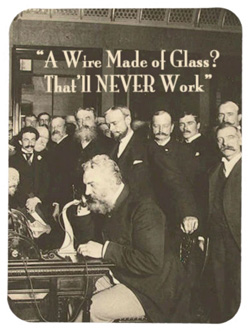
It has been rumored for a long time and now it’s really underway. The end of over a century of copper wire based phone and network lines is here, with a key event on June 30. That’s the start of AT&T’s first major wave of wire center decommissioning. Over 277 of these facilities will go dark when completed, with more waves of decommissioning to follow. In the end, we’ll have completely moved on from Alexander Graham Bell’s original network.

Take action before the sun sets on your copper telecom services. What The Loss of Wire Centers Really Means
In simple terms, a wire center is where all the wires connect. It’s the building that connects the central office switching with all the local loops. That’s often thousands and thousands of individual twisted copper pairs that are bundled into larger cables. Your analog phone line, the “landline” or POTS (Plain Old Telephone Service) line, is one of these loops. You can trace the wire pair directly from the phone jack on your wall all the way to the line card at the central office that provides power and signaling to run the phone handset.

Those twisted pairs can carry a lot more than individual phone calls. They can be set up with digital termination equipment to provide DSL and T1 broadband or PRI digital multi-line phone service. They may also be used in special applications such as fire alarms, elevator phones, gate entry systems, security systems, and fax machines.

Decommissioning means taking these lines out of service. No more wire center. No more copper line service.

In actuality, the phone companies that own these lines have already been discouraging their use through higher service prices and refusal to add more customers. Another group, copper wire thieves, have been doing their own decommissioning by cutting and stealing cables and then burning off the plastic insulation so they can sell the copper at recyclers. Copper prices are way up due to the expansion of data centers, electric vehicles, and solar power, to name a few.

What Replaces Copper Telecom Lines?
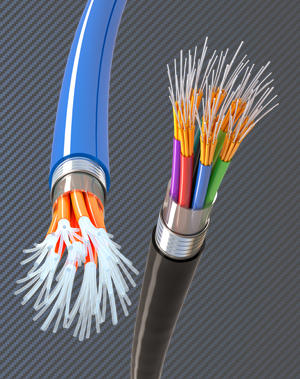
Like the incandescent light bulb, it’s time to move on from 19th century technologies. The new options are primarily fiber optic and wireless.

Fiber voice and broadband started with phone company Optical Carrier standards but has migrated to Carrier Ethernet standards to be compatible with the vast majority of company networks. Ethernet over Fiber service ranges from 10 Mbps up to 100 Gbps, with Gigabit Ethernet and 10 GigE becoming popular standards.

You need what is called an Ethernet Port at your end. That connects via fiber to your service provider, often an Independent network operator but perhaps a traditional telco. The speed of the Ethernet port limits the amount of bandwidth you can have. A Gigabit port lets you order up to 1,000 Mbps. A 10 Gigabit port supports anything up to 10,000 Mbps.

There are different flavors of fiber optic service. Your Internet access can be on a fiber line that is shared among many businesses and residential users to save cost. You may prefer to order Dedicated Internet Access (DIA) so that your connection to the Internet itself in essentially on a private line.

Direct Cloud Access is a similar service without the Internet being involved at all. You have a private fiber service from your facility to your cloud service provider. This gives you the best low latency and low congestion for higher productivity and smoother voice calls and video conferences.

You might also want to consider dedicated point to point fiber to interconnect your facilities across town or around the world. These private lines offer high performance and better security than what you could hope for on the Internet.

Wireless Options
Of course you have mobile phones, tablets and laptop computers that connect to the Internet using 5G cellular broadband. Another flavor of that services is Fixed Wireless Access. It comes in a box with higher gain antennas and Ethernet connection. It’s the 5G broadband without the phone features. There are also options to add outside antennae for better coverage and some controllers offer multiple providers for service continuity if one company goes offline temporarily. FWA can be as speedy as fiber, but without having to run the fiber line itself.

Some Wireless Internet Service Providers do not use cellular networks. Instead, they have their own towers and beam and point to point signal to a small dish antenna on your roof. These are very private lines and can have Gigabit or higher speeds.

Satellite broadband and satellite phone have been around for years. The broadband using geostationary satellites can be very reliable and speeds have been improving with newer generations of satellites. The half second or more of latency due to the distance to geosynchronous orbit is one sticking point. LEO or Low Earth Orbit satellite constellations, primarily SpaceX Starlink, reduces the latency to something similar to terrestrial broadband. Bandwidths are also competitive for many applications. Just stating now is direct to handset service that turns satellites into alternative cell towers. Soon there will be no dead spots, even in the most remote areas.

What to Do About Specialty Services?
Those fire alarms, fax machines and elevator phones that were designed for twisted pair copper and nothing else still have hope. AT&T, among others, is offering a “POTS Replacement” service that consists of 4G LTE cellular wired to support these services along with built-in battery backup. Why 4G LTE? This standard can mimic the old phone lines and is still readily available.

The One Remaining Copper Service
There is still one very popular copper broadband service, but it is not from any phone company. This is Cable Broadband that is brought in on coaxial copper wiring. In reality, the cable companies have converted to fiber optic transmission, but the latest DOCSIS standards let them keep their existing copper coax into your building and still achieve speeds of 1,000 Mbps or even 10 Gbps… competitive with fiber.

Is your company experiencing an upcoming loss of service due to copper decommissioning? No time to wait. Find out what copper replacement services are available for your business needs. You may be surprised to find you can actually get more capability at a lower cost.


Click to check pricing and features or get support from an expert technology specialist.


Follow Telexplainer on Twitter


Friday, May 30, 2025

10000 Mbps Business Internet is Available

By: John Shepler

Growing businesses seem to always be running out of bandwidth. No matter how much you have, it doesn’t take long and you’re starting to push against that upper limit. That’s where the conversation gets a bit difficult. Is there more bandwidth to be had? If so, will it be even remotely affordable?

Good news! Behind the scenes, the infrastructure of Internet access has been moving fast. You are no longer stuck with what copper pair wiring will carry or the jaw dropping cost of telecom oriented fiber optic protocols. There are reasonably priced options available right now for your business that stretch to 10000 Mbps or even higher.

Business Internet bandwidth to 10000 Mbps Why Such a Need For Speed?
Today’s bandwidth isn’t yesterday’s bandwidth. Everything has changed and it has happened seemingly overnight. What’s driving changes to the networking industry is the way businesses and consumers have evolved in their use of the Internet. What started out as a simple way to send electronic messages between computer centers has morphed into a life support system for an all-digital environment.

Take your business, for instance. In fact, take any business. Nobody logs onto the Internet anymore. It’s just there, running all the time. It is probably running processes for you in the background even when your screens are dark and everybody goes home. Turn off your PC. It doesn’t matter. The programs aren’t running on your PC. They’re on the network somewhere. That used to mean a server in the back room. Now it’s a server in a colocation facility or a server cluster in a cloud service provider.

Today’s business processes are large and often customized packages from a provider who offers everything you need from sales to inventory to customer service. Your office telephones are probably integrated with the computers and also any mobile devices including smartphones. Communications run the gamut from text messages to traditional email to in-app messaging to video conferences. All of these have a bandwidth demand, with video needing the most and being the most sensitive to interference from other applications.

Oh, and then there are your customers. Do they all just walk in? Sure, some do. Especially in businesses where face to face service is necessary or customary. Other business may derive most of their sales online and not even have a showroom or client conference room. Those online customers need to connect to your business instantly and without glitches. If they have trouble, they’ll go somewhere else. After all, your competitors are just as easy to get to as you are.

Add it all up and you can see that a digitally oriented business environment demands a support structure that is far more robust and seamless than they days when the Internet was just an accessory tool to a legacy bricks and mortar operation.

How Much Bandwidth Is Enough
Every business type has its unique set of demands. Similar size companies in similar industries will likely have more or less similar demands. Large and small companies will have large and small demands. Some applications, like content delivery or medical imaging may have enormous needs. Most all of these can be accommodated with a combination of fiber and wireless bandwidth, and perhaps cable broadband.

Ethernet over Fiber has become the de-facto connectivity for demanding business applications. Copper-based services like T1 and DS3 are on the wane. They probably won’t be with us too much longer as the telecoms are decommissioning the facilities. In most cases it doesn’t matter. The limited bandwidth of these services has been eclipsed by newer technologies.

The older SONET fiber services developed by the telephone industry and adapted to business metropolitan and wide area networks is also going by the waysides. It may still be at the core of many networks, but is less and less offered to businesses directly. Ethernet over Fiber directly connects to business Local Area Networks without the need for any proprietary protocol conversion.

A major advantage of standardized Ethernet over Fiber infrastructure is that it accommodates a wide range of bandwidths using the same protocol. 10 to 100 Mbps is entry level, with 1000 Mbps a typical standard offering. Gigabit Ethernet, also known as GigE, seemed the most anyone would need not so long ago. Nowadays, the need for increased speed goes beyond a gigabit per second.

Bandwidth You Can Afford
If you are nearing the end of a three year contract or have just been paying month to month for years, you owe it to yourself and your company to get fresh quotes for the bandwidth you need right now and into the foreseeable future. As long as you have a port installed that will handle your anticipated growing needs, you don’t need to pay for the maximum bandwidth right now. Most providers will lease you the capacity you need today with the understanding that you can easily upgrade at any time on just a phone call or even through a Web portal.

What’s available? Fiber serves the lion’s share of today’s business locations. It’s been quietly installed without much fanfare. You can likely get any bandwidth you need from 10 Mbps on up to 10 Gbps (that’s 10000 Mbps) quickly and easily… and for less cost than you might think. If your demands are really stringent, 100 gbps or 100000 Mbps is not available in many metropolitan and suburban business districts. Cable and wireless broadband up to 1000 Mbps is also often a reasonable option.

Go ahead. It doesn’t cost anything to simply ask for current pricing. You may be surprised at the business Internet that is available to you.

Click to check pricing and features or get support from a Telarus product specialist.


Follow Telexplainer on Twitter


Thursday, November 14, 2024

5 Gig Internet Business Fiber

By: John Shepler

You can see it for yourself. Bandwidth needs are climbing higher every day. That Gigabit Ethernet Dedicated Internet Access service you installed a few years ago is already hitting its limit. A GigE to the cloud isn’t enough to completely avoid congestion anymore. Clearly, it’s time to move on up.

Order 5 Gbps Internet or private line fiber optic bandwidth5 Gig is the New Gigabit
What’s the next logical level for business bandwidth? Actually, you can have pretty much anything you want in 1 Gbps increments. However, some levels are more popular than others. An emerging standard is 10 Gig. You may not need or want to pay for that much right now. A good intermediate level is 5 Gigabit for Internet or private lines.

Why 5 Gig? It gives you breathing room for business applications running in the cloud, e-commerce Internet connections, remote file storage and access, and lots of video content. The more users you have accessing the same WAN connection, the more bandwidth you need to avoid congestion slowdowns, broken VoIP conversations and jerky video conferencing. Real time applications need fat pipes.

Dedicated Internet Access vs Private Lines
There are two basic types of network connections: Private and shared. The Internet is by design a shared network that connects everybody to everybody else with nobody having priority. You can improve your Internet connection performance by avoiding shared access and using Dedicated Internet Access. That gives you a private link from you business to your Internet Service Provider. The last mile is where most of the congestion and variation problems originate.

A private line is just that. Your company is the only user on the connection that runs from point to point. There is no contention with other businesses or consumers. If you have a 5 Gigabit fiber link, you have 5 Gbps available at all times. Whatever bandwidth you don’t use at the moment is there for headroom. You’ll only experience congestion and the latency it creates when you exceed 5 Gigabits per second momentarily or for an extended time.

Connecting Multiple Business Locations Privately
A private fiber optic network can be set up point to multipoint or mesh as well as a direct cloud link or dedicated line between business locations. You can also employ an MPLS network to span regional, national or international sites for a cost savings. MPLS networks are run by a private provider who guarantees bandwidth, latency and packet loss even though there are multiple users on the network. Everybody thinks they are the only user.

Other High Bandwidth Options
Fiber future-proofs your network and generally offers symmetrical bandwidth so that upload and download speeds are the same. Cable broadband speeds are often above 1 Gbps, with 5 Gbps offered in some areas. The bandwidth is asymmetrical and the last mile connection is shared, but the cost savings may well outweigh the advantages of fiber in less critical applications. Fixed wireless can also offer high bandwidths using a small antenna on your building and are a great alternative where fiber and cable are not available.

Are you running out of capacity on your Gigabit fiber connection? If so, consider an expansion to 5 Gbps with a growth path to 10 Gbps when you need it. You’ll love the extra breathing room.

Click to check pricing and features or get support from a Telarus product specialist.


Follow Telexplainer on Twitter


Wednesday, May 08, 2024

Is 10 Gbps Internet the New Business Standard?

By: John Shepler

Internet bandwidths have been creeping up since the introduction of broadband more than two decades ago. Just when you think you have enough, you find that response from websites and cloud applications is too sluggish for you to maintain maximum productivity. It’s time for another upgrade, but that isn’t such a bad thing these days… if you do it right.

10 Gbps fiber optic service for business.Why the Need for So Much Bandwidth?
What’s driving the need for ever increasing bandwidth is more data hungry applications. While the original Internet was most text-based, the next move was to images and then database operations. The introduction of video really started to suck up Mbps and Gbps as fast as they could be provided.

Now it is enormous file transfers, high definition video, including video conferencing, and the relocation of business critical applications from the server room to the cloud. Add e-commerce to that mix and you have a screaming demand for high speed low latency bandwidth.

The Changing Nature of WAN Bandwidth
The telecommunications world was founded on copper and wireless. Wireless persists in an evolved form, but copper is on the way out. Well, twisted pair copper telecom lines are disappearing fast. Coaxial cable copper has a new lease on life with DOCSIS 3.1 and 4.0 that are enabling it to compete with fiber. Wireless, too, can compete with fiber using 5G and, soon, 6G technology in the microwave range.

The big daddy of telecom is fiber. You can see fiber being trenched into nearly every right of way in cities and even smaller towns. Fiber goes under water to link continents. The Internet IS fiber, even if your access isn’t.

Fiber today isn’t the same fiber as yesterday. Oh, it’s still glass fibers fed by lasers. What’s different is the protocols. The telephone-centric SONET has given way to Ethernet over Fiber that is directly compatible with the Ethernet on your LAN. Packet switched networks have taken over from circuit switched networks.

The Good News About Bandwidth
The thought of ever accelerating bandwidth needs could give you pause except for one counter factor. The cost of that bandwidth is decreasing almost as fast as the speeds are increasing. You can get gigabit level fiber or cable broadband for what you used to pay for a T1 line. It is rapidly becoming possible for residential users to get gigabit level bandwidth over cable and PON (passive optical network) fiber. Wireless speeds in the hundreds of Mbps are also getting common. Any of these services may also serve smaller businesses well.

The next step up is in the multi-gig speed range, with 10 Gbps a new standard. It works well for businesses with many employees online, hospital and medical centers needing to transmit medical images, automated factories, video production and so on. If you already have Gigabit Internet or GigE service and are running into congestion, a 10 Gbps fiber line may be the perfect solution. For very high volume operations, even 100 Gbps isn’t unreasonable and is becoming more commonly available.

All Bandwidth Isn’t the Same
So far we’ve been talking about the Internet, the ultimate public commons. It’s a shared network by its very nature. Even so, most users with enough bandwidth find it works well for their purposes.

Internet access is also generally shared. Cable and cellular wireless are multi-user services without any priority or guarantee of latency. Because they are shared, these are the most affordable options.

The next step up is called Direct Internet Access or DIA. It’s a private line from your location to the Internet connection at your service provider. Being private means that you aren’t competing with dozens of other local companies or consumers for bandwidth, which can become scarce at times. The wireless equivalent of DIA is called 5G slicing.

Still need higher performance? Skip the Internet for a private lane all the way from your company to your cloud provider. Direct connection, another name for a private line, completely eliminates competition from other users to give you the best consistent performance. A 10 Gig Ethernet fiber private line is a premium service that may well fit your budget if you need to have the cloud behave like the servers down the hall.

Are you ready for 10 Gbps Internet or private line service? Don’t say no until you’ve checked prices for 10 GigE and higher business bandwidth. If 10 Gig is too much right now, you may opt for a fraction of that with the option to upgrade later. If 100 Gbps makes sense, large organizations may also find that within their means.

Click to check pricing and features or get support from a Telarus product specialist.


Follow Telexplainer on Twitter


Thursday, September 23, 2021

Gigabit Ethernet Replaces DS3 and T3

By: John Shepler

T3 lines and DS3 bandwidth have long been a staple of telecom service offerings. The rise of Carrier Ethernet WAN, point to point microwave for business and DOCSIS 3 cable broadband is causing these traditional telco services to fade into legacy services. Let’s have a look at what’s available for your business in the 50 to 1000 Mbps speed range.

Gigabit Ethernet replaces DS3 and T3 now.Telco’s T1 Line Upgrade
The pioneering work on digital transmission over long distances was done by Bell Labs right after WWII. Their first product was called T-Carrier and consisted of T1 and T3 services that were compatible. T1 lines could replace 24 analog phone lines with one multiplexed T1 line.

T1 was designed to run on the same twisted pair copper wires that supplied analog POTS landlines for easy deployment. T3 is an upgrade that ran on coaxial copper lines and microwave towers at 45 Mbps. It can handle 672 voice lines. The protocol that runs on T3, called DS3, can also be carried on SONET fiber optic circuits. When the Internet arrived, both T1 and DS3 were offered in clear channel versions to carry packetized data. T1 runs at 1.5 Mbps. DS3 or T3 runs at 45 Mbps.

Carrier Ethernet over Fiber Takes Over
Computer generated data far exceeds telephone traffic these days. The near ubiquitous standard is Ethernet on the LAN running the Internet Protocol or IP. With T1 or DS3, you need to do a protocol conversion at each end to go from the computer standard to the telephone standard and back again. The introduction of Carrier Ethernet keeps everything in one standard, Ethernet, from end to end.

Carrier Ethernet has been deployed in two versions. The slower version is Ethernet over Copper or EoC. This is a direct replacement for T1 lines and fractional DS3 service and runs from about 1 Mbps to 20 Mbps or so depending on the length of the circuit. The key feature is that it uses the same twisted pair wiring as T1 line or analog phone lines.

The faster version of Carrier Ethernet is Ethernet over Fiber or EoF. This is the technology that is rapidly taking over the world. EoF gives you end to end Ethernet from about 10 Mbps to 10 Gbps and even 100 Gbps in some areas. As you might expect, Ethernet over Fiber easily replaces T3 lines or DS3 bandwidth over SONET. It also offers the ability to easily upgrade to higher speeds than 45 Mbps any time you want. With a Gigabit Ethernet port, you can start off at 50 or 100 Mbps and scale up to 1,000 Mbps with just a phone call or click of a mouse online. There is no need to change out equipment. Only the speed of the line and your monthly billing will change.

The other big advantage of Carrier Ethernet, and some say the most important one, is the cost reduction compared to traditional telco services. You can get EoF service at DS3 bandwidth speeds of 50 Mbps for a fraction of what you would pay for actual DS3 over SONET. 100 Mbps, 1000 Mbps and 10,000 Mbps are suddenly affordable when you upgrade to Ethernet over Fiber.

Wireless is Fiber Without the Fiber
There are situations where fiber just doesn’t work despite all its advantages. One is is rural or remote areas that haven’t been wired, perhaps not even for telephone. The other is in dense urban areas where fiber has yet to be installed. The cost of construction is astronomical in both situations but that doesn’t mean you are out of luck. Just skip the fiber or wires completely.

Point to point microwave was a staple of telephone long haul. Microwave relay towers would retransmit the phone calls every 30 miles or so. Microwave is still applicable on a smaller scale over reasonable distances. In downtown business districts a dish on the roof pointed at the provider's antenna a few blocks away can give you Gigabit level bandwidth with very little construction cost. it’s also fast to install compared with pulling cables under the street.

In more rural areas, a WISP or Wireless internet Service Provider gives similar service usually at somewhat lower bandwidth levels, but similar to DS3 or better. Customers point their antennas at the service tower which can be miles away, but in a direct line of sight.

Another popular arrangement is to take advantage of the fact that every cell tower is also transmitting Internet traffic for smartphones. 4G LTE is commonly available and can give you the performance of fractional DS3 at least on download. Many smaller businesses can get all the performance they need from 4G without any of the wiring headaches. This is especially valuable for mobile or pop-up stores and individual entrepreneurs. Now that 5G is well into deployment, cellular can easily replace DS3 and higher speeds.

One thing to be aware of with wireless services, especially cellular, is that there are usage limits to most plans. That’s because the system can handle less traffic than fiber and the bandwidth must be shared fairly among users. Even so, if you can get 300 GB per month plans and pay much less than DS3 or even a T1 line, wireless can make a lot of sense.

Cable Broadband Can Mimic Fiber
The old Cable TV networks have been vastly upgraded and are now mostly run on fiber. It’s just that last link into your building that is run with coaxial cable. The protocols have also been upgraded along with the switch from analog to digital television. DOCSIS 3.0 and 3.1 offer high speed performance at bargain prices. You might be surprised to know that DOCSIS 3.0 can support bandwidth up to 1 Gbps download and 200 Mbps upload. The newer DOCSIS 3.1 standard is good to 10 Gbps download and 1 to 2 Gbps upload. When DOCSIS 4.0 is deployed, that upstream capacity will increase to 6 Gbps.

Cable broadband is extremely popular with residential users and many businesses. You just can’t beat the pricing. The only limitations are that cable isn’t available in many rural areas and the bandwidth is multiplexed or shared among many users. Thus speeds can vary. Like wireless, there is a large difference between download speeds and upload speeds. Uploading is typically a tenth or less the speed of downloads. That reflects the way Internet traffic usually flows. In many cases, this may make no difference to your operation, but it you need very high upload and download speeds and dedicated bandwidth, especially for cloud services, you may need fiber optic service through cable companies or other competitive fiber network providers.

Do you still have an old DS3 or T3 contract or simply need high performance, low cost bandwidth in the 50 Mbps or above range? If so, discover what Gigabit Ethernet services are available for your business.

Click to check pricing and features or get support from a Telarus product specialist.


Follow Telexplainer on Twitter


Wednesday, December 16, 2020

100, 1000, 10000 Mbps Internet Speed

By: John Shepler

Business Internet speed requirements have increased dramatically as computer and software technology has advanced. It’s also true that our long distance WANs (Wide Area Networks) have become more like umbilical cords than transmission pipes. Today, 100 Mbps, 1000 Mbps and even 10000 Mbps Internet connections are common and necessary. Fortunately, pricing has plunged as speed has jumped, making these bandwidth levels affordable.

Find 100, 1000, 10000 Mbps Broadband100 Mbps Fast Ethernet
100 Mbps is the new benchmark bandwidth, replacing the traditional DS3 bandwidth at 45 Mbps. DS3 is part of the telco TDM standard as an upgrade to slower T1 lines. At one time, DS3 could be supplied on a T3 coaxial copper line or microwave signal, but is now demultiplexed or “dropped off" by a SONET OC3 legacy fiber optic service.

The lower cost option for 100 Mbps bandwidth is cable broadband running DOCSIS on small diameter coaxial lines. These are the familiar “cables” installed for cable TV and broadband. In most cases, 100 Mbps is the download speed. The upload speed may be 10 Mbps or less. The service is also multiplexed or shared among subscribers, so actual bandwidth may vary somewhat. Even so, 100 Mbps cable broadband works very well for many work from home situations, home based businesses, small offices and small retail businesses.

For larger or technically more demanding applications, 100 Mbps Ethernet over Fiber gives you 100 Mbps upload and download speeds or symmetrical service. This service is also dedicated or private. You and you alone have access to all the bandwidth and it is consistent at 100 Mbps. While this service requires a fiber drop rather than cable, pricing is quite reasonable and readily available for most business locations.

1000 Mbps Gigabit Ethernet
Gigabit Ethernet or GigE provides 10x the bandwidth of Fast Ethernet. Like the 100 Mbps service, you can now get this level of service through a cable broadband provider in many areas. The step up in speed makes it easier for many users to connect in your office. It also facilitates more demanding applications like heavy video streaming or conferencing.

Gigabit Ethernet over Fiber is a premium service that is getting more affordable every day. Many medium and larger businesses opt for this service as it is highly reliable, with low latency, jitter and packet loss combined with high enough bandwidth to be transparent even with many concurrent users. The symmetrical bandwidth enhances the performance of cloud based applications and remote backup where upload speed is important.

10,000 Mbps Gigabit 10 Gig Ethernet
10 Gigabit Ethernet or 10GigE is the fastest bandwidth service available to most business users. At this level, you can connect large offices, factories, warehouses and retail stores to the Internet or as point to point private lines. Bandwidth is symmetrical and private, as you would expect. While DOCSIS cable is theoretical capable of supporting 10 gigabits, this is currently a fiber optic service almost exclusively.

When you get to these bandwidth levels, some other options become available. You can opt for the standard fiber optic connection or lease an entire wavelength or lambda on the fiber. This increases your privacy and, thus, security level. For even greater control, you can lease an entire dark fiber and light it yourself or have the carrier do that.

Advancing Bandwidth Levels
Like processing speed and number of cores on a chip, metropolitan and wide area network bandwidths are continuously increasing. In select areas, 100 Gigabit Ethernet over Fiber service is now available for business. With Dense Wavelength Division Multiplexing, you can easily achieve that by lighting dark fiber and, perhaps, even move up to Terabit per second bandwidth levels if the budget allows.

Are you looking for reasonable high business bandwidth levels at your current location or needing to connect a new facility? Know that high bandwidth broadband and private line services are more available and affordable than ever before. Get quotes from multiple providers and decide the best option for you.

Click to check pricing and features or get support from a Telarus product specialist.


Follow Telexplainer on Twitter


Wednesday, June 27, 2018

Fiber to the Curb and Premises

By: John Shepler

Copper is rapidly disappearing in telecommunications networks. It’s replacement, fiber optic cabling, may be run through the same conduits when copper bundles are removed, or it may be trenched nearby. The old copper lines are then left to slowly return to nature, much like obsolete two lane highway superseded by newer interstate construction.

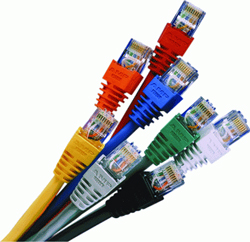
A Wire Made of Glass Tech GiftsBut, you say, I still have copper connections. The RJ45 cable to my computer is clearly twisted pair copper wiring. So is the coaxial cable that provides broadband to the office. Just where is all that fiber you are talking about?

Mostly Fiber Outside, Mostly Copper Inside
The quiet revolution in fiber optic transmission is occurring just out of sight. The reason is simple. Standard Ethernet cabling works great in the home or office. You can easily get 1 Gbps and perhaps even 10 Gbps performance… as long as you keep the cables short. That’s 100 meters or 328 feet for CAT5e or CAT6 at 1 Gbps and CAT6A at 10 Gbps. CAT 6 can also do 10 Gbps at 180 feet or less.

In most smaller offices you never need longer runs to get to the nearest switch or router. Since most network equipment you use every day has a RJ45 10/100/1000 Mbps interface, you’ll probably never have to deal with a fiber optic connection. That is, unless you work in the IT department in a company large enough to have one, or work for one of the telecom carriers.

Just beyond your view, the interface changes from copper to fiber optic wiring. Why? Speed and distance. If you want 100 Mbps Fast Ethernet or 1,000 Mbps Gigabit Ethernet, you need fiber to carry those high speed packets across campus and beyond. You may have copper patch cables at each end, but in-between it’s all fiber.

Fiber To The Curb
If you don't look inside the beast, you can pretend that the Internet is millions of miles of shiny copper wire in a web that covers the Earth. Actually, that’s how it started out. Today that notion is as dated as those obnoxious dial-up tones. The world’s long distance networks have long since been converted to fiber. Fiber is also rapidly replacing the local telco physical plant. When hurricanes and other disasters strike, the phone companies jump to install new fiber to replace plastic coated and even paper coated multi-pair bundles that might be many decades old. Both capacity and reliability are improved and higher speed services are possible.

Why, then, do telephone and broadband connections look the same as they always have? Someday they’ll be changed out, too, but right now it makes more sense to avoid the high cost of running new lines in from the street or rewiring old buildings. The trick to keeping the old twisted pair and coaxial cable able to meet today’s needs is to run the fiber to the junction box at the curb and connect to the existing copper. As you might guess, this is called Fiber To The Curb or FTTC. It’s a stop-gap measure that works well… for now.

Fiber To The Premises
The next logical step is for the service providers to just run the fiber right to your building and give you a fiber or copper connection at the demarcation point. For business bandwidth services, this is becoming the norm. Tens of thousands of cell towers are also being newly served by fiber optic lines. These replace the trusty T1 lines that work great up through 3G, but aren’t up to 4G speeds and certainly not 5G wireless.

This service is logically called Fiber To The Premises or FTTP. For residential service it is often referred to as FTTH or Fiber To The Home. There are two main flavors being deployed. One is active fiber that has all the electronics end to end. The other is a less expensive approach called passive fiber that uses passive optical splitters to connect multiple locations to one shared active fiber strand.

Is It Time to Upgrade to Fiber?
You can pretty much bet that whatever provider you use is running their core network on high speed fiber, probably at 40 Gbps or 100 Gbps. The question is whether they are connecting to you via legacy copper twisted pair leased from the telephone company or bringing fiber right to the premises. Cable companies use HFC or Hybrid Fiber Coax systems, so the less expensive coax broadband service joins their fiber plant nearby on a pole or curb termination box. Cable companies can also connect you directly to their fiber network for higher performance services.

The beauty of bringing fiber to your premises is that it helps future-proof your service. If you install, say, a Gigabit Ethernet port, you can subscribe to any line speed up to 1 Gbps. If you only need 100 Mbps or even 10 Mbps right now, you’ll have the option to turn up the speed quickly with only a phone call. Some providers are now letting their customers log into the system and upgrade their service themselves. Billing accounts for upgrades and downgrades automatically.

Not sure what service makes the most sense for your business? Discuss your needs with one of our expert consultants and see the range of bandwidth options available for your location.

Click to check pricing and features or get support from a Telarus product specialist.


Follow Telexplainer on Twitter


Note: A humorous collection of tech giffts with the theme, "A Wire Made of Glass" are available through Zazzle.

Tuesday, April 11, 2017

Metro Fiber Ethernet Gets You The Bandwidth You Need

By: John Shepler

Back when your company was smaller and business was slow, the old DSL or T1 line offered plenty of bandwidth to get the job done. Not so much anymore. Things have picked up and more of the content you need involves higher resolution graphics and video. Network congestion has your business throttled and that’s a bad situation.

Find Metro Fiber Ethernet Service for your business location now!Metro Fiber Ethernet Means Bandwidth
There is a clear trend in the telecom and network connection field. It is a gaining momentum toward everything fiber. That’s right, the fiber optic connections you used to take a pass on because of high cost or lack of availability are now ready for your business and at much better prices.

Fiber has the advantage over traditional twisted pair copper and wireless distribution because there is just about no limit to how fast those glass strands will run. Technology advances take the same glass fibers and increase the carrying capacity every few years. Too much data in the fiber bundle is a problem for the distant future, if ever.

What level of bandwidth is available now? Business users can generally get anything from 10 Mbps to 10 Gbps, with 100 Gbps in selected areas. Once your have the fiber installed, it’s your choice how much capacity to order. Same line, multiple bandwidth options.

Pay For Just What You Need
As fiber optic installations are multiplying, another technology is also taking over. That is, Carrier Ethernet. Yes, this is a compatible protocol with the Ethernet you already use on your Local Area Network. You simply plug into the Carrier’s termination, often a managed edge router, and you are connected to the Internet or via a private line across town or some other business location in the world.

Another beauty of Ethernet service is that there are no fixed bandwidth levels as there were with the older SONET fiber service. If you want 400 Mbps, you can get that. If you’d prefer 100 Mbps or 1,500 Mbps you can order those levels too. As long as the Ethernet Port installed at your location can handle the bandwidth, you can run at just about any speed.

This suggests a major cost savings for you. If your business level only requires 100 Mbps today, then order that. You may soon need 1000 Mbps, also called Gigabit Ethernet. No problem, call up your carrier and tell them to increase the speed of your line. They likely do that without any hardware changes and simply adjust your bill to reflect the increase in service level. You know that you have the flexibility to incrementally increase bandwidth as you really need the capacity.

More Availability, Less Money
You are no doubt aware that smartphones are getting faster and faster. 3G broadband is pretty much on the way out. Now it’s 4G everywhere, with 5G trials underway. One effect of this is that the old T1 lines that powered cell towers through 2G and 3G don’t have the capacity to support 4G and certainly not 5G. Support of high speed wireless has ironically caused fiber optic installations to boom. Fiber used to be rare and extremely pricey. Not so anymore. Pretty much all communication infrastructure being installed right now is fiber or wireless towers… or both.

All this fiber means capacity galore and lots of competition between a myriad of providers, all vying for businesses of all sizes. Even the Cable companies have gotten into the act recently. They’re offering access to their fiber optic networks that have the same quality of service as other business fiber services.

Why Metro Fiber Ethernet?
As the name suggests, metro fiber is more for locations within populated areas than out in the boonies. Metro also includes smaller cities, suburbs and business parks, not just major downtown areas.

What you want is competitive pricing on fiber based Ethernet bandwidth in a given metro area. Fortunately, that’s easy to find if you have the right tools. Want to see just how much bandwidth you can get for much lower prices than you’d expect? See how many Metro Fiber Ethernet Services are available for your business (not residential) location in a matter of a couple minutes.

Click to check pricing and features or get support from a Telarus product specialist.


Follow Telexplainer on Twitter

Friday, September 30, 2016

Ethernet Everywhere? We’re Almost There!

By John Shepler

It’s been brewing for a long time, now. The prediction is that all of those networking standards will finally settle on just one. No more T1, DS3, OCx and whatever. It’s all going to be just Ethernet one day. How close are we to that day? Why, we’re almost there!

Find Ethernet services for your businessNetwork Standards Have Already Embraced Ethernet
Telcos are doing something once thought heresy. They’re abandoning their proprietary standards in favor of Ethernet services.

Why? Because that’s what the market wants. Once upon a time, there were all sorts of Local Area Network standards. Can you remember when Token Ring was the coming thing? How about AppleTalk?

Today, virtually all network equipment has one connector and it is for Ethernet. There are really only two flavors: copper and fiber. Virtually all office equipment is either 10/100 or Gigabit Ethernet over twisted pair copper. Networking equipment may have fiber connections for GigE, 10 GigE or 100 GigE.

This standardization has make connectivity extremely easy. The standardization on switched Ethernet versus the original collision domains makes networking a fairly easy plug-and-play.

The same thing has happened to networking software. The Internet standard, TCP/IP has become the THE standard, further enhancing the ease of setting up and running networks.

Getting LANs to Talk Telco
When you own the network, you get to decide how it works. There’s nobody to tell you otherwise when you come up with a design that’s based on off-the-shelf massed produced switches, routers and cabling. The big problem comes when you try to connect to the outside world.

The Internet may have been based on TCP/IP, but the wide area networks that carried it were not. Telephone company standards evolved from the world of voice only channels for telephone calls. What T1, T3 (DS3) and OCx did was simply bundle the smallest channels, 64 Kbps PCM coded telephone calls.

Digital being digital, the solution was to perform a protocol conversion at each end so that Ethernet LAN would be converted to, say, T1 for transmission over some distance and then back to Ethernet at the other end. That process still works great and many T1 lines remain in use because they are sometimes all that is available in rural areas.

What’s Going Bye-Bye?
The major telecom companies have been quietly converting their networks to Ethernet for years. In many cases, this can be simply running Ethernet over some underlying fiber protocol like SONET. Competitive carriers have built out their facilities using Ethernet in the network core and never going through the TDM (Time Division Multiplexing) evolution.

What’s going on now is that telcos are asking the FCC for permission to sunset some of their older services, especially those that run on copper and don’t have many customers anymore. The standard POTS (Plain Old Telephone Service) is an endangered species. Fewer and fewer residential users have the traditional “home phone.” They either get their phone service bundled with TV and Internet or simply depend on cellular for voice communications.

Businesses are following suit. Smaller companies may get voice and data bundles from cable companies or incumbent telcos that are acting like cable companies. Larger companies are moving rapidly to enterprise VoIP and Unified Communications. These don’t need traditional telephone wiring inside or outside the facility. Everything runs on the network. Outside connectivity is by SIP trunking, dedicated private line, MPLS networks or Dedicated Internet Access.

Is Copper a Goner?
Copper is still going, but who knows for how long. The telcos want to rid their plants of those thick copper bundles, especially the individual POTS lines.

T1 lines are still popular, but the 1.5 Mbps bandwidth is becoming more and more of a limitation. A newer standard, Ethernet over Copper, is highly competitive and offers an order of magnitude or more higher bandwidth at lower cost per Mbps.

Even so, fiber optic connections are reaching more and more business buildings as well as cellular towers. 4G and 5G wireless needs bandwidth beyond what is practical with twisted pair copper. It’s likely that all twisted pair copper may be abandoned to corrode in the ground or pulled out of conduits and sold for scrap. That’s not today in most areas, but it’s not that far away.

So, Where Can I Get Ethernet?
You can order Ethernet over Copper or Ethernet over Fiber in most populous areas right now. In rural locations, Ethernet over DS1 uses a T1 line to deliver Ethernet.

Don’t forget that Cable broadband is delivered to you as an Ethernet connection and FTTP (Fiber to the Premises) is also Ethernet at typically 1 Gbps.

Satellite and wireless Internet services are also delivered as Ethernet. That includes 3G and 4G cellular services designed for business use.

If you’ve been living with a legacy Internet or telecom connection and wondering if there is something better to choose from, there probably is now. Find out with a quick check of Ethernet services in your area and complementary consultation to help you choose the best solution for your business.

Click to check pricing and features or get support from a Telarus product specialist.


Follow Telexplainer on Twitter

Wednesday, March 16, 2016

Your Options For Business Internet Broadband

By: John Shepler

The range of broadband Internet connectivity solutions available for your business location is greater than ever before. Let’s take a look at what’s available and appropriate for companies of all sizes.

WAN Man gift are available now. Click to see the collection.Starting at the Top
We’ll start at the top, since Gigabit Internet is the gold standard that everyone would really like to have… if they could afford it. Chances are, you probably can if you have a medium or larger size company in most locations or smaller businesses in select areas.

Where You Are Counts
This is an important point for all connectivity services. What you get and what you pay for it depends a lot on your particular business location. That’s because not all areas are built out equally. Major metro downtowns have a wealth of services and are highly competitive on price. Large business and office parks are also well connected. In smaller towns or out in rural areas, pickings are slim, as they say. Even so, you can get some form of broadband Internet connection no matter where you are.

Options at 1 Gbps
The most popular form of Gigabit Ethernet or GigE service for business right now is Gigabit Ethernet over Fiber. It is a more modern technology than SONET and excels in both ease of connectivity and price. The ease of connectivity comes from the fact that Carrier Ethernet is really just an extension of the same switched Ethernet that runs on your company LAN. Features necessary to long distance operation and maintenance have been added to the Ethernet standard. Otherwise it’s the same packets you already know and love.

Gigabit Ethernet is priced at a fraction of what traditional SONET OC3, OC12, OC48 etc costs. These are still viable options and are embedded into many, many regional and national networks. Ethernet can run over SONET or be natively hosted on the fiber. Competitive providers have pushed prices lower and lower, to the point that if you really need this much bandwidth you can probably afford it.

Another advantage of Carrier Ethernet is that it is easily scalable. You can install fiber services with a Gigabit speed port today but only take 100 Mbps service if that is all you need. The price will be considerably less and you can upgrade to 200, 500, 750 or 1,000 Mbps whenever you like. No equipment changes will be needed.

Even Higher Speeds
The relentless migration of data centers to the cloud and higher performance hosted business applications have pushed demands on WAN networks to higher and higher speeds. While most companies are getting used to the idea of having Gigabit connectivity, some, like video producers and larger medical complexes, find that bandwidth a bit limiting. No problem. If you can get Ethernet over Fiber, you can likely get 10 Gbps as easily as 1 Gbps. In larger markets, 100 Gbps is readily available for business use.

Fractional Gigabit Options
If your needs are more modest, say in the range of 50 to 500 Mbps, you have multiple options for service. Certainly, rate limited GigE can work in this range. You can also opt for traditional DS3 service at 45 Mbps. This bandwidth, which once was a corporate standard, is provisioned on copper coaxial cables. Most of the delivery is done over fiber, however, running as a service on OC3 fiber to the curb.

How about business cable broadband? The price is certainly right and you can easily get bandwidths to 100 Mbps, and often 300 Mbps. In some areas Gigabit service over cable is available. Limitations of this service are that the bandwidth is shared, and thus varies during the day. It is also asymmetrical with download speed 10x that of upload speed. Finally, there are usually no service level agreements. Its a best effort service. Even so, if the cable runs by your location and the service will meet your needs, you’ll pay only a fraction of what equivalent fiber bandwidth costs.

The Low End
Small businesses may find 50 Mbps more than they need, especially if the Internet is used primarily for email, purchasing, web browsing and similar applications. In this case, cable broadband at 30 Mbps can be your lowest cost option. Ethernet over Copper will give you symmetrical bandwidth from 5 to 50 Mbps and is also very cost effective.

Have you considered a T1 line? Yes, the bandwidth is only 1.5 Mbps, but it is rock solid and suitable for things like credit card verification and email. Not so much for video or other demanding applications. The beauty of T1 lines is that they have been around so long they are available just about everywhere you can get landline telephone service. That means out in rural areas where just about nothing else is available.

Business satellite broadband is another option for just about any location where power is available and you have a clear view of the Southern sky. The downsides of satellite are that usage is limited to a fixed number of GB per month, just like cellular, and the latency from the satellite being so far up make applications slow to respond and telephone calls more like two-way radio conversations.

How About SDN?
Software Defined Networks are taking the industry by storm. These are collections of similar or dissimilar broadband services that are managed by a special controller that makes instant decisions about which path each packet should take. The effect is that your WAN connection becomes more robust and even lower cost options can be integrated to create a high performing network.

Which business Internet option is right for your business? Get quote for multiple business Internet broadband services and see which fits best to your requirements.

Click to check pricing and features or get support from a Telarus product specialist.


Follow Telexplainer on Twitter

Wednesday, August 19, 2015

Dark Wavelength vs Dark Fiber for 10 GigE

By: John Shepler

Organizations that require extremely high MAN (Metropolitan Area Network) bandwidth or need to run a multitude of protocols have looked to dark fiber as a technical solution. Dark fiber is still a good choice for the most demanding applications, but there is a competitive service you should also be aware of. It’s called dark wavelength or dark lambda. Let’s look at what each has to offer and how they compare with the more common point to point and MPLS network connections.

How a prism separates a single white beam into multiple colored wavelengths.What is a Dark Wavelength?
We think of wavelengths as colors of light, not something dark. A wavelength with no color would essentially be turned “off” and would be the same as a dark fiber, right?

Not really. The difference is that dark fiber is nothing but the glass fiber strand itself. There is no equipment attached. Somebody, and that somebody is likely you, has to install terminal equipment at each end and turn on one or more laser beams to “light” the fiber. Sometimes "managed" dark fiber is available, where the carrier will provide the terminal equipment but you'll still have exclusive use of the fiber strand.

With a dark wavelength, this has already been done. It’s not a fiber with a single color laser at one end and a detector at the other. Instead, the equipment that has been installed is DWDM or Dense Wavelength Division Multiplexing gear. What DWDM does is send multiple non-interfering laser beams down the same fiber strand to create what amount to additional channels equivalent to multiplying the number of fiber strands available.

With DWDM there is still only a single physical glass strand. The multiplexing or creating of multiple virtual fibers out of one is based on the fact that glass is transparent to more than a single color or wavelength of light. You can easily see this with a common prism. Shine white light in one side and bands of color appear on the other side. The prism shows that a number of separate colors can travel through the glass without interfering or canceling each other out.

Say you want to create a dozen different wavelengths on a single fiber. You’ll need a DWDM system that contains a dozen laser transmitters, each tuned to a slightly different wavelength or color. In practice, all the colors are in the infrared part of the spectrum and not visible colors. Nonetheless, they are referred to as colors, wavelengths or lambdas (the Greek letter used to denote wavelength).

Why go to all this trouble and expense? Simple: To multiply the capacity of a fiber cable. There are two ways to get more bandwidth from a fiber bundle. Either add more strands or use more of the inherent capacity of each strand. Adding strands means running an additional cable along the same route or replacing the cable you have with a larger diameter one that has more of the hair-thin glass fibers. Both options are incredibly expensive. Getting more from the infrastructure you already have is very attractive by comparison.

This is why DWDM is so popular. Why pull many miles of new cable at a cost of millions of dollars when you can upgrade your terminal equipment for a fraction of the cost? DWDM is a well established and standardized technology. Why not let technology save you the cost and delays involved in upgrading the physical cable?

The Dark Wavelength vs Dark Fiber Tradeoff
If you lease a dark fiber strand, you have exclusive use of that piece of glass. You have the security of knowing that only your traffic will travel over that strand. There will be other customers using other fiber strands, but there is a physical separation between you and them.

Dark fiber also gives you the flexibility of using any protocol you want and even setting up multiple protocols on the same fiber. How do you do that? By installing DWDM equipment of your own to create multiple independent wavelengths.

You can see how this can get to be expensive fast. A simple one wavelength fiber strand is one thing. You can probably get 10 Gbps bandwidth on that strand with simple equipment. DWDM is another matter. Now you need a fairly sophisticated piece of equipment at each end that you have to install, pay for and manage. For that, you can create multiple independent channels of, say, 10 Gbps each.

Instead, why not let somebody else bear that expense? That’s the basis of dark wavelength services. Someone, the carrier or service provider, has already lit the fiber with DWDM equipment that they own and operate. However, they don’t need all of the wavelength capacity themselves. If there is only enough traffic to use half the wavelengths available, the others can be leased to help pay for the system.

A dark wavelength is simply an unused wavelength on an existing fiber optic system. To be truly dark, the laser for that wavelength may be turned off or there is no card in the system for that particular channel. Either way, once someone agrees to lease the wavelength, service can be turned up fairly quickly. After all, the fiber and the DWDM chassis are already in place and operating.

Why Choose Dark Wavelength?
One reason to opt for dark wavelength service is that it may be all that is available. The owner of the fiber network may not be willing to lease an entire strand. That’s especially true if they have already lit their strands and are using some of the wavelengths.

Another attraction of dark wavelengths is equipment cost and maintenance. In theory, a provider could require you to purchase the channel cards that are compatible with their DWDM system and light the wavelength yourself. More likely, they will handle that themselves. You may or may not be asked to pay a one-time installation fee that includes the cost of the wavelength cards.

If the common carrier turns up the wavelength and maintains the system, you will have exclusive use of that particular wavelength at a bandwidth of 1, 5 or 10 Gbps. Sometimes wavelengths can be aggregated to create higher bandwidths up to 100 Gbps. Either way, only your traffic will be carried on that wavelength as whatever protocol you choose. Other customers will have their traffic on other wavelengths, but the different color beams will not interact.

Other Options
Not everyone needs or wants dark fiber or wavelength service. Many businesses only need 100 Mbps or Gigabit service. Both traditional SONET or the newer Carrier Ethernet protocols are generally available as point to point connections, ports to much larger MPLS optical networks, or Dedicated Internet Access.

What bandwidth option is best for your applications? Why not discuss your needs and get competitive quotes from multiple carriers for a range of services that can meet your needs. Then you can compare costs and benefits and pick the high bandwidth fiber optic service that best meeds your requirements.

Click to check pricing and features or get support from a Telarus product specialist.

Note: Spectrum of light wavelengths though a prism animation courtesy of Wikimedia Commons


Follow Telexplainer on Twitter

Monday, May 11, 2015

Why Your Next Wire Should Be Glass

By: John Shepler

The telecommunications industry was build on copper wire. So was the computer networking industry. You’re well versed in the installation and maintenance of metal wire technology. Cat5e or Cat6 cabling gets the job done for most of your networking needs. So, why should you be looking at fiber optic exclusively for your next connection?

Find products with the theme of "A Wire Made of Glass" at the Gigapacket Zazzle store.The WAN vs the LAN
Ethernet over copper works great over short distances. That’s why it is so popular for in-house network wiring. Most users don’t have NICs that run faster than 1000 Mbps and seldom really need even that much bandwidth. Running fiber to the desktop seems like an expensive and unnecessary project.

Where fiber shines in-plant is long stretches between floors or other buildings. It’s also important between some networking equipment that really can benefit from 10 to 100 Gbps or higher bandwidths.

The WAN is another matter. Ethernet was originally designed with short interconnections in mind. The specs for Carrier Ethernet added provisions that let common carriers extend your LAN anywhere in-town, between cities or around the world. There’s even a product called Ethernet over Copper or EoC. It uses multiple pairs of existing twisted pair wiring between your location and the telco office.

That gets Ethernet from in the building to several miles away. But that’s the rub. EoC bandwidth falls off with distance. It is intended to be an upgrade from copper-based T1 lines to increase bandwidth from T1’s 1.5 Mbps on up to 10 or 15 Mbps. In some short run situations, that can be increased to 20, 30, 50Mbps or even higher.

Glass Is The Future
You might be surprised to learn that there is almost a stampeded among businesses from their old copper WAN connections to fiber optic service. Most new installations should really take a look at fiber options first. Only if fiber isn’t really needed because of low bandwidth requirements or unavailability in rural areas, do you want to settle for copper services like T1 or EoC.

The first reason, as you probably suspect, is bandwidth. Business bandwidth needs have multiplied recently. The reason is that more and more business processes are being automated for gains productivity. Software is far more sophisticated than is was a short while ago. Multimedia, especially video content, sucks up bandwidth orders of magnitude faster than text based messaging and reports. More jobs that depend on computers or network connected machines combined with more sophisticated processing means much faster connections are needed for communications.

The “Cloud” is another driver. Behind all the magic, the cloud is really just a big, big data center located too far for a LAN connection. The cloud is sold as a way to transform capital investments into monthly expenses and reduce the cost of local maintenance and support staff. Economy of scale and the ability to scale resources for any given user in near real-time are attractive benefits. The one fly in the ointment is network bandwidth.

Cloud-based computing and telecommunications demands a lot more performance from your wide area connections than simple telephone lines or Internet service used primarily for email and casual web browsing. Productivity, along with voice and video performance, depend on high bandwidth, low latency connections.

Not Yesterday’s Fiber
Fiber optic bandwidth service has a history of being expensive and hard to get. That has changed dramatically in recent years. What started off as a niche technology for the telephone companies to transport huge bundles of phone calls between switching centers has morphed into routine connectivity for private line and Internet service. Buildings are being “lit” at a rapid rate to supply fiber optic bandwidth as a utility, something like electricity and water. In today’s information age, digital connectivity really needs to be considered a utility.

Another big driver is the cell phone industry. In the decades since cellular service was introduced, its use has shifted from simple mobile phone calls to full-blown computer applications running on smartphones, tablets and laptop computers. Carriers can’t build out 4G wireless fast enough to meet the demand. The work on 5G is well underway.

T1 lines were perfect for cell towers handling voice traffic and performed well until 3G start to be replaced by 4G. Even bonded T1 lines can’t keep up with 20 or 30 Mbps, much less higher speeds. That means it has become imperative to get fiber to every cell tower. Fiber is no longer rare. It’s being installed in underground conduit and flying on utility poles everywhere you look.

Fiber That Makes Sense For Your Company
The best deals in fiber optic bandwidth right now are for Ethernet over Fiber (EoF) service rather than the traditional SONET telco standards. EoF has the advantages of being highly competitive among multiple carriers, easy to scale up and down in bandwidth, low in latency, packet loss and jitter and a lot lower priced than you may think.

The most popular Ethernet over Fiber services right now are 10 Mbps as an entry level for smaller businesses, 100 Mbps Fast Ethernet for most established companies, and 1000 Mbps GigE for medium and larger operations and companies with high bandwidth demands, such as video production or computer aided design and manufacturing. School districts also find Gigabit Ethernet attractive to serve their many facilities.

Are you acquiring bandwidth for a new location or looking to upgrade the copper service you already have? Now is the perfect time to take a look at what’s available in fiber optic bandwidth service for business.

Click to check pricing and features or get support from a Telarus product specialist.

Note: Products with the humorous theme "A Wire Made of Glass" shown on this page are available through the Gigapacket Zazzle Store.


Follow Telexplainer on Twitter

Friday, March 06, 2015

Upgrading to Fiber FAQ

By: John Shepler

The bandwidth solution you’ve had for years is running out of capacity. It’s worked well for you, but now you have no real choice but to upgrade to something faster, more reliable, lower latency, more consistent or all of the above. How about fiber? You’ve always had twisted pair copper or cable. Does fiber make more sense for the future and… can you afford it? Let’s look at some key questions and answers for making this decision.

Red Laser Starburst Stickers. Get some for yourself now!What Can Fiber Do That Copper Can’t?
The real beauty of fiber isn’t necessarily what it will do for you today. It’s the virtually unlimited upgradability down the road that is unique to fiber. Every copper technology runs out of capacity at some level. Technology advancements have expanded copper’s capability and extended its life. However, technology advancements have also expanded fiber capacity beyond what most of us can fathom needing.

I Have a T1 Line Now and Love It. Can’t I just Add Another T1?
You bet you can. The process is called bonding. It makes 2 T1 lines act like a single line with twice the bandwidth. You can bond T1 lines up to 10 or 12 Mbps, which is about the entry level for fiber. One limitation is that you have to get all your lines from the same provider to bond them. A more serious limitation is cost. You may find that 10 Mbps fiber is a lot less expensive than 10 Mbps bonded T1.

What About Ethernet over Copper?
EoC is a competing technology to T1 and uses the same twisted pair copper. You can get higher bandwidths at lower cost than T1, but the technology is distance sensitivity. For 10 to 50 Mbps, you need to be geographically close to the office supplying your service. For higher bandwidths, say 100 Mbps and up, it’s rare to find EoC available. At 1Gbps, it’s pretty much fiber all the way.

Don’t Cable Companies Offer Fiber Bandwidth over Cable?
Yes and no. Yes, you can get hundreds of Mbps, perhaps even Gbps, bandwidth over the same coaxial cable that brings in hundreds of TV channels. This is relatively inexpensive service, but it is a “shared” bandwidth that varies with the number of users online. It’s strictly Internet access, not private line, and has no performance guarantees. For demanding business operations, the Cable companies offer competitive fiber optic service using their core transmission networks. This grade of service is similar to what you get from telecom companies.

OK, But Isn’t Fiber Hard to Get?
Not any more. The first fiber technology, called SONET, is a telephone company product and has been both expensive and limited in availability. A newer technology called Ethernet over Fiber is offered by a wide array of competitive carriers, including many traditional suppliers. Nobody is building out copper plant anymore. It’s yesterday’s news. All of the new network construction is fiber and there is a race among carriers to capture the business market

Where is Fiber Available?
Ethernet over Fiber and SONET are both readily available in major metropolitan areas. Fiber is also often available in suburban areas and smaller cities. There is a big push right now to replace T1 lines with fiber to increase the bandwidth of cell towers from 3G to 4G and, eventually, 5G. That is extending metro fiber networks out into the countryside where they haven’t been before. Eventually, fiber will be everywhere.

What About Now? Where Can I Get Fiber?
Your best bet is to be located in an already “lit” building. That means the building has fiber optic service installed and operating. Once the terminal equipment is in place, adding another customer in the same location is trivially easy for the carriers. If you can’t be in a lit building, you’ll need to be near enough that construction costs are minimal. It’s those long distance runs that need new fiber installed that get expensive.

Note: A popular option for companies that find fiber construction costs too much to consider is to locate their high bandwidth equipment, such as servers, in a colocation data center where multiple fiber options are readily available.

So, Where Are These Lit Buildings?
Lit buildings and nearby fiber optic services can be easily located using the Telarus GeoQuote search engine. This is a tool specifically developed to quickly locate existing fiber services. You can find out in seconds what’s available in your area with no commitment.

Great, I’ve Found Fiber Service. Will It Cost a Fortune?
You may be shocked to find how affordable fiber optic service is today. This isn’t consumer grade FTTH (Fiber to the Home). It’s a business grade service that is installed at commercial locations. Bandwidth generally starts at 10 Mbps, which is the same speed as traditional Ethernet. If you’ve had your T1 line for many years and haven’t negotiated a lower priced contract, you may find that you can get 10 Mbps fiber for about the same price. Yes, you’ll pay more for Ethernet over Fiber than today’s T1 lines or low cost business cable broadband, but you can also expect higher performance.

How Much Bandwidth Makes Sense?
Many smaller businesses can get by with 10 Mbps Ethernet over Fiber. High tech or medium size operations will want 100 Mbps Fast Ethernet. Nowadays, Gigabit Ethernet is well within reason for companies that need highly responsive cloud applications or make extensive use of video. Municipalities and school districts often find that Gigabit Ethernet or GigE is exactly what they need at a reasonable price point.

How Easy Are Upgrades
Legacy T-Carrier (T1, T3) and SONET (OCx) services can take a long time to provision because each bandwidth level has a unique interface. Ethernet over Fiber is designed to be easily scalable. You install a port with the maximum speed you expect to need (usually 100 Mbps or 1 Gbps). Then you pick the bandwidth you want to start out with. Often a quick call to your provider is all it takes to increase or decrease bandwidth within hours or days. Some services even let you make the changes yourself through a Web browser.

What’s the Maximum Bandwidth Available?
It’s not likely you’ll ever run out. Gigabit Ethernet service is common. So is 10 Gbps now. In some locations you can get 100 Gbps business bandwidth. That level will become more widely available in the future, as more bandwidth intensive requirements demand it. If you are a really high bandwidth user or have special protocol or security requirements, you might consider wavelength service. Each fiber can carry dozens of wavelengths. Each wavelength transports up to 10 Gbps.

Are you interested in finding out what fiber optic service options are available for your business location and how much they cost? Get fast quotes with no obligation and complementary expert consulting to help choose the best option for your needs.

Click to check pricing and features or get support from a Telarus product specialist.


Follow Telexplainer on Twitter

Monday, February 02, 2015

Do You Still Have Broadband?

By: John Shepler

If you’ve had the feeling that Internet broadband speeds have been accelerating lately, you’d be right. Broadband service was an amazing improvement on dial-up access when it was first introduced and then quickly took over. For a lot of years a few Mbps seemed plenty fast enough. Then 10 Mbps became the benchmark to shoot for. Now businesses are moving quickly to 100 Mbps and beyond, while the FCC is codifying 25 Mbps as the threshold where broadband begins. What does this really mean and what does it portend for the future?

Broadband Cable Dripping Data iPhone 6 Case. Get one for yourself now.What Does The New Standard Represent?
Official broadband standards have never been a leading indicator. They are set after a technology is well proven and the need clearly demonstrated. The move from 4 Mbps to 25 Mbps is quite a jump and it tells you something important about where bandwidth requirements are going. Is 25 Mbps the end of the road for awhile? Not likely and here’s why.

Few individuals and fewer businesses are going to pay up for higher line speeds for simple bragging rights. Something is driving the need to upgrade and then upgrade some more. The big factors are the move from local to remote resources and the nature of content itself.

The Rapid Growth of Computing Requirements
Remember message boards? Digital communications used to mean ASCII text transmissions. No need to press up against the speed of light just to get a few KB of characters to a distant server. It was the text-based model of computing that prompted Bill Gates to declare that 640K of RAM was plenty for the original PC, because who could possibly need more? Well, nobody did when the migration was starting from 64KB 8-bit processors. In just a few years, 640 KB was a joke. How long before 640 GB becomes a limitation? Probably sooner that any of us think possible.

Processor speeds have bumped up against some practical manufacturing limits, but the way around that is multiple processors. Memory, both RAM and Disk (now solid state), are sill growing. Bandwidth? Why is anybody surprised that WAN bandwidth requirements are going up when processing capability and memory are steadily increasing?

What's Next?
Computers always seem on the verge of not being able to keep up with us because of the functions we ask them to do. Text? That’s kids stuff. Photos? Easy. HD and 4K video? That’s more of a challenge. Will 4K be fully deployed before 8K starts to take over? What then?

You might think that software is getting less sophisticated because of the relatively small size of downloaded apps compared with some of the huge software packages that used to come in fancy cardboard boxes. That’s an illusion. The real power of of the apps we use is in all of the back-end processing that is going on at some remote server. Now everything is being tied to locality (with GPS) and highly personalized. A lot of this personalization is subtle and automatic. The system watches your behavior instead of you having to manually input a bunch of parameters.

Big data was a big bottleneck when it had to be handled locally. Just how much of a database can you put on a PC and how much grief is it going to be to keep up to date and accurate? Enormous data bases in equally enormous data centers can present a wealth of opportunity. The way the investment in gathering and managing all this data makes sense is to keep it simple for the end user. That doesn’t mean the system is simple. It just means that you and I are only dealing with the tip of the iceberg when we access these systems.

Big Data, Big Support Required
Big Data and sophisticated business applications have driven IT to a new architecture: The Cloud. The cloud pools all the processing and memory you can possibly use in a system that allows individual tenants to scale resources up and down at will. What you don’t need right now can be used by someone else. The resources they release can be put to work on your growing applications. As long as there are sufficient resources above and beyond what everybody needs at the moment, the system appears to be infinitely expandable.

What often isn’t infinitely expandable or even seems that way is bandwidth. The WAN connection, be it a dedicated line or Internet connection, has become the new bottleneck. Think of those clouds as enormous lakes full of data and you are getting your share through an old garden hose.

The way businesses are going to continue accelerating productivity is to let the machines do more and more of the work. Paper pushing is already a thing of the past in most clerical operations. Manually filling out forms is as obsolete as standing at a drill press or using a scythe to cut grain. Make no mistake that performance will continue to increase and probably accelerate. If you don’t make it happen, competitors will. That means more and more sophisticated processing, more mobility, and more data to present in simple, usable formats, more flexibility in manufacturing (think 3D printing) and larger data communication channels.

How Much Bandwidth Is Enough
In the long run, we have no idea how many Gbps or Tbps or Pbps will be needed. Right now, we can make some good estimates on what’s needed immediately and what that will grow to over the next few years.

Single digit Mbps connectivity has had its day. The only place T1 lines are still appropriate is for simple point of sale terminals and remote locations where there really isn’t any better solution. Bonding T1 lines can take you to 10 or 12 Mbps, but that’s just a stopgap. You’ll be needing more in the future.

If the consumer threshold for broadband is 25 Mbps, then that seems like a reasonable amount for businesses too. Granted, most business users aren’t creating or consuming a stream of HD movies all day. But they are accessing cloud applications, doing desktop or conference room video conferencing, sharing large files among business locations and running the phone system in the cloud. Remember that one consumer or a family is using that 25 Mbps. Your business demands per person may not be as consistently high, but you have lots of them on the same line. Productivity is also more of an issue when you are paying people. You don’t really want them sitting around waiting for the computers.

That argues for at least 10 Mbps for really small operations and 25 to 50 Mbps more commonly. Fast Ethernet at 100 Mbps used to be expensive and hard to come by. Now it’s reasonably priced and readily available. It doesn’t seem unreasonable for a medium size office to have 100 Mbps broadband… especially when that 100 Mbps may not cost much more than the 1.5 Mbps T1 line you budgeted for when you first got broadband many years ago.

Larger companies or sophisticated operations creating video content or doing 3D printing on an industrial scale can easily justify Gigabit Ethernet. So can school districts and anybody else with hundreds of simultaneous users.

How about really big companies? The new threshold may well be 10 Gbps Ethernet or 10 GigE. That service is readily available in metro areas and 100 GigE is starting to deploy nationwide on some carriers. This is where the upper end will be soon. Can Tbps service be far behind? It’s in development now.

Ethernet is the Way to Go Now
Note that all of these recommended services are Carrier Ethernet based. That’s where the industry is going for ease of interfacing and rapidly scalability. Like cloud resources, connectivity changes will be on-demand as well.

How is your company doing for broadband? Feeling the squeeze as you try to get more packets through the old lines? Feeling put upon now that the FCC has declared your connection as below broadband standards? Not to worry. Faster fiber optic bandwidth connections are plentiful and now cost much less than you might think. This is a good day to make a broadband upgrade.

Click to check pricing and features or get support from a Telarus product specialist.


Follow Telexplainer on Twitter

Monday, July 14, 2014

The Office to Data Center Connection

By: John Shepler

Outsourcing IT applications to the cloud has become so popular that the connection to the cloud is sometimes given little consideration. Why should it be when all the action is in the remote data center? That center has a wealth of connectivity options both to the Internet and dedicated private lines. But, how do you connect with the cloud? Does it matter?

The stairway to heaven or at least to a remote data center is a dedicated bandwidth connection.The Ubiquitous LAN Connection
To understand why office to data center connections are so important, let’s take a look at what you have now. You have your own data center right down the hall, in the basement or the next building over. Chances are that nobody gives a second thought to how they connect with that equipment because everything connects through the company LAN. All of the network equipment runs at the same speed, 100 Mbps or 1000 Mbps most likely, so one Ethernet jack is pretty much the same as another.

Performance Taken For Granted
The beauty of the in-house network is that it is well controlled and that high bandwidth and low latency are fairly easy and inexpensive to come by. After all, it’s just a copper or fiber cable running hundreds of feet at the most. Fast Ethernet and Gigabit Ethernet switches are standard. Bandwidth, jitter and latency? You can pretty much take them for granted.

If your network is converged, with voice, data and video all running on the same network, your job is a little harder. You likely need to prioritize traffic so that the sensitive audio and video streams aren’t interrupted or delayed by less sensitive data transfers. Even so, on the local network this is under your control

The Trouble With Telecom
The challenge begins at the edge of your network. This is where you hand off control to a third party. Unless you are leasing dark fiber or have a wireless or optical laser link, you need a carrier to accept your signal and transport it across town, across the country or even around the world. Your wide area connections can be as robust as your local network connections… but they aren’t necessarily.

This is where you can get into trouble. Metro and long haul connections come in many flavors, each with its own classes of service, guaranteed bandwidth, latency, jitter and packet loss.

Shared vs Dedicated
Two major categories of bandwidth service are shared and dedicated. They mean what the names imply. Shared bandwidth means that you share a pool of bandwidth with dozens or hundreds of other users. Dedicated means that you have exclusive use of a line. Whatever you don’t use sits idle.

Why would anyone opt for shared bandwidth when they could have an exclusive channel? It comes down to cost. Telecom lines are less expensive than they’ve ever been. Even so, the cost is not trivial. Consumer Internet broadband is set up as shared bandwidth in order to get the monthly charge down to something most people can accept. The same is true of 3G and 4G cellular wireless and satellite. Wireless bandwidth is scarce and expensive, so there are usage limitations imposed above and beyond the shared usage.

When Sharing Works and When It Doesn’t
For things like email, web surfing, downloading short video clips, online purchasing and other activities that aren’t very resource demanding or time critical, shared bandwidth offers an excellent tradeoff between price and performance. This is why many small businesses opt for commercial grade cable broadband as their Internet connection. For home offices, shared bandwidth is almost universal.

Where sharing become a problem is when applications are sensitive to time delays. VoIP telephony can’t take much in the way of latency caused congestion, packet loss or jitter without sounding bad or dropping calls completely. The same is true for video conferencing. One often forgotten time sensitive application is the business critical cloud application.

What Makes Cloud Stormy
Cloud and other remote data center applications have unlimited resources, right? So why should they not perform even better than when you hosted them yourself? The answer is that pesky connection back to the office. You might assume a perfect connection, but it probably isn’t so. If you are using shared bandwidth, it really isn’t so.

What happens when there are even short time delays in packets to and from the cloud? You experience hesitation in the application. You send a request. You’ll get a reply… eventually. That’s likely no more than seconds at worst, but the seeming randomness of the delays is enough to drive a user crazy. The more annoying it gets, the more productivity suffers.

The Dedicated Line Solution
The answer to effective remote data center connectivity is to make your WAN as transparent as your LAN. You do this by ordering a dedicated connection with symmetrical bandwidth and guaranteed performance for bandwidth, latency, jitter and packet loss. It’s a direct connection between you and the data center without going through the Internet and its potential bottlenecks.

Fortunately, this has become affordable for all but the smallest operations. Gigabit Ethernet and 10 GigE are now readily available for most business locations. Even 100 GigE is starting to be installed for the largest and most demanding users.

Are your applications suffering from lower than expected performance since you moved to a colocation facility or cloud service provider? If so, it’s time to look into what’s available in the way of high speed dedicated bandwidth connections.

Click to check pricing and features or get support from a Telarus product specialist.


Follow Telexplainer on Twitter