Showing posts with label DIA. Show all posts

Tuesday, May 26, 2026

Can You Use 10 Gbps to 100 Gbps Circuits?

By: John Shepler

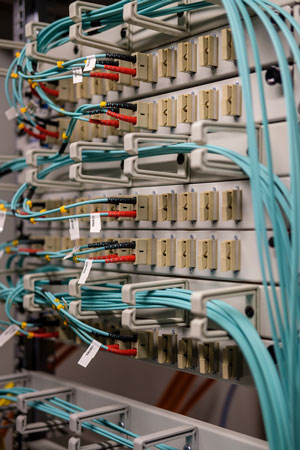
The move to business software in the cloud increased the demand for high speed, low latency bandwidth. The introduction of AI ups the ante even more. What used to be considered high bandwidth may now be an impediment to getting work done. Fortunately, higher bandwidth circuits in the range of 10 Gbps to 100 Gbps are now readily available and at reasonable prices.

Find high bandwidth circuits from 10 Gbps to 100 Gbps.What Higher Bandwidth Offers
Why increase your bandwidth to 10 Gbps or above? Because you need it. Or, if you don’t absolutely need it, the improvement in performance and productivity justify the additional cost.

The amount of bandwidth you need is driven by the traffic on your WAN or point to point networks. As long as there is enough and the quality is high enough, the lines are essentially invisible. As soon as there are more packets ready to transfer than there is capacity to transfer them, trouble begins. Your circuit becomes congested. It shows up as increased latency, as packets must be buffered to wait their turn.

Response from the Internet and cloud slows down. Telephone calls have delays even to the point of sounding like you are on a two-way radio. Some packets might get lost creating garbled audio. Same for video. Two way conferencing gets jerky or frozen and may have missing pieces. Anything in real time suffers. Frustration by users increases. Workflow slows.

What Drives the Need for Higher Bandwidth?
Text messaging and email are now the least of the bandwidth drivers. Telephone audio might be if you have a large operation or a call center. Video for conferencing and watching online streaming is definitely a bandwidth driver. Don’t forget that more and more business processes are now being conducted in the cloud or at colocation data centers. The days of everything running on a server and some disk drives in the same building are gone for most everyone. At least some of what you do is processed remotely. That could be ordering, inventory, accounting, simulation and so on.

Replacing a sea of stand-alone PCs with a LAN was the first step. Now the LAN connects to a WAN and Dedicated Internet Access. The amount of traffic leaving the building is often more than what is handled strictly inside.

Don’t Forget About Big Data and AI
Data sets are becoming huge as more and more business and customer data is electronic. You don’t need more file cabinets, but you do need more disk space, including remote backup for safety.

AI is something new that consumes data and bandwidth like never before. As staffs are being encouraged to up their inference level and use as many tokens as they can to gain skill with AI models, the load on the connection circuits increases. Training can be even more of a overwhelming load as data bases have to be uploaded to the model. All of this is a demand on your network you probably didn’t see coming. But it’s here and it is only going to increase.

What Bandwidth is Available?
Most everyone needs Internet access and the best type for most business is DIA or Dedicated Internet Access. That is essentially a private line between your office and your service provider. Most of the congestion comes in the first mile when circuits are shared among many companies and residential users to save cost. Casual and undemanding users may not even notice the difference, but highly demanding businesses can easily see variations in performance throughout the day that are largely unpredictable.

Another form of private connection is direct cloud access, which connects you to your data center or cloud provider without going through the Internet. No sharing means faster and more consistent performance.

Dedicated private lines may also be leased to interconnect your facilities directly. This is like extending your LAN to cover multiple locations. Once again, no traffic sharing with other businesses and definitely no traffic sharing with the general public. Better performance and better security.

Is your network not keeping up with today’s needs? Increase productivity and future proof your connections with Dedicated Internet Access, direct cloud access, dedicated private lines, wavelengths and even dark fiber with bandwidth from 10 Gbps to 100 Gbps and above.


Click to check pricing and features or get support from an expert technology specialist.


Follow Telexplainer on Twitter


Wednesday, May 08, 2024

Is 10 Gbps Internet the New Business Standard?

By: John Shepler

Internet bandwidths have been creeping up since the introduction of broadband more than two decades ago. Just when you think you have enough, you find that response from websites and cloud applications is too sluggish for you to maintain maximum productivity. It’s time for another upgrade, but that isn’t such a bad thing these days… if you do it right.

10 Gbps fiber optic service for business.Why the Need for So Much Bandwidth?
What’s driving the need for ever increasing bandwidth is more data hungry applications. While the original Internet was most text-based, the next move was to images and then database operations. The introduction of video really started to suck up Mbps and Gbps as fast as they could be provided.

Now it is enormous file transfers, high definition video, including video conferencing, and the relocation of business critical applications from the server room to the cloud. Add e-commerce to that mix and you have a screaming demand for high speed low latency bandwidth.

The Changing Nature of WAN Bandwidth
The telecommunications world was founded on copper and wireless. Wireless persists in an evolved form, but copper is on the way out. Well, twisted pair copper telecom lines are disappearing fast. Coaxial cable copper has a new lease on life with DOCSIS 3.1 and 4.0 that are enabling it to compete with fiber. Wireless, too, can compete with fiber using 5G and, soon, 6G technology in the microwave range.

The big daddy of telecom is fiber. You can see fiber being trenched into nearly every right of way in cities and even smaller towns. Fiber goes under water to link continents. The Internet IS fiber, even if your access isn’t.

Fiber today isn’t the same fiber as yesterday. Oh, it’s still glass fibers fed by lasers. What’s different is the protocols. The telephone-centric SONET has given way to Ethernet over Fiber that is directly compatible with the Ethernet on your LAN. Packet switched networks have taken over from circuit switched networks.

The Good News About Bandwidth
The thought of ever accelerating bandwidth needs could give you pause except for one counter factor. The cost of that bandwidth is decreasing almost as fast as the speeds are increasing. You can get gigabit level fiber or cable broadband for what you used to pay for a T1 line. It is rapidly becoming possible for residential users to get gigabit level bandwidth over cable and PON (passive optical network) fiber. Wireless speeds in the hundreds of Mbps are also getting common. Any of these services may also serve smaller businesses well.

The next step up is in the multi-gig speed range, with 10 Gbps a new standard. It works well for businesses with many employees online, hospital and medical centers needing to transmit medical images, automated factories, video production and so on. If you already have Gigabit Internet or GigE service and are running into congestion, a 10 Gbps fiber line may be the perfect solution. For very high volume operations, even 100 Gbps isn’t unreasonable and is becoming more commonly available.

All Bandwidth Isn’t the Same
So far we’ve been talking about the Internet, the ultimate public commons. It’s a shared network by its very nature. Even so, most users with enough bandwidth find it works well for their purposes.

Internet access is also generally shared. Cable and cellular wireless are multi-user services without any priority or guarantee of latency. Because they are shared, these are the most affordable options.

The next step up is called Direct Internet Access or DIA. It’s a private line from your location to the Internet connection at your service provider. Being private means that you aren’t competing with dozens of other local companies or consumers for bandwidth, which can become scarce at times. The wireless equivalent of DIA is called 5G slicing.

Still need higher performance? Skip the Internet for a private lane all the way from your company to your cloud provider. Direct connection, another name for a private line, completely eliminates competition from other users to give you the best consistent performance. A 10 Gig Ethernet fiber private line is a premium service that may well fit your budget if you need to have the cloud behave like the servers down the hall.

Are you ready for 10 Gbps Internet or private line service? Don’t say no until you’ve checked prices for 10 GigE and higher business bandwidth. If 10 Gig is too much right now, you may opt for a fraction of that with the option to upgrade later. If 100 Gbps makes sense, large organizations may also find that within their means.

Click to check pricing and features or get support from a Telarus product specialist.


Follow Telexplainer on Twitter


Wednesday, January 10, 2024

Advantages of Dedicated Point to Point Fiber

By: John Shepler

If you are running a business and your broadband connections are driving you crazy, you may want to take a look at an alternate solution called dedicated point to point lines. Let’s have a look at what they are and what they can do for you.

Connect you business locations with dedicated point to point fiber.What Does Dedicated Mean?
Dedicated means that the bandwidth you are paying for is dedicated to your operations only.

But isn’t all bandwidth dedicated if you pay for it?

This is where it gets a little tricky. If you look closely at what broadband providers offer, they say something like “bandwidth up to 300 Mbps” or a similar disclaimer. Yes, the service you bought is capable of running at 300 Mbps. When you run a speed test, you may well see it clock-in at 300 Mbps… but not necessarily every time you test.

Why is that? It is because the bandwidth you got for such a bargain price is shared, not dedicated. You and multiple other users, including other businesses and consumers, are all connected to the same access line. When demand is low, you get screaming speeds. When everybody wants to download or upload files at the same time, that available bandwidth will be divvied up fairly so that everybody gets a share but nobody gets the line all to themselves. You might be waiting a bit.

If you want the line all to yourself and your business, you need to order a dedicated service. With dedicated bandwidth there won’t be other users outside of your organization competing for your line bandwidth. Whatever you aren’t using at the moment simply sits there idle for the time being.

You can greatly improve the stability of your Internet service with what is called DIA or Dedicated Internet Access. That’s a dedicated line from your company to your Internet Service Provider, where it connects to the Internet itself.

Will that guarantee smooth performance? Not really. Remember that the Internet is a shared service by its nature. There will be congestion and failure points from time to time no matter how you connect. The next step up is dedicated point to point fiber service.

Dedicated Point to Point Fiber
Dedicated lines have been available for decades using copper pairs and legacy telecom fiber called SONET for Synchronous Optical NETwork. Nowadays the best value is Ethernet over Fiber or EOF.

Fiber optic Ethernet services, sometimes called Metro Ethernet Fiber, are directly compatible with your servers using standard Ethernet interfaces. Unlike the Internet, you specify what two locations you want connected. The provider installs ports at each location and you have an always-on dedicated point to point fiber connection between them. You can order service starting at 10 Mbps or 100 Mbps and go up to 10 Gbps easily. In metro areas 100 Gbps bandwidth is available if you need it.

Advantages of dedicated point to point or P2P lines include solid bandwidth that is not affected by what other customers are doing. The link is inherently more secure than the Internet because there is no public access. Your bandwidth is usually symmetrical, meaning that it is the same for upload and download. That’s important if you are accessing remote servers to upload and download large files. Most shared bandwidth services are asymmetrical with download speeds typically 10x what you get for upload.

What are good uses for dedicated P2P fiber? The traditional application is linking multiple business locations. You may want to connect your headquarters and branch offices on the same private network so that someone across the country seems like they are just down the hall. Remote servers in colocation facilities or your own remote data center can also benefit from “extending the LAN” using dedicated P2P. Today that’s extended to the cloud, be it public, private or hybrid cloud services.

Do you need the stability and performance that dedicated point to point fiber line services can provide? If so, find out what fiber optic services are available for your business locations.

Click to check pricing and features or get support from a Telarus product specialist.


Follow Telexplainer on Twitter


Friday, July 21, 2023

10 Gbps Dedicated Internet Access Availability

By: John Shepler

Once considered a massive bandwidth suitable only for carriers, 10 Gbps is rapidly becoming the in-demand connectivity for businesses, municipalities, medical centers, content providers, and e-commerce. But is this bandwidth level readily available at a reasonable price? Indeed, it is.

Find 10 Gbps and higher bandwidth connections now.Where is 10 Gbps Dedicated Internet Available?
Most municipalities have 10 Gig Ethernet readily available because of the rapid deployment of fiber optic infrastructure. Fiber is necessary to provide the bandwidth to support 4G LTE and 5G cell towers, replacing legacy T1 copper lines. Fiber is also at the heart of cable systems even though the connection to the cable modem is still coaxial copper. Cities are now installing fiber infrastructure as a utility to serve all homes and businesses.

Once you have fiber optic cables, getting Gigabit and 10 Gigabit broadband is a piece of cake. Each strand can transport 10 Gbps with only one channel. Those same strands can be set up to use multiple wavelengths to carry numerous Gigabit and 10 Gigabit services. A fiber cable can bundle a few to over a hundred fiber strands. Rest assured, there is plenty of 10 Gbps capacity to go around.

What 10 Gbps Options Are Available?
The universal service in demand is Dedicated Internet Access. Dedicated means that your connection to the Internet carries only your traffic. Any capacity that you aren’t using at the moment is idle and available. There is no competition with other companies sharing your line.

Dedicated Internet Access gives you the best consistency and lowest latency way to access the core of the Internet. This is important if your company has remote servers in the cloud or colocation hosting. It’s also key if you are doing business over the Internet and want your customers to have the best online experience.

There are also 10 Gbps private lines that connect point to point between your business locations or from your company to your cloud service provider. This is a step above using the Internet for access. Private lines give you the lowest latency and least congestion. Having a dedicated private line makes your servers seem like they are right down the hall even if they are on the other side of the country.

Cable broadband is now offering a shared bandwidth service that enables 10 Gbps in the download direction using DOCSIS 3.1 and will offer 10 Gbps symmetrical service with DOCSIS 4.0. By sharing Internet access with other users, you can save a significant amount of money, but with the vagaries of varying bandwidth and congestion.

How about wireless? In some metro areas, microwave wireless broadband can give you bandwidths as high as 10 Gbps with no wired connections. Service can be installed rapidly, sometimes within a matter of days or a week.

What About Pricing?
Fiber optic service prices used to be sky high, but that has changed in recent years due to intense competition among service providers and the economies of scale that come from having so many more customers using high bandwidths. If you haven’t checked 10 Gbps prices lately, you owe it to yourself to get a set of current quotes from multiple providers. Yes, there are likely several carriers that can meet your needs right now.

Click to check pricing and features or get support from a Telarus product specialist.


Follow Telexplainer on Twitter


Friday, October 16, 2020

Lower Cost Last Mile Fiber

By: John Shepler

What is the most critical part of the Internet? To you, the user, it’s that last mile connection to your place of business. That’s usually the limiting factor and where most of the problems are. What you need is a better connection, and fiber is the gold standard.

Get a fiber optic last mile Internet connection now.Last Mile Limitations
Don’t get me wrong. There are no guarantees on the Internet. Your priority is the same as everyone else’s. When nodes get congested or name servers go down, the people connecting on a shoestring and the well-healed are both affected. That said, the Internet has matured to the point where the backbone networks are highly reliable and have plenty of bandwidth.

If you need the ultimate in connection quality between multiple business locations, you need to look to private solutions, such as point to point dedicated connections and MPLS networks. These have much stricter control of bandwidth, latency, jitter and packet loss. They are pricey and they don’t connect to the general public. That’s why the Internet is indispensable for nearly all businesses for sales and customer service.

The last mile connection is where pricing and quality vary all over the place. The biggest differentiator is shared vs dedicated bandwidth. Dedicated bandwidth means that you have exclusive use of the line capacity. What you don’t use simply idles until it is needed.

Seems like that’s the way it should always be, but the Internet wouldn’t have expanded geometrically the way it has if everyone had to pay for a dedicated line. Instead, carriers such as cable and wireless companies, buy high capacity dedicated lines and then multiplex them to share among many users. The idea is that not everyone is online at the same time and even if they are, most are not uploading or downloading at a given moment.

Prior to so many people working at home, most of the heavy consumer activity took place in the evening and business use was limited to daytime. Now, daytime demand is heavy for everyone using shared bandwidth. When it gets too heavy, line speed for everyone is reduced until the load lightens.

Dedicated High Speed Connections
Your best performance will come through a dedicated, symmetrical high speed link. Symmetrical means that upload and download speeds are the same. That tends to be case with dedicated lines. Shared bandwidth tends to be asymmetrical with much higher download than upload speeds.

You also want to connect through a top tier Internet Service Provider. These are larger companies that pay to connect directly to the Internet backbone. Smaller ISPs pay transport fees to the larger companies to connect through them to the Internet. It’s one more link in the chain.

You can get dedicated lines in both copper and fiber technologies. There are some microwave service providers who can deliver an equivalent connection wirelessly. These tend to be short range line-of-sight connections in major metro areas.

Copper solutions include the traditional T1 and DS3 (also called T3) lines. Newer technology is Ethernet over Copper which uses the same twisted pair cabling as T1 lines, but can support much higher speeds, although bandwidth tends to decrease with distance to the central office.

Fiber used to be a rare and expensive proposition, but that has all changed in recent years. Even cable companies have deployed fiber as their main transport network and some will sell you dedicated fiber optic Internet connections in addition to their more typical coaxial copper shared bandwidth services.

Fiber solutions include traditional telco Optical Carrier services such as OC3, OC12 and OC 48. The newer technology is Ethernet over Fiber. it’s generally much less expensive and highly scalable. That means you aren’t stuck with the bandwidth you first installed. You can start off with 10 or 100 Mbps and easily scale up to 1 Gbps, 10 Gbps or even 100 Gbps as the need arises. That alone is a great cost saver. The competitive nature of today’s fiber marketplace has greatly reduced the price of bandwidth far below what you might expect.

The buildout of cellular towers for 4G LTE and 5G has created a fiber construction boom. Many buildings have also been connected by fiber for business use. These are great places to have an office because the heavy construction costs of bringing in fiber have already been paid. If you don’t have fiber in your office yet, it may still cost little or nothing to bring a fiber bundle in. That’s because there is likely a point of presence fairly close and carriers each want to be first to “light” a building and garner the business of the tenants.

Do you need a reasonably priced highly reliable last mile connection to the Internet? Get multiple competitive quotes now and see how much bandwidth you can really afford.

Click to check pricing and features or get support from a Telarus product specialist.


Follow Telexplainer on Twitter


Wednesday, September 16, 2020

10 Gbps Dedicated Internet Access Has the Speed You Need

By John Shepler

Gigabit Internet is something of a gold standard for high speed business connections. Sometimes, though, even 1 Gbps doesn’t get the job done. At that point you need to consider a move up… to 10 Gigabit Internet.

Find 10 Gbps DIA bandwidth now.Who Needs 10 Gbps Bandwidth?
Most small businesses and probably all residential Internet users have no real need for this performance. The bragging rights are far offset by significant monthly lease fees. This is serious bandwidth for demanding applications that make having it more than worth the cost.

Not long ago the only place you’d find 10 Gbps pipes were in the backbones of carrier networks, including the Internet itself. Time marches on and what was adequate a decade ago is marginal performance today. Those 10 Gbps lines have gone from rare and hard to get to fairly common and readily available to business.

Cloud services and colocation centers certainly need access to gigabit, 10 gigabit and even higher connection speeds. Large corporations with thousands of employees, all connected, can also justify this speed. High tech firms and those using high tech tools may also require higher speeds. Content providers? Absolutely. Hospital and medical centers with large imaging requirements certainly can’t be waiting around for file transfers.

What’s Involved In Acquiring 10 Gigabit Service?
Speeds this high are almost always going to be delivered on fiber optic cable. The interesting thing about fiber is that once you have it installed it is as easy to get high speeds as it is to get much more modest service. That’s because the fiber itself is capable of tremendous throughput. The limiting factors are the number of strands in the fiber bundle and the termination equipment on both ends.

The first standard for high speed fiber transmission was developed by the telephone companies and called SONET for Synchronous Optical NETwork. You may have heard of OC-192, which is the 10 Gbps SONET Optical Carrier level. Nowadays, most competitive networks and even the telcos are moving to Carrier Ethernet. Ethernet is directly compatible with nearly all local area networks. It is also easily scalable from typically 10 Mbps to 10 Gbps and even higher speeds. What’s even more important for most business users is that Carrier Ethernet, also called Ethernet over Fiber, is generally far more available and far less costly than the older SONET technology.

Many competitive regional, national and international carriers now offer 10 Gig Ethernet access as well as point to point private lines. That means you may have several competitive offers to consider.

Why 10 Gbps Dedicated Internet Access?
Think of the Internet as the proverbial electronic superhighway with a backbone of major interstate and international roadways and millions of on-ramps. Unless you are part of the Internet itself, you will be connecting through one of these on-ramps. They vary greatly in performance.

The best performance you can expect on the Internet is to connect to the network backbone through a high tier provider using a dedicated connection. Dedicated means that you and you alone have use of the bandwidth you have leased. That sounds like the way it should be, but most Internet connections designed for consumers and smaller businesses are shared, not dedicated. By multiplexing many customers on the same line, cable, satellite and cellular wireless companies can offer low cost reasonable speed connections to their customers.

The other characteristic to look for is symmetric bandwidth. That means 10 Gbps in both the upstream and downstream connections. Those low cost options are usually asymmetrical, with download speed high and upload speed low.

Bandwidth to Grow With Your Needs
Since Carrier Ethernet is so scalable, you can often order the bandwidth you need today with the option of upgrading incrementally as your needs grow. With a 10 Gbps port, you can order 1 Gbps, 5 Gbps or some other speed and pay for the performance you are actually using. As long as you have enough port speed, you can often upgrade with just a phone call to your supplier or even through your online account.

Are you cramped for bandwidth but concerned that what you really need is not available or too expensive? You’re likely in for a pleasant surprise, so go ahead and request competitive quotes from Dedicated Internet Access providers serving your business address.

Click to check pricing and features or get support from a Telarus product specialist.


Follow Telexplainer on Twitter


Monday, February 09, 2015

The Cloud Needs Low Latency

By: John Shepler

It makes so much economic sense. Instead of getting a bank loan and making a major capital investment in your own server farm and data center, you simply contract with a cloud service provider and pay only for what you use when you use it. No more having to predict how business will be next year or even next quarter. You can roll with the punches with on-demand cloud services.

Cloud Computing Data Mouse Pad. Get one for yourself now.It Seems So Easy
The solution is deceptively simple. Clean out your current data center or don’t build one in the first place. Rent what you need from one of a myriad of cloud service providers. All you need is a simple link from your facilities to theirs and nobody on the network will know the difference. After all, how can they tell whether the servers are down the hall or across the country? Few users do anything but run the applications anyway.

The Hesitating Network
There’s an old saying that goes something like this: “On the network, the printer on the other side of the country is as close as the one in the next office.”

That’s an ideal. In reality it can either seem just that close or really a thousand miles away. The server three states over works the same as the one in the basement used to. Somehow, though, it’s developed a hesitation. You have to wait for the system to respond now. Worse, yet, that hesitation seems to vary. You really don’t know how the system is going to perform from one day to the next.

The Infinite Cloud That Isn’t
One used to be able to blame system performance lags on lack of resources. When everyone is running big jobs at the same time things slow down a bit. If you were clever, you tried to get your work done at odd hours before the thundering herd got to work or when they went to lunch. Let somebody else deal with the congestion. It’s the equivalent of drive-time traffic and no more fun.

That was one thing the cloud was supposed to fix. A major benefit of cloud data centers is that they have massive resources. Any given tenant can expand or contract the number of servers and the amount of storage they are using in real time. You aren’t supposed to run out of capacity ever. Yet, it seems like the cloud has less capability than you had before. How can that be possible?

The WAN Gotcha
One big thing that is often forgotten is that the printer in the next office and the one across the country have to be connected by something. That something is your WAN network connection. When all of your network resources were sitting on the LAN, the point was moot. There was plenty of capacity and the links were short enough that network performance just wasn’t an issue. You might say that the network became “transparent.”

Now, your network includes both the sporty LAN and metro and wide area connections that can be anything but sporty. In fact, they can be downright sluggish. That’s because there’s a difference between your local networks and the ones that run by telecom carriers. Local networks can be fairly easily engineered to have enough performance to appear transparent. That’s both harder and more expensive to do over long distances.

What’s Holding Back the WAN?
There are a few technical characteristics that spell the difference between transparent and not so transparent connections. These include bandwidth, latency, jitter and packet loss. You want to maximize the first and minimize the other three.

It’s tempting to jump to the conclusion that sluggish network performance is a result of too little capacity. When you start to use most of the available bandwidth most of the time, you can have periods of congestion where there are just too many packets to send down the line at the same time. Easy solution? Increase bandwidth. A double, triple or 10x bandwidth increase should solve the problem immediately… or will it?

One issue that no bandwidth increase can fix is latency. This is a time delay for packets to traverse the network. We think of electrical transmission being instantaneous from source to destination. At the local level, that’s a really good assumption. Once you leave the premises, though, even the speed of light may not be fast enough.

Minimizing Latency
Clearly, one way to minimize the time delay of transmission is to minimize the distance involved. Even at light speed, you can only go 186 miles in a millisecond. That’s 10 mSec for 1,860 miles. In fact, even that isn’t really possible. In real world glass fiber, you may be looking at more like 15 to 20 milliseconds one way or at least 40 milliseconds round trip. If you happen to be using a geosynchronous satellite link for part of the trip, that expands to a quarter to half a second.

Most applications aren’t going to be impacted by a 40+ millisecond delay, although half a second is definitely going to be noticeable and perhaps difficult to live with. This argues for using a terrestrial fiber link to the cloud (which is actually on the ground) and using the shortest path possible. A point to point dedicated private line is most likely the highest performance you can achieve. You may be able to get equivalent or nearly equivalent performance through a privately run MPLS network at a lower cost.

How About The Internet
Oh, yes, the Internet. It sounds like the ideal resource. It goes everywhere and connects everyone. The cost is amortized over so many users that the Internet is going to be your low cost solution. Security is certainly an issue, but encryption can create tunnels that give you a virtually private network that emulates a truly private network.

That emulation may fall short, not for security reasons, but in performance. The Internet is not engineered to minimize latency or jitter. It’s architecture is designed for resilience. If you lose a connection between servers, the network will automatically reconfigure to heal itself and keep the traffic moving. Unfortunately, that means your packets may take different paths on different trips. They may also encounter bottlenecks if particular nodes get overloaded.

Does this mean you can’t use the Internet to connect to the cloud? For maximum performance or highly sensitive interactive and real-time applications, you’ll do better with private lines. Otherwise, you might be satisfied with a private/public hybrid called DIA or Dedicated Internet Access. You still share the high performance backbone of the Internet core, but you connect via a private line that minimizes latency, jitter and packet loss during that critical first mile.

Finding a Better Cloud Connection
There is a range of cloud connectivity options available for most business locations. You should look at the cost/performance tradeoffs involved with each of these and then choose the link you need to make your connection to the cloud as transparent as you need.

Click to check pricing and features or get support from a Telarus product specialist.


Follow Telexplainer on Twitter

Wednesday, September 17, 2014

The 3 Types of VoIP Lines for Business

By: John Shepler

Businesses large and small have been migrating to VoIP telephone technology for years now. Some are delighted with the move and have never look back. Others feel like they’ve lost something in the way of performance. The calls are often muddled and it’s hard to carry on a two way conversation. Would you believe that its the exact same technology involved? Why is it that VoIP telephony can range from excellent to unacceptable? Let’s take a look.

Check out the range of VoIP options for your business.What’s VoIP
VoIP or Voice over Internet Protocol is a means to convert telephones into computer peripherals. The reason to do that is both to save money and enable applications that just won’t work on the old style telephone network. Network voice is a powerful tool, but can more easily be degraded that simpler analog phones.

Old School Phone Systems
Business phone lines are sometimes called POTS for Plain Old Telephone Service. They consist of twisted copper pair wires that run directly from the phone set all the way to the telephone company. Each phone has its own set of wires. Once you get more than a few phones, however, you face a mounting phone bill since the telco charges you to make internal as well as external calls.

Companies get around this by installing their own phone switches. Small systems use Key Telephone Systems where multiple outside lines are available on each phone but you can also call within the building on your own wiring. Larger companies install PBX (Private Branch Exchange) switches that manage a pool of outside lines that can be assigned to any phone as needed.

If you only have a couple of phones, each with their own line, the phone company takes care of all the switching for you. With many phones, you become your own little phone company for inside calls. That means you have to take care of all the special phone wiring and the Key or PBX switching equipment. Plus, you have to pay for multiple outside analog lines or a digital PRI trunk to get to the public telephone system.

How VoIP is Different
With VoIP, each phone plugs into your company LAN. That gets rid of the second special phone network. You still need something to switch the calls between phones. This can be a VoIP PBX or IP PBX that you have in-house. It can also be a much larger hosted PBX system from a hosted VoIP service provider. Hosted means that a specialized company “hosts” or run the system. You are one of many clients that they host. It’s pretty much like buying web hosting. You simply pay by the month for service instead of having to install and maintain your own equipment.

VoIP Phone Line Needs
All VoIP phones connect to a local network. This can be a small home office network that has only a computer, WiFi router, VoIP phone adaptor (for a regular phone) and broadband modem. Or, it can be an extensive corporate LAN that is bridged into multiple business locations nationwide and even overseas. The principles and the requirements for high quality performance are the same.

Since the network is shared with many phones and other computing devices, it take some doing to make sure that you get high performance. With dedicated analog lines, that’s the phone company’s problem. With VoIP, it’s now your IT problem.

What’s needed is plenty of bandwidth to accommodate all the phones and other devices. But that’s not enough. You need to give the voice packets priority over data because phone calls will start sounding muddled and choppy long before you notice that the file is loading slower. The network also needs low latency, packet loss and jitter to be transparent to the packets carrying the VoIP digitized phone conversations.

3 Types of VoIP Phone Lines
All analog phone lines are alike. All ISDN PRI trunks are alike. VoIP phone lines can be quite different. They range from Internet VoIP to SIP Trunks to MPLS private networks.

Using the Internet as Your Phone LIne
The low end of the market, which keeps costs low for home offices and small businesses, uses a broadband Internet service to connect to the VoIP service provider. You can share your broadband connection with a couple of computers, a WiFi router, and a few VoIP phones. You’ll need a router that creates CoS (Class of Service) to prioritize the phones or the computers will interfere with your calls. Sometimes the service provider will give you an adaptor that does this.

The advantage of using the Internet as a phone line is that it’s cheap. You probably already have broadband for your computer. The lure is to save money by “eliminating the separate phone line.” The downside is that the Internet was never designed for telephony. It was intended to reliably transport data files. There is no prioritization of voice on the Internet and most access lines, like DSL, Cable, Satellite and Cellular, are shared broadband. It’s a cost vs performance tradeoff. You may find that some calls sound perfect but others break up or sound muddled. It all depends on what else is happening on the Internet while you are making your call.

One way to improve Internet VoIP is to use a dedicated Internet access (DIA) like T1 or Ethernet over Copper. This keeps your neighbors from disrupting your calls while they download large video and software programs, but you are still subject to network congestion on the Internet itself.

Private Line VoIP Service
Companies that depend on high quality phone service for customer support and employee productivity usually sidestep the Internet in favor of something more predictable. The outside line that compares most closely to the legacy analog and PRI lines is the SIP Trunk. This is a digital broadband line, but it is a private line that is not shared with others. It’s called a SIP trunk because it supports SIP or Session Initiation Protocol, the switching system for VoIP calls.

A simple SIP trunk is a T1 line that runs from your network to your service provider. It supports up to a couple dozen simultaneous phone conversations or a combination of phone calls and Internet. The Internet service has a lower priority than the phone calls and uses whatever bandwidth isn’t needed for the phones at any given time. Smaller companies that don’t have dozens of phones find this is a great cost saver compared to maintaining separate phone and broadband lines.

Larger SIP trunks are also available for bigger companies or call centers. Both copper and fiber optic bandwidth is available to support as many calls as you need.

Voice over MPLS Networks
Major corporations generally have many business sites located around the country and even in other countries. They still want any employee to easily call any other employee without paying long distance toll charges. They also need to make outside calls to anyone with a phone.

A sophisticated solution is called VoMPLS or Voice over MPLS networks. MPLS is a private network arrangement with a regional, national or international service footprint. The network operator ensures that each paying customer has the necessary Class of Service, bandwidth and low latency, packet loss and jitter that they need for high performance.

VoMPLS works a lot like VoIP using SIP Trunks. The difference is that instead of having to run dedicated private lines among all your locations, you simply need an access line from each location to the MPLS network. This can give you a major cost savings, especially on those long international connections, while maintaining high network performance.

Are you in search of a better telephone solution, to reduce costs, increase available features or both? If so, there are VoIP telephone solutions you should take a close look at.

Click to check pricing and features or get support from a Telarus product specialist.


Follow Telexplainer on Twitter

Wednesday, September 03, 2014

Is a Virtual Leased Line Right For Your Applications?

By: John Shepler

Leased lines have been popular with businesses since they were made available from the telephone companies decades ago. But how about a virtual leased line? Could you make good use of this technology?

Virtual Leased Lines can connect your business locations with high performance at reasonable cost.Before we get into virtual leased lines, let’s take a quick review of what leased lines are and how they work.

Leased Lines vs Shared Bandwidth
A leased line is a telecommunications line that you lease for a particular time period. This is typically 1 to 3 years. During that time, you have exclusive use of the line for your applications.

Contrast that with shared bandwidth, the norm on the Internet. You don’t lease the Internet, you may lease access to the Internet. Once you are on the Internet, your traffic gets in line with everyone else’s and traverses the various networks that get your packets from source to destination.

Last Mile Often Determines Performance
Actually, the core of the Internet works pretty well most of the time. The congestion and latency you may experience is generally caused by the access or last mile connection. Shared bandwidth services such as cellular broadband, satellite, DSL or cable broadband are shared “best effort” services. You get what you get at any particular time because your performance is determined by how much of the bandwidth pool is being used by other customers.

How Can You Improve This Situation?
With a leased line, of course. This is called DIA or Dedicated Internet Access. Typical leased lines include T1 (1.5 Mbps), Ethernet over Copper ( 10 to 50 Mbps), DS3 (45 Mbps), OCx (155 Mbps and up) and Ethernet over Fiber (10 Mbps to 10 Gbps and more).

Why choose this hybrid approach of dedicated access and public shared Internet? It’s to improve the performance of your Internet connection end to end. You need the Internet to connect with customers and vendors and gain access to the wealth of content that is the World Wide Web. DIA gives you the best shot at excellent performance for business.

Dedicated lines are for much more than simply connecting to the Internet. They were in heavy use before there even was an Internet. Radio stations employed specially equalized analog lines to get their signals from studio to transmitter. Fire alarm systems use low bandwidth dedicated lines to send alerts to monitoring stations.

Rise of the T1 Line
Computerization of business made the T1 line popular. This is a dedicated private leased line that offers 1.5 Mbps of bandwidth. It’s still used to interconnect retail franchises to headquarters and for connectivity in rural locations where other services aren’t available. T1 has been the standard way to connect cell phone towers to central offices, but that is giving way to fiber optical lines that support 4G and beyond. If 1.5 Mbps isn’t enough for your needs, you can bond T1 lines to get up to 10 or 12 Mbps. A specialized version of T1, called ISDN PRI, provides telephone line trunking for PBX telephone systems.

What T1 and other leased lines offer beyond dedicated use of the line capacity is low latency, jitter and packet loss, along with the security of knowing that you are the only one with access. This is especially valuable for banks and other financial institutions where maximizing security is a very high priority.

Low latency is an important characteristic in preserving the quality of voice communications and teleconferencing. It’s also key to getting the fastest response from cloud based services.

Addressing the Cost Issue
The one drawback of leased lines is that they get expensive over long distances. Every leg in the path requires dedicating or “nailing up” a hardwired circuit (or fiber channel) almost indefinitely. Is there any other suitable option?

Yes. It’s called the virtual leased line (VLL). “Virtual” may sound a bit like “Internet,” but this is something different. Virtual does mean that you share a connectivity resource. In this case, that resource is a privately run MPLS (Multi Protocol Label Switching) network.

MPLS is the answer to cost effective private bandwidth service for nationwide and International connection. Few companies can afford true dedicated private circuits on transatlantic cable or even to multiple locations in the US. MPLS providers create their own core fiber optic networks with huge service footprints. This gives you the connectivity you need to the locations you want to interconnect. The core of the network runs at 10, 40 or 100 Gbps, so you’ll have all the bandwidth you need now and for growth, without having to commit to line capacity you can’t load up at the moment.

How MPLS Works
MPLS is a specialized technology that uses proprietary label switching to set up communications paths. These paths support IP traffic, but the network is not based on IP. That’s a security benefit. More security is derived from MPLS being a “private” network with no access by the general public. If you still want more security, you have the option to encrypt your traffic. The MPLS network will transport it.

The MPLS network operator sets up your virtual leased line from point to point, as you specify. You have a committed information rate (CIR) that defines the bandwidth you are guaranteed. A bonus is that some MPLS carriers allow you to burst above that rate for show intervals, something a hardwired circuit can’t do. MPLS service level agreements also specify the latency, jitter and packet loss you can expect. These are similar to what you’d get with other leased line options.

Related Services
You may hear VLL also described as Virtual Private Wire Service (VPWS) or EoMPLS (Ethernet over MPLS). A related service is Virtual Private LAN Service (VPLS) that is a many to many meshed network. It gives you the option of creating a LAN that interconnects all of your business locations over a large MPLS network.

Does this technology sound like what you need right now for your applications? Get more information and latest pricing on dedicated leased private lines and virtual leased line options now.

Click to check pricing and features or get support from a Telarus product specialist.


Follow Telexplainer on Twitter

Monday, September 23, 2013

Private IP Networks vs The Internet

By: John Shepler

Private vs Public. This is a big dividing line between business connectivity services. Let’s take a closer look at what the differences are and how you go about picking the right solution.

Compare private IP networks with Internet business solutions.Private lines have been a staple of business operations since they were first offered by the telephone companies. They are renowned for their high reliability, excellent consistent performance, desirable specs… and high prices.

The Internet is the new kid on the block, relatively speaking. Remember the dial-up days? Long gone. Now just about everyone who wants a broadband connection and can pony up $40 to $60 a month can hook into a universal worldwide network from just about anywhere. In fact, if you have a business and want to connect with consumers you WILL be on the Internet.

That suggests an interesting approach. If you have to be connected to the Internet to do business with your customers and, often, suppliers, why not use the Internet for everything? If it would work, you could save a bundle of money and only have to worry about your last-mile access connection instead of an entire wide area network. Somebody else will take care of making sure the Internet core will be available 24/7.

The actual Internet core network is highly reliable. The issues that business users have generally break down into performance, security and reliability of that last mile connection.

Let’s take the last mile first. You know that you can connect to the Internet using a business version of the same DSL, cable and wireless broadband services that are popular with consumers. The price is right, but you will be dealing with variable performance due to the bandwidth being shared among many users, asymmetrical (much higher download than upload speeds), and no service level agreements to give you the priority you need when things occasionally go wrong.

The solution to these limitations is DIA or Dedicated Internet Access. This is a last mile connection using a T1 line, DS3, Ethernet over Copper or Fiber or SONET fiber optic service. Now your last mile is every bit the quality of a private line. So, does that also make the Internet the ideal business network?

Not necessarily. The Internet is designed for universal access and is self-healing to maintain connectivity even if one path is cut or routing equipment fails. That’s good, right? It sure is if you want to make sure your packets get from one place to another. Not so good if you need consistency in bandwidth, latency, jitter and packet loss. Remember, you are sharing the Internet with millions of other eager users. That can result in things backing up, like the congestion you get on a public highway. Nobody guarantees performance, so you get what you get. For nearly all consumers and many businesses it’s a good tradeoff.

Security is another matter. There is no security on the Internet. It’s open to anyone and everyone. However, you can create your own security by using data encryption to build a private tunnel through the public network. SSL (Secure Socket Layer) encryption is the standard for ecommerce and can be used for private business communications, too.

It the Internet won’t cut it for your critical internal operations, you can construct your own private IP network using point to point dedicated lines and your own switches and routers. The PTP lines simply extend your network around town, cross country or internationally. This is the ultimate in performance and security, but it costs a pretty penny. Is there anything else that will work?

MPLS networks are becoming the new gold standard for private business communications. This means connections between multiple business locations, remote data centers or cloud services. Only paying customers get on this network and the Multi-Protocol Label Switching technology is proprietary to the network. This is why they’ll often be referred to as MPLS VPN or virtual private networks. The network operator ensures that each user has the connectivity they need with committed bandwidth and guaranteed levels of low latency, jitter and packet loss. From your perspective, you are the only one on the network. In actuality, there are likely thousands of other customers using the same core network. There is no interaction between them.

MPLS networks are considerably less expensive than building your own private network but more expensive than using the Internet. So, how do you decide? In many cases, the answer is to use both. The Internet is perfect for connecting prospects and customers to your public-facing servers. The private network connections are perfect for sensitive internal communications, VoIP telephony, video conferencing, and efficient cloud connections.

Does your business need solutions for internal connections, public communications or both? Check out the different options for Internet and private IP connections available for your business locations.

Click to check pricing and features or get support from a Telarus product specialist.


Follow Telexplainer on Twitter

Monday, January 07, 2013

Ethernet Connects Businesses Throughout Latin America

Over the last few years, Carrier Ethernet services have become the choice of many, many businesses for Dedicated Internet Access (DIA), private line point to point connections, last mile access to MPLS networks and meshed any-to-any connections to link multiple business sites in the United States. Now that capability is rolling out worldwide. As an example, Level 3, a major international carrier, has won an award from the Metro Ethernet Forum (MEF) for their service to the Caribbean and Latin America.

Check prices and features of Ethernet services to Latin America or other worldwide destinations now...International voice and data services have been available for decades. We’re well aware of the extensive undersea fiber optic cables that link continents. What’s different now is a change of protocol and the availability of new services for companies and organizations worldwide.

The reason that Ethernet is displacing earlier protocols is that IP packets are now the dominant packaging for electronic communication. Nearly all Local Area Networks (LANs) are Ethernet based. The Internet, the largest and most connected set of networks, is based on routing IP or Internet Protocol packets. So why wouldn’t you simply extend the networks you have now using an Ethernet protocol?

The only thing stopping a faster switch over to IP based core networks is legacy. The massive investment in infrastructure over the last century isn’t going to go away all at once. That infrastructure was largely built by the telephone companies for their own use and is based on Time Division Multiplexing (TDM) telco standards such as T1, DS3 and SONET.

Fortunately, it isn’t necessary to rip out all the existing telecom equipment that works perfectly well just to have Ethernet services available. Carrier Ethernet can run over IP core networks or TDM networks. Ethernet over T1 (EoDS1) works well as a last mile connection to join MPLS networks or as a point to point private line. The existing T1 infrastructure is so extensive that it can be brought into nearly any business, even in rural areas. Ethernet over DS3 (EoDS3) up the bandwidth to 45 Mbps. Ethernet over SONET picks up at 155 Mbps and goes to at least 10 Gbps, with some connections available at 40 Gbps and 100 Gbps.

One factor that has hastened the adoption of Carrier Ethernet is the existence of an industry standards group called the Metro Ethernet Forum (MEF). This group serves to establish and maintain the standards that all manufacturers and Ethernet service providers will use to enter the Ethernet marketplace. One standard of note is the E-NNI or Ethernet Network to Network Interface. This provides a predictable and carrier-agnostic way for two networks to exchange traffic. As they do this, each carrier expands the reach of its own services. It is no longer necessary to lay fiber around the world to connect to international destinations. Carriers can create peering arrangements through E-NNIs to gain access to the markets that they don’t directly serve.

Level 3’s award winning project involved one of the world’s largest banking and financial services companies. The Ethernet business solution supported this customer’s connectivity throughout Brazil. More and more large and medium size corporations are looking at Ethernet services to interconnect their various locations worldwide. Smaller companies are finding that the cost advantages and easy connectivity of Ethernet makes it well worthwhile to switch services at contract renewal time for for new installations.

Does your large, medium or small organization need better connectivity at lower prices than what you’ve traditionally paid for legacy telecom services? If so, check pricing and features of Carrier Ethernet services now.

Click to check pricing and features or get support from a Telarus product specialist.


Note: Map of Latin America image courtesy of Wikimedia Commons.


Follow Telexplainer on Twitter

Monday, September 10, 2012

Zayo Lights Denver With Expanded Fiber Optic Network Services

Zayo Group, a major provider of fiber optic bandwidth infrastructure, has metro fiber networks in the Denver and Colorado Springs metropolitan business districts. Now they are expanding their fiber assets to span the entire Front Range of Colorado that includes the Denver metro area plus Colorado Springs, Boulder, Longmont, Loveland, Greeley and Fort Collins. For Colorado based businesses, this means another 521 miles of fiber to support research and development, technology, education and energy, among other major users. That will bring Zayo up to 900 route miles of fiber optic networking in the Denver area.

Find the fiber optic services you need in the Denver, Colorado area and nationwide...What sort of fiber optic services are available to businesses in the Denver area? Pretty much everything you can use from metro connections to Internet access, right on up to wavelength services and dark fiber.

Zayo can offer you classic TDM and SONET based services from DS3 (45 Mbps) right on up to OC-192 (10 Gbps). You can get these configured as point to point private lines, hub/tail arrangements and dedicated ring configurations. There are options for both logical and physical protection with fast failover.

Zayo is also set up to offer you the newer Ethernet over Fiber (EoF) services with speeds that range from 100 Mbps (Fast Ethernet) up to 10 Gbps (10 GigE). These are also available as point to point private lines, but go on to include point to multipoint configurations. These Ethernet services include end to end QoS (Quality of Service) options to prioritize voice, video and private data network traffic. This gives you the ability to converge your network for cost savings and higher productivity.

Does your company need Dedicated Internet Access (DIA)? Who doesn’t? Zayo offers line speeds ranging from 10 Mbps on the low end on up to 1 Gbps. This runs on a fully redundant MPLS network with Service Level Agreements (SLA) available from 99.9% to 99.99% uptime. Choose from Scalable GigE and 10GigE interface options. You also have the ability to connect end to end on Zayo’s nationwide network.

If standard fiber optic line services aren’t quite enough to meet your needs, you can opt for wavelength services over Dense Wavelength Division Multiplexing (DWDM). Options include 1, 2.5, or 10 Gbps in single or multiple waves. Choose a dedicated point to point data transport solution with defined or undefined routes, single path or dual path, or flexible topologies.

For the ultimate in bandwidth and security options, Zayo can provide you with dark fiber. Since you are leasing entire fiber strands exclusively, you have complete control of the traffic on your piece of the fiber network. This offers stronger security that you can achieve with shared networks. It also gives you complete protocol flexibility and rapid scaling for speeds up to 400 Gbps.

While this particular buildout covers the Denver, Colorado area, Zayo Group provides both nationwide and international connectivity with over 61,000 route miles of fiber, 9,000 buildings and 2,400 cell towers on-net, and 136,000 square feet of colocation space. Their network covers 45 states plus Washington, DC, as well as London, Paris, Amsterdam, Frankfurt, Toronto and Tokyo.

Do you have connectivity needs in Denver or other metropolitan areas that require fiber optic speeds? If so, you should know that there are more options available at lower prices than ever before. Get competitive quotes for fiber optic services that meet your business requirements from Zayo and other high performance service providers.

Click to check pricing and features or get support from a Telarus product specialist.

Note: Photo of Denver skyscrapers courtesy of Sasha Bruck on Wikimedia Commons.


Follow Telexplainer on Twitter

Wednesday, June 27, 2012

All My Access Is In Texas

If the state of Texas is where you do business, you’ll want to be aware of Alpheus Communications and their regional network connecting the major cities in Texas. In addition, they have colocation data center facilities in the Lone Star State. This gives you the advantage of security, reliability and low cost connectivity while keeping everything reasonably nearby.

Find metro and long haul network connections in Texas...The Alpheus regional fiber optic network offers high bandwidth and low latency between Dallas, Fort Worth, Waco, Bryan, Austin, San Antonio, Laredo, McAllen, Harlingen, Corpus Christi, Victoria and Houston. Long haul connections can take your traffic anywhere in North America at bandwidth speeds ranging from DS-1 (1.5 Mbps) up to OC-192 (10 Gbps).

Network connectivity is available in a wide range of options. These include Dedicated Internet Access (DIA), Metro Ethernet, Private Line and Managed Wavelength. Alpheus clients can connect with each other through a cross connect arrangement called Metrolocity. You can choose from bandwidth speeds ranging from DS-1 to OC-12 (622 Mbps) and peer with other enterprises and competitive communications service providers. You do not have to colocate or build facilities to other carriers to make these connections. They’re provided by Alpheus as part of their Metrolocity peering.

Alpheus operates four hub facilities in Houston, Dallas, Austin and San Antonio. Their network operations center (NOC) is also located in Houston. The Austin and Houston data centers are SAS 70 Type II Audit Certified to meet the demanding needs of enterprise clients. These data centers give you the security, reliability and scalability you need to host enterprise applications, disaster recover solutions, high performance websites, Software as a Service (SaaS) applications and general IT operations infrastructure. You’ll find hubbed and point to point service from DS-1 to OC-192, Gigabit Ethernet and 10 Gbps managed wavelengths.

Some clients find even SONET, GigE and wavelength services too limiting. To meet their needs, Alpheus Communications offers dark fiber solutions. With dark fiber, capacity is determined by the terminal equipment, usually DWDM (Dense Wavelength Division Multiplexing). In essence, you become operator of your own fiber optic network. That means you have the ability to transport any protocol or multiple protocols at once. Leverage wavelengths to create massive bandwidth for transporting near-limitless amounts of information.

Perhaps a Gigabit Ethernet connection is enough to meet your needs. Alpheus is set up to connect you across the metro markets in Texas or across the country. You can choose from point to point or point to multipoint GigE connectivity. Bandwidth options vary from 51 Mbps on up to 1 Gbps if you don’t need the full 1,000 Mbps right away. Rate limiting is flexible. There are three different classes of service available. The highest is load sharing. With this, Alpheus provides two physically diverse unprotected connections and you have two client interfaces. You take care of the protection switching. The other grades are Network Protection, which does have network protection features but no client protection, and completely unprotected service.

Are you interested in Texas Metro Ethernet service? If so, Alpheus can give you layer 2 networking services that include point to point, point to multipoint and any to any WAN connectivity. This connectivity takes place over a redundant MPLS network on a self-healing DWDM fiber backbone. Your port interfaces include 10/100 Mbps FastE, 1000 Mbps GigE and 10 Gbps Ethernet. Alpheus has last mile connectivity solutions that include Ethernet over Copper, Ethernet over NxT1 and Ethernet over NxDS3 plus Ethernet over Wireless to get you connected no matter where you happen to be.

Do you need network access in Texas? You’re in luck. Get pricing, features and availability of Texas metro and long haul network connections from Alpheus and other high quality network service providers.

Click to check pricing and features or get support from a Telarus product specialist.


Note: Map of Texas courtesy of WikimediaCommons.


Follow Telexplainer on Twitter

Thursday, May 17, 2012

Symmetrical Internet Providers

Most people who use the Internet are consumers, not producers of content. The mix of content has migrated from largely text to largely images and streaming video over the last couple of decades. Even so, the connection arrangement for broadband Internet access has remained asymmetrical with bandwidth in the downward direction 5 to 10 times that provided in the upload direction.

Symmetrical or Assymetrical? That is the question...Why is that the setup? Think about how you access the Web on a PC, tablet or smartphone. It almost always involves selecting some content to read or view. The selection process is a matter of mouse clicks or keyboard entry. Those are pretty low bandwidth activities. The viewing of the results or the acquisition of a file is just the opposite. A server assembles those results and delivers fairly large pages consisting of text, graphics, photo images and perhaps video. All of that material comprises a lot of bytes and needs a considerable bandwidth to deliver in any reasonable time.

Since bandwidth is a scarce commodity, relatively speaking, there is a noticeable cost involved in providing the wireline or wireless channel for transport. There is no point in provisioning a fast upload link if it is only going to be lightly used. It’s download that customers value and demand as much as they can get for their broadband dollar.

Social media is changing the mix of upload and download requirements. When most of us were web page readers, the low bandwidth upload and high bandwidth download channels were the obvious setup. Today, many more users are creators as well as consumers of content. They post to blogs and Facebook. They upload photos and videos as well as download them. New applications like VoIP telephony and video conferencing consume equal amounts of bandwidth in both directions. The pressure on service providers is for more upload bandwidth as well as download bandwidth.

Businesses have had the symmetrical bandwidth requirement for a long time. It’s the businesses that run those servers that provide content to their customers. Large files going to the server need lots of bandwidth. There may be more email flowing out of a business than into it. Some businesses are providing streaming video content to the Internet and consume more bandwidth in the upload direction than the download direction. Cloud services have heavy traffic moving in both directions.

Right now, your choices in Internet bandwidth services can be divided into symmetrical and asymmetrical categories. Symmetrical means that upload and download speeds are the same. Asymmetrical means one direction is much faster than the other. That’s almost always the download stream.

Traditional telecom services are symmetrical. They were developed by the telephone industry and later adapted for transporting data. Telephone is inherently two-way with no difference in the amount of traffic flowing in one direction versus the other. If you order a T1 line, Ethernet over Copper, DS3 connection or OC-3 fiber optic service, you will get symmetrical bandwidth by default.

Symmetrical bandwidth services also tend to be dedicated Internet services, abbreviated DIA for Dedicated Internet Access. What does dedicated mean? It means that the bandwidth is assigned exclusively for your use. A 10 Mbps EoC Internet service gives you 10 Mbps in both directions, called 10 x 10 Mbps, anytime you want to use it. Any bandwidth you don’t need at the moment sits idle until you do.

Symmetrical bandwidth services are often covered by Service Level Agreements or SLAs. These agreements spell out the technical characteristics of the line, such as bandwidth, jitter, latency and packet loss. They also define such things as MTTR or Mean TIme To Repair for any outages that might occur. There are generally remedies available, like refunds on your bill, if the service provider can’t deliver to the terms of the SLA.

Asymmetrical bandwidth services are generally targeted toward consumers where price is far more important than performance. The bandwidth is shared among multiple users, not dedicated to you alone. That means that your download and upload speeds will vary depending on how many others are trying to use the service at the same time. Instead of SLAs, asymmetrical services are provided on a “best effort” basis that lacks any guarantees.

There’s quite a difference in price and performance between symmetrical and asymmetrical bandwidth services. Which is right for your business? Get prices and features from business broadband Internet providers to compare options and select the best match for your company needs.

Click to check pricing and features or get support from a Telarus product specialist.


Follow Telexplainer on Twitter

Wednesday, November 02, 2011

Internet Wholesale Bandwidth Options

There are two types of organizations that buy Internet bandwidth. Most are end users. They want the access for their employees. The others are resellers. They take large Internet connections and divvy up the bandwidth to hundreds or thousands of individuals and businesses. These are Internet Service Providers (ISPs) looking to buy at wholesale and sell at retail.

Better wholesale bandwidth prices for Internet direct Internet access...The largest networks in the world, called Tier 1, don’t purchase Internet access. They are part of the core network itself. Those major world wide networks exchange traffic on basis of equals called peering. Each network gets as much traffic as it sends to the others, so all benefit and no money is exchanged.

Everyone else has to get to the Internet by accessing one of these Tier 1 networks. The next level down, the Tier 2 networks, are also very large Internet service providers. Since they don’t have the enormous global traffic to participate in peering, they purchase what is called IP Transit. This is Internet access sold on a per Megabit per second per month basis.

Smaller Tier 3 networks can purchase IP Transit from Tier 2 networks, if they are large enough to have an assigned AS or Autonomous System number (ASN) to identify them as part of the Internet. Large scale ISPs fall into this category as well as some large corporations and other organizations.

Local and regional Internet Service Providers, including WISPs (Wireless Internet Service Providers), buy DIA or Dedicated Internet Access. DIA connections are like point to point private lines, except that one end connects to the Internet. Other private line characteristics still apply. The bandwidth provided is completely dedicated to the ISP and not shared with anyone else. There are generally SLAs or Service Level Agreements that spell out characteristics such as maximum latency, jitter and packet loss as well as time to respond to outages and time to make repairs.

Dedicated also means that there are no extra charges for heavily loading the line. You can use the entire capacity of the circuit in both directions or only some of it. The price is the same.

The smallest DIA service is usually a T1 line running at 1.5 Mbps. This is a symmetrical service, meaning 1.5 Mbps upload and 1.5 Mbps download. Usually the download path is much heavier loaded than the upload path for typical Internet access. If fact most consumer Internet access is sold with 5x to 10x higher speeds on download than upload. For business users, upload speeds can be important when transferring large files to remote backup sites and servers within colocation centers.

Obviously, T1 lines can’t serve a large user base but they work great for WiFi hotspots and rural or subdivision WISP service where signed-up customers number in the dozens, not hundreds. A nice feature of T1 lines is that they can be bonded by adding more lines to double, triple and quadruple bandwidth up to about 10 or 12 Mbps. The other nice feature of T1 lines is that they are available where other line services don’t reach. If you can get business telephone system into a facility, you can probably get T1 DIA service.

The next increment in traditional telecom bandwidth is DS3, also called T3 lines. This service runs at 45 Mbps which is large enough for a good size service provider to offer competitive bandwidth. Beyond that, SONET fiber optic services include OC3 at 155 Mbps, OC12 at 622 Mbps and OC48 at 2.5 Gbps are very popular.

A strong competitor to T-Carrier and SONET bandwidth is Carrier Ethernet. It comes in two flavors, Ethernet over Copper (EoC) typically from 1 to 50 Mbps and Ethernet over Fiber (EoF) from 10 Mbps to 10 Gbps. In a some metropolitan areas, you can also get EoFW or Ethernet over Fixed Wireless at DS3 and Fast Ethernet speeds. Where available, Carrier Ethernet tends to have considerably better pricing than other services.

Do you resell Internet access to other ISPs or end users? If so, see if you can get better wholesale pricing on Dedicated Internet Access and IP Transit services.

Click to check pricing and features or get support from a Telarus product specialist.


Follow Telexplainer on Twitter

Monday, September 12, 2011

T1 Line Cost At A New Low

Over the years, most companies have come to own T1 lines either sooner or later. Larger companies got them for dedicated Internet connections back when business was just getting acquainted with the Internet. Small operations often get into T1 lines after becoming frustrated with shared bandwidth information services, such as DSL and Cable. There’s only one thing not to like about T1 lines and that’s the cost... or is it?

T1 line cost is lower now than ever before...If you think that T1 lines cost a small fortune, you probably remember getting a quote some time ago. Yes, less than a decade ago it wasn’t uncommon to pay $1,000 a month for a typical T1 line. I say typical because there are different flavors of T1 service and pricing has been very location dependent. Today, you might pay about a third of that in most locations nationwide.

Costs have plunged due to maturity of the service, deregulation that has opened the market to many more competitive carriers, and new technologies that now compete directly for your bandwidth dollar.

It’s never been a better time to get into T1 line service if it will meet your needs. Let’s take a look at how T1 lines work, what you can use them for, and how to decide if T1 or something else is the right service for your company.

T1 is one of the most mature telco technologies, developed by the Bell System for telephone trunking. T1 formed the basis of digital telephone service and later was pressed into service to transport data also. A half-century of experience means that T1 is well understood, almost universally available and well supported. As a tariffed telecom service, carriers take T1 seriously. Most are sold with an SLA or Service Level Agreement that spells out what you can expect in the way of availability, time to respond to an outage and mean time to repair.

T1 lines were designed to be provisioned on two pair of ordinary telephone wire. One pair is for transmit or upload. The other is for receive or download. This is a symmetrical bandwidth service. You get the same bandwidth in both directions and it is full duplex. You can transmit and receive at the same time. That was designed-in to support telephone conversations that are also full duplex.

The original use for T1 lines was telephone trunking. A trunk line supports multiple phone conversations. A T1 telephone line supports up to 24 separate conversations, each with its own synchronized channel. Think of these as individual business phone lines. A device called a channel bank can convert the 24 channels back and forth to 24 analog phone lines.

A more popular configuration of T1 telephone line is called ISDN PRI or T1 PRI. This also divides the T1 line into 24 channels but only 23 of them are used as phone lines. The last one is reserved for switching signals and data, such as Caller ID. ISDN PRI is very popular as a telephone trunk line that plugs directly into many PBX phone systems.

When used to transport data, the idea of channels is dispensed with and the entire payload of the line service is used to carry data packets. T1 has a payload of 1.536 Mbps. The actual line speed itself is 1.544 Mbps. The difference of 8 Kbps is overhead used to keep the line synchronized and for maintenance. A T1 line is typically said to provide 1.5 Mbps of bandwidth.

That bandwidth can be used to connect to the Internet in what is called DIA or Dedicated Internet Access. Dedicated means that you have exclusive use of the bandwidth at all times. Use as little or as much of it as you need. The remainder will still be available and not shared by other users.

T1 lines are also popular as point to point connections to link two business locations. A specialized use is to transmit digitized audio from radio station studios to rurally located transmitter sites. T1 is also the most popular backhaul technology that connects cellular wireless towers to telephone switching systems.

Has the cost of a T1 line come down enough to make it attractive for your business use? If so, you may also want to compare T1 against the newer Ethernet over Copper that typically offers twice the bandwidth for the same money. If EoC is available, it's an even better bargain. Get quotes now for EoC and T1 line services at your business locations.

Click to check pricing and features or get support from a Telarus product specialist.


Follow Telexplainer on Twitter

Friday, April 15, 2011

Broadband Business Internet Service Options

Nearly every business today is connected to the Internet or soon will be. Even those mom and pop operations that still use the mechanical credit card machines will soon use electronic card verification, email and at least a brochure website. Businesses that are already seasoned users of the Web are looking to upgrade their bandwidth to support a move to cloud services. Let’s compare and contrast the various options you have for a broadband Internet connection.

Check out the range of broadband business Internet services available for your location.Business Internet broadband services generally fall into two categories. They are shared and dedicated connections. Shared connections are similar in design to residential broadband services. The fact that the bandwidth is divvied up among many users lowers the cost for all. Dedicated services allocate a certain bandwidth to your connection and it does not vary regardless of what other users are doing. These services also tend to come with SLAs or Service Level Agreements that spell out technical parameters and availability commitments.

Shared bandwidth services include Cable Broadband, DSL, 3G and 4G Wireless, and two-way Satellite Internet. What they all have in common is that the actual bandwidth you’ll see varies with the number of other users and what they are doing. These services are sold as speeds “up to” a certain number of Mbps. That means what it says. You may get the full speed the connection is capable of or you may get a tenth of that at any given time.

These variations may or may not bother you. If you are running enterprise VoIP or bandwidth sensitive business processes, your variable connection may not support the performance you have in mind. On the other hand, if you use the Internet at work the same way you use it at home for email, Web browsing, or accessing pre-recorded audio and video, you may be quite satisfied with the service and delighted with the cost savings. Some services, like 3G wireless and Satellite are often used to support electronic credit card machines in lieu of using a phone line.

Dedicated Internet access connections, such as T1 lines and Ethernet over Copper, have rock solid bandwidth and generally excellent latency, jitter and packet loss characteristics. These are the same lines that you would use to interconnect business connections on a private line service. As Internet connections, they have one termination at your location and the other at your Internet service providers location.

Dedicated Internet access supports Web and email servers. The also support multiple users accessing the Internet and VPNs (Virtual Private Networks). If you are going to stream content to Internet users, you’ll want a DIA (Dedicated Internet Access) connection from the server to the Internet.

Ethernet over Copper (EoC) has become very popular as both a private line and DIA connection. You can often get twice the bandwidth you could with a T1 line costing the same price. Like T1, EoC is provisioned over twisted pair copper telco wiring to keep construction costs down.

Larger companies and those with demanding applications such as video transport move up to fiber optic services, such as OC3 to OC768 SONET and Ethernet over Fiber (EoF) 100 Mbps Fast Ethernet, 1 Gbps GigE and 10 Gbps 10GigE bandwidth services. All of these are dedicated services with service level agreements.

How do you decide which broadband service is right for your business? Perhaps the best way is to compare prices, availability and features for the range of Broadband Business Internet Service options available for your location. Most business grade broadband services are available only for business locations and not residences, despite similarities with consumer Internet services.

Click to check pricing and features or get support from a Telarus product specialist.


Follow Telexplainer on Twitter