Showing posts with label SD-WAN. Show all posts

Monday, July 20, 2026

Outsource Your Network Headaches

By: John Shepler

Back when all the network equipment fit into a literal broom closet and Cat5 cables hooked it all together, running a LAN with a connection to the Internet was an all in a day’s work. Now you’re dealing with multiple clouds, multiple locations, bad actors constantly trying to intrude, and equipment going obsolete almost before you can even power it up. The level of complexity is growing exponentially, but your staff and resources aren’t. Is there any way to simplify all of this?
Get NaaS services that are right for your businessMake Network Woes Someone Else’s Problem
You can keep doing it all yourself. That means hiring more and more staff, constantly refreshing hardware, troubleshooting outages and dealing with outside attacks on a daily basis. Or, you can let someone else take care of it.

The first approach to outsourcing network grief is to contract with a Manage Service Provider or MSP. This is an outside company that acts as your IT department. You still own all the equipment and services, but someone else provides the staff to manage it for you.

A newer approach is Network as a Service or NaaS. It’s a logical extension of Software as a Service. You stopped buying boxes with CD-ROMs to update your systems years ago. Most software is now offered on a subscription basis. Computing hardware has gone the same way with cloud-based services. Why not take the same approach to networks?

How NaaS Works
When you employ NaaS, you are essentially turning your network into a subscription. Just like SaaS you pay as you go and you pay for what you use. You dump capital expenditures and trade them for operational expenses.

NaaS can be implemented on a WAN or LAN basis. WAN networks include whatever it takes to interconnect various business locations, cloud providers and general Internet service. You can also outsource your LAN so that NaaS provides all the in-house routers, switches and security appliances needed to run the network.

What about SD-WAN?
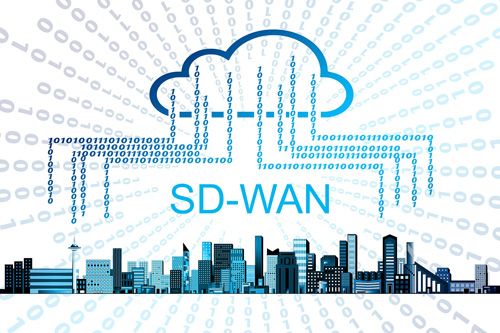
Software Defined Wide Area Networking is a flavor of NaaS that can improve WAN performance, especially in accessing the Internet. SW-WAN combines multiple lines, such as fiber optic, Fixed Wireless Access, cable broadband, and satellite to get the highest performance for your most critical functions. It automatically monitors each line and selects which path each packet should take. Higher priority packets get faster and lower latency paths, while lower priority tasks get what’s left. NaaS may incorporate SD-WAN to improve network performance.

The NaaS Advantage
There’s a certain efficiency in not being short of resources when you desperately need them to conduct business, or getting stuck with a back room full of hardware you’ll have to keep until things pick up or unload at fire sale prices. Worse yet, who wants to be laying off valuable tech employees during a downturn only to have to recruit and on-board new ones when business increases?

NaaS can also introduce some new features, such as constant AI monitoring and self-healing networks. Your network becomes another type of cloud that just gets a job done without you having to fight fires or worry about how to add this or that capability.

When NaaS Doesn’t Make Sense
As attractive as outsourcing your network woes sounds to many companies, it’s not for everyone. Companies that have large expert teams with deep knowledge of the network infrastructure and business operations may be able to provide an operational ability and efficiency beyond what an outside company can. This is especially true in heavily regulated industries or those with unique requirements.

How about your business? Does your network run like a well oiled machine with a staff that has knowledge not easily replaced? Or, are you struggling to deal with growth, a changing environment, difficulty in finding the right staff, constant problems that are hurting productivity or facing an equipment refresh that is going to be a strain on the finances?

Before you spend a fortune, you might want to consider the alternative of Network as a Service. Get expert consulting and proposals that meet your particular needs now with compelling NaaS solutions.


Click to check pricing and features or get support from an expert technology specialist.


Follow Telexplainer on Twitter


Wednesday, March 20, 2024

How AI is Helping to Improve Call Centers

By: John Shepler

All of us have been frustrated when making calls to customer service… and it seems to be getting worse. High costs and labor shortages serve to dishearten the poor customer hanging on the phone for hours and, also, the companies who desperately need to provide a favorable experience to keep their customers and attract new ones. Tech correspondent David Pogue discusses this situation and possible solutions in this CBS News report:


Did you catch that the likely solution going forward is a combination of traditional call center agents and new artificial intelligence software. The example in the story is called Grace. Here’s a more detailed look at how Grace works as a stand-alone agent:


Of course, even the most advanced AI agents come to a screeching halt when confronted by unique or complex situations. That’s where the best solution is to transfer immediately to a trained human agent. Some of the best agents are located in countries outside the United States and English is not their first language. Many US customers are put off by interacting with an agent with a heavy foreign accent, even though this agent has excellent technical skills. A new AI tool that can help is from a company called Sanas. The software works to change the speaker’s accent without otherwise affecting the conversation. You can try it out online and compare how actual call center agents sound with and without the AI support.

Behind the Scenes
Not all AI tools directly interact with customers. More mundane, yet important, applications include optimizing networks to get the best performance. SD-WAN is a simple system that combines multiple Internet or direct line connections and continuously chooses what traffic to direct down what path. Highly sensitive functions like VoIP phone calls and teleconferences get highest priority on for the lowest latency paths. Less sensitive operations, like remote backups, get lower priority and lesser performing paths.

AI software is also valuable for intelligently routing calls to ensure that they go to the next available person that can properly handle them and to track down key players regardless of whether they are at their desks or on the move.

Do you have communications issues that might be helped with newer or better technical solutions? Things are changing rapidly. Get support and find out what telecom solutions can really benefit your company.

Click to check pricing and features or get support from a Telarus product specialist.


Follow Telexplainer on Twitter


Monday, December 18, 2023

Cost Saving Shared Fiber, Wireless and Coax

By: John Shepler

You need connectivity but are feeling the pinch of inflation. Is there any way to get a business online and not break the bank? Sure there is. If they work for you, shared bandwidth wireless, cable coax and fiber optic connections are available at bargain prices. Let’s have a look at these.

Low cost shared bandwidth options for your business.What is Shared Bandwidth?
You are probably too young to remember telephone party lines, but how about roommates at school? That’s the sharing economy. It’s based on the idea that if something is expensive you can still have it as long as you join with others to foot the bill.

Internet connections can be had the same way. A fully dedicated high speed symmetrical fiber optic link can run into the big bucks every month. If that’s what you must have, then you’ll just have to come up with the lease fee. But, if your usage isn’t all that demanding, you can probably share the line with others, not limited to users within your company, to split the cost.

Now, this is where shared bandwidth services differ from the old party lines. Back in the day, a single analog phone line would serve multiple households in the same area. When you picked up the handset, you might hear a dial tone or you might hear someone else’s conversation already in progress.

The polite thing to do was hang up and wait awhile before you tried again. More often that not, curious individuals would simply cover the mouthpiece and eavesdrop on the call.

Shared bandwidth isn’t really like that… for the most part. You and another customer aren’t going to see each other’s traffic on your screen. The routing in the system keeps your data streams separate. However, all your bits are intermingled on the same line. A clever hacker can figure out how to monitor whatever traffic they can access.

The way around that limitation is encryption. Encrypt all your traffic and you’ve created a secure tunnel through the public Internet. That’s critical for using WiFi hotspots, but important for any shared access or easily tapped-into connection. Most websites and email services have gone to secure connections that are encrypted, but all your file transfers should also have this layer of security.

Shared Bandwidth Via Coax
Cable broadband is the originator of the coaxial copper connection. This standard was originally designed for analog cable TV and community antennas. Eventually a cable connector came standard on the back of TV sets. Later, Cable providers became Internet Service Providers by developing a modem that could connect to their coaxial line and share the bandwidth between TV and Internet.

The modem technology that does this is called DOCSIS for Data Over Cable Service Interface Specification. The most common version is 3.1, which is capable of multiple Gigabits on the downline side. The newest is 4.0, which can support 10 Gbps downstream and 6 Gbps upstream.

Shared Bandwidth Via Wireless
Smartphones have had excellent Internet service starting with 3G and 4G LTE. The small screen requirements are easily supported and were quite useful even with the old 2G standard. The standards also serve tablet computers, laptops and in some cases desktop computers, especially when other ISPs are offline. The bandwidth is often enough from a shared smartphone connection. The one limitation for desktop usage is that you might run up against monthly data limits.

With 5G service, cellular providers have begun promoting the use of their Internet service at fixed locations. They even have a name for this: Fixed Wireless Access. Instead of sharing your phone with your desktop, you buy a 5G gateway that may offer an Ethernet port for your network or WiFi hotspot. It connects to the provider like a phone, but without the mobility or voice service. There is simply an incremental charge to your cellphone bill each month. If you have good signal strength, you may get bandwidth of a hundred or two hundred Mbps without a wired connection.

Shared Bandwidth Via Fiber
Fiber optic service used to be only for major corporations and priced accordingly. Now fiber is so widespread that you can get Ethernet over Fiber Dedicated Internet Access in most reasonably populated areas. Bandwidths are available from 10 Mbps up to 10 Gbps and even 100 Gbps in major metro locations.

Fiber Internet is highly desirable and prices have dropped dramatically over the years. Even so, you may still want a lower cost option. Did you know that you can still have fiber for a bargain price? The technology involved is called PON or Passive Optical Networking. The provider takes that high bandwidth dedicated fiber line and divvies it up among 32 users using a passive splitter. Each customer still gets a fiber line, but the bandwidth on that line is being shared among multiple users just like cable broadband. In fact, cable companies are pioneers in building out this technology. You get fiber bandwidths, but with pricing that is more similar to cable services.

Limitations of Shared Bandwidth
While you won’t be seeing your neighbors messages popping up on your screen, you will likely still feel the effects of sharing. During periods of heavy usage, the service slows down. You might even detect congestion that brings everything to a crawl and then, just like with traffic jams, magically disappears. VoIP phone calls can break up. Video conferences can stutter or freeze. Cloud applications can become sluggish.

Another characteristic of shared bandwidth connections is that they are usually asymmetrical. That means that the download speed is much higher than the upload speed. Typically, a factor of ten or so. For Internet browsing or email, this may make no difference. It could impact video conferences and large file transfers up to cloud storage.

You can improve on this with a dedicated Internet access or with a software defined wide area network or SD-WAN. This is a technique for combining multiple Internet connections. The SD-WAN controller assigns traffic to the most appropriate link, with sensitive applications like phone calls getting the highest priority on the fastest paths. SD-WAN can let you combine a fast shared and low cost line with a small dedicated line. The result can be a service that gives you all the performance you need at a lower cost than a high speed dedicated fiber line.

What bandwidth service is most appropriate for your business? Find out what shared and dedicated Internet and private line services are available at better prices for your particular location.

Click to check pricing and features or get support from a Telarus product specialist.


Follow Telexplainer on Twitter


Tuesday, October 25, 2022

The Connectivity You Need For Digital Transformation

By: John Shepler

Most every business is now in some phase of digital transformation. It’s the process of moving from analog mechanical and paper based operations to digital and online processes. The promise of this transformation is faster and more efficient business methods that save cost and expand your customer base. But, what do you need to put in place to support this digital transformation?

Get the connectivity you need for digital transformation.Plan on Doing Most Everything Online
While most products and services are not digital, the tools to support them now are. Everything from finding prospects to converting prospects to customers, servicing those customers and keeping the products flowing has a digital element to it. The Internet is now the hub of operation for many businesses. Others may be local and walk-in for the most part, but may have an online presence and accounting or other processes in the cloud.

What makes the Internet so compelling is that after a decades of development, it is largely in-place, paid for, and ubiquitous. People who don’t even have bank accounts do have smartphones with Internet apps that allow them to buy, sell and get paid. While there are challenges, especially in the area of security, the Internet is a must for most companies.

Start With High Speed Reliable Internet Access
You’ll need a solid connection to the online world. It will have to be fast enough to be transparent to you and your customers, always available, and have a minimum of latency, jitter and packet loss. The best connections are the ones you never have to think about. That customer on the other side of town or the other side of the world will seem as close as someone in the next office.

There are basically two types of broadband connections. One is called Dedicated Internet Access. The other is Shared Internet access.

Dedicated Internet Access, particularly with symmetrical bandwidth that gives you the same speed uploading as downloading is the gold standard. While the Internet is certainly a shared resource, most of the congestion and outages occur in that “last mile” between you and your service provider. Dedicated connections give you a private road to the Internet. You always have the bandwidth you are paying for, whether you are using it every second or not.

Shared Internet Access is just that. A service provider leases a dedicated access line and then divides it up among many users. If the speed is high enough and there aren’t so many users demanding the same bandwidth simultaneously, you may not even know you are sharing. Sometimes, though, everybody wants to download videos or large files and things slow down. Then, like every traffic jam, they just as mysteriously dissipate and everything is back to normal.

The advantage of dedicated access is performance. The advantage of shared access is cost. Shared services such as cellular and cable broadband can cost a fraction of what a similar speed dedicated fiber or fixed wireless access service costs.

A Hybrid Approach to Increase Reliability and Lower Cost
There is also a third option that has been recently developed. That is the Software Defined Network (SDN) or Software Defined Wide Area Network (SD-WAN). What these systems do is take multiple Internet connections and bond them together so that you get one higher capacity, lower latency and more reliable connection. A SD-WAN box can combine a cable broadband line, a cellular broadband modem, and a small fiber optic service. Even satellite and landlines can be included. The software in the controller monitors each line constantly and selects the most appropriate for every packet.

With SD-WAN, your most sensitive applications, such as telephone and conference calling, get the highest priority for speed, latency and jitter. Business process are next in line. Less sensitive needs, like remote backups, get the lowest priority because a few seconds here and there probably won’t make any difference. SD-WAN can save you money compared to one very large fiber line that you can’t keep busy or perhaps can’t even get installed. It is also a lifesaver when one line is accidentally cut or has an equipment failure. SD-WAN will simply use the other connections to keep things running seamlessly.

Don’t Forget Your Cloud Connections
Your main office, store or factory connection to the Internet is critical, but so are the connections for your cloud based operations. Once those servers and applications leave the premises to be co-located elsewhere or run in a public or hybrid cloud, they need the same reliable and transparent connectivity you had in-house.

There are two connections to be concerned with. The first is the connection between you and the cloud. This may be the same Internet access you use for everything else, but for business critical operations you may want to consider a dedicated private line between your office and the colocation center or cloud service provider. This bypasses the Internet completely and gives you much greater control of your traffic since nothing is shared outside of your business.

The other connection of importance is the connection between the remote servers in the colo center or cloud and the outside world. For this you want the same high performance Internet access with enough bandwidth, low latency and minimal jitter and packet loss. Fortunately, this quality of service is easy to find for colo and cloud, as they deal in massive amounts of bandwidth on a regular basis.

Are you properly connected for digital transformation? That old DSL line or bandwidth limited T1 probably won’t get the job done anymore. Consider an upgrade to highly reliable fiber or wireless broadband for your business. Recent buildouts have made this much more affordable than you might expect.

Click to check pricing and features or get support from a Telarus product specialist.


Follow Telexplainer on Twitter


Thursday, January 16, 2020

Escape the High Cost of Bonded T1 Lines

By: John Shepler

The T1 line was the first professional-grade digital communications pipe. Over a half-century later, it is still widely used for point to point private lines and for PRI telephone trunking. It also makes an excellent first mile link for dedicated Internet access for small business. While the price of T1 lines have dropped dramatically over the years, it can still be a pricey solution, especially if you need to bond several together to get enough bandwidth. Are there any good alternatives?

Best the high cost of bonded T1 lines.The Good and the Bad of T1 Lines
At first, T1 lines were the only game in town. Once fiber became available with much higher bandwidth, T1 still had a cost advantage in the days before broadband everything. Would you believe that 1.5 Mbps was pretty impressive back in the day? It’s a symmetrical 1.5 Mbps. That’s the same speed in both directions. It’s also full duplex or both directions at the same time. T1 is a dedicated line. You have all the bandwidth and if you don’t use it, it just sits there idle until you do.

Bonded T1 Lines Increase Speed
Bonding is a process of making big lines out of little ones. If you bond two T1 lines, you get 3 Mbps. Four lines gets you 6 Mbps. Six lines and you have a respectable 9 Mbps. I understand that in the wilds of Alaska they’ll bond 8 or 10 lines together. That’s about the limit.

Now, the downside. Those 2, 4 or 6 bonded lines cost 2, 4 or 6 times as much as one T1 line. There’s no economy of scale. At, say, several hundred dollars a month each, that’s gets pretty pricey pretty fast. For that much money, why not just get a fiber optic connection?

Fiber Instead of Copper
Fiber, indeed. A nice side effect of the big telecom move to 4G LTE and 5G wireless is that the T1 lines they used to run to cell towers can’t possibly deliver the bandwidth. So, there has been a big buildout of fiber to the tower along with wireless fiber, also known as microwave transmission. That means that fiber service is far more available than it used to be. It’s also a lot less expensive due to increased competition from new providers and a technology switch from SONET to Carrier Ethernet. If you haven’t checked out fiber pricing and availability in awhile, you may be surprised at what has popped up while you weren’t looking.

Keep the Copper, But Use Ethernet
All that twisted pair copper in the ground can still be used to deliver decent bandwidths by bonding it for Ethernet over Copper instead of T1. EoC is a different technology and can deliver 10 or 20 Mbps easily. The downside is that bandwidth falls off rapidly with distance. This approach works best in populated areas where a telco office isn’t far away. If you can get it, Ethernet over Copper is very affordable and gives you the performance of bonded T1 at a fraction of the cost per Mbps.

How About Cable?
I’m amazed how many times prospective customers ask for gigabit fiber or dark fiber but wind up buying cable broadband. Why? Cable has a tremendous cost advantage. You can often get fiber bandwidths at T1 prices and most service levels are easily afforded by any business. The bandwidth is shared, not dedicated. It’s also asymmetrical, meaning that the download speed can be ten times the upload speed or more. These may or may not be issues, depending on how you use the service. Some applications just won’t tolerate anything but a private line. Most everything we do everyday isn’t that demanding. Many cable services have consistently high bandwidth and low latency. What hiccups there are tend to be transitory and long term outages have become rare on the major service providers.

Mix and Match
To get the right combination of performance and cost, you might want to consider a combination of services. For VoIP telephony and maybe business processes in the cloud, get a dedicated T1 or fiber connection. For general Internet use or customer WiFi, business cable broadband gives you a lot of performance for the price. Run the networks separately or use an SD-WAN system to intelligently direct traffic.

What bandwidth options are best for your business? Get pricing and availability on a wide variety of bandwidth services now so you can make the best decision and perhaps save considerable cost as well.

Click to check pricing and features or get support from a Telarus product specialist.


Follow Telexplainer on Twitter

Thursday, October 10, 2019

Can Satellite Be Part of Your SD-WAN?

By: John Shepler

Software Defined Networks (SDN) or Software Defined Wide Area Networks (SD-WAN) are being implemented more and more to provide high quality business bandwidth at lower costs. In some cases, SD-WAN is the only way to get decent bandwidth levels in rural and remote areas. You might think of these software defined networks as a potpourri of different connection technologies, but it’s more than that. it’s an intelligent approach to making the most of every connection available, including satellite.

Consider satellite as part of your SD-WAN solutionWhy The Need For SD Networks
Say you want to connect to the Internet or to your cloud service provider. Traditionally, you’ve done that by ordering up a “last mile” connection from your business location to the Internet or a private point to point line between two locations, such as your office and your cloud provider.

That’s great as long as there are providers who can give you all the bandwidth you need and at a price that won’t choke your business. The problem is that you often overpay for premium bandwidth that goes unused or settle for what the budget can handle and regret the performance limitations every day.

In reality, different tasks have different connection requirements. Telephone lines for a call center or even ordinary office use don’t need tremendous amounts of bandwidth but are highly sensitive to latency, jitter and packet loss. Backing up files to a remote data center or storage in the cloud is fairly insensitive to the latency, jitter and packet loss characteristics but needs lots of bandwidth to get done in a reasonable time.

This is where SDN / SD-WAN work their magic. An intelligent processor acts as a traffic manager for each and every packet entering the network. Those voice packets get routed to a dedicated high performance but limited bandwidth circuit like like a T1 or ISDN PRI. File backups can go via cable broadband or as lower priority on the T1 or fiber optic line. Business applications in the cloud need reliability and quick response. They’ll go over a high performance connection.

How SD Networks Optimize Cost
The processing power within the SDN controller makes note of what each type of traffic needs. You’ve told it that. The processor is also constantly monitoring the status of each connection that you’ve provided it. It can truly be a potpourri of T1, DS3, cable broadband, 4G and 5G wireless, Point to Point Microwave, Ethernet over Copper, Ethernet over Fiber, SONET, MPLS networks, DSL, and two-way Satellite.

What’s key is that the controller knows at each instant how each connection is performing. Low cost connections aren’t always low performing. That DSL or cable link might be zooming along right now. The low cost usually comes from these being shared rather than dedicated connections. Other users, not in your company, can be hogging bandwidth and creating congestion to slow you down.

Satellite may well have excellent speed and low packet loss. The geosynchronous satellites now in service do have long latency times that can’t be avoided. That can be an issue with voice and video conversations, but makes little difference for file transfers or downloaded video.

Wireless connections in general have usage limits simply because wireless bandwidth is a scarce resource. SDN needs to be mindful of that in assigning the connections to avoid bandwidth slowdowns or additional charges.

The point is that you don’t need to buy the most expensive bandwidth solution in many cases. You won’t be able to load up that line 100% of the time with traffic that absolutely needs it. SDN / SD-WAN can ensure that your costly connections get used to the max but offload traffic that doesn’t need such high performance to a lower cost link. You also gain the advantage of automatic failover in case one of your links fails.

When Availability Is Most Important
There are many locations in rural America where you can stand outside and waive a fist full of money to buy connectivity and have no takers. This is where an SD network solution can really help. The newer high bandwidth satellites offer fast speeds and quality connections. You can include a dedicated SIP trunk based on a T1 line for your VoIP phone calls to get around the latency issue. it is likely that cellular broadband is also available in most areas. Combine these and you may well get all the bandwidth you need with the performance you also need without having to pay a fortune to bring in a fiber cable… if anyone will even do it.

Are you frustrated with either the cost of connectivity or its availability? This would be a good time to look into SDN / SD-WAN solutions that can give you the performance you need at a cost you can afford.

Click to check pricing and features or get support from a Telarus product specialist.


Follow Telexplainer on Twitter

Friday, September 20, 2019

Various Flavors of Business Internet Access

By: John Shepler

You might think that the Internet is the Internet, but how you connect to it makes a big difference in the performance you experience. What is your best bet? Is it Dedicated or Shared Internet Access?

Find Business Internet Connection Options now.What is Dedicated Internet Access?
There are actually two ways to connect to the Internet. One is Shared Internet Access, which is the basis of consumer and most wireless services. The other is Dedicated Internet Access or DIA.

Dedicated Access is similar to how you run your own in-house network. You have ownership and control of the bandwidth. No other company can come in and hog your bandwidth. If you allow vendors or customers to connect to the network, you control that access so you decide who can use what resources.

You don’t own the Internet. Nobody does. The core of the Internet is an extremely high bandwidth infrastructure provided and operated by Tier 1 telecom carriers. Smaller carriers and local Internet service providers pay to have their traffic carried through the core. What you want is performance closest to what is experienced in the core. That’s dedicated access.

How Does Dedicated Internet Access Work?
You contract with an incumbent or competitive telecom carrier for a line that connects through their network core to the core of the internet. All the traffic on that line is under your control. Once it enters a carrier’s network you depend on their expertise and abundance of resources to ensure that you’ll have adequate bandwidth without congestion, latency, jitter or packet loss.

Isn’t Shared Internet Access a Better Deal?
Shared Internet Access is a much lower cost option for one simple reason: It’s shared. Here’s how that works. An Internet Service Provider who sells directly to consumers and small businesses leases a Dedicated Internet Access line, usually a fairly high bandwidth fiber optic line. That provider then multiplexes or divides that bandwidth among many customers. The maximum bandwidth you can use is rate limited to the plan you purchase.

Of course, the actual bandwidth you experience depends on how many other customers are online at the same time and what they are doing. There can be lots of users browsing the Web and not slow each other down. If many users are downloading video or large files from their cloud providers, the total bandwidth will exceed the capacity of the provider’s line and each customer will only get a fair share of that line. Providers can’t provision enough capacity for worst-case traffic conditions and keep the price reasonable, so you can expect your bandwidth to vary.

So, you have a decision to make. If you don’t use cloud services or have a requirement for constant high performance to ensure employee productivity, you might well benefit from the cost savings of cable broadband, satellite, or cellular broadband.

When Even Higher Performance is Required
The Internet is the Internet and it was designed to be robust in maintaining connections and not focused on bandwidth, latency or security. Congestion can happen even in the core and performance can vary on a minute by minute basis. Even a dedicated access line can’t change the inherent nature of this public resource.

The way to improve long distance network performance is to stay off the Internet for everything that doesn’t need it. Have a direct connection to your cloud service provider for business processes and certainly for VoIP telephony or Unified Communications. Use private point to point lines to connect business sites outside your headquarters. A usually acceptable option is the MPLS network, which is a form of privately run Internet. There are multiple users on this network, but the net is run to ensure every customer has all the resources they need. MPLS networks do not connect to the general public, so you will still need the Internet to interact with most customers.

A newer technology that improves Internet performance is the SDN or Software Defined Network, also called a SD-WAN or Software Defined Wide Area Network. This is a system that integrates multiple Internet access lines and manages them to assign the highest performance paths to the most critical functions. You can plug-in a dedicated T1 or Ethernet line, a cable broadband line, a 4G or 5G wireless modem or a two-way satellite transceiver and let the SD-WAN box decide which packets go where. It gives you redundancy so that you almost always have Internet access and can cost less than a dedicated high speed line that might not be used to capacity all the time.

How do you need to connect to the Internet? Will Dedicated or Shared Internet Access work best? Find out what bandwidth options and pricing are available for your business locations.

Click to check pricing and features or get support from a Telarus product specialist.


Follow Telexplainer on Twitter

Tuesday, April 09, 2019

Can SD-WAN Solve Your Low Bandwidth Problem?

By: John Shepler

Can SDN or SD-WAN solve your low and unreliable bandwidth problem? Hey, you can probably solve your bandwidth problems right now by upgrading to a dedicated higher bandwidth service with a service level agreement, such as Ethernet over Fiber from a top-tier carrier. A better question is how can SD-WAN give you faster and better bandwidth at a more affordable price point?

WAN Man Coffee Mug. Get yours here...The Cause of Low & Unreliable Bandwidth
Companies with bandwidth woes generally fall into one of two categories. The first is being stuck with bargain basement options because of very limited budgets. The other is being frustrated because the service needed isn’t available in that particular location at any cost.

The really low cost options tend to be broadband services that were designed for the cost sensitive consumer market and then re-branded for business. These include DSL and cable broadband certainly, but may also include cellular wireless and some two-way satellite.

What these services have in common is that the bandwidth pool is shared among however many users are online at the moment. That makes your speed fluctuate during the day. They also tend to be Internet only. If you want point to point you have to set up an encrypted tunnel with VPN or take your chances on security. Finally, they tend to be offered as “best effort” information services with no uptime or performance guarantees.

Are All Non-Telecom Regulated Services Low Quality?
No. That’s unfair and untrue. Cable speed and performance has grown by leaps and bounds, especially since the introduction of DOCSIS 3.0 and now 3.1. You can get fiber speeds at bargain prices in most populated areas. Reliability tends to depend on the local service provider. Some have almost perfect uptime. Others are less dependable.

Likewise, cellular wireless and satellite have experienced technology upgrades over the years. Both suffered from low bandwidth, congestion and spotty service. That’s not much of a problem anymore. With 4G and now 5G wireless, fiber-like bandwidths are becoming commonplace with solid service. Satellite, too, is now 100 Mbps nationwide with gigabit service on the way. Spot beams provide highly reliable fade margins.

Both cellular and satellite do have limitations, however, Satellite has a latency issue that won’t be overcome until the Low Earth Orbit constellations are in place. Both services are bandwidth limited by the amount of spectrum available, so there is only so much to go around. That means data limits to keep some users from hogging the scarce resources. If you hit the limit, you either pay more or have your bandwidth throttled for the remainder of the month.

Just What Can SD-WAN Do About These Limitations?
SD-WAN or Software Defined Wide Area Network, part of the Software Defined Network (SDN) technologies, can’t change the laws of physics, provider unreliability, or service availability. What it can do is manage a collection of limited performance bandwidth options to create a single higher performing network.

This works because not every connection you have will have the same latency, packet loss, speed or reliability. Besides the inherent differences in technology, performance often varies moment to moment. Sometimes the cable runs blindingly fast. Sometimes it’s all clogged up. Same with wireless, satellite and even DSL.

No human can sit there with a switch and direct traffic fast enough to send each packet down the best or most appropriate path by the instant. A computer can. That’s what SD-WAN is all about. A processor running software monitors multiple links. It then follows a plan for where to route traffic and it keeps track of it all.

The Other SD-WAN Secret
Another thing that makes SD-WAN effective is that not all traffic is equally demanding. VoIP voice calls are extremely sensitive to latency and packet loss. Data file backups aren’t. Many cloud based business applications need high performance all the time. Some aren’t all that fussy. With that in mind, a SD-WAN controller can see what demands there are for service, what paths are available and with what instantaneous performances. It can pick and choose where to route traffic for the most optimum use of the resources you have provided.

Your choice of SD-WAN links might include DSL, cable, T1 lines, satellite, 4G or 5G wireless, point to point microwave, Ethernet over Copper or Ethernet over Fiber, and even SONET fiber optic lines. The right mix depends on what performance you must have, what connections are available and your budget for bandwidth.

Are you struggling to do business because your current bandwidth solution just isn’t getting the job done? You should know that you have more options now than ever before, especially since SD-WAN became available. Tell a network bandwidth consultant about your particular business needs and see if you can do a lot better than what you are living with now.

Click to check pricing and features or get support from a Telarus product specialist.


Follow Telexplainer on Twitter

Business products with the WAN Man theme are available through our Zazzle Gigapackets store.

Thursday, January 10, 2019

SD-WAN vs MPLS Networks

By: John Shepler

Information Technology has changed dramatically in recent years, as has the business enterprises it supports. Most dramatic has been the move to cloud based computing and everything as a service. Last to change, however, has been the way everything connects together. Now that is also being transformed, driven by cost and cloud architectures.

SD-WAN cloud for high performance connectivity


WAN Networking via Individual Lines
Before MPLS, there were dedicated point to point line connections. Every company had one or more T1 lines and eventually DS3 bandwidth and fiber optic OCx circuits. Connecting two business locations together is pretty straightforward. Just order a line that runs directly between them and use that as another portion of your network.

Where it gets complicated and expensive is when you add line after line after line to connect far-flung offices, factories and warehouses. Each of those lines has a monthly lease fee dependent on distance and bandwidth. Each has to be integrated into the network as one big mesh or segmented for traffic control. You soon find yourself becoming a virtual telecom office running your own WAN (Wide Area Network).

The Solid Performance of MPLS
Two competing technologies have been developed to make long distance data connections more available and less costly. The first is the Internet. It’s a public network that is nearly universal and cheap as chips, as they say. The problem is that performance is erratic and security is non-existent.

The other is a smaller private version of the Internet called MPLS or Multi-Protocol Label Switching networks. Instead of one giant internet, you have a multiverse of smaller networks, each operated by an independent commercial vendor. It’s strictly pay to play. Being on one MPLS network generally does not give you access to any other, although there are services that will mesh or combine diverse MPLS networks. More often, you pick the particular MPLS network that has nodes near locations you need to connect.

The beauty of MPLS networks is that performance is guaranteed and security is orders of magnitude above the Internet. In fact, MPLS is sometimes called MPLS VPN just because the unique protocol makes it harder to hack. Your connections are pre-determined so that you can only talk to your own locations. Others have no way to access your data and you don’t even know that you are sharing the network. All of this comes at a price, but it is a much lower price than owning a multitude of leased private lines.

How About That Internet?
For those who don’t have the budget or need to connect with anyone and everyone around the world, especially the general public, the Internet is really the only decent option available. You have access to your customers and suppliers wherever they may be. Connectivity and core bandwidth have improved to the point where performance is generally pretty decent if your applications aren’t too demanding and you don’t mind some variability. Even security can be beefed up to an acceptable level by employing VPN technology such as SSL used in browsers.

SD-WAN, Best of Both Worlds
What SD or Software Defined WAN offers is a hybrid of private line, semi-private MPLS network and public Internet connections all at once. Each has their advantages and disadvantages. Private lines are rock solid, limited to one path only, and pricey. MPLS networks offer a lower cost while maintaining circuit performance and a wide area of connectivity. The Internet is low cost bandwidth and connects just about everywhere.

Can you possibly connect all of these together? That’s the job of SD-WAN. The Software Defined part is the intelligence that manages all of the different lines that you plug into it. You or your service provider explicitly tell the SD-WAN controller that VoIP phone calls go over the private lines or MPLS network and the file backups go over the Internet. If you lose a private line or MPLS connection, the system can create a VPN tunnel through the Internet to route all your traffic instantly. You’ll at least be able to keep doing business, albeit with some performance loss, until your high performance paths are restored.

SD-WAN can be a big money saver by knowing what traffic is either latency sensitive, bandwidth demanding or highly secure, and what traffic isn’t that critical or demanding. It will route packets through the lowest cost routes consistent with acceptable performance. WAN optimization software can also be included as part of the control system to further improve performance and reduce costs.

Have your business needs changed recently or are you suspicious that you may be spending much more than necessary because of the piecemeal way your WAN was constructed over the years? Now would be a good time to take a look at new SD-WAN and other connectivity options that have become available for your business locations.

Click to check pricing and features or get support from a Telarus product specialist.


Follow Telexplainer on Twitter

Thursday, August 23, 2018

We’re Headed Toward Universal Elasticity as a Service

By: John Shepler

We’ve all suffered the frustration of visiting a web site that normally works great, only to find it is slow or completely stalled. Perhaps you are trying to finish a project at 5 PM on a Friday and your cloud service has slowed to a crawl. Maybe the video you are watching just buffers over and over, raising your blood pressure to an unacceptable level. Why doesn’t this stuff just work?

Elastic Computing and BandwidthResource Starvation
Anytime systems that normally run without hesitation get bogged down, it’s caused by some type of failure or being starved for resources. On rare instances there is a hardware failure. More likely the failure is the software gone wandering down some unpredictable path or stuck in a loop. Even more likely you are experiencing resource starvation.

You are starved of resources when you need more of something than is available at the moment. This can be compute cycles, RAM memory, disk space or bandwidth. If the problem is caused by a sudden demand for more service than usual, you might be starved for all of these.

How can this happen? Imagine a e-commerce web site that is sized to handle the usual number of shoppers, plus some margin for peak shopping times. A major TV network presents a story on a product that has become popular on social networks. All of a sudden, it seems like everybody on Earth is searching for this item and many are finding your site. Traffic? Through the roof! Sales? Not so many more. You’ve been skunked by resource starvation.

But My Services Are Scalable!
Sure they are. All you have to do is hope someone has detected the surge in activity. They notify someone else in charge, who analyzes the situation and takes action to provision more resources. In most operations this is done by changing settings on a control panel or making a phone call to the service provider. After some minutes or hours, the traffic congestion has been relieved and everybody who still wants to place an order can easily do so. But… how many buyers have given up or found another seller?

The other weakness of scalability is that you may wind up paying a premium for unneeded capacity after the surge in traffic has passed. It takes a keen eye to match resources with need to minimize the cost of your computing and network services.

Elasticity Acts Faster Than Scalability
Think of elasticity as the automation of scalability. Elastic resources are those that automatically adjust for need without human intervention. Yes, the robots have come for our jobs and, in this case, they are welcome to this maddening task.

Elastic cloud computing allows the cloud to assign you virtual servers and storage as needed. You really couldn’t do this back in the day when your own servers had to be ordered, shipped, installed in racks and connected to the rest of the infrastructure. Oh, that’s still the way it is done. It’s just invisible to you. Now the cloud company takes care of installing dozens or hundreds of physical servers at a time. The hypervisor software slices and dices them into virtual machines that can be assigned to any user at any time, faster than you can ask for them.

Another beauty of elastic computing is that resources can be deleted as fast as they are added. With the system automatically monitoring the traffic demand, this means you only have what you need at any point in time. It also means that you only pay for what you are using as you use it. A good cloud service will appear to be an infinite well of resources that you can check out and turn back as required.

Elastic Bandwidth Completes the System
It doesn’t do any good to have a supercomputer in the back room if all you’ve got is a T1 line at 1.5 Mbps to access it. What you really need to complement your elastic computing is elastic bandwidth as well. Software control and billing is making this a realistic prospect. You cloud provider may have many Tbps or Pbps of fiber bandwidth connected directly to the core of the Internet. You don’t have to pay for all of it. You can be billed by the average bandwidth that your computing resources need per hour.

Software Defined Networks now make it possible to virtualize bandwidth the way clouds virtualized servers. This capability will optimize the use of of bandwidth in the connections to your company locations. With elasticity, your lines won’t get congested nor cost your a fortune for idle capacity.

MPLS Networks with bursting capability have offered a form of this elasticity for years. You pay for a certain throughput, but are allowed to automatically increase your traffic for short periods of time.

Rapid scalability is now typical of fiber optic Internet and point to point bandwidth service. Soon, elasticity will become the norm and we’ll forget the days when you were never quite sure if you ordered enough bandwidth or way too much.

Click to check pricing and features or get support from a Telarus product specialist.


Follow Telexplainer on Twitter

Thursday, August 17, 2017

How SD-WAN Hands-Off Seamlessly

By: John Shepler

It would be nice if WAN network connections were uninterruptible. Of course, they aren’t. Even the best copper, fiber or wireless Internet or point to point dedicated lines goes down eventually. With it goes your phone calls and other work in progress. You lose productivity and perhaps even sales. But, what if you had a magic box that made sure your connections never experienced more than a glitch for a fraction of a second no matter what the problem?

The magic box has a name. It is called SD-WAN or Software Defined Wide Area Networking. The box itself controls multiple redundant broadband links and has the intelligence to analyze the quality of each link and assign or remove traffic instantly.

Think this fiction? Have a look at a real time demonstration from Telarus, a leader in deploying this networking technology:


Did you notice that each link was different? Once was cable broadband, one was high speed fiber, and one was LTE wireless. An SD-WAN system will work with whatever links you have available, ranging from DSL to T1, DS3, Satellite, line of sight wireless and so on.

There’s an advantage in not having all your links the exact same type. All it takes is one backhoe to chop through a copper or fiber bundle and you can be out of business for hours, days or even weeks before they can patch it all back together.

If your business needs both speed and reliability in its digital connections to maximize productivity and profit, you should take a closer look at what SD-WAN from Telarus can do for you at a very reasonable cost. Find out what SD-WAN systems and connections are available for your business location now.

Click to check pricing and features or get support from a Telarus product specialist.


Follow Telexplainer on Twitter

Tuesday, July 18, 2017

WANs That Act Like LANs

We take our Local Area Networks (LANs) for granted. Every business has them, but they are seldom seen except for that network connector on the wall. You plug-in your computer, printer, phone, etc. and it just works.

Find better Wide Area Network Connections now!Networks vs Utilities
In a way, LANs are now the data equivalent of AC power. You don’t think about it. You just use it. Connections and operations were long ago standardized. You don’t worry about different flavors of Ethernet any more than you stop and think what voltage is coming out of that wall socket.

Now, how about those Wide Area Networks (WANs)? It’s the WAN that gets you out of the building and connected to your other business locations, your cloud services and everyone else in the world. We don’t think about the fact that electrical power is transformed to higher voltages and that there are switching centers between your location and the power generation. It’s just as invisible as the wires running through the walls. If only Wide Area Networks worked the same way (sigh!)

The Difference Between LANs and WANs
The big difference between local and metro or wide area networks is that the local nets tend to be invisible and the longer haul connections may not be. You probably don’t have to be concerned about bandwidth, jitter, latency or packet loss on an in-house network. Wired LANs, especially, do a good job of keeping these issues out of your way. As you leave the premises, those characteristics degrade. Ideally it is not enough to get in your way, but sometimes it’s a major stumbling block.

Where WANs Go Bad
Take the most common WAN we use: The Internet. The Internet is an amazing infrastructure that connects nearly everyone to everyone else. It was designed from the beginning to be extremely robust, so that line cuts and equipment outages are automatically worked around. Its design philosophy and popularity are its limitations. The speed and quality of your connection can vary from minute to minute depending on traffic levels. The least costly connections, like cable and cellular, are shared, increasing the variability even more.

Invisible WANs
If you want the same performance over long distances that you have in-house, you need to order dedicated symmetrical wired, wireless and fiber point-to-point or multipoint services. Yes, a dedicated connection will help Internet performance greatly because most of the issues are in the “last mile” connection to your facility. Dedicated direct lines may make a huge difference in how business critical systems like VoIP telephone and software as a service in the cloud perform. MPLS networks provide similar high performance among multiple business locations, including remote data centers and cloud service providers.

The Almost Invisible WAN
The one sore point with dedicated lines is that can be a bit pricey, especially if you need a lot of bandwidth over very long distances. It’s a cost/benefit tradeoff. Dedicated wins for most medium and larger size businesses, where productivity losses and poor quality voice services are intolerable.

For smaller businesses and less critical applications, however, there is a fairly new alternative that makes the Internet perform more like a direct connection. This is called SDN or Software Defined Network, sometimes also referred to as a SD-WAN or Software Defined Wide Area Network. What the software does is combine multiple lower performing connections to produce a composite service that works much better. The SD-WAN monitors each WAN connection packet-by-packet and routes the most critical packets over the best performing links at that instant. It goes a long way toward making very noticeable Internet services more like invisible direct connections.

Are you frustrated by unacceptably poor Internet or other WAN services or have just hit the limit of your current bandwidth? Discover the range of competitive Wide Are Network connections that are now available for your business locations.

Click to check pricing and features or get support from a Telarus product specialist.


Follow Telexplainer on Twitter

Friday, November 04, 2016

Will SD-WAN Eat MPLS?

By John Shepler

SD-WAN has become a hot service recently. It is often touted as an alternative or replacement for MPLS networks. Just comparing costs makes a compelling argument that SD-WAN may do to MPLS what MPLS did to Frame Relay. Is this really the case? Let’s take a look.

Find SD-WAN services now.

What Problem Are We Trying to Solve?
The issue is networking, specifically computer networking. Most of us have some need for computers as part of our job. That could be a traditional desktop computer, a laptop in a hotel room or conference center, or perhaps a tablet or or cellphone while we move around. It could also be a point of sale terminal, an industrial process controller, a 3D printer or just a laser printer in the office. All of these things need to be hooked together, or networked, or they just plain won’t work.

It’s actually worse than that. Remember when you bought software in a box? Not much software is sold that way anymore. Now everything is apps and they are delivered and updated virtually. The really heavy lifting software doesn’t even reside on your device. It’s at a remote data site or vendor’s platform. Without a connection, you can’t even run the application.

Private Lines: The Old Gold Standard
If you want to stay in complete control of every aspect of your network, you build your own for your exclusive use. Most companies do that internally. It’s when you leave the building that you have a problem. You need to hand off your packets to a service provider, or carrier, to transport them to another location.

The closest thing to stringing the wires yourself is to order private point-to-point circuits. T1, DS3 & OCx SONET are the traditional PTP circuits. More modern replacements are Ethernet over Copper and Ethernet over Fiber. All of these are still extremely popular with high performance, high security and high reliability. Cost and provisioning time are really the only issues.

MPLS Networks Save Money and Go Worldwide
You can approach the quality and security of private point to point lines using MPLS networks. MPLS or Multi-Protocol Label Switching is a replacement for the old-timey Frame Relay networks that were popular when high speed was 64 Kbps. It’s a privately run wide area network that handles multiple customers at the same time without them being aware of each other. Since the core network is shared, the cost is lower than running private lines to every satellite office you want to connect. Plus they’re already built-out, so you only need to provision an access line for each location.

MPLS networks are very popular for connecting companies with multiple business locations in the US or worldwide. Once again, they offer high performance, high security and high reliability. Also once again, cost can be an issue.

Why Not The Internet?
The lure of the Internet is strong. It’s the lowest cost of any method to reach anyone, anywhere in the world. However, there are issues.

Security is an obvious one. Just read the headlines any day and you’ll feel insecure about being online. Encryption, especially IPsec and SSL, make the risk acceptable for e-commerce and banking. However, performance is variable and out of your control. Latency, Jitter and packet loss are not only variable, they’re unpredictable. Companies running high performance business-critical applications wince at the thought of trusting their livelihood to the public Internet. Even so, the cost is really, really attractive compared with other solutions.

The Hybrid Network Compromise
Fact is, most companies need a broadband Internet connection for communications with suppliers and customers and access to the nearly unlimited news and information available online. A popular compromise is to use the MPLS network for internal communications and the Internet to go outside in a hybrid network arrangement.

Another use of the Internet is as a backup in case your private network fails. That happens enough with line cuts that it has a name: backhoe fade. If the broadband connection is just there on standby, all that bandwidth goes to waste most of the time.

SD-WAN Makes the Internet Suitable
The Software Defined Network (SDN) was invented to reduce the time and labor required to run complex networks. It “virtualizes” the network so you don’t have to deal with all the complexity of so many diverse routers, switches and appliances spread throughout the physical network.

SD-WAN or Software Defined Wide Area Network does the same thing for outside networks to connect far flung locations. SD-WAN manages multiple connections according to rules that you set up through a control panel. Once running it automatically directs traffic and works around problems without you having to get involved.

For instance, the SD-WAN can make use of Cable broadband, DSL, T1 lines, MPLS networks, LTE wireless, Satellite links and whatever else you have. It will monitor the characteristics of each path, in both the upload and download directions, for bandwidth congestion, packet loss, jitter and latency. It decides what path to use for each packet based on the instantaneous characteristics of the paths available. These can vary all over the place and change in milliseconds. You couldn’t possible keep up with all of this manually, but the SD-WAN system can stay on top of it.

With SD-WAN, you don’t need to waste the perfectly good bandwidth of your backup connection when the main link is running. SD-WAN will combine the bandwidths and make sure that the more critical apps, like VoIP and UC voice and video run on the best paths available and less critical file transfers use the lower performance paths.

Companies are finding that even having two diverse Internet broadband connections can give excellent performance compared with a single broadband service as long as they are being managed by SD-WAN. Two broadband services can easily cost only a fraction of even one private line for the same or less bandwidth. The core of the Internet usually runs pretty well. It’s the access connections, like WiFi and cable or DSL, that generally get flakey. Using SD-WAN to watch and select the best path at any given instant can dramatically improve the performance of the “virtualized” WAN network.

Is SD-WAN right for your business? You’d be remiss if you didn’t at least take a closer look at what connections are available and at what price for your particular business locations. Remember that you don’t have to go 100% on the Internet. SD-WAN will manage private lines, MPLS networks, satellite and wireless connections as well.

Click to check pricing and features or get support from a Telarus product specialist.


Follow Telexplainer on Twitter