Showing posts with label wide area networks. Show all posts

Thursday, November 17, 2022

Ethernet Replacements For SONET

By: John Shepler

High bandwidth fiber optic Wide Area Networks have their basis in a decades old telephone company standard called SONET. Highly reliable, but highly expensive, SONET is giving way to the newer technology of Ethernet WAN. As demand for business bandwidth keeps increasing, so does the attractiveness of Ethernet for long distance connections.
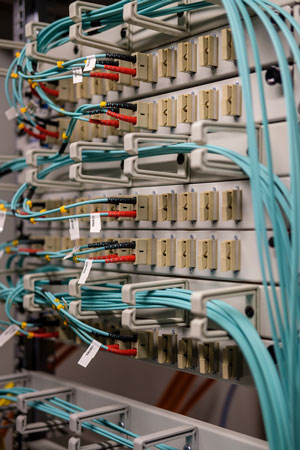
Get competitive quotes on Ethernet fiber optic WAN service.Why SONET Ruled For So Long
SONET or Synchronous Optical Network was born out of a burgeoning demand for higher and higher levels of traffic. In this case, the traffic was long distance telephone calls. In the early days of telephony, this demand was met with dense webs of overhead copper lines.

Multi-channel analog technology made it possible for each copper pair to carry many phone conservations on a carrier-based system, much like many radio stations in a single band.

Digital technology eliminated the noise and crosstalk of carrier telephony by converting the analog conversations to pulse coded digital streams and multiplexing many together on a single pair. The transmission medium was still copper wire.

One thing about phone company standards is that they are all backwards compatible down to a single phone line. After all, that’s the telco business. So, the digital T1 lines were actually carrying 24 separate phone calls. A T3 line was 28 T1 lines or 672 phone calls.

When the fiber optic standard was developed, it picked up where copper left off. The OC3 SONET line is 155 Mbps and is equivalent to three T3 lines. Within all those multiplexed channels is the same 64 Kbps voice channel to support one phone call.

How did we get from really big phone lines to data transmission? Basically, SONET was the only game in town if you needed large amounts of bandwidth. So, all those voice channels in the line were combined to create one large data channel to carry packets of information. That requires protocol conversion circuitry to go from Ethernet network protocol to SONET telephone line protocol.

This works beautifully, but there are a few issues. For one thing, SONET levels are very specific and not scalable. If you want to move up from, say, a 155 Mbps OC3 to a 622 Mbps OC-12, you’ll at least need to swap out the termination controller or interface card in your router. Also, since analog phone traffic is now trivial compared to packet based data traffic, wouldn’t it be more efficient to just keep everything Ethernet from end to end? Indeed, it would.

Ethernet Replacements For SONET
Most competitive carriers and even many of the traditional telecom companies have adopted Ethernet as their network standard, as that’s where the traffic is. As a result, you can find much better pricing for Ethernet circuits than for traditional SONET. Ethernet WAN is also highly scalable. If you install a Gigabit Ethernet port, you can order service at any bandwidth level up to 1 Gbps. That covers OC-3 at 155 Mbps, OC-12 at 622 Mbps and pretty much OC-24 at 1.2 Gbps.

No hardware changes are needed until you require more 1 Gbps. At that point you may install a 10 Gbps port which will cover OC-24, plus OC-48 at 2.5 Gbps and OC-192 at 10 Gbps. Today, 100 Gbps is becoming more and more available to take the place of OC-768 at 40 Gbps.

If you are looking to upgrade your fiber optic WAN connections or are just curious about how much you might save by switching from SONET to Ethernet WAN service, you can easily get a set of competitive quotes from multiple service providers with no obligation. That applies to private line services, including cloud communications, as well as dedicated Internet access. Now would be a good time to make that inquiry.


Click to check pricing and features or get support from a Telarus product specialist.


Follow Telexplainer on Twitter


Tuesday, July 18, 2017

WANs That Act Like LANs

We take our Local Area Networks (LANs) for granted. Every business has them, but they are seldom seen except for that network connector on the wall. You plug-in your computer, printer, phone, etc. and it just works.

Find better Wide Area Network Connections now!Networks vs Utilities
In a way, LANs are now the data equivalent of AC power. You don’t think about it. You just use it. Connections and operations were long ago standardized. You don’t worry about different flavors of Ethernet any more than you stop and think what voltage is coming out of that wall socket.

Now, how about those Wide Area Networks (WANs)? It’s the WAN that gets you out of the building and connected to your other business locations, your cloud services and everyone else in the world. We don’t think about the fact that electrical power is transformed to higher voltages and that there are switching centers between your location and the power generation. It’s just as invisible as the wires running through the walls. If only Wide Area Networks worked the same way (sigh!)

The Difference Between LANs and WANs
The big difference between local and metro or wide area networks is that the local nets tend to be invisible and the longer haul connections may not be. You probably don’t have to be concerned about bandwidth, jitter, latency or packet loss on an in-house network. Wired LANs, especially, do a good job of keeping these issues out of your way. As you leave the premises, those characteristics degrade. Ideally it is not enough to get in your way, but sometimes it’s a major stumbling block.

Where WANs Go Bad
Take the most common WAN we use: The Internet. The Internet is an amazing infrastructure that connects nearly everyone to everyone else. It was designed from the beginning to be extremely robust, so that line cuts and equipment outages are automatically worked around. Its design philosophy and popularity are its limitations. The speed and quality of your connection can vary from minute to minute depending on traffic levels. The least costly connections, like cable and cellular, are shared, increasing the variability even more.

Invisible WANs
If you want the same performance over long distances that you have in-house, you need to order dedicated symmetrical wired, wireless and fiber point-to-point or multipoint services. Yes, a dedicated connection will help Internet performance greatly because most of the issues are in the “last mile” connection to your facility. Dedicated direct lines may make a huge difference in how business critical systems like VoIP telephone and software as a service in the cloud perform. MPLS networks provide similar high performance among multiple business locations, including remote data centers and cloud service providers.

The Almost Invisible WAN
The one sore point with dedicated lines is that can be a bit pricey, especially if you need a lot of bandwidth over very long distances. It’s a cost/benefit tradeoff. Dedicated wins for most medium and larger size businesses, where productivity losses and poor quality voice services are intolerable.

For smaller businesses and less critical applications, however, there is a fairly new alternative that makes the Internet perform more like a direct connection. This is called SDN or Software Defined Network, sometimes also referred to as a SD-WAN or Software Defined Wide Area Network. What the software does is combine multiple lower performing connections to produce a composite service that works much better. The SD-WAN monitors each WAN connection packet-by-packet and routes the most critical packets over the best performing links at that instant. It goes a long way toward making very noticeable Internet services more like invisible direct connections.

Are you frustrated by unacceptably poor Internet or other WAN services or have just hit the limit of your current bandwidth? Discover the range of competitive Wide Are Network connections that are now available for your business locations.

Click to check pricing and features or get support from a Telarus product specialist.


Follow Telexplainer on Twitter

Wednesday, January 13, 2016

Are Your WAN Circuits Monitored For Quality?

By: John Shepler

As we transition from circuit switched telephony and make the move from in-house data centers to the cloud, our WAN (Wide Area Network) circuits become more critical than ever before. A misbehaving network connection that might once have been a mere inconvenience is now a productivity killer at best and a business shutdown at worst. It is essential that every copper and fiber optic line that leaves the building be running at peak performance all the time. But… how do you make sure that is the case?

Are you WAN Circuits monitored?Do You Know What is Going On Behind Your Back?
Technology has a sneaky side. When your outside network circuits are installed and checked out, the lines are verified to make sure they meet specs for latency, packet loss, jitter and bandwidth. Everything is running great. Tomorrow it’s still running great. But the next day, next week or next month something goes wrong. it might be a subtle change that degrades performance rather than knocking the line out completely.

Where do you point the finger?
The problem could be anywhere in the system. Is your LAN congested or are you dealing with a failing switch? Is it just your computer or telephone set that is having problems? Perhaps it is one of several network circuits that connect you to the outside world. How do you find out for sure?

Circuit Monitoring Is Your Eye on the Network
You can’t just blindly trust that everything is running smoothly. You need a way to look into the system. Likely, you already have that capability. You can run Ping and Traceroute diagnostic tests from your computer whenever you want. That’s great for troubleshooting if you know there is a problem and have time to sit down and run the tests. But what happens when no one is running diagnostics? Hard to say.

That’s where continuous circuit monitoring shines. You don’t have to jump in and run some tests. They are running all the time. Better yet, a monitoring program gives you a chart of how the circuit has been performing over time. Run a diagnostic yourself and you have only a single data point.

Get Automatic Heads-Up Messages
The other beauty of automating the performance monitoring of your WAN circuits is that the monitor can let you know when something goes out of whack. You can get an email when something goes wrong. That way, you don’t have to sit there and watch the screen continuously just in case there is an anomaly. You’ll get notified 24/7. The monitor never sleeps.

Best Deal Ever: Free Circuit Monitoring
The best way to get your WAN circuits monitored is to have it done for free. Ever hear of this? Probably not. This is a fairly new service powered by VXSuite and offered by Telarus on Internet and coax circuits with static IP addresses that they provide. MPLS and other monitoring is available. Telarus is well known for the extensive suite of carriers that they partner with and the best prices on WAN circuits. Now you get this bonus of free circuit monitoring included on both domestic and international circuits.

This circuit monitoring includes a ping and traceroute to that circuit. Packet loss and latency are also measured. If the circuit goes down, you get an email. You also have access to a web-based dashboard to view your current circuit status and performance graphics. A monthly email report is available if you wish.

Do you need WAN circuits you can depend on? Would you like those circuits to be monitored with the powerful VXSuite tools at no extra cost? If so, it is time to get the latest competitive pricing and availability of monitored WAN network circuits for your business.


Click to check pricing and features or get support from a Telarus product specialist.


Follow Telexplainer on Twitter

Tuesday, June 19, 2012

Ethernet In The First Mile Advantages

Metropolitan and Wide Area Networks can transport your packets anywhere you wish them to go. Regardless of what type of network you are connecting to, there’s one more thing you are going to need. It’s a way to get to the nearest on-ramp. This is often called first or last mile connectivity. Ethernet offers some real advantages to that first mile link that you should know about.

Connect to metro and WAN networks using Ethernet...There are a number of technologies that work well for first mile connections. These include T1 lines, DSL, SONET fiber optic services and even microwave or 3G/4G wireless. The idea is to connect your building to your service provider, or at least a portal to your service provider. In many cases, you can’t connect directly to your preferred network service provider because they don’t have any resources close enough. In other cases, it’s more cost effective to do it in a couple of hops.

A very typical case is the venerable T1 line. These are almost universally used by businesses as first mile links. Why? Because they are highly reliable, reasonably priced and almost always available. That availability is based on using telco twisted pair copper wire bundles that run from the business directly to the nearest Central Office (CO). That CO is owned by the incumbent local phone company, but copper pairs and rack space for equipment are leased to other service providers. This is where you connect to your provider’s network.

In many areas you now have the option of connecting via T1 lines or Ethernet over Copper (EoC). They both use exactly the same bundled twisted pairs but have different interfacing equipment at each end. This may not make any difference to you if your provider is installing a managed router as part of the service. You’ll connect to the router with a standard Ethernet LAN cable. What will make a difference is the lease price you’ll pay each month and the bandwidth options available.

Ethernet over Copper is less expensive per Mbps in most areas. You can typically get 2 Mbps or even 3 Mbps EoC for the same price as a 1.5 Mbps T1 line. It’s an even better deal as you go up in bandwidth. T1 lines can be bonded to double, triple or quadruple line speed or even more. You can stretch this technology up to 10 or 12 Mbps, but it starts to get pricey at the high end. Ethernet over Copper scales much less expensively and to higher bandwidths. While 3 Mbps EoC is a popular replacement for T1 service, many companies order 10, 15, 20, 25, 30 or even 45 Mbps Ethernet over Copper bandwidth. You can even get increments between these levels so that you don’t have to pay for any more connectivity than you actually need.

In addition to cost savings and increased bandwidth, there’s another reason that you may want to opt for Ethernet rather than T1 in the first mile. Standardized Carrier Ethernet services are now widely available. These include Ethernet Line (E-Line), Ethernet LAN (E-LAN) and VPLS (Virtual Private LAN Service). What they have in common is layer 2 connectivity that gives you the option to bridge your company LANs regardless of how far apart they may be separated. You need to keep everything in the Ethernet protocol to make this work. EoC will do that, T1 won’t. However, there is a service called EoDS1 that uses T1 lines to transport Ethernet where EoC isn’t available.

If you need higher speeds than Ethernet over Copper affords, you should take look at Ethernet over Fiber (EoF). It’s a replacement for SONET fiber optic services that include OC-3, OC-12, OC-48 and so on. Like EoC, EoF has both scalability and cost advantages. If you order a 1 Gbps port, as many companies do, you can have your provider deliver any bandwidth up to 1,000 Mbps and pay only for what you need. When your requirements increase, a simple phone call to your provider will get you higher bandwidth quickly. Ethernet over Fiber has the same Carrier Ethernet services available as Ethernet over Copper.

Are you thinking that Ethernet may be a better solution to your connectivity needs that what you have now? If so, get prices, bandwidths and availability of First Mile Ethernet services for your business locations.

Click to check pricing and features or get support from a Telarus product specialist.


Follow Telexplainer on Twitter


Wednesday, May 23, 2012

Optical Ethernet Connections To The World

Fiber optic connections are becoming common for network operations. How about for WAN (Wide Area Network) connections? Are you limited to what’s available on Ethernet over Copper or forced to abandon Ethernet for an unrelated telecom protocol?

Not any more. Ethernet connections have become established and far more common than you might think. This does include the lower bandwidth options over twisted pair copper, but it also includes high speed services over fiber optic connections. With fiber, you can pretty much have all the bandwidth you care to pay for. That payment may also be a lot less than you think.

Ethernet over FIber or EoF offers a set of high bandwidth services that meet the specifications of the Metro Ethernet Forum (MEF). All together, these standardized services are referred to as Carrier Ethernet as distinguished from Ethernet that runs on a local area network. These two types of Ethernet are highly compatible. Carrier Ethernet runs in the switched configuration only. There is no CSMA/CD capability. This is actually the way most networks run today. Nearly all use switching and routing to gain full duplex performance. Carrier Ethernet also has provisions for OAM or Operations, Administration and Maintenance that is needed by carriers to ensure that the link keeps working reliably.

There are some real advantages in having standardized services available that meet the MEF requirements. Like standardized equipment, you know what you are getting and that it will interoperate or work with similar services from other vendors. Part of the rapid expansion of Carrier Ethernet is due to the ability of exchanging traffic between service providers through an Ethernet NNI or Network to Network Interface. All carriers have limited fiber optic assets and would be constrained by their own service footprints if they couldn’t interconnect with other carriers. By entering into traffic sharing arrangements, it is possible for carriers to span the nation and the globe.

Two of the standard Ethernet services you may be interested in are E-Line or Ethernet Line and E-LAN or Ethernet LAN service. E-Line is the equivalent of the point to point private line available with T-Carrier and SONET telecom services. E-LAN is something different. This is a multipoint connection that can be used to network multiple business locations as if they were on the same bridged LAN. Everything operates at layer 2 so that switched Ethernet is available across town or to the other side of the globe.

Carrier Ethernet connections are through ports on a UNI or User Network Interface. Typical fiber optic port speeds mirror standard LAN speeds of 100 Mbps Fast Ethernet, 1000 Mbps GigE and 10,000 Mbps 10GigE. This differs a bit from standard telecom services that have unique circuit interfaces for T1, DS3, OC-3, OC-12, OC-48, etc. Many carriers find it easy to install Gigabit Ethernet ports as a standard practice and then rate limit the bandwidth to the amount ordered by the customer.

The port itself will accept traffic at any speed up to the limit of the port capability. Let’s say that’s 1 Gbps. Since you have only ordered and are paying for 150 Mbps bandwidth, that’s what you’ll have on your Ethernet Line or LAN service. The real beauty of this system becomes apparent when you need to upgrade from 150 to 500 Mbps. All you need to do is call your service provider and notify them of the change. They’ll adjust the rate limit to increase your bandwidth up to the 500 Mbps level. There is no physical change to any of the equipment in the signal path. That means the change can be implemented in a matter of days or hours rather than weeks or months.

Ethernet bandwidth services often have many bandwidth increments available. You don’t have to jump from 150 to 500 Mbps. You may be able to get 200, 250, 300, 400 or some other increment offered by the carrier. Most carriers have a fine layer of granularity available because it’s all done in software.

Can you make good use of fiber optic Ethernet connections to the Internet or other business locations? If so, get prices, features and bandwidth levels available for optical Ethernet connections to your business location.

Click to check pricing and features or get support from a Telarus product specialist.


Note: Photo of Earth from space at night courtesy of NASA on Wikimedia Commons.


Follow Telexplainer on Twitter

Tuesday, January 31, 2012

WAN Providers Bandwidth Service Options

WAN bandwidth connections are all but necessary for doing business today. What you may not realize is the wide variety of WAN bandwidth options available. Let’s see what’s on the market now and how you can get prices quickly.

Check prices and availability for your many WAN bandwidth options...WAN or Wide Area Network bandwidth is how you connect from your business to other businesses and your customers. For the sake of simplification, we’ll include MAN or Metropolitan Area Network connections along with WAN. What they have in common is that they start where your LAN leaves off.

WAN bandwidth has always been the domain of telecom companies. You don’t have your own WAN. You lease what you need from a service provider. What’s changed recently is that many competitive providers have come into the WAN marketplace to compete with incumbent telephone companies and traditional long haul networking providers.

Perhaps the most popular of all WAN services is the T1 line. It’s been around for half a century and comes in various flavors. A basic data T1 offers 1.5 Mbps symmetrical bandwidth with full duplex. You can get a point to point private line to connect two business locations or a dedicated T1 Internet connection for business broadband. T1 lines are also popular as telephone trunks for PBX phone systems. The original T1 telephone line supports 24 business phone lines. The newer ISDN PRI offers 23 phone lines plus Caller ID and faster switching.

The direct competitor to T1 is Ethernet over Copper. EoC will typically give you twice the bandwidth for the same money. Most popular is 3x3 Mbps Ethernet running at 3 Mbps in both directions. Where available, the price is generally the same as a 1.5 Mbps T1 line. Ethernet over Copper is easily scaled up in bandwidth, so you can order 10 Mbps, 15 Mbps, 20 Mbps or higher bandwidth over twisted pair copper telco wiring. T1 lines can also be bonded to increase bandwidth up to about 12 Mbps at the most. The one limitation is EoC is that it is a distance sensitive technology that is mostly available in metropolitan areas where you are located close to the central office where your telco wiring terminates.

Another WAN option that is becoming popular with smaller businesses is business Cable broadband. You may be able to get 100 Mbps x 10 Mbps service for the same price as a T1 line. While these speeds are impressive, note that the service is not symmetrical. The upload speed is only a fraction of the download speed. That works well when you are using it to access the Internet for email, Web browsing and video downloads. Cable broadband is an Internet connection. However, you can set up a VPN (Virtual Private Network) for two Internet connected locations so that you can transfer files much like a point to point T1 line. Also note that Cable bandwidth is shared, not dedicated. Your bandwidth will vary considerably depending on what other Cable users are doing online.

Higher speed WAN bandwidth requires fiber optic lines. DS3 at 45 Mbps is generally transported on a fiber optic line, although your connection is via coaxial cable. Both traditional SONET and the newer Ethernet over Fiber are available if your building is lit for fiber. Once the fiber is in place, you can easily get anywhere from 100 Mbps on up to 10 Gbps for business applications. Carriers themselves often use 10 Gbps and 40 Gbps fiber for their network backbones.

Wireless connections are also possible. Low bandwidth fixed wireless uses 3G and 4G technology and is popular for retail credit card verification. Higher bandwidth fixed wireless can replace DS3 and Fast Ethernet wireline services but is generally limited to downtown business districts. Satellite broadband works where no other service is available.

For really wide area connectivity, consider an MPLS network. These have regional, national and international connectivity. You can get nearly any bandwidth you require and connect dozens, hundreds or thousands of business locations securely.

With all these options available, how do you choose? The best way is go through a telecom broker that represents dozens of different carriers and has an application that makes it easy to get pricing quickly. The GeoQuote tool from Telarus, Inc. does just that. For many options you can get WAN bandwidth pricing and availability instantly online. Other services will be manually quoted in short order to meet your requirements. With that information in hand, you can do the price/performance tradeoffs and choose what make the most sense for your particular situation.

Click to check pricing and features or get support from a Telarus product specialist.


Follow Telexplainer on Twitter

Monday, October 03, 2011

Why The Smart WAN Beats A Dumb Pipe

The basic building block in constructing Wide Area Networks has been the “dumb pipe.” This refers to a bandwidth connection between point A and point B. There’s nothing stupid about these connections. They do one thing and one thing well. They get your packets from place to place with no effort on your part. The reason you’d want something smarter is that IT needs are getting more sophisticated. Either you add more smarts within your organization or gain this capability as a service.

Compare managed IT services for cost and performance...Level 3 Communications, a major domestic and international fiber network carrier, has seen the transition from simple to high performance networking requirements and is launching what they call the “Smart WAN.” This is a bundled solution that includes all of the bandwidth services you traditionally associate with the WAN, plus managed services to optimally tie everything together.

Let’s take a look at some of the services you find in this bundle and how they can benefit your organization.

You’ll want a connection to the Internet, of course. This is a dedicated bandwidth line that can range from a T1 or Ethernet over Copper connection on the low end on up to Gigabit Ethernet or 10 GigE for high performance needs. Level 3 can make whatever connection you need, including video transport and content delivery outside but in parallel with the Internet.

Nobody in their right mind would simply plug an Internet port into their company network these days. All the benefits of worldwide connectivity bring along all the problems with bad actors scattered around the globe. Some want to bring down your organization just for fun. Others want to steal your intellectual property for sale to a competitor. Level 3 offers managed security services to keep the threats at bay. These include managed firewalls, intrusion detection and protection, and IPSEC secure remote access. You’ll need this if you employ remote workers or employees that need access to the company LAN while traveling.

Beyond the Internet, you may want a VPN to tie together your business locations in other cities, states and countries. Level 3 has an extensive MPLS network in place that can support any needed protocol. Some of the standard services include EVPL or Ethernet Virtual Private Line, a Layer 2 Ethernet service that replaces long haul dedicated point to point lines and can also provide point to multipoint data service. IP VPN service offers any to any, full mesh WAN connections plus managed routing to simplify your support needs. There’s also VPLS or Virtual Private LAN Service that lets you interconnect your far-flung LANs in to a single company network. WAN optimization ensures that you are making best use of the bandwidth you have without overpaying for unnecessary higher level line services.

You can go out and procure any of these services separately, of course. That’s been the traditional approach to building business WAN networks on an ad-hoc basis. When all you need is a phone line and broadband Internet access, it’s no big deal to handle it yourself. What’s different lately is that companies are embracing cloud services that need high performance secure connections, perhaps shared among many different locations. This puts an additional demand on IT resources, at a time when increasing staff is difficult to impossible.

Level 3’s Smart WAN looks to offload the burden of setting up and running your WAN for maximum effectiveness. In addition to bandwidth and managed services, Level 3 can provide architecture, design, project management, monitoring & measurement and field service.

Are you finding that your WAN needs are getting hard to handle and perhaps costing more than you think they should? Perhaps you need a “smarter” WAN approach. Get competitive quotes for managed WAN services and see if you can get higher network performance at better prices than what you are doing now.

Click to check pricing and features or get support from a Telarus product specialist.


Follow Telexplainer on Twitter

Monday, January 10, 2011

The Multiple Data Center Dilemma

With mergers and acquisitions on the rise, companies are finding themselves with a multitude of data centers. So, do you leave things the way they are or try to capture some cost savings thorough data center consolidation?

Consider bandwith pricing as part of any data center moves and colsolidations. Click for pricing.The solution may not be as simple as picking one data center to expand and moving everything there. For one thing, each of those data centers is likely somewhat unique. They have different equipment, applications and expert personnel. Even if you take half a dozen small server rooms and move them intact to one big data center, you still have the matter of connectivity.

Most companies have networking set up to support much higher levels of traffic within the facility than to the outside world. That’s changing, as cloud services become more accepted. But even users of cloud computing and storage have to face the fact that they need much higher WAN (Wide Area Network) bandwidth than they used to. That drives two things: cost and availability.

Yes, availability can be a show stopper. If all your facilities are located downtown in major metropolitan areas, you have suite of services and providers to choose from. Telecom service competition in densely populated areas will work to ensure that you get excellent pricing on your service contracts. But what if your facilities are now scattered among small, medium and large cities with some locations out in the boonies?

This is why you start with a paper study before you do anything. Figure out what the new traffic levels will be to and from your main center or centers and then price out bandwidth that supports those levels with some margin for growth. Also make sure that you aren’t at the high end of available service levels or you’ll find future growth completely stifled. Do you really want to make a major move now and then make another one in a few years?

Calculate new bandwidth levels to serve the rest of your business locations. Note that while their data centers may now be downsized or empty, WAN traffic levels will almost certainly be higher. After all, all that data that was stored and processed locally will now have to come from somewhere else.

While virtualization and equipment consolidation may eliminate a lot of hardware and its associated power and cooling costs, you need to make sure that you aren’t just adding that cost back in network service expense. Perhaps you’ll find that modestly priced T1 lines or Ethernet connections are all you need to provide connectivity for those remote facilities.

By the way, if you are going to be ripping out facilities and re-installing equipment, this could be the perfect opportunity to take a look at cost savings you might not otherwise think were worth the effort. One approach is to move everything to a colocation center rather than try to operate your own. The advantage is that you’ll get a better deal on shared resources like HVAC and backup power. Also, bandwidth prices are often best within a colo. There are no availability issues and little or no provisioning costs because multiple carriers are right there in the same building.

Another option is to take a look at cloud services rather than providing your own. Once again, access bandwidth becomes critical with appropriate backup circuits to ensure that you’ll always be able to connect with the cloud. You’ll be trading off the capital expense and ongoing maintenance and operations costs of running your own data center for monthly fees to the cloud service provider. It is a better deal? Do the paper study and see what makes sense for your particular situation.

Would you like some help with this? Our Telarus bandwidth consultants are happy to get your requirements and work out pricing and availability for a variety of options. This consulting service is provided gratis to IT managers with serious requirements. Why not get started now? Put in a quick inquiry for enterprise voice and data services now.

Click to check pricing and features or get support from a Telarus product specialist.


Note: Photo of data center equipment courtesy of Wikimedia Commons.


Follow Telexplainer on Twitter

Thursday, September 16, 2010

Ethernet over Copper Growing By Leaps and Bounds

What’s the hottest new access network service? It’s clearly Ethernet over Copper. So hot is it that competitive carriers are scrambling to add coverage as fast as they can. An recent example is XO Communications, a major player in EoC, that just expanded its Ethernet over Copper network by more than 30%.

Just what is Ethernet over Copper and why is it so hot? The technology was developed in response to changing network priorities. WAN or Wide Area Network networks have traditionally been the domain of the telephone industry, which has adapted telephone transport technology to also carry data and video.

T1 lines have been used almost universally by businesses for point to point and dedicated Ethernet connections. They can be configured to transport 1.5 Mbps in both the upload and download directions. What’s made T1 so universal is that it is provisioned on two pair of ordinary copper telephone wires.

Ethernet over Copper also makes use of those same copper telephone wires, some of which have been in the ground for decades. Why push this old copper into service when fiber optics is so much more advanced? Simply because there is so much copper available and perfectly functional. Every business location has copper telephone bundles installed by default. If you want fiber optic service, you need to be in a fiber lit building or often be willing to pay the construction costs of extending fiber from the nearest carrier point to presence to your location. If copper will work, construction costs are minimal to non-existant.

But what can you do with copper? You can extend your LAN across town or across the country. You can even connect internationally to include locations overseas. Want a fast, reliable connection to the Internet? EoC will give you just that.

But why Ethernet over Copper instead of just sticking with the venerable T1 line? It comes down to cost, bandwidth and services. EoC is typically cheaper than T1 for the same level of bandwidth. In fact, you can often get 3 Mbps Ethernet for the same price as 1.5 Mbps T1. The most popular service is 10 Mbps Ethernet over Copper, although you can also get 20 Mbps and sometimes up to 50 Mbps over copper. T1 bandwidth can also be increased by bundling multiple T1 lines together, but the cost is often prohibitive above 10 Mbps.

In addition, Ethernet over Copper keeps your network protocol as Ethernet from LAN to WAN and back to LAN. That allows you to create virtual LANs that include multiple locations acting as one bridged LAN network. Ethernet line and LAN services are becoming very popular with businesses that support multiple locations.

Is Ethernet over Copper a service that would benefit your company or organization? Before you sign a contract for any other service, be sure to get pricing and availability of Ethernet over Copper bandwidth. It can be an eye-opener.

Click to check pricing and features or get support from a Telarus product specialist.


Follow Telexplainer on Twitter

Tuesday, September 14, 2010

Future Proofing Your WAN With Ethernet

The nature of wide area networks is changing. Once the exclusive domain of telephone technologies, core networks are being re-engineered for packet switched services. Voice will always be important, but data and video are now the dominant forms of network traffic. How does this affect your business connections and should you be doing anything to stay ahead of the curve?

Most businesses and organizations are being affected by increased requirements for bandwidth. As their line service contracts come up for renewal, savvy managers are taking a look at what’s available now and rethinking their options. Do you simply renew the T1 line contract that you’ve had for years or switch to a newer Ethernet service?

I mention Ethernet because Ethernet in the WAN, also called Carrier Ethernet and Metro Ethernet, are becoming the network connection resource of choice. What’s behind it is a recognition that virtually all business, organizational and home networks are based on standardized Ethernet. That includes the wildly popular WiFi wireless routers and hotspots that have Ethernet inputs and outputs. It seem intuitive that Ethernet would make a good metro and wide area connection technology.

What’s held back Ethernet WAN services is the entrenchment of telephone technology line services. Until deregulation, there was a century of monopoly ownership and development of analog phone lines, carrier telephony, T-Carrier digital line service and SONET/SDH fiber optic services. All of these services were designed to support the basic core element of the individual two-way telephone conversation. Even the vast cellular networks were designed with telephones in mind first and data piggybacked on later as an afterthought.

With data and video dominating digital traffic, it makes sense to take another look at what network characteristics make the most sense for now and in the future. Network providers, including incumbent telephone companies, have done this and are moving rapidly to IP networks and connections. The two most on the ascendancy right now are Ethernet and MPLS Networks. MPLS is an excellent choice for creating a virtual private network cloud that can transport nearly any type of traffic across the country or worldwide. It readily supports Ethernet, making those two network technologies a powerful combination.

While there are other network protocols for specialized applications, it looks right now like we are headed toward an everything-over-Ethernet world. It’s an easy connection from your switches and routers to the carrier that transports your packets to remote destinations. You just plug-in and go. You also have the option of ordering a layer 2 Ethernet service so that you can make all your distant sites connect like they are on the same bridged LAN. In a way, Ethernet makes the WAN portion of the network disappear.

Is it the right time for you to move to Ethernet services? You’ll likely find that they are less expensive per Mbps that other options and offer scalable bandwidth anywhere from 1 Mbps on up to 10 Gbps or more. Check out the cost and availability of Ethernet WAN service for your locations before you commit to other options. You could be missing out of a better deal.

Click to check pricing and features or get support from a Telarus product specialist.


Follow Telexplainer on Twitter

Wednesday, December 16, 2009

Can You Get To The Cloud?

Cloud computing and cloud storage are the emerging architecture for how we’ll all use computers before long. Advantages of doing everything in the cloud include not having to buy or maintain software, automatic backup for stored data, being able to access the same tools and data from anywhere using a variety of devices, and smaller, lighter computers themselves. In fact, your computer might turn out to be a netbook, cellphone or tablet. It sounds promising, but there remains one nagging question. Are you sure you can get to the cloud?

Get backup for your link to the cloud. Click here.The WAN or Wide Area Network link is the weak link in this chain. If most computing is done locally or by downloading applications from an in-house server, you’ve got control of the system. You only lose your ability to communicate with the outside world when your link goes down. But lose that link on a cloud-based system and your client device becomes the proverbial doorstop -- one that's really too lightweight to make even a good doorstop. If everything you do is in the cloud, you’ve got to have a pathway to that cloud at all times.

Mobile device can get connection redundancy by having two wireless technologies embedded. The primary link is through the carrier’s data network that’s on the same towers used for cellular telephone service. You are more likely to encounter a weak signal area than for the carrier service to fail. But Hurricane Katrina taught us that even well designed wireless systems can go dark if the emergency is dire enough.

A commonly used second path is WiFi connectivity. WiFi has a couple of advantages. There’s almost always a WiFi hotspot, and usually a free one, within walking or driving distance. If the nearest hotspot is down because a line break has shut down all telecommunications in the area, you can simply venture out further until you find a place that’s connected to a different broadband service. It might be inconvenient, but at least you can get to your apps and data.

It’s not quite as easy to work around an outage in a bricks and mortar office or store. You can’t easily just have everybody pick up and move to the nearest coffee shop with service. Instead of depending on someone else for backup, you need to provide that redundancy yourself.

What makes a good backup service? A carbon copy of what you have now is better than nothing, but has limitations. For instance, if a nearby construction activity cuts the wire bundle containing your T1 line, it will likely cut through your second T1 line as well. In backing up T1 or DS3 connections, you want service from two separate suppliers that approach your building from different directions and have no wires or equipment in common. You may elect to set up your routers to use both lines normally but fall back to the single working line when failure occurs. That cuts your bandwidth in half, but everything else continues to work as usual.

You should think about what you need to get by during an emergency. Perhaps less bandwidth will slow things down but can be lived with for a short period of time. A T1 line makes a good backup for DS3 service despite the huge difference in bandwidth: 1.5 Mbps versus 45 Mbps. Since T1 is copper based and DS3 is fiber based, outages that affect one won’t necessarily take down the other.

You should also look at the newer Ethernet services for primary or backup bandwidth. An advantage of Ethernet is that it is often much lower cost per Mbps than traditional carrier grade services. It offers high reliability, and the lower speeds from 1 to 45 Mbps might be available over copper as well as fiber.

What’s the best backup service for your cloud based computing architecture? Check out the variety of bandwidth services available for your location.

Click to check pricing and features or get support from a Telarus product specialist.


Follow Telexplainer on Twitter

Monday, October 19, 2009

Celairo Offers Gigabit Wireless MWAN Services

Is your organization bandwidth frustrated? You need telecom network throughput and lots of it. Gigabit Ethernet would be nice, but it’s just not available for your location. Bonded copper solutions can’t deliver anything near the speed you require. Fiber optic line service would surely work, but that costs a fortune to build-out and will take forever even if you have the capital funding, which you don’t. What to do? How about carrier-grade gigabit wireless?

Wow! Gigabit wireless connections for businesses and other large organizations? Is there really such a thing?

Oh, yes, there is. Celairo Wireless Solutions specializes in just such high bandwidth point-to-point and Dedicated Internet Access services. They are experts in MWAN or Metropolitan Wide-Area Networks. They can give you the bandwidth you need from 1 Mbps to 3 Gbps without having to worry about how the wires are going to get to you. That’s because there are no wires. No wires means quick turn up times and often cost savings as well.

Celairo employs a combination of licensed and unlicensed WiMAX technology to deliver their high capacity services that include wireless Ethernet, high speed Internet, metropolitan point-to-point and multi-point services, and temporary high speed Internet for city events, emergency services and conventions. Bandwidth is symmetrical, scalable, reliable and secure. All connections are fully managed from Celairo network operating centers.

You may be familiar with the consumer oriented WiMAX services that are being built-out around the nation by Clearwire. But did you know that WiMAX technology isn’t just limited to wireless consumer broadband? WiMAX, meaning Worldwide Interoperability for Microwave Access, is a set of technical standards for wireless transmission that’s ideal for feeding WISPs (Wireless Internet Service Providers), campus WiFi networks, hospitality or hotel and motel broadband Internet, healthcare and general business. With high reliability and security, WiMAX connections are every bit as capable as wireline and fiber optic connections.

Another Celairo service is called the HotZone Mesh Network. This is a wireless system that can scale up to 1000 nodes that automatically form the mesh network and overcome line-of-sight obstacles. This system is perfect for temporary or portable networks, like you might need for fairs and festivals, sporting events, concerts or even emergency situations.

Are you stymied by a lack of wide area connectivity, or limited by wireline services that simply can’t provide the bandwidth you need or be provisioned fast enough to support your special project? If so, Celairo may have wireless solution that is just what you need. For pricing and availability on high capacity voice and data service from Celairo and other high reliability carriers, speak with a bandwidth consultant toll free or enter a quick request for quote at our GigaPackets service.

Click to check pricing and features or get support from a Telarus product specialist.


Follow Telexplainer on Twitter

Tuesday, April 15, 2008

WAN Transparency Via Ethernet

The ideal network is one that users aren't aware of. They don't sit and ponder what type of LAN it is or how fast the backbone is running. It's like electricity. You plug in and then forget about it. It's just there as a service with all the capability you can use. That's transparency.

Many local area networks have started to meet this definition. With nearly every NIC able to support at least Fast Ethernet at 100 Mbps and many supporting Gigabit Ethernet, company LANs are able to support business applications transparently. The real network speed bump is hit when you exit the LAN on your way to the Internet or another company facility. Wide Area Networks or WANs tend to be anything but transparent.

There are two things that make WANs a pain to deal with. First is the disconnect between LAN and WAN protocols. Everything on the LAN runs over Ethernet, most applications using TCP/IP. Your wiring, switches, and protocols are all standardized. After some amount of effort, you've got it all playing together smoothly. Adding new users is no big deal. Even new applications such as IP security cameras join the network without much ado.

Now look at the WAN. Your access is likely by TDM carrier, such as T1, DS3, or SONET fiber optic carrier. These can be configured as telephone trunks, point to point data connections, or dedicated Internet access. There are also Frame relay networks that might be accessed using low speed connection such as ISDN BRI. The one thing all of these transport technologies have in common is that they need special interface equipment. TDM carriers require a CSU/DSU or Channel Service Unit / Data Service Unit to keep the line synchronized and perform the protocol conversion. ISDN BRI uses an ISDN Terminal Adapter and Frame Relay requires a FRAD or Frame Relay Access Device.

In itself, the signal interfacing and protocol conversion isn't such a big deal. The proper CPE or Customer Premises Equipment is often provided by the carrier or is contained on a plug-in circuit card for your PBX phone system or network edge router. But it does introduce another layer of complexity, and often an efficiency penalty that comes from stuffing packets into TDM timeslots and back again. It's nothing like the limitations you encounter when trying to send data through an analog phone line, but there is a price to pay. That price is usually extracted in dollars and service availability.

T1 line services have plunged in price over the last few years. But a newcomer, Ethernet WAN, has done even better. T1 service is almost universally available and can be configured for PBX telephone, dedicated Internet access, VoIP SIP trunking, or point to point data service. Each line is good for 1.5 Mbps, although you can bind them together to increase WAN speed.

The WAN bandwidth limitation is the second frustration, and the big one suffered by companies that have grown to dozens or hundreds of employees, or need high speed file transfers. Everything moves swiftly on the LAN, but try to send a video or high resolution image across town or across the country and you wait. The WAN to LAN connection is something like connecting a garden hose a fire hose. Sometimes it seems like connecting a drinking straw to a fire hose. Nothing moves fast through that constricted connection.

T1 bonding might get you to 10 Mbps standard Ethernet speed, but that's about it. You can sometimes elect to bring in DS3 service at 45 Mbps, but you might need to be lit for fiber optic service to do it. Fiber optic bandwidths are virtually unlimited, as long as your budget is too. This is where Ethernet WAN service shines. With fiber optic drops from a competitive carrier POP (Point of Presence) or Ethernet over Copper connections where fiber optic construction is too expensive, the cost per Mbps is anywhere from half to a tenth of what you'll pay for equivalent TDM services.

Ethernet WAN connections are usually available in speeds that mirror Ethernet LAN bandwidths. These are 10 Mbps, 100 Mbps and 1,000 Mbps. Once you've matched your WAN speed to your LAN, at least for traffic leaving the premises, your entire network will once again become transparent to the users.

Want to see how much you can improve your WAN connections for a lot less cost than you'd expect? Use our handy Ethernet Services Search Engine to see Ethernet WAN connections available in your area.

Click to check pricing and features or get support from a Telarus product specialist.


Follow Telexplainer on Twitter

Monday, February 25, 2008

Ethernet Domination

Someday in the not too distant future there will be Ethernet and only Ethernet. That's one possible, perhaps even likely, scenario that's popped up with the proliferation of Ethernet WAN services.

It wasn't that long ago that there was a choice in local networking technologies. Token Bus, Token Ring. But what protocol does nearly every NIC or Network Interface Card ship with today? It's Ethernet. The only question is one of speed. The interface could be 10, 100, or 1,000 Mbps with 10 Gbps soon to be widely available at reasonable prices. Local Area Networks are Ethernet structures. Most have gone to a subset, switched Ethernet, for full duplex operation. Coaxial cable has given way to twisted pair copper wiring and RJ-45 connectors. Copper is now being challenged by fiber optics.

What is driving standardization toward a single networking standard in the LAN is as simple as cost. Economy of scale means that once NICs, wiring, switches, routers and connectors are in large scale production, they get cheaper by the unit. Pretty soon other technologies are at a cost disadvantage and start to disappear. Lower volume production runs hasten their demise.

The LAN revolution is over but the WAN revolution is in full swing. Wide Area Networks started as analog dial-up and went to telephone company developed Time Division Multiplexing standards that are dominant today. But Ethernet is escaping into the Metro Area Networks and into long haul connections. MPLS networks hope to be the successor to the circuit switched model used for SONET and other TDM technologies. But even MPLS may be an intermediate solution. The dominant networking protocol could actually wind up being Ethernet end-to-end.

Is that possible? It is actually available right now for many businesses. Imagine connecting your office in New York with your offices in Los Angeles and Seattle in one very large network. Not just communicating from location to location by going through multiple protocol conversions. But connecting LANs together to transparently create a single large company network.

Ethernet transport services from intra-city to inter-state are available from competitive carriers who operate their own private regional and national networks. They are fiber optic based to offers bandwidths that include classic 10 Mbps Ethernet, 100 Mbps Fast Ethernet, and 1,000 Mbps Gigabit Ethernet. As 10 GigE networks proliferate, that level of WAN Ethernet service will likely become available as needed. Larger service providers are now in the process of upgrading to 40 Gbps and even 100 Gbps in their core networks to meet the rising demand for bandwidth, driven especially by video streams.

Here's another surprise. Even though Ethernet is the newer technology, it also offers a price advantage per Mbps of bandwidth. You could be paying less than half of what you are now for high bandwidth WAN connections. Would you like to know what the best offers are for your location? Find out now with an easy online Ethernet service search

Click to check pricing and features or get support from a Telarus product specialist.


Follow Telexplainer on Twitter