Showing posts with label sdwan. Show all posts

Wednesday, January 21, 2026

Redundant Internet Connections Keep You Online

By: John Shepler

The Internet has become so ubiquitous that we take it for granted. It’s a utility, like gas, water and electricity. It’s always there quietly and efficiently running in the background… until it isn’t.
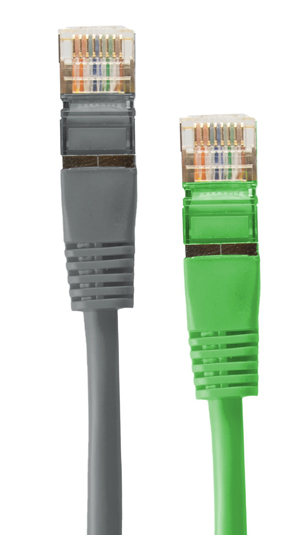
Redundant Internet connections keep you in business.The Danger of Single Point Failure
Any time we’re dependent on one key element, we’re subject to what is called “single point failure.” Your entire business could be running like a well oiled machine, with orders being fulfilled and customers pouring in. It’s high efficiency and high profits. Then, the connection goes down and stays down. Computers do nothing. Point of sale terminals are frozen. Business grinds to a halt.

Somewhere, somehow the Internet has stopped cold. But it’s designed not to do that, right? Indeed it is. The technology behind the Internet was designed by the military to keep functioning during a nuclear attack when whole areas were vaporized. No one cable or router can stop the data flow. It simply re-routes to paths that are still functional. Well, except for that last connection. You, know. The one that hooks your business to your Internet service provider. How many lines is that? That’s right… ONE. What happens when that gets cut? Right again. Service to and from the Internet stops cold.

The Value of Redundancy
Redundancy is what protects you from single point failure. For things that are so critical you can can’t do business without them, you need a backup. When you have a primary connection and a backup you have redundancy

A simple example of redundant connections is found with many home based businesses. As a solopreneur, you probably can’t justify having a second fiber optic or cable service just in case one goes down. But you likely do have redundancy. Your desktop computer is connected through the router and modem to the ISP. Rarely do you lose service, but it does happen. What then? No need to call up and order another service, you already have one on your phone. Simply use the personal hotspot feature with your phone to supply cellular broadband to your computer and you’re back in business.

There are a couple of fine points here. First, you wan’t to get back to your primary service as quickly and you can or you may get overage charges on your cell phone bill. You typically get only so may GBs per month before they start tacking on extra fees. Second, is your primary Internet service a Fixed Wireless Access from the same provider as your phone service. That might be a great money saver but likely not a redundant connection. If the tower you are accessing is off the air, your phone goes dead and your FWA goes dead at the same time. What’s left to do? Pack up the laptop and head for a hotspot. Hopefully that coffee shop has a different ISP and is still Internet ready. Best to check before you settle in and order.

Robust Business Redundancy
Most businesses don’t have the option to flee the office or store and head out for a break to get reconnected at the nearest hotspot. It makes a lot more sense to have redundant service connections with enough speed to keep running no matter what. Also in most offices it isn’t practical to have everyone pair their PC with their smartphone, although that can work for a short period in some cases. It’s better to have a second redundant service available for the network you already use.

What are some things to think about when setting up this redundant connection? Ideally, you want at least automatic failover. That means when one line goes down, the other picks up the load automatically. This is similar to the way a battery backup power supply works. When the line drops, the battery powers an inverter and the computer doesn’t even blink.

Even better than automatic failover is having a dual or multi-port router that can automatically share the load or pick and choose what route to send each packet for best performance. That’s SDN (Software Defined Networking) or SD-WAN (Software Defined Wide Area Network). The beauty of this approach is that instead of one line sitting idle until it is needed, you can make use of all the available bandwidth all the time. Only when one connection goes down does the total bandwidth available get reduced for the duration of the outage.

A good SDN supplier will ensure that you have truly redundant services, but here are a few guidelines if you are going to set this up yourself. First, don’t just have a pair of lines going from your location to your iSP using the same route. Chances are they run in the same bundle. If a backhoe cuts the bundle, you lose all your connectivity at once. Instead, use diverse pathways so that no one disaster can take out all your lines.

You may also want to have different providers for each service. They can be fiber, cable, wireline, fixed wireless, or satellite. At least use two different providers and you may want to consider two different technologies that are unlikely to be affected by a particular outage… be that wire cut, storm, or power loss. It’s valuable to have battery, generator, or solar power backup for your own equipment as well as redundant Internet.

Have you experienced Internet outages or concerned that a sudden loss of service could damage your business? If so, speak with a technology expert and see what redundant Internet options are available for your situation.


Click to check pricing and features or get support from an expert technology specialist.


Follow Telexplainer on Twitter


Tuesday, October 31, 2023

Gigabit and 10 Gigabit Metro Fiber Ethernet

By: John Shepler

Have you ever wished that you could stretch your LAN to cover other locations around the block or around an entire city and suburbs? You can. Best of all, you don’t have to do it personally. A Metro Fiber Ethernet connection will plug into your LAN at one location and plug into your LAN at another location.

Get quotes on Metro Fiber EthernetThe Problem Connecting Multiple LANs
Most all private networks are now Ethernet LANs or Local Area Networks. Within your realm, you have complete control. You string the cabling. You provide the switches and routers. You hook up the user equipment. You manage the entire network operations.

It doesn’t matter what the company next door or across town is doing. They won’t be bothering your network. They have their own to serve their employees.

This is all well and good until you get another location that is not on your campus. What are you going to do to tie them together? You could go into the business of pulling a fiber bundle across town. Just get the rights of way, bring in the trenching equipment and get to work. It keeps you in control, but it gets really expensive really fast. It also takes forever and may be blocked by city organizations that just don’t want you doing it.

The Internet Will Interconnect Your Locations… Sort of
Hey, the Internet is available. It goes everywhere. You probably have service at each of your locations already. Why not simply exchange files and route phone calls over the Internet?

Actually, this works after a fashion. You can connect anything to anything over the Internet. However, you need to be mindful about how you do this or you’ll find out it is nowhere near the expectation of a transparent line connection.

The Internet is so available and so cheap because of scale. It does connect everybody to everybody else, and they are all on one big party line. No way do you have any say over priority of traffic or who is accessing that traffic. It’s a big happy family and everybody potentially has their nose in everybody’s business.

There are ways to make this work better. First, get dedicated access. No, you won’t have a private connection through the Internet, but you can order a private line to the Internet. That helps greatly with keeping your service consistent.

Also, make sure you encrypt the daylights out of anything you send through a public network. If not, you are just asking for eavesdroppers to lick their chops as they read through all your sensitive documents or tap into your phone calls and video conferences.

To really make the Internet seem like your private lane, take a look into SD-WAN, or Software Defined Wide Area Networking. This is a technique of combining multiple internet connections of different types, such as wireless, fiber, copper, and cable, using software to pick the best path for each packet despite constantly changing network conditions. It sets priorities and knows that data backups take a back seat to interactive cloud services.

Better Yet, Go Private
Now we’re getting to Metro Fiber Ethernet. It’s a service provided by a commercial carrier but not part of the Internet. You get a LAN to LAN connection between your locations. You can set it up as point to point, like a direct line. You can also set it up as multipoint to multipoint for any number of locations in the area. They’ll all be on that one big LAN. Another flavor of this service is a direct to cloud connection that connects you to your cloud service provider through a local data center.

Sometimes the Metro designation is a bit limiting. You need to connect to cloud services or branch offices in another city, state or even country. Many fiber optic network providers have connections that go far beyond your city and may have interconnections with other networks to extend the reach across International borders.

You can also contract with a private service provider called an MPLS or Multi Protocol Label Switching network. These are wide area service providers that are privately owned and not accessible by the general public. They will guarantee performance and connect your far flung empire with low latency and high bandwidth. Security is enchanted because this type of network has its own protocol that differs from what runs on the Internet.

Do you have a need to interconnect business locations with speed, reliability and privacy? Gigabit and 10 Gigabit Metro Fiber Ethernet might be just what you need at a reasonable cost. For even higher performance 100 Gbps bandwidth are also supported in key metro areas.

Click to check pricing and features or get support from a Telarus product specialist.


Follow Telexplainer on Twitter


Tuesday, August 29, 2023

How Managed SD-WAN Can Help Your Business

By: John Shepler

Digital transformation is a wonderful thing for business… until you run into snags trying to implement it. One of those unanticipated snags is the need for WAN bandwidth connections far beyond what you ever thought you’d need. You can slug it out trying to make everything work and not break the bank. Or, you can enlist the help of managed SD-WAN to make your connectivity something you don’t even think about anymore.

Get a quote on Managed SD-WAN for your business needs.How Did Connectivity Get to Be Such a Big Deal?
Chances are that when your business was primarily bricks and mortar, you installed a broadband connection for when you needed to access the Internet and that was plenty good enough. It works for point of sale. It works for online ordering. It’s even good enough for a brochure-style web site so that potential customers can easily find you.

Then the transformation began. First it was VoIP phone to replace the old analog landlines. Then came online ordering for both you and your customers, followed by automatic restocking, customer relationship management, financial and tax accounting in the cloud, lead generation, online advertising management, factory planning and on, and on and on. Under the weight of too many software packages to keep track of, eventually some these processes relocated to cloud servers, with some still in your local data center.

That good old broadband service that got you started with the Internet is no longer satisfactory. Even upping the speed as much as you can still doesn’t make it work right. Phone calls get garbled, but not all the time. Workflow slows to a crawl, but not all the time. This inconsistency is driving everybody crazy. You never know when things will zip along seamlessly or when it will all slow to a crawl for a few seconds or a few minutes or the entire afternoon. You need better and you can get it.

The Expensive Solution: Build Your Own WAN Network
You can avoid many of the vagaries of the Internet, especially on shared broadband connections, by building a private network for your operations. This means getting everything off the Internet that you can. All connections to branch offices, warehouses, factories, and any cloud providers can be made with dedicated private lines. As you might expect, each line costs plenty and you’ll need lots of them.

MPLS networks with guaranteed performance levels can reduce the cost when operations are spread over long distances. MPLS is a privately run Wide Area Network with a special protocol that makes it more secure than the Internet. The general public also has no access. It’s business subscribers only and they are only admitted if the network can handle the traffic. For multiple locations, MPLS is less expensive than private lines, but still pricey.

Managed SD-WAN Is More Cost Efficient
SD-WAN stands for Software Defined Wide Area Networking. The software defined aspect is where the savings come from. The managed aspect takes the burden of running all of it off your back. If done correctly, Managed SD-WAN makes your connectivity invisible. You don’t have to worry about it. It just works.

Here’s briefly how SD-WAN does its magic. The trick is to use the least cost connections that will get the job done, but make sure that quality doesn’t suffer. Take the Internet. The least costly connections are shared bandwidth, like cable broadband and wireless, but these are also the most likely to get congested and vary in performance. The most costly are dedicated private lines, but these may be wasted on low priority traffic that doesn’t need low latency and jitter and isn’t bothered by a bit of congestion. If you aren’t using a private line, it’s just idling and you are paying for it anyway.

SD-WAN needs at least two connections in order to make traffic decisions. These can be a mix of cable broadband, Ethernet fiber optic WAN, fixed wireless access, satellite broadband, LTE or 5G cellular, MPLS network and even older wireline services such as T1, PRI or DS3.

What SD-WAN does is continuously monitor each connection’s performance so that it knows the available bandwidth, latency, jitter, and packet loss on a moment by moment basis. When you have traffic in the form of packets, it notes the quality of service you require and then picks the best connection for those packets. Phone conversations and video conferences need very stable connections to work well, so they get a higher priority and QOS requirement. Backups to off-side storage aren’t so demanding and can live with a lower quality link. Other processes are assigned to the right connections for their needs.

Better Performance, Less Cost, Fewer Headaches
Managed SD-WAN is handled by your provider so that you don’t have to worry about day to day connectivity issues. You add locations or policies as you need to. The supplier figures out how to program the system to make everything work. It’s all transparent to you and the cost is considerably lower than trying to optimize a morass of connections yourself.

Are you frustrated with your current connections enough to want an easier and more reliable solution? If so, get a competitive quote for your needs by one or more SD-WAN providers and see if they can save you money and improve performance at the same time.

Click to check pricing and features or get support from a Telarus product specialist.


Follow Telexplainer on Twitter


Tuesday, September 20, 2022

Two Internet Connections For Consistent Phone Calls

There are forces at work changing the way business phone systems connect. Plain old analog telephone service and traditional PBX switching systems are giving way to mobility, computer integration and cloud services that bear little resemblance to Alexander Graham Bell’s network of the last century. The new features can greatly enhance business performance… as long as the fundamentals of high quality robust voice communications aren't lost. Can we have both advanced technologies and quality of service?

Get higher quality phone calls with SD-WANWe have to. There’s really no going back. If you are still tethered to an analog twisted pair or ISDN PRI, obsolescence is coming for you… and soon. It’s time to embrace digital voice and the cloud services that it enables.

What’s The Internet Got to Do With It?
Telephone networks were purpose built for telephone sets. When the Internet started, it glommed onto the phone network with dial-up modems because that was the only universal connectivity available. Fast forward to today and the Internet has moved on to high bandwidth fiber optics as a core network and last mile connectivity. Mobile telephony has developed its own wireless cellular system. That leaves the original phone network to rust in peace.

Business telephones are connecting more and more to the company IT network rather than run a separate phone network based on legacy wiring technology. For those calls to leave the company and connect to the greater world, a decision has to be made. Do you install a PBX system that connects those internal phone sets directly to the phone company using telco lines, or stick with the digital network system and connect to a phone service supplier via a dedicated private line or the Internet?

The Internet is a compelling answer. It has already been built-out to interconnect just about everybody, everywhere. Costs to reach them are as low as you can get. You already use the Internet and probably cloud business services for computer applications and file transfers. Why not let your phone calls ride along on the same network?

The fly in the ointment is that voice calls don’t have the robustness that file transfers enjoy. If the connection slows down a bit or gets little jittery, the data will get through just fine. The voice on the other end of the phone calls will cut in and out, become garbled or just disconnect. That’s unacceptable for business and a major impediment to adopting VoIP telephone systems.

How to Fix the Internet for Phone Calls
A solution to getting high quality business phone service along with the benefits of digital telephony is called SD-WAN. A WAN or Wide Area Network is any connection, such as the Internet, that goes outside your business. The SD part is called Software Defined. That means adding intelligence into the WAN connections to manage sensitive traffic for quality and reliability.

The most basic operation of SD-WAN appliances is to combine two or more WAN connections. That can be two broadband Internet lines, such as Cable, DSL, fiber, T1, 4G LTE or 5G cellular, or fixed wireless access.

The idea is that every connection has it own performance characteristics and variations that are different from other types of connections. That’s typical of the Internet. It varies all over the place from instant to instant, but not on all connections at the same time.

The SD-WAN appliance constantly monitors the characteristics of each connection. What is the speed, packet loss and jitter? Has the line gone dead or so congested it might as well be? With two or more lines to choose from, SD-WAN can route packet by packet through the best connection at each moment. Phone calls get priority over your other traffic so they get the absolutely best connectivity at all times.

There are other intelligent features that are also running to ensure voice quality. Forward error correction duplicates each voice packet so if one is lost, the other can take its place at the far end. That gets rid of a lot of the choppiness you hear in digital phone calls. Calls are also smoothed out using dynamic jitter buffering that collects the packets and delivers them smoothly in spite of variances in transmission time.

How about security? The Internet is notorious for terrible security issues compared to private lines and the traditional PSTN phone network. By encoding the voice streams and including a firewall and other intrusion preventing measures, even the Internet can be made acceptably secure.

SD-WAN Also Improves Your Other Applications
What helps improve voice calls is also a major benefit for all your network traffic over the Internet. As companies move more and more applications to the cloud, robust connectivity is becoming essential to productivity and customer satisfaction. SD-WAN can make all of your Internet interactions faster, smoother and more reliable. It comes down to having enough high quality links for the system to always have solid connections. Those links will be used efficiently since lower demanding traffic, such as backups and low priority file transfers, can traverse even slower and more jittery connections.

Are you frustrated with the quality and performance of your current business phone system or face disconnection of legacy services? If so, find out what high quality enterprise VoIP and Universal Communications options are available for your business.

Click to check pricing and features or get support from a Telarus product specialist.


Follow Telexplainer on Twitter