Showing posts with label business. Show all posts

Wednesday, June 25, 2025

Goodbye Employees, Hello Bandwidth

By: John Shepler

Office employment has been undergoing a major shift since the rise of the Covid Pandemic in 2020 and it’s likely to accelerate rather than return to “normal.” Office buildings nationwide have been emptying out, some being converted to residential units or commercial malls. Even with employees being ordered to return to the office or be replaced, things aren’t really going to go back to mass commutes five days a week, as we’ll soon see. This also has major ramifications for the bandwidth you’ll need and where you’ll need it.

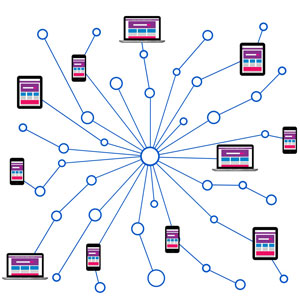
Bandwidth to support the changing business officeReluctant Office Workers Offer Opportunities
How do you get ‘em back in the office after they’ve seen work from home?

That might be the title of a song for the 2020’s. The abrupt culture shock from everyone being sent home, with most expected to keep on working, did indeed break the expected paradigm of where you are supposed to be all day. Once appropriate computers and Internet connections got settled, quite a few customer service reps, programmers, and other information workers found they could work just as well from a spare bedroom or dining room table as in the corporate cubicle. Their productivity even improved without the distractions of office chatter or pro-forma meetings.

Employees might have picked up an hour or two of extra personal time not spent commuting and some could drop the expense of outside daycare for children. Meanwhile, companies that continued this arrangement after the pandemic threat had passed found they could reduce office space expense, including real estate and utilities.

One demand that might have increased is the need for fast highly reliable bandwidth to connect now far-flung individuals. Residential Internet connections have improved greatly during this millennium. High speed cable broadband, fiber to the home and 5G fixed wireless access have made most connections nearly transparent. For more demanding applications, SD-WAN and dedicated point to point private lines can reduce latency and congestion.

Not All of Us Are Coming Back to the Office
Remote work may be a boon for some employees and their employers, but many other companies, including some of the largest ones, want the old culture of co-located teams back for camaraderie and supervision. In fact the managers are insisting on it. To some extent this coalescence will occur, but there is another force at work that is going to disrupt it again.

Artificial Intelligence is heralded to be the next dramatic productivity improvement. There is a mad scramble on to build data centers and secure baseload power to support the coming tsunami of AI applications. These promise to be far more sophisticated than the inane chatbots on many sites that can’t seem to answer the simplest questions. Expect these to get a lot smarter. A lot of the coming AI will not be customer facing. It will handle back office paperwork, data entry, report writing, proposal generation, language translation, code generation, graphic arts, network monitoring & troubleshooting, quality control, financial analysis, legal research and medical image diagnosis just to name a few.

In other words, the century long migration from farm to factory to office is about to hit a brick wall of automation. There is already concern that new hires in white collar professions will be facing an increasingly tough job market, followed by job eliminations right up the ladder.

What Network Technology Will You Need?
If office automation is soon taking over, what do you need to plan for to support this transition? In addition to remote worker systems and bandwidth, you’ll need robust connectivity to the AI data centers where many of these applications will reside. Any apps that deal with the customer directly will require substantial Internet connections, likely right from the data center. Your office team will also need solid connections to those same data centers. The Internet may not be adequate for high bandwidth, low latency, jitter, packet loss and general congestion. A dedicated fiber optic private line, also called a cloud on-ramp, can make this connection transparent and help maximize productivity.

A lot of your communications may be in the form of video conferences, including a mobile workforce and well as the office staff. Don’t forget to include enough mobile bandwidth so that the people in the field are as well connected as those in the office.

Finally, you may be looking at whole new systems of computers, phones, pads and other devices that integrate your staff, management, suppliers and customers along with the AI applications that make it all work seamlessly.

Are your business needs in a state of change? Yesterday’s solutions might not support your future. Let an experienced technology advisor help you acquire the networking services you need to stay at the top of your markets.


Click to check pricing and features or get support from a Telarus product specialist.


Follow Telexplainer on Twitter


Wednesday, April 30, 2025

Today’s Best Business Broadband Options

By: John Shepler

If you are still using a copper wireline service, such as DSL or T1, for your business Internet connection, it’s time to upgrade your service… before you are forced to.

Find today's best Internet connections for businessForced to? Why would that be? Fact is, the major telecom companies are all in the process of decommissioning their copper wire assets. Basically anything that uses century-old twisted pair wiring is on the way out.

Technology marches on. T1 lines were once considered broadband. They don’t even qualify with today’s standard. DSL? Pretty much an obsolete system that was once a good way to re-purpose standard telephone lines for fast Internet access.

AT&T and others have made it clear that they are either pulling up old copper lines or abandoning them to rust in place. The wire centers or central offices that connect to these lines are being repurposed as data centers for the insatiable needs of AI.

So what are better options? Surprisingly, one of the best is also an older technology that has continuously upgraded to keep it competitive with the times.

Cable Broadband Is a Great Deal for Small Business
That coaxial cable that plugs into the back of a set-top box or cable modem has been a familiar tech standard for many decades. Physically, it’s the same. What’s changed is the signal that comes out that center wire.

Cable was originally analog, just like TV signals back in the day. When the Internet came along, some of the unused TV channels were set aside for digital transmission using a standard called DOCSIS or Data Over Cable Service Interface Specification, an invention of the industry’s R&D organization CableLabs. The current standard is DOCSIS 3.1 with a migration underway to DOCSIS 4.0.

Today’s cable modems are cable of gigabit speeds, with common service levels of 300 Mbps downstream, 30 Mbps upstream. That’s fast enough for pretty much all web browsing, video streaming and data transfer. What’s hard to beat at those speeds is the price. Cable is easily affordable by both consumers and smaller businesses, often with telephone service included.

Wireless Broadband is Now Both Mobile and Fixed
Like cable, cellular wireless had humble beginnings as a mobile telephone service, but has kept up with the times through multiple technology advancements. The first standard that really supported broadband as well as telephone was called 3G. That’s evolved to the current standards of 4G LTE and 5G. With 300 Mbps or so, an iPhone has all the bandwidth it can really make use of.

That high bandwidth, which can reach a Gigabit per second near some of the 5G towers, is easily competitive with fixed broadband services. The capacity limits have been largely eliminated with 5G buildouts and the extra spectrum acquired from government auctions of unused television bandwidth. Now the wireless companies are in a competitive battle to roll out cellular modems that work like cable modems but without the wires. You can put one at a construction site or a pop-up store in minutes. If you move soon, take it with you and have connectivity at your next location.

Cable broadband is being built into laptop computers and tablets and other devices, called the Internet of Things. Remote data acquisition and control are now possible in remote areas that have cell towers but no other connectivity.

Fiber, The Gold Standard and Secret Backbone
The magic that makes cable and cellular broadband so fast is the fiber optic lines that feed these services. It’s all behind the scenes, of course. Even so, you may want to connect directly to fiber yourself.

What’s the fiber advantage? Nearly unlimited bandwidth for one thing. Today’s service levels run from 10 Mbps to 10 Gbps just about everywhere, with 100 Gbps service available in some metro locations. That’s important for medium and larger enterprises with many employees who need simultaneous Internet access.

Another big advantage is symmetrical bandwidth That means if you have 1 Gbps downstream, you also have 1 Gbps upstream. Contrast that with most cable and wireless services that offer much higher download than upload speeds. If you need to transfer files up and down regularly or have demanding video conferencing requirements, this can be important.

A third advantage is very low latency and jitter with minimal congestion. This is because fiber is usually a dedicated service, not shared like cable and cellular. For even higher performance, consider a dedicated line between your company and your cloud service that bypasses the Internet completely.

Need the ultimate in performance? Dark Fiber that you “light” with your own equipment gives you complete control of protocols and bandwidth allocation. It’s like having your own network extended across town or across the country.

Do you need a replacement Internet connection or are ready for a bandwidth upgrade or perhaps even a cost saving? Check out the Business Broadband Options available right now.

Click to check pricing and features or get support from a Telarus product specialist.


Follow Telexplainer on Twitter


Tuesday, February 21, 2023

Colocation Hosting vs Cloud Data Centers

By: John Shepler

You’ve run your own in-house data center for years, but business is growing and you’ve hit the limit on what your server room can support. Now you’ve got a choice to make. Lease new space for the additional servers, storage and other appliances you need or consider moving everything to the cloud. It’s a big decision and one that needs careful consideration before funds are committed.

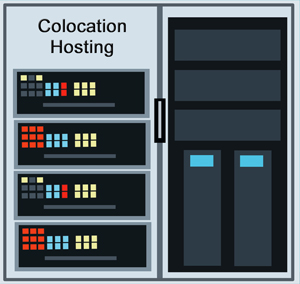
Choose colocation instead of cloud hosting.Isn’t Everyone in the Cloud?
If you read the tech headlines and articles, it looks like everyone is clearing out the old server room and simply leasing cloud services. That does have a lot of attraction. With your data and applications deep within the cloud, you no longer have any capital investment, no power bills, no physical security worries, no HVAC worries, and perhaps less IT support staffing. If you need more bandwidth, server processing or storage, you simply ask the cloud to increase your allowance, perhaps even automaticlly.

Why Wouldn’t You Join the Stampede to the Cloud?
Perhaps you’re feeling a little uncomfortable. You’ve heard that joke: “There is no cloud. It’s just somebody else’s computer.” What it really amounts to is somebody else’s thousands of computers, all nicely divvied-up to share among thousands or millions of clients. The promise of the cloud is that it looks to you like you have your own computing resources all by themselves.

Does that sound exciting or does it give you a bit of a twinge? After all, you’re really happy with how responsive your IT staff is and the control you have over all the equipment and software. There are no other companies sharing your facilities. Security involves keeping bad actors out of the building and on the far side of the firewall. So, is your only choice to bite the bullet and lease a new building for expansion?

Consider the Colo Option
Perhaps a third option is best. Lease space in someone else’s specialized building but keep your computing resources to yourself. This is the idea behind Colo or colocation hosting. These facilities were once called carrier hotels when their tenants were primarily telecom carriers. Now colo is popular with businesses of all sizes.

A colocation facility provides the physical building with controlled access and security personnel. It is staffed 24/7, which may even be more than you are able to provide now. Massive redundant power lines feed the facility so there is never a question of having enough amps to power new equipment. Moreover, that power is backed up by emergency generators and often batteries to keep things running no matter what.

With all that power, you are also going to need to get rid of the heat generated by the electronics. That is handled by redundant HVAC equipment to provide cooling air to the servers and other equipment. Air filters keep the facility dust-free.

What about connectivity? That’s one reason why companies move out of their own facilities and to a colocation center. With so many clients wanting so much bandwidth, major carriers have a presence in the colo. Often you have multiple carriers to choose from and they each have multiple fiber links for dedicated access and Internet service. Not every business is served with high bandwidth fiber yet, but the colocation centers are. They’ll get you as many Gbps as you need along with IP addresses.

Moving to a Colo Facility
When you move to a colo, you lease racks with power and cooling plus connections for bandwidth. Want more security? You can have those racks installed within a locked cage that keeps everybody but your staff out. Your people can come and install their own equipment, do maintenance, and make upgrades as needed.

Many colo facilities also offer additional services if you want them. You can have the colo tech staff monitor, troubleshoot and repair your equipment. You can even lease servers and storage from the colo instead of buying them yourself.

Are you outgrowing your tech facilities but want to explore options other than simply relocating to a cloud? Consider colocation data center facilities as an option that gives you more control but saves money compared to leasing your own dedicated buildings.

Click to check pricing and features or get support from a Telarus product specialist.


Follow Telexplainer on Twitter


Monday, January 23, 2023

What Replaces DSL, T1, ISDN PRI, EoC?

By: John Shepler

Have you seen recent cost increases for your copper-based telecom services? Did you even get a letter saying that service will be discontinued? This situation will only get worse, as telcos sunset their aging copper wire assets in favor of more modern technologies such as fiber and wireless. It’s time to make a change.

Find copper line network replacements now. The Copper That Isn’t Going Anywhere
The copper that’s in trouble is twisted-pair analog copper telephone lines. They started the electronic communication revolution over a century ago and have run their course from innovation to obsolescence. There is another copper network line, however, that is still going strong. That is cable broadband using coaxial copper cable as a curb to premises connection.

The copper nature of cable services is something of a fooler. The vast majority of the network is fiber optic based. Only the last few hundred feet is the well known RG-6 terminated with an F-type connector. You might think of this wiring as old-school, but with the latest DOCSIS modems, it can easily deliver Gigabit broadband up to 10 Gbps.

Cable companies offer television, broadband and telephone service over the same cable line at a very reasonable cost that is attractive for small businesses, especially those that can use the TV feature for their customer waiting rooms.

Fiber Optic: The New and Improved Copper
The telephone and network industry standard that is replacing twisted pair copper is Ethernet based fiber optic service. The original standard, SONET, is still the backbone of many networks, but has actually transitioned from carrying channelized telephone calls to packet based Ethernet network traffic. Newer networks are all Ethernet, to reflect the standard Ethernet protocol used in the majority of digital networks worldwide.

Ethernet over Fiber has the advantage that it plugs directly into company routers and is vastly scalable, from 10 Mbps to 10 Gbps just about everywhere, and up to 100 Gbps in many metro locations. Fiber takes over from copper data services, include DSL, T1, DS3 and even the newer Ethernet over Copper. EoC was meant to provide higher bandwidth using the same twisted-pair infrastructure, but is falling victim to the decommissioning of the copper bundles themselves.

Business telephone, which standardized its own analog and digital networks, is largely switching to a computer networking standard of Voice over IP or VoIP. This offers the benefit of supporting many newer technology features and allows computers and phones to share the same company Local Area Network.

To make VoIP work, your phones need to connect to the Public Switched Telephone Network to make and receive outside calls. This is done using a standard called SIP or Session Initiated Protocol that runs on the network and connects to your phone service provider over an Ethernet WAN connection, using fiber. Both the Internet and direct connections can be employed. SIP trunks replace analog phone lines and ISDN PRI trunks to carry telephone traffic to the PSTN.

The Special Case of POTS Replacement
In many cases, the move to fiber optic private line and Dedicated Internet Access will handle business needs for voice, video and data traffic. There are special cases of FAX, fire alarms, burglar alarms, elevator phones, analog point of sale systems and some others that are specifically designed to phone company standards and don’t work well on packet based networks, such as the Internet.

For these uses, you may want to look into specialized POTS (Plain Old Telephone Service) replacement options. These usually work wirelessly through private connections to the LTE cellular phone network and don’t traverse the Internet at all. An advantage of POTS replacement equipment is that it connects directly to the systems you already have.

Fixed Wireless Where There Is No Fiber
The day may come where fiber is everywhere, but today were are still in the build-out phase. Fiber is going into the ground at a rapid pace, but in more rural locations are still waiting for access. Even metro areas that don’t have lit fiber installed may be faced with huge construction costs to connect to the fiber access points.

The alternative is to skip the fiber but get high speed Ethernet bandwidth using Fixed Wireless Access. FWA is similar to cellular broadband but is intended to connect to in-house networks rather than cell phones. In fact, the major cellular companies are in competition to offer 5G Fixed Wireless broadband service to both residential and commercial users.

Other wireless companies, often called WISPs for Wireless Internet Service Providers, don’t handle cell traffic but have towers that serve a limited area with wireless Internet access.

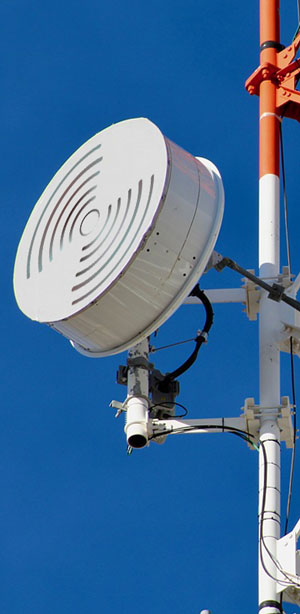
Other microwave-based FWA providers focus on business customers with high bandwidths that can reach 10 Gbps. This can be private line as well and Internet service. An advantage to business FWA is that a small dish or other antenna can be installed on your building for reliable operation and service can get started in days rather than weeks or months for fiber construction.

Are you facing a loss of your traditional DSL, T1, ISDN PRI, EoC or analog telephone service and need replacement soon? If so, you may have an opportunity to upgrade your service and save money at the same time. Check out telephone and network replacement options now.

Click to check pricing and features or get support from a Telarus product specialist.


Follow Telexplainer on Twitter


Tuesday, September 20, 2022

Two Internet Connections For Consistent Phone Calls

There are forces at work changing the way business phone systems connect. Plain old analog telephone service and traditional PBX switching systems are giving way to mobility, computer integration and cloud services that bear little resemblance to Alexander Graham Bell’s network of the last century. The new features can greatly enhance business performance… as long as the fundamentals of high quality robust voice communications aren't lost. Can we have both advanced technologies and quality of service?

Get higher quality phone calls with SD-WANWe have to. There’s really no going back. If you are still tethered to an analog twisted pair or ISDN PRI, obsolescence is coming for you… and soon. It’s time to embrace digital voice and the cloud services that it enables.

What’s The Internet Got to Do With It?
Telephone networks were purpose built for telephone sets. When the Internet started, it glommed onto the phone network with dial-up modems because that was the only universal connectivity available. Fast forward to today and the Internet has moved on to high bandwidth fiber optics as a core network and last mile connectivity. Mobile telephony has developed its own wireless cellular system. That leaves the original phone network to rust in peace.

Business telephones are connecting more and more to the company IT network rather than run a separate phone network based on legacy wiring technology. For those calls to leave the company and connect to the greater world, a decision has to be made. Do you install a PBX system that connects those internal phone sets directly to the phone company using telco lines, or stick with the digital network system and connect to a phone service supplier via a dedicated private line or the Internet?

The Internet is a compelling answer. It has already been built-out to interconnect just about everybody, everywhere. Costs to reach them are as low as you can get. You already use the Internet and probably cloud business services for computer applications and file transfers. Why not let your phone calls ride along on the same network?

The fly in the ointment is that voice calls don’t have the robustness that file transfers enjoy. If the connection slows down a bit or gets little jittery, the data will get through just fine. The voice on the other end of the phone calls will cut in and out, become garbled or just disconnect. That’s unacceptable for business and a major impediment to adopting VoIP telephone systems.

How to Fix the Internet for Phone Calls
A solution to getting high quality business phone service along with the benefits of digital telephony is called SD-WAN. A WAN or Wide Area Network is any connection, such as the Internet, that goes outside your business. The SD part is called Software Defined. That means adding intelligence into the WAN connections to manage sensitive traffic for quality and reliability.

The most basic operation of SD-WAN appliances is to combine two or more WAN connections. That can be two broadband Internet lines, such as Cable, DSL, fiber, T1, 4G LTE or 5G cellular, or fixed wireless access.

The idea is that every connection has it own performance characteristics and variations that are different from other types of connections. That’s typical of the Internet. It varies all over the place from instant to instant, but not on all connections at the same time.

The SD-WAN appliance constantly monitors the characteristics of each connection. What is the speed, packet loss and jitter? Has the line gone dead or so congested it might as well be? With two or more lines to choose from, SD-WAN can route packet by packet through the best connection at each moment. Phone calls get priority over your other traffic so they get the absolutely best connectivity at all times.

There are other intelligent features that are also running to ensure voice quality. Forward error correction duplicates each voice packet so if one is lost, the other can take its place at the far end. That gets rid of a lot of the choppiness you hear in digital phone calls. Calls are also smoothed out using dynamic jitter buffering that collects the packets and delivers them smoothly in spite of variances in transmission time.

How about security? The Internet is notorious for terrible security issues compared to private lines and the traditional PSTN phone network. By encoding the voice streams and including a firewall and other intrusion preventing measures, even the Internet can be made acceptably secure.

SD-WAN Also Improves Your Other Applications
What helps improve voice calls is also a major benefit for all your network traffic over the Internet. As companies move more and more applications to the cloud, robust connectivity is becoming essential to productivity and customer satisfaction. SD-WAN can make all of your Internet interactions faster, smoother and more reliable. It comes down to having enough high quality links for the system to always have solid connections. Those links will be used efficiently since lower demanding traffic, such as backups and low priority file transfers, can traverse even slower and more jittery connections.

Are you frustrated with the quality and performance of your current business phone system or face disconnection of legacy services? If so, find out what high quality enterprise VoIP and Universal Communications options are available for your business.

Click to check pricing and features or get support from a Telarus product specialist.


Follow Telexplainer on Twitter


Thursday, April 14, 2022

Ethernet WAN is the New SONET

By: John Shepler

High speed communications lines progressed from copper analog to copper digital to fiber optic digital over most of the last century. The technology that drives fiber has also evolved from time sliced synchronous multiplexing to packet based protocols, mirroring the transition to networked computing for nearly every business. While older SONET telco lines still provide effective connections, there are real advantages to be gained by upgrading to Ethernet WAN, the newer technology for fiber optic service.

Find Ehternet WAN services now.It Started With Really Fast Phone Lines
SONET, which stands for Synchronous Optical NETwork, is a phone company invention that was developed to bundle or multiplex thousands of individual phone calls onto an optical fiber for long distance transmission. To make operations easier, SONET was made backwards compatible with legacy T1 service that does exactly the same thing with 24 calls over two twisted copper pair… in other words, ordinary telephone line.

SONET allowed the phone companies to bundle T1 line into DS3 lines into OC3 fiber lines and demultiplex or unbundle them anywhere along the way. Everything was compatible down to the single telephone channel.

SONET to Link Computers
So, how did SONET come to support computer networking? The protocol had to be converted between SONET’s time division multiplexing and Ethernet’s packet switching. That was accomplished using protocol conversion on a plug-in module. To the user, It made no difference what was going on under the hood. Packets would go in one router and come out another miles or thousands of miles away.

SONET was developed for fiber and all of the early fiber optic links for computer networks were connected using one of the SONET levels. OC3 was the lowest speed at 155 Mbps. This was the first fiber service that most corporations ordered when they outgrew their T1 and T3 lines. Each increase in speed required swapping out an adaptor module for the particular SONET level.

In fact, the Internet was built on SONET. SONET rings, which offer redundant paths, formed the core of the Internet as it grew. Internet service providers would connect via SONET and then divvy up the bandwidth for multiple 64Kbps dial-up modems or, later, DSL or Cable broadband modems.

The Ethernet Revolution
Ethernet, developed by the Xerox Palo Alto Research Center in the mid to late 1970’s, grew to become the dominant networking protocol, thanks in no small part to the proliferation of the personal computer at the same time. Most small and large users adopted Ethernet, as adaptor cards, cabling, hubs and routers became more and more affordable. Every PC soon came with an RJ-45 Ethernet jack as standard equipment and peripherals, such as printers, did the same for compatibility.

Once Ethernet became the de-facto networking standard and computer data traffic greatly exceeded voice traffic, it started to make sense to just adopt Ethernet for Wide Area Networks as well as Local Area Networks. When business phones became digitized and used VoIP to connect on the same network as the computers, the need for a separate voice network faded away.

Another factor that has moved WAN services from SONET to Ethernet is the rise of competitive network service providers independent of the telephone companies. Since these companies had no legacy analog phone service to support, they could simply focus on offering Ethernet connections to their customers in competition to the telcos.

By this time the original Ethernet protocol has been expanded to provide technical specifications for Carrier Ethernet, which is the same as LAN Ethernet but extended to support the MAN (Metropolitan Area Network) and WAN (Wide Area Network).

What Ethernet WAN Has to Offer
You remember that SONET has distinct service levels, each with it’s own bandwidth and specific adaptor requirements. Ethernet doesn’t have this limitation. Instead, you have an Ethernet port with a maximum bandwidth, say 1 Gbps. It will support any bandwidth up to the max limit of 1 Gbps. You can order 100 Mbps service today and easily upgrade to 500 Mbps or 1 Gbps later. Only if you want a service level above 1 Gbps, will you need to have a higher capacity port installed. This process is so seamless that many providers will let you change service levels at will by logging into your online account.

Ethernet services tend to be less expensive than SONET. Usually, much less expensive. You pay for the service level you want, be it 10 Mbps, 100 Mbps, 1 Gbps, 10 Gbps, and so on. Remember you can change this easily after you have service installed and your bill will be adjusted to the new level you select.

Since there are many, many competing Ethernet MAN and WAN service providers, pricing per Mbps has dropped rapidly over the years and continues to do so. Some of the service providers are the traditional telephone companies, but with much improved pricing. Others are independent carriers serving regional, national, or international areas. They can also provide excellent customer service, high reliability, and very good deals on bandwidth.

There are usually two types of service you’ll be interested in. One is a dedicated connection to the Internet at a bandwidth you select. The other is a point to point dedicated private line that is just like having a very long Ethernet cable connecting two LANs separated by many miles. These are useful for interconnecting main offices and branch offices, warehouse, manufacturing centers and so on with maximum performance and privacy. Another popular application is a direct connection between your offices and your cloud service provider. This avoids the vagaries of Internet performance and makes the cloud seem like it is right down the hall.

Perhaps you still have legacy SONET service that was installed years ago. It’s been working fine so no one has paid much attention. This would be a good time to see if competing Ethernet WAN services can give you more bandwidth for the same budget or offer a considerable cost savings if you are happy with the bandwidth level you have now. It doesn’t cost anything to look, so why not see what’s available?

Click to check pricing and features or get support from a Telarus product specialist.


Follow Telexplainer on Twitter


Wednesday, March 16, 2022

Upgrade your ISP to GigE and 10GigE

By: John Shepler

Regardless of whether your business is strictly e-commerce or a traditional bricks and mortar operation, Internet access is essential to conducting business these days. One thing we never seem to have enough of is bandwidth. This is the right time to upgrade your broadband connection to handle the throughput you really need to efficiently get the job done. Surprisingly, it may be more affordable than you think.

Dramatically increase your broadband speed to 1 Gbps or 10 GbpsHow Much Do You Need?
Small businesses, including home offices, single person professional offices, small retail stores and the like, may find that 100 Mbps Fast Ethernet service is plenty. You might even get by with less than that… for now. For every other situation, you’ll want to look at bandwidth fast enough to be transparent. Transparent means you don’t even know it is there. There’s always enough that you won’t get slowed down no matter what you are doing. That’s the gigabit range. Consider Gigabit Ethernet (GigE) and 10 Gigabit Ethernet (10GigE).

Why speeds so much higher than you’ve expected over the years? Today’s business is different. Much of what we call content is high consumption video versus email messaging. Images are much larger, if not in physical size then in Mbps. Databases are huge. They don’t call it “big data” for no reason. On top of all this, most processing has moved or is moving to the cloud. Those high speed Ethernet cables that connected you in-house have to be replicated between you and your cloud provider.

Really Fast Connections Readily Available
Fortunately, the networking industry is keeping pace. The incentives of greater business demand, 4G and 5G wireless, and consumer cord cutting has pushed providers to expand their networks and lower the cost per Mbps and Gbps. You likely have multiple options to get the bandwidth you need at a price you can afford.

You should know that Internet Server Provider (ISP) bandwidth comes in multiple flavors, each with its own characteristics and pricing. There’s a reason why they don’t all cost the same. The first reason is provider competition. The more options that are available in a particular area, the more competitive pricing will be, especially on the higher end business connections.

Another reason is whether you can live with shared bandwidth or need to have exclusive use. Your lower cost options, of which cable is the biggest provider by far, have the bandwidth multiplexed or shared among many users. You’ll notice that your bandwidth is “up to 1 Gbps” rather than guaranteed to be that speed at all times. The idea is that not everyone is using the line to full capacity at all times. In fact, that’s highly unlikely. So, while you are reading something online, somebody else is downloading a file… and vice versa.

If you are running a server or running business critical software in the cloud that needs to hesitate as little as possible, you’ll want Dedicated Internet Access (DIA) at a minimum. In fact, you may even need to upgrade to a direct connection between you and your cloud provider to get the performance you desire. That gets you off the Internet and its vagaries completely. Dedicated Internet Access keeps you on the Internet, but you don’t share your “last mile” bandwidth. That’s where most of the congestion occurs anyway.

Another consideration is whether you need symmetrical bandwidth or not. Most Internet services that offer shared bandwidth are also asymmetrical. That means the download speed is much higher, sometimes 10x higher, than the upload speed. It makes sense if you are mostly accessing web sites or downloading videos, like most consumers. However, if you run cloud processes where you upload as much as you download or do large backups to remote storage, you’ll want symmetrical bandwidth options.

Your ISP Bandwidth Options
So, what’s available? Cable broadband using DOCSIS 3.0 or 3.1 standards will get you 100 to 1000 Mbps shared bandwidth Internet access, usually asymmetrical. It’s quite reliable these days and you can’t beat the price.

If you are out in the boonies where there is no cable, you might get by with 4G or 5G wireless broadband. Yes, it’s the same broadband that runs your smartphone, but with a special modem that connects an office network. Another option is satellite business broadband. This will work just about anywhere and offers decent bandwidth. Latency can be an issue, especially for VoIP telephony and video conferencing, but otherwise may be just the ticket. Note that both of these wireless options have limited resources so that you may run into usage limits.

Fiber optic bandwidth is the gold standard these days. It’s more available than ever before and you can generally get as much bandwidth as you care to. This is where you find DIA and symmetrical options. You'll also find the services to directly connect you to your cloud provider or other business locations.

Fixed Wireless Access used to be very limited and only in major downtown metro areas. It’s expanded quite a bit recently and can often function as fiber optic without the fiber. That works to your advantage when fiber construction costs are high or you can’t wait long for service installation.

Should you upgrade your ISP to GigE or 10 GigE? Perhaps even 100 GigE? If your current Internet service is stifling your business you really can’t afford not to. Check high speed business Internet and direct connection prices and availability now to see what is available for your business locations.

Click to check pricing and features or get support from a Telarus product specialist.


Follow Telexplainer on Twitter


Wednesday, January 19, 2022

Fixed Wireless As Fiber Backup

By: John Shepler

You need large amounts of rock solid bandwidth to enable your business systems, including telephone, conferencing and business process software in the cloud. Normally, that says fiber optic connectivity. But what if that fiber gets cut (it happens) or just can’t be installed soon enough or the construction is just too expensive? Then what? If you happen to be located in the right areas, fixed wireless can be your best solution.

Take a look at fixed wireless microwave as a backup or substitute for fiber optic connectivity.What is Fixed Wireless?
Cell phones have brought mobility to all of us, including having both a phone and a small computer in our pockets. This is wireless mobility. Each device has a modem and radio that communicates with the nearest cell tower. As you move, the session keeps getting handed off to the next towers as you get closer to them. All of this is imperceptible to you, the user. The complexities of handling mobile signals is hidden in the cellular network.

Perhaps you’ve tethered your phone to your PC to keep working when your cable or landline Internet service was interrupted. That’s an example of fixed wireless. It’s the same as mobile wireless, but you’re not moving.

Cellular Fixed Wireless
Ideally, you’d like to tether your entire network to your phone during an outage rather than just one PC. Some phones allow this by acting as WiFI hotspots. In a small business, you may find this work-around to be just fine for short periods of time. Not being able to walk away with your phone can be a real inconvenience. Running out of minutes and getting cut off or big overage charges can be an even bigger inconvenience.

Fortunately, there are fixed cellular services designed for exactly this use. The box you receive looks something like a Wi-Fi router. It has better antennas than your phone, an Ethernet jack to feed your network, and, perhaps, built in WiFi routing. Some have provisions for mounting an antenna outside in weak signal areas.

Best of all, fixed cellular wireless services for business know that you can’t get by with a few Gigabytes a month. You can order 100 GB and more, even unlimited (within reason) usage. Services include 4G LTE and, now, 5G to give you the speed you need to run your business.

Microwave Fixed Wireless
The big brother to cellular is point to point microwave fixed wireless. This is a modern version of the old telco point to point microwave relay. You get a small dish or other microwave antenna that attaches to the side of your building or sits on the roof. It points directly at the provider’s antenna at their central location. This is a line of sight service and generally limited to metropolitan areas.

A major advantages of this type of service is that it is private and dedicated to business use. You won’t be competing with everybody else’s cell phones for bandwidth. The bandwidths can be as high as 1 Gbps or even 10 Gbps. They can also be symmetrical, unlike cellular. With many services your upload and download speeds are the same and your bandwidth is guaranteed. Usage limits? Not usually an issue.

You might even think of microwave fixed wireless as fiber optic without the fiber. Ditching the physical fiber means fewer construction headaches and delays. It is possible that you can have service installed in as little as a few days compared with weeks or months if your building isn’t already lit for fiber.

An unexpected benefit is that fixed wireless can have lower latencies than fiber services with the same bandwidth. That’s because the wireless signal is a direct beam from provider to you. Fiber systems tend to weave all over town with lots of switching gear in the path. Lower latency is critical to some businesses, especially in financial trading. It’s a boon for improving the quality of VoIP phone calls and video conferencing, and for interactive processes running in the cloud.

Cellular broadband uses the Internet and whatever latencies and congestion exist. Fixed Wireless can avoid the Internet and its limitations, or be connected to the Internet so that you can easily connect to customers and suppliers.

Why Not The Best of Both Fiber and Wireless?
Perhaps the best arrangement for your business is a combination of fiber optic service and fixed wireless service. Why both? One reason is to get service started fast with fixed wireless and then add fiber when you can get it installed.

Once you have both running, consider keeping your fixed wireless as a backup to the fiber. Fiber interruptions, often caused by the cable being cut during unrelated construction work, can take days to repair, leaving you high and dry. With automatic failover installed, your traffic will simply move to the wireless link without interruption. When the fiber comes back online, the system will switch back.

Note that fixed wireless offers a true diversity path to fiber. That means fiber and wireless are very unlikely to exhibit failures at the same time. Some businesses think they have this in place by ordering redundant fiber lines or even fiber services from two separate providers. What they don’t realize is that all the fiber serving their location runs in the same bundle or conduit and can all be taken out at the same time by one accident.

Do you need fast installation of high speed business connectivity and/or a robust backup to the fiber you already have? Consider microwave fixed wireless service for your bandwidth needs.

Click to check pricing and features or get support from a Telarus product specialist.


Follow Telexplainer on Twitter


Wednesday, October 13, 2021

Dark Fiber Gives You Control

By: John Shepler

Higher and higher bandwidths are expected in business IT infrastructure. That includes the local networks and leased lines for metro and wide area bandwidth. It’s about more than that, though. Just as important are parameters such as latency, packet loss and jitter. Security is a major concern for all network operations. Finally, the ability to make changes, create workarounds and rapidly bring resources online are important to keeping network operations running smoothly.

Find Dark Fiber for business bandwidthBig Bandwidth Means Big Pipes
The need for increasing bandwidth has resulted in a mass migration from copper wirelines to fiber optic cables. Copper may still make sense to the desktop, but outside network connections need the capacity of fiber.

Fiber leased lines are available from 10 Mbps to at least 10 Gbps, with 100 Gbps service becoming more readily available. They can be configured as point to point dedicated lines or dedicated Internet access. Many companies need some combination of the two. The Internet is essential to communicating with customers and suppliers. Direct lines to cloud service providers and between company facilities provide more consistent performance, lower latency and higher security.

Wavelengths are Like a Private Fiber Link
Fiber optic cables are said to have unlimited bandwidth. While that might seem like an exaggeration, in practice it is pretty hard to run out of bandwidth. Each cable has multiple fibers, sometimes as many as 100 in a bundle. Each of those fibers can carry multiple streams of non-interfering data through a process of wavelength division multiplexing.

There are two schemes. Coarse Wavelength Division Multiplexing can divide the fiber into a dozen or more laser colors called Lambdas, all traveling the same time. Dense Wavelength Division Multiplexing ups that count to 80, 96 or more separate wavelengths using more sophisticated equipment.

Note that each wavelength acts like its own fiber. It is unaware of other wavelengths on the same strand. When you lease a wavelength your data is not multiplexed with anyone else’s. You have exclusive use of all the bandwidth on that wavelength, which might be as high as 10 Gbps. Need more bandwidth? Lease another wavelength. Until the fiber bundle is fully loaded, you’ll never have to run more cable.

Dark Fiber Gives You Ultimate Control
What’s better than a wavelength? Having the entire fiber to yourself. That sounds great until you think about the cost of running your own fiber. It makes total sense on your own property, but what about connections across town or across the country? Unless you are in the business of providing carrier services, you’ll find trenching your own fiber to be cost prohibitive.

There is a way to get pretty much your own fiber. Lease an unused strand from a service provider. That’s more doable than you might think. Remember that it doesn’t make sense to go to all the trouble of burying a single fiber strand when you can bury a multi strand cable or even multiple multi strand cables for not much more cost. That way, a carrier only has to lay in the fiber once and have capacity to spare for decades.

These unused strands are called “dark” fiber because there is no laser light illuminating them. It could be your job to light the fiber. The carrier will simply give you access at each end of the fiber and the rest is up to you.

Clearly this beyond the capability of smaller companies, but they are likely well served by lit fiber options already available. Larger and more sophisticated IT organizations may be able to make good use of dark fiber for research labs, medical campuses, video content creation and transport, engineering & manufacturing, and other demanding applications.

Benefits of Dark Fiber
Owning exclusive rights to use an entire fiber is the next best thing to building your own. You do need to provide the termination equipment at each end and manage those resources. That may include your own DWDM equipment to generate multiple wavelengths for all the bandwidth you can reasonably use.

Without competing customers, there is no need for multiplexers to add and drop connections along the route. The fiber serves your locations only. The lack of unnecessary equipment in the line minimizes latency. Unlike the Internet there is no need for routers every so often to direct traffic. You not only have minimal latency, there is no reason it should vary from common carrier routing decisions, and no congestion as long as you are not overloading the capacity of the fiber or individual wavelength.

Security is another big benefit of dark fiber. There is no sharing of bandwidth among customers. This is similar to the old “nailed up” copper private point to point line. You need to trust the operator of the fiber, but don’t have to worry about the other customers. Of course, encryption on top of dedicated fiber gives you the most security you’ll get in point to point transmission.

Dark Fiber Availability
As fiber is being extensively deployed for Internet, cable television, and cellular towers, dark fiber is also becoming more and more available. Competitive fiber network operators and some cable system operators have lots and lots of extra capacity installed. They are more than happy to lease out unused strands when there are dozens sitting dark.

Do your needs demand the capacity, flexibility, and security that dark fiber offers? Find out what dark fiber options are available for your business locations.

Click to check pricing and features or get support from a Telarus product specialist.


Follow Telexplainer on Twitter


Wednesday, December 16, 2020

100, 1000, 10000 Mbps Internet Speed

By: John Shepler

Business Internet speed requirements have increased dramatically as computer and software technology has advanced. It’s also true that our long distance WANs (Wide Area Networks) have become more like umbilical cords than transmission pipes. Today, 100 Mbps, 1000 Mbps and even 10000 Mbps Internet connections are common and necessary. Fortunately, pricing has plunged as speed has jumped, making these bandwidth levels affordable.

Find 100, 1000, 10000 Mbps Broadband100 Mbps Fast Ethernet
100 Mbps is the new benchmark bandwidth, replacing the traditional DS3 bandwidth at 45 Mbps. DS3 is part of the telco TDM standard as an upgrade to slower T1 lines. At one time, DS3 could be supplied on a T3 coaxial copper line or microwave signal, but is now demultiplexed or “dropped off" by a SONET OC3 legacy fiber optic service.

The lower cost option for 100 Mbps bandwidth is cable broadband running DOCSIS on small diameter coaxial lines. These are the familiar “cables” installed for cable TV and broadband. In most cases, 100 Mbps is the download speed. The upload speed may be 10 Mbps or less. The service is also multiplexed or shared among subscribers, so actual bandwidth may vary somewhat. Even so, 100 Mbps cable broadband works very well for many work from home situations, home based businesses, small offices and small retail businesses.

For larger or technically more demanding applications, 100 Mbps Ethernet over Fiber gives you 100 Mbps upload and download speeds or symmetrical service. This service is also dedicated or private. You and you alone have access to all the bandwidth and it is consistent at 100 Mbps. While this service requires a fiber drop rather than cable, pricing is quite reasonable and readily available for most business locations.

1000 Mbps Gigabit Ethernet
Gigabit Ethernet or GigE provides 10x the bandwidth of Fast Ethernet. Like the 100 Mbps service, you can now get this level of service through a cable broadband provider in many areas. The step up in speed makes it easier for many users to connect in your office. It also facilitates more demanding applications like heavy video streaming or conferencing.

Gigabit Ethernet over Fiber is a premium service that is getting more affordable every day. Many medium and larger businesses opt for this service as it is highly reliable, with low latency, jitter and packet loss combined with high enough bandwidth to be transparent even with many concurrent users. The symmetrical bandwidth enhances the performance of cloud based applications and remote backup where upload speed is important.

10,000 Mbps Gigabit 10 Gig Ethernet
10 Gigabit Ethernet or 10GigE is the fastest bandwidth service available to most business users. At this level, you can connect large offices, factories, warehouses and retail stores to the Internet or as point to point private lines. Bandwidth is symmetrical and private, as you would expect. While DOCSIS cable is theoretical capable of supporting 10 gigabits, this is currently a fiber optic service almost exclusively.

When you get to these bandwidth levels, some other options become available. You can opt for the standard fiber optic connection or lease an entire wavelength or lambda on the fiber. This increases your privacy and, thus, security level. For even greater control, you can lease an entire dark fiber and light it yourself or have the carrier do that.

Advancing Bandwidth Levels
Like processing speed and number of cores on a chip, metropolitan and wide area network bandwidths are continuously increasing. In select areas, 100 Gigabit Ethernet over Fiber service is now available for business. With Dense Wavelength Division Multiplexing, you can easily achieve that by lighting dark fiber and, perhaps, even move up to Terabit per second bandwidth levels if the budget allows.

Are you looking for reasonable high business bandwidth levels at your current location or needing to connect a new facility? Know that high bandwidth broadband and private line services are more available and affordable than ever before. Get quotes from multiple providers and decide the best option for you.

Click to check pricing and features or get support from a Telarus product specialist.


Follow Telexplainer on Twitter


Monday, November 16, 2020

Wireless Business Internet Options

By: John Shepler

We live in a wired world. Your business is tethered to infrastructure of electrical power, telephone and Internet by a variety of copper cables. Electric power and landline phone are almost universally available, thanks to national plans and regulations.

Wireless Business Internet solutions for you.Internet? Not so much. While copper and fiber optic broadband are readily available in metro and suburban areas, as you get farther from the city center you options go down. Out in rural areas? There’s often no such thing as wired Internet infrastructure. You either go without or… go wireless.

Point to Point Microwave
Think of point to point microwave as fiber optic without the fiber. At high enough frequencies that could be an actual light beam from a laser, although it is much more common to use the centimeter and millimeter wave bands.

PTP microwave uses small dish antennas at the sending and receiving ends. This is a fixed, not mobile, service and you need the antenna on your building high enough to see the other dish without obstructions. These high frequencies don’t penetrate objects well, but they can supply high bandwidths of a Gigabit per second or more.

While PTP microwave established itself in dense metro areas that might be expensive to add fiber or cabling or take too long for construction, you see these little dishes on cell towers out in the country for the same reason. If there is a provider serving your area, you might be in luck for this service.

Wireless Internet Service Providers
A WISP, as it is known, is a centrally located tower that provides wireless Internet service to a small service area circling the tower. This is point to multi-point rather than a dedicated PTP link. Think of WISPs as high powered WiFI outdoor routers. Like PTP, you’ll need an outdoor antenna, perhaps one of those small dishes, pointed at the tower. They may operate in licensed or unlicensed spectrum and deliver typical broadband speeds.

WISPs are popular where fiber and cable don’t reach, but they are local operations. You may or may not have one that serves your location.

Cellular Broadband Service
Just about everyone has a smartphone these days and making phone calls is the least of the services we expect. No, it’s the broadband Internet connection feeding a myriad of apps that keeps us glued to the screen. That same broadband can be harnessed for business applications using an access point that has all the circuitry needed for broadband but minus the screen and telephone capability.

For limited or infrequent use, you might pick up one of these access points at a big box store. Have it set up for the carrier of your choice. These work well in areas where the cellular signal is strong and usually come with fairly limited usage plans. Plug the access point into your router or buy one that comes with a WiFi router and you can serve your entire business.

A more robust version designed especially for business uses specially designed antennas for better signal pickup or an outside antenna that will give you a strong signal even in rural areas. These business grade access points are usually 4G LTE or 5G where available. They also come with more extensive data plans, some even unlimited… just what you need to run a business with employees.

What makes this really attractive is that the cellular infrastructure is already widespread and extending out into many rural areas and smaller towns. If your business needs to move from job site to job site or your operate pop-up stores, cellular broadband may be the only reasonable option that will follow you.

Satellite Broadband
Yes, there are areas really out in the boonies where there is no cellular service and even landline phone and electric power are hard to come by. You can still get Internet, though. How? With a satellite dish pointed at the southern sky where the geostationary communication satellites are parked. Newer high power satellites offer high speeds, reliable service, reasonable data plans for business and reasonable prices.

The big limitation of satellite business broadband is the latency that is inherent in the long distances that the signal must travel up to the bird and back down. This half to one second or so delay can be an annoyance for business processes that use the cloud or VoIP phone calls and video conferences. For email, web browsing, remote data acquisition and file transfers, latency might not be much of an problem at all.

The latency issues will likely be solved by the new constellations of Low Earth Orbit or LEO satellites. These orbit hundreds rather than tens of thousands of miles up and support latencies similar to cable or long haul fiber. SpaceX is first to market with an extensive fleet of broadband satellites that will provide worldwide coverage, even at sea, in a few years. Other providers will likely follow, as the potential market for connecting the disconnected is enormous.

Are you in serious need of reliable broadband Internet service for your business at a reasonable price? Find out what wired and wireless solutions are available for your locations now.

Click to check pricing and features or get support from a Telarus product specialist.


Follow Telexplainer on Twitter


Wednesday, May 20, 2020

Tips To Reduce Your Telecom Costs

By: John Shepler

Business is open. Business is closed. Business is open again. Most businesses are suffering from whiplash as they navigate the Covid-19 crisis. When times were good, growth was king. Now survival is key and a major element of business survival is cost control. Here are some things you can do immediately to curb expenditures while still being operational.

Save on your network and telecom costs right now!Are You Paying For Things You Aren’t Using?
it seems obvious that nobody would pay for something they don’t use, yet both consumers and businesses are guilty of just that.

Get your phone bill and some pens and highlighters. Now go through it line by line. Consider yourself an old time prospector looking for gold. That gold is in the form of expenses that don’t provide value.

Are you currently using every line that comes into your business? How about lines to buildings that were offices and are now storage? Fax lines not connected to fax machines anymore? Old burglar alarm lines or extension phones? Old data lines that aren’t being fed by anything anymore?

What about mobile phones? Each phone should be currently used by an employee. Are there leftovers from departed employees that haven’t been reassigned? What about features that nobody is using?

Every line, every feature, every device should be assigned and preferably be in-use. Now, get on the phone with your carrier and delete everything not being used.

The same goes for equipment rentals. If you are not using it, send it back and stop the bleeding. When things pick up, reacquire the resources you need then.

While you were doing your survey, I’ll bet you found a bunch of equipment squirreled here and there. Routers, switches, PCs, phones, adaptors, and even boxes full of software. Have someone who is not otherwise engaged look into selling this stuff on e-bay. True, some has little value and should be just recycled. Sell anything that is worth the time and shipping cost to unload. This could turn into a cash cow and justify an ongoing job assignment.

Pay Less For The Same Value
I feel pretty safe in saying that you are paying more than you have to for your telecom lines. That’s because deregulation and new competition have driven down the cost of bandwidth year over year. You may be finishing a 3 year contract or be paying month to month on an expired contract. There’s high value-added in figuring out how many lines of what performance you need and getting a new competitive price quote .

T1 lines are still popular, but they cost a fraction of what they did a decade ago. Same lines, much lower prices. The fiber optic services from DS3 (45 Mbps) and OCx to 10 Gbps and more are largely being replaced with Carrier Ethernet. It’s more compatible with today’s equipment, bandwidth is scalable, and costs are much, much lower. Fiber is king these days, but there is also Ethernet over Copper and wireless services. MPLS networks are a better deal than multiple point to point lines. SD-WAN is replacing MPLS for even greater savings.

How do you sort all of this out? You need to work with a good master agency like Telarus that has relationships with dozens and dozens of suppliers. A knowledgeable agent will get you multiple quotes and help you decide on the best options for your situation.

Don’t Invest, Pay As You Go
You’ve heard that the cloud is taking over everything. Well, there’s a good reason for that. We’re past the time when every company needs to maintain telecom rooms and server rooms. All of that goes bye-bye to the cloud, which is nothing more than one giant data center with full time staff to maintain everything. You concentrate on your business and they take care of the constantly changing infrastructure. Cloud centers can also provide cybersecurity and stay on top of evolving threats? Do you really want to be saddled with that?

Moving to the cloud does two things for you. It avoids capital expense (capex) and allows you to pay as you go (opex). Paying as you go these days can be really helpful because you can scale both up and down rapidly as business goes on a rollercoaster.

Don’t forget to consider bandwidth that can also be easily scaled both up and down. If you get a fiber optic service with a GigE or 10GigE port, you can run any bandwidth level you like and pay for just that. Some services even let you upgrade and downgrade online instantly. It’s a far cry from the old days of nailed-up telco circuits.

Are you busy adjusting to the new normal and concerned that you may not be able to afford your ongoing business costs? Don’t let networking and telecom drag you down. Get competitive quotes and expert advice now and reduce your costs ASAP.

Click to check pricing and features or get support from a Telarus product specialist.


Follow Telexplainer on Twitter


Friday, April 17, 2020

Business Grade 4G LTE Broadband for Work at Home

By: John Shepler

All of a sudden, everybody is working from home… or at least trying to. One of the big challenges is trying to get enough high speed, low latency bandwidth into a remote business or home office instantly. The more isolated your location, the tougher it gets. Well, thanks to the wide coverage of 4G LTE cellular broadband and high performance modem/routers, you can get the bandwidth you need fast, at low cost and with no long term commitment. Does that sound interesting?

Get business grade wireless broadband now.The Secret is Wireless
Forget having wires or, worse, fiber run to your location. That’s not going to happen fast and it might cost you a small fortune in construction fees plus a multi-year commitment. For a situation that may only last a few months to a year, it’s tough to take on a contract like that. Fortunately, you don’t have to.

Wireless broadband is now just about everywhere with any population at all. Can you get a decent cell phone signal? Then you are pretty much assured of having broadband Internet access. The cellular phone system started out as a replacement for voice-grade landlines, but has morphed into a broadband Internet service that also supports phone calls. The current widely deployed iteration is 4G LTE. Signals are strong and bandwidth is similar to many cable services. All you really need is a way to connect.

Instant Desktop Broadband
Here’s a little secret that I use to backup my own cable broadband. Your iPhone will act as a personal hotspot. Just turn that feature on, select that network name on your desktop WiFi and enter the password the phone gives you. Voila! Your desktop computer in on the Internet. No wires needed.

This works great for short term outages, but if you are going to use this service day after day, there is always the nasty issue of data limits. You may have 20 GB on your wireless plan, but typical monthly use is more like 250 GB. Your cellular plan won’t cut it for the long term. You need something designed for business.

Business Grade Wireless
Instead of a cell phone, you need something that looks more like a WiFi router but with 4G LTE driving it instead of DSL or Cable. These are made by companies like CradlePoint with service from business broadband providers like For2Fi.

A single box has a 4G LTE modem with antennas and a WiFi signal router. Some models include firewalls, Ethernet ports, and even Power over Ethernet (PoE). Unlike a cell phone, you can add an external antenna to boost the signal in areas with weak coverage.

Enterprise Grade Service
Would unlimited usage (subject to 300 GB acceptable use policy) at 20 to 50 Mbps download and 5 Mbps upload with low latency and low packet loss work for you?

You will be able to do the usual web browsing and email, but also video conferencing, file collaboration, teams and unified communications as a service (UCaaS).

But what does this cost? It’s about what you’d pay for business grade cable broadband and likely less than a 1.5 Mbps T1 line (sometimes the only other solution in rural areas). That’s with no contract. You just pay as long as you use the service.

For businesses that are really on a budget, there is also a basic plan with 1, 5, and 10 GB plans at a bargain rate. If you go over the limit, you pay a fee per GB used.

Are you faced with having to suddenly support a scattered workforce with no time to install the usual connections and in locations that might not even support high speed wireline or fiber installations? Get up and running in days, not months with a flexible enterprise grade wireless broadband solution. Use the handy online form or call toll free 888-848-8749 now.

Click to check pricing and features or get support from a Telarus product specialist.


Follow Telexplainer on Twitter

Wednesday, February 26, 2020

Gigabit Internet Near Your Business

By: John Shepler

No doubt about it, you need more broadband speed to conduct business than you ever have. Most businesses have an online presence now. The few that don’t still need the Internet for business processes and to offer WiFi hotspots for their customers. If yesterday’s connection solutions seem to have slowed to a crawl, you clearly need an upgrade. Gigabit Internet broadband could be exactly what you need now and for the foreseeable future.

Gigabit Internet broadband service near you. Find it now!Is Gigabit Internet Really Right for Me?
What you really need is invisible connectivity. No matter what you are doing, the speed of the line shouldn’t be getting in your way. In fact, you should completely forget about how you get to the Internet. It should just be there.

You probably need more speed than you think. Over the last 20 years, the “Internet” has evolved from email and some very simple HTML brochure-type websites to fully functional online operations. Many of your customers never set foot in your place of business anymore. They do everything online. It’s second nature. Their phone is really a web browser that is always in their pocket. Their desktop computer has relatively little boxed software anymore. Most everything is done online and in real time. Your phone system? Probably VoIP technology these days and more likely, integrated with a video conferencing system for unified communications.

How about your business processes? Do you keep manual books? How about customer or patient records? Your customer relationship management systems are all software based and most likely cloud based. In fact, fewer and fewer companies host their own data centers anymore. It’s all about the cloud and what isn’t cloud related is all about connecting to the outside world, especially customers and suppliers.

Making your connection invisible to you and your employees involves certain technical characteristics. The line must run fast enough. That’s speed or bandwidth. It also must respond quickly. That’s latency as much as speed. Long latency in the system means sluggish response. It must also be accurate and efficient in the sense that it doesn’t lose bits. That integrity is essential in the case of voice and video streams. Dropped bits garble conversations and make video distorted and even jerky. A high quality Gigabit Internet connection can go a long way to making all of this fairly easy to accomplish.

Your Gigabit Internet Connection
Is Gigabit Internet near you? Most likely, yes. Perhaps you checked around a few years ago and found nothing available. It’s highly likely that situation has changed. The demand for higher and higher speeds, especially 4G and 5G wireless broadband speeds, has resulted in a building boom for fiber optic and microwave circuits. In addition, new technology modems have enabled cable broadband systems to be able to deliver Gigabit speeds over their existing fiber and coaxial copper infrastructure.

Even if you don’t think you really need Gigabit speeds right now, you should seriously consider having that capability. You’ll need them sooner than you think. What you want is a DOCSIS 3.1 modem or a Gigabit Ethernet port to deliver your Internet connection. That way you can start out with, say 100 Mbps business broadband, and upgrade to as much as 1,000 Mbps, a Gigabit, later.

Know Your Broadband Types
You should know that there are two basic types of Internet broadband services. They are called dedicated and shared. Dedicated Internet Access has the highest prices, but is the most solid, reliable connection you can get. The "dedicated" name means the bandwidth is 100% dedicated to your use only. Whatever you don't use remains available when you need it. A dedicated connection also tends to be symmetrical, with upload and download speeds identical.

Shared connections, like what you get with cable broadband and 4G and 5G wireless, are far less costly, but are shared among multiple users. You many notice this as fluctuating line speed throughout the day. Shared connections also tend to be asymmetrical with download speeds about ten times upload speeds. Whether either of these characteristics matter depend on how you are using the service.

What Internet connection is best for your business? Find out now what Gigabit Internet broadband services are available near you.

Click to check pricing and features or get support from a Telarus product specialist.


Follow Telexplainer on Twitter

Friday, September 20, 2019

Various Flavors of Business Internet Access

By: John Shepler

You might think that the Internet is the Internet, but how you connect to it makes a big difference in the performance you experience. What is your best bet? Is it Dedicated or Shared Internet Access?

Find Business Internet Connection Options now.What is Dedicated Internet Access?
There are actually two ways to connect to the Internet. One is Shared Internet Access, which is the basis of consumer and most wireless services. The other is Dedicated Internet Access or DIA.

Dedicated Access is similar to how you run your own in-house network. You have ownership and control of the bandwidth. No other company can come in and hog your bandwidth. If you allow vendors or customers to connect to the network, you control that access so you decide who can use what resources.

You don’t own the Internet. Nobody does. The core of the Internet is an extremely high bandwidth infrastructure provided and operated by Tier 1 telecom carriers. Smaller carriers and local Internet service providers pay to have their traffic carried through the core. What you want is performance closest to what is experienced in the core. That’s dedicated access.

How Does Dedicated Internet Access Work?
You contract with an incumbent or competitive telecom carrier for a line that connects through their network core to the core of the internet. All the traffic on that line is under your control. Once it enters a carrier’s network you depend on their expertise and abundance of resources to ensure that you’ll have adequate bandwidth without congestion, latency, jitter or packet loss.

Isn’t Shared Internet Access a Better Deal?
Shared Internet Access is a much lower cost option for one simple reason: It’s shared. Here’s how that works. An Internet Service Provider who sells directly to consumers and small businesses leases a Dedicated Internet Access line, usually a fairly high bandwidth fiber optic line. That provider then multiplexes or divides that bandwidth among many customers. The maximum bandwidth you can use is rate limited to the plan you purchase.

Of course, the actual bandwidth you experience depends on how many other customers are online at the same time and what they are doing. There can be lots of users browsing the Web and not slow each other down. If many users are downloading video or large files from their cloud providers, the total bandwidth will exceed the capacity of the provider’s line and each customer will only get a fair share of that line. Providers can’t provision enough capacity for worst-case traffic conditions and keep the price reasonable, so you can expect your bandwidth to vary.

So, you have a decision to make. If you don’t use cloud services or have a requirement for constant high performance to ensure employee productivity, you might well benefit from the cost savings of cable broadband, satellite, or cellular broadband.

When Even Higher Performance is Required
The Internet is the Internet and it was designed to be robust in maintaining connections and not focused on bandwidth, latency or security. Congestion can happen even in the core and performance can vary on a minute by minute basis. Even a dedicated access line can’t change the inherent nature of this public resource.

The way to improve long distance network performance is to stay off the Internet for everything that doesn’t need it. Have a direct connection to your cloud service provider for business processes and certainly for VoIP telephony or Unified Communications. Use private point to point lines to connect business sites outside your headquarters. A usually acceptable option is the MPLS network, which is a form of privately run Internet. There are multiple users on this network, but the net is run to ensure every customer has all the resources they need. MPLS networks do not connect to the general public, so you will still need the Internet to interact with most customers.

A newer technology that improves Internet performance is the SDN or Software Defined Network, also called a SD-WAN or Software Defined Wide Area Network. This is a system that integrates multiple Internet access lines and manages them to assign the highest performance paths to the most critical functions. You can plug-in a dedicated T1 or Ethernet line, a cable broadband line, a 4G or 5G wireless modem or a two-way satellite transceiver and let the SD-WAN box decide which packets go where. It gives you redundancy so that you almost always have Internet access and can cost less than a dedicated high speed line that might not be used to capacity all the time.

How do you need to connect to the Internet? Will Dedicated or Shared Internet Access work best? Find out what bandwidth options and pricing are available for your business locations.

Click to check pricing and features or get support from a Telarus product specialist.


Follow Telexplainer on Twitter

Tuesday, July 09, 2019

Enterprise VoIP Moves to the Cloud

by: John Shepler

Enterprise VoIP has been replacing switched circuit analog telephone business systems for decades. PBX systems transformed into IP PBX, but they were still premises based hardware and software. Now those telecom rooms are emptying as business VoIP moves to the cloud and transforms into Unified Communications.

Find the cloud communications services you need now. What’s Cloud Got To Do With It?
Businesses started installing their own phone switching equipment when half a dozen buttons on a desk phone weren’t enough anymore. PBX actually stands for Private Branch Exchange. It mimics the phone company central office but sized just for your company. Even so, that can mean hundreds or thousands of people and phones. PBX systems that can handle this amount of traffic often require their own dedicated staff.

The impetus to move to the cloud centers around clearing out all that equipment and the staff to keep it updated and running smoothly. However, it’s not magic. The common joke about the cloud is that there really is no cloud, it’s just somebody else’s computer. That’s about it. Only cloud providers have huge facilities with huge staffs for economy of scale. You not only get away from the hassle of running a phone system, you can likely save money in the process.

New Capability and No Investment Required
One problem with in-house technology is that it’s easy to outgrow and it goes obsolete really fast. You avoid both issues with cloud services. A decent size cloud can handle as much expansion as you can think of. Software updates are routinely handled by the provider. Most PBX functions are now in software anyway. That means that adding or changing features doesn’t require junking racks full of perfectly good equipment. It’s a simple download to what is likely a virtual server.

Telephone calls are getting to be just one of many functions that companies want in their “phone” system. The old standard desk phone has to easily integrate with mobile smartphones where a lot of the conversations are taking place. Then there is text messaging, email and video conferencing. This is how business people communicate these days. The voice call is just one option. With IP telephony, the concept of voice as an application has been realized. What’s more, you may want to have multiple types of communication going on at the same time. That’s Unified Communications and cloud providers offer it under the name Unified Communications as a Service or UCaaS.

Special Needs of Call Centers
Many businesses find it advantageous to have their own in-house call center rather than outsourcing that function. With managed cloud services this is easily realized. You can add features such as an automated receptionist, call recording, automatic call distribution, interactive voice responses, call queues, skills-based routing, dedicated phone numbers, integration with CRM systems and reporting & metrics.

The beauty of cloud based call centers is that they don’t much care where the employees are located. None of your people will be sitting in the cloud data center anyway. This means that you can easily add remote workers and contractors to your team. They just let the system know when they are available and they’ll start getting assignments until they indicate they are unavailable.

What It Takes to Connect To the Cloud
You need to take special care in connecting your business and your people to the cloud if you want top notch performance. The Internet can be a bit dicey at the worst possible time, so you want the best connections possible. From your home office and remote offices, if possible, dedicated lines or SIP Trunks are best. Just avoid the Internet all together. Home workers may not even have that option or it can be too expensive for one worker locations, so the most reliable high speed broadband available is highly desirable. New SDN or Software Defined Networks make it easy to combine several broadband connection to make one faster and more reliable Internet connection. That can be the difference between distorted and interrupted calls and smooth seamless connections.

Are you getting frustrated with an under-performing phone system or feel you are missing out on productivity by not having the latest UCaaS features? You have many options available and complementary expert consulting to help you pick the most appropriate for your organization. Find out what Enterprise VoIP, Call Center and UCaaS services are available to you now, quickly and easily.

Click to check pricing and features or get support from a Telarus product specialist.


Follow Telexplainer on Twitter

Tuesday, June 04, 2019

I Want Fiber But Not Construction Costs

By: John Shepler

The first choice for business private line and Internet connections is now fiber optic bandwidth. Fiber provides a nearly limitless pipe with low latency, packet loss and jitter. Prices are better than ever… as long as you don’t get a giant bill for construction costs.

Avoid construction costs with on-net and near-net buildings.Why Fiber Has Construction Costs At All
Companies that have depended on T1 lines, Ethernet over Copper or business cable can be stunned when they receive a quote that includes thousands or tens of thousands of dollars in build costs to bring in a fiber line. Twisted pair copper lines rarely have such a charge because the telephone companies routinely install telco wire bundles to every business when the building is first built.

Fiber should have the same status, but we’re not quite there yet to the same extent. Unlike copper, fiber is often installed long after the building is constructed as a retrofit. That can mean running fiber bundles overhead on poles or tunneling under roads and sidewalks. It gets pricey. If the nearest fiber point of presence is miles way, it gets really pricey.

By the way, business cable can suffer the same fate. If the cable doesn’t run right up to your building, you can get dinged for one-time construction fees. These tend to be a lot less than fiber, although if the cable is miles away the bill can be eye-popping.

When YOU Don’t Have to Pay for Construction
Don’t assume that if you’ve never had fiber before, you’ll have a huge construction bill. There are many cases where the bill is zero. Why? Because the construction cost may have already been paid or even waived.

What you want to look for is a fiber-lit building. That’s a facility where one or more fiber service providers has already brought in a fiber bundle and termination equipment to make it operational. Lit means that the fiber has an active laser light shining through it and is capable of carrying traffic.

Fiber buildings were once rare, but now they are very common. As business bandwidth requirements increased, more and more competitive carriers established fiber optic networks and began competing to light buildings. Often the first provider to establish services gets all the business and makes that building unattractive to competitors.

Near Net vs On Net
The best situation is to have your building lit or on-net with a fiber company. The next best thing is to be near-net. That means a building next door or close by is lit and providing service. This is important because running a line from one building to another is relatively inexpensive. Your construction costs will be low or perhaps even waived if the carrier wants to be the provider for your building. If you have other tenants in the building, you can encourage this by all requesting service.

Other Options
If fiber really does turn out to be unaffordable, you aren't necessarily out of luck. In metropolitan areas, wireless microwave companies can give you fiber speeds without the wires. All you'll need is a small antenna on the building. Ethernet over Copper can deliver speeds as high as 30 to 50 Mbps over multiple twisted pair wires that are likely already installed. The available speed depends on how far from the telco office you are. Business Cable might also work. The newest DOCSIS standards offer hundreds of Mbps up to Gigabit speeds on a shared bandwidth basis.

How Do You Get The Best Connection Deal?
Ideally, you want to get quotes from many service providers, not just the phone company or the one fiber company that advertises locally. You are likely unaware of all the potential service providers. However, a bandwidth broker, such as Telarus, Inc, has contractual arrangements with dozens of providers nationwide and can get you a suite of competitive quotes. It takes only a few minutes of your time. Simply request a fiber optic service quote through the online form or call toll free: 888-848-8749. A bandwidth service consultant will gather quotes and help you chose the most appropriate service for your business.

Click to check pricing and features or get support from a Telarus product specialist.


Follow Telexplainer on Twitter