Showing posts with label fixed wireless. Show all posts

Wednesday, March 25, 2026

Rural Business Broadband is Getting Better

By: John Shepler

Businesses located in cities and suburbs have a wealth of choices in connectivity, including Internet access and private lines. Out in rural areas, not so much. In fact, until recently it might be what former FCC Chairman Newton Minnow referred to as a “vast wasteland”, although he was talking about television content. Rural broadband has really been a scarce resource… but it is getting better; A lot better.
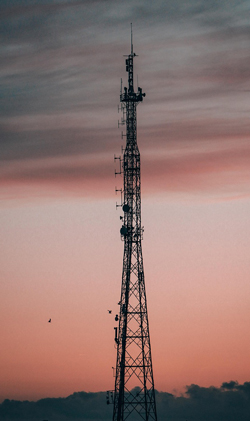
Rural broadband options now include fixed wireless, satellite and fiber What is Driving Rural Broadband Expansion
The biggest factor driving broadband expansion is broadband itself. The technology is mature and the defacto standard for Internet access. The Internet has also matured and expanded to include nearly every business and consumer in the United States and most worldwide.

Speeds have multiplied and multiplied again. Dial-up is long gone. T1 lines available for rural business are woefully inadequate for most purposes as they are capped at 1.5 Mbps. Even if still available, they won’t be for long. Telcos are abandoning their copper wireline assets as quickly as they can.

Part of the problem in getting high bandwidths into rural areas is the cost per user. Cities with dense populations can easily support hookups to metropolitan area fiber networks. In the countryside, there may be miles and miles between paying customers. The infrastructure costs have been just too high for the revenue generated to support… until recently.

What’s changed? One big change is the advancement of cell phone standards to 4G LTE and 5G. The Internet connectivity supported by these standards just can be satisfied by even multiple copper T1 lines. So, the phone companies have been pulling fiber optic cables and adding microwave relays to remote tower sites.

Another change is a national initiative to get everyone connected, much the same way as rural electrification and universal telephone service interconnected the entire country. This initiative is called BEAD for Broadband Equity, Access and Deployment. It will be underway for maybe another five years before Internet Service Providers can hookup everyone, everywhere. The preferred solution is fiber optics for expandability far into the future.

Multiple Technologies Fill the Broadband Gaps
Fiber is slowly but surely making its way past every business, home, farmstead and cell tower. Those cell towers can do double-duty as Internet Service Providers. With 5G blanketing the country, an easy solution to remote access is to use a Fixed Wireless Access modem plugged into your broadband router. This device is a smartphone without the keys, display and apps. As long as you can get cell service, you can get full time broadband.

In essence, FWA is expanding on the idea of WISPs or Wireless Internet Service Providers. Those operate in limited service areas and deliver broadband from a tower to antennas mounted on your home or business in a direct line of site.

Another source of broadband is straight up to the sky. LEO (low Earth orbit) satellite constellations like Starlink and the upcoming Amazon Project Kuiper and Blue Origin TeraWave are designed to deliver high bandwidths at low latencies to mimic fiber optic broadband but pretty much anywhere no matter how remote.

The next step is direct to phone service that will act as cell towers in space and orbiting data centers powered by solar arrays. It’s likely that some mix of satellites, cell towers and fiber will give us all the connectivity we need for the foreseeable future.

Are you having difficulty getting broadband in a rural or remote area? Opportunities are more available than ever before. Find out what rural broadband solutions are available for your business right now.


Click to check pricing and features or get support from an expert technology specialist.


Follow Telexplainer on Twitter


Wednesday, April 30, 2025

Today’s Best Business Broadband Options

By: John Shepler

If you are still using a copper wireline service, such as DSL or T1, for your business Internet connection, it’s time to upgrade your service… before you are forced to.

Find today's best Internet connections for businessForced to? Why would that be? Fact is, the major telecom companies are all in the process of decommissioning their copper wire assets. Basically anything that uses century-old twisted pair wiring is on the way out.

Technology marches on. T1 lines were once considered broadband. They don’t even qualify with today’s standard. DSL? Pretty much an obsolete system that was once a good way to re-purpose standard telephone lines for fast Internet access.

AT&T and others have made it clear that they are either pulling up old copper lines or abandoning them to rust in place. The wire centers or central offices that connect to these lines are being repurposed as data centers for the insatiable needs of AI.

So what are better options? Surprisingly, one of the best is also an older technology that has continuously upgraded to keep it competitive with the times.

Cable Broadband Is a Great Deal for Small Business
That coaxial cable that plugs into the back of a set-top box or cable modem has been a familiar tech standard for many decades. Physically, it’s the same. What’s changed is the signal that comes out that center wire.

Cable was originally analog, just like TV signals back in the day. When the Internet came along, some of the unused TV channels were set aside for digital transmission using a standard called DOCSIS or Data Over Cable Service Interface Specification, an invention of the industry’s R&D organization CableLabs. The current standard is DOCSIS 3.1 with a migration underway to DOCSIS 4.0.

Today’s cable modems are cable of gigabit speeds, with common service levels of 300 Mbps downstream, 30 Mbps upstream. That’s fast enough for pretty much all web browsing, video streaming and data transfer. What’s hard to beat at those speeds is the price. Cable is easily affordable by both consumers and smaller businesses, often with telephone service included.

Wireless Broadband is Now Both Mobile and Fixed
Like cable, cellular wireless had humble beginnings as a mobile telephone service, but has kept up with the times through multiple technology advancements. The first standard that really supported broadband as well as telephone was called 3G. That’s evolved to the current standards of 4G LTE and 5G. With 300 Mbps or so, an iPhone has all the bandwidth it can really make use of.

That high bandwidth, which can reach a Gigabit per second near some of the 5G towers, is easily competitive with fixed broadband services. The capacity limits have been largely eliminated with 5G buildouts and the extra spectrum acquired from government auctions of unused television bandwidth. Now the wireless companies are in a competitive battle to roll out cellular modems that work like cable modems but without the wires. You can put one at a construction site or a pop-up store in minutes. If you move soon, take it with you and have connectivity at your next location.

Cable broadband is being built into laptop computers and tablets and other devices, called the Internet of Things. Remote data acquisition and control are now possible in remote areas that have cell towers but no other connectivity.

Fiber, The Gold Standard and Secret Backbone
The magic that makes cable and cellular broadband so fast is the fiber optic lines that feed these services. It’s all behind the scenes, of course. Even so, you may want to connect directly to fiber yourself.

What’s the fiber advantage? Nearly unlimited bandwidth for one thing. Today’s service levels run from 10 Mbps to 10 Gbps just about everywhere, with 100 Gbps service available in some metro locations. That’s important for medium and larger enterprises with many employees who need simultaneous Internet access.

Another big advantage is symmetrical bandwidth That means if you have 1 Gbps downstream, you also have 1 Gbps upstream. Contrast that with most cable and wireless services that offer much higher download than upload speeds. If you need to transfer files up and down regularly or have demanding video conferencing requirements, this can be important.

A third advantage is very low latency and jitter with minimal congestion. This is because fiber is usually a dedicated service, not shared like cable and cellular. For even higher performance, consider a dedicated line between your company and your cloud service that bypasses the Internet completely.

Need the ultimate in performance? Dark Fiber that you “light” with your own equipment gives you complete control of protocols and bandwidth allocation. It’s like having your own network extended across town or across the country.

Do you need a replacement Internet connection or are ready for a bandwidth upgrade or perhaps even a cost saving? Check out the Business Broadband Options available right now.

Click to check pricing and features or get support from a Telarus product specialist.


Follow Telexplainer on Twitter


Thursday, January 16, 2025

The Cable vs Fiber Broadband War

By: John Shepler

There’s a broadband battle underway right now. It pits cable business broadband against Ethernet fiber optic bandwidth. These are the two leading technologies that will dominate business Internet now and for the foreseeable future. There is also a third contender warming up that we’ll discuss a bit later. Let’s see what the two big players have to offer.

Cable Broadband and Fiber Optic Bandwidth vie for your business. Get quotes now!Fiber Takes Over From Copper
The first century of telecommunications was dominated by twisted pair copper wires that provided the last mile for landline telephones, multi-line business phones, point to point computer connections and, when it started developing, the nascent Internet. The ground is chock-full of multi-pair cables. Some will be pulled out and recycled. Others will be left to slowly disintegrate.

Their technological replacement is fiber optic cables. Glass fibers take the place of plastic coated copper strands. Optical fibers have tremendously more bandwidth carrying capacity. A copper T1 line can deliver 1.5 Mbps. A fiber can deliver a Gigabit per second up to at least 10 Gbps. It’s no longer uncommon to have 100 Gbps fiber optic service available for business use.

Fiber itself has undergone a technical evolution in protocol from the early SONET telecom standard to Carrier Ethernet, otherwise known as Ethernet over Fiber. This upgrade made sense as telecom traffic changed from largely audio phone calls to digital computer packets.

What Fiber Optic Service Can Provide
Fiber broadband is readily available and can offer 10 Mbps to 10 Gbps bandwidth. This bandwidth is usually symmetrical, meaning the same speed for upload and download. It is also generally dedicated. That means you don’t share your fiber capacity with any other businesses. It’s all your traffic from your building to where it joins the Internet. This makes for much more consistent Internet performance.

Many companies have been moving from having their own in-house data centers to hosting that equipment at a co-location facility or leasing the same capability from a cloud provider. If your business software is running remotely, it often makes sense to have a direct connection from your offices, factories and warehouses to the cloud provider and avoid any potential congestion from the Internet.

Direct connections are also useful between company facilities, such as branch offices and any owned data center facilities. Essentially, you are extending your LAN out to include all your locations.

How Can Cable Compete with Fiber?
Cable got its start as a community antenna that fed a small town or city. Like fiber, cable has come a long way technically. Analog has transformed into digital. Still, isn’t cable a bandwidth limited copper connection?

Less than you might think. The drop or final connection to your business is still the familiar coaxial copper cable. The innards of the system have long ago upgraded to fiber, just like the telecom industry. That means most of the distance travelled is over fiber optic cables, some with as many as 100 fibers. The TV and Internet signal is converted to drive a copper drop cable just before it reaches your building. This system is referred to as HFC or Hybrid Fiber Coax.

The other big advance in Cable broadband has been the upgrading of cable modems using the DOCSIS standard. Most modems are now DOCSIS 3.1 that has the ability to support downstream data speeds of up to 10 Gbps and upstream speeds of 1 Gbps.

DOCSIS 4.0 is in the process of being deployed. This equipment upgrade will support downstream speeds of 10 Gbps plus upstream speeds of 6 Gbps.

Clearly, today’s cable broadband is easily a match for all but the most demanding fiber speeds. One difference between Ethernet fiber and cable broadband is that cable is usually asymmetrical to match the typical usage of retail customers on the Internet. In other words, the demand for download speed is usually more than the demand for upload speed. Often download is 10 times as fast as upload.

Another difference is that cable broadband is a shared access service in the last mile. This means that some heavy users may impact the performance of other users from time to time. For consumers, this is usually not a problem. For a business that depends of steady high performance for employee productivity using cloud services, it could present an issue.

Why Pick One Service Over the Other?
For consumers and many smaller businesses, cost is tie-breaker. Cable business broadband is generally less costly than Ethernet over Fiber for similar bandwidths. However, if you need symmetrical bandwidth, dedicated Internet access, dedicated point to point connections, or a dedicated line to your cloud provider, fiber optic connections can be well worth the added monthly cost. It should also be mentioned that some Cable companies are now offering access to their internal fiber optic networks as a premium bandwidth service.

Wireless is the Next Competitor
There is a new entry to the broadband wars that is also worthy of consideration. That is fixed wireless broadband. Once a niche service over very small areas, fixed wireless is now being offered by the major cellular carriers. What has made this possible is the advancement to 4G LTE and 5G. Mobile phones with 300 Mbps or more Internet service are now common. By providing a high performance modem without the telephone features but including Wi-Fi or LAN connection, carriers can deliver high speed broadband over their wireless networks already in place. Advantages include very reasonable pricing and little or no construction cost. You pick up the modem at the cellular store or have it shipped to you and install it yourself right away. It’s also perfect for pop-up stores and construction sites that are only temporary locations.

Which is best for your business? Cable broadband? Ethernet over Fiber? Fixed Wireless? Get pricing and availability for each of these bandwidth options and then choose the right solution for you.

Click to check pricing and features or get support from a Telarus product specialist.


Follow Telexplainer on Twitter


Monday, March 03, 2014

13 Hot Business Bandwidth Options

By: John Shepler

You may think that your business has one or two options when it comes to bandwidth connectivity. If fact, you may have a baker’s dozen or more different technology options to choose from and multiple vendors for each. Of course, the closer you are located to a major business district, the more variety of services and providers you’ll have to pick from. Even so, there are often at least a few options available even out in the boonies. Let’s take a look at at thirteen hot business broadband options you should know about.


1. DSL - Digital Subscriber Line is a broadband service that is delivered over regular telephone lines. It may share a line with a phone or have a line all to itself for more bandwidth. Bandwidth starts at under a Mbps and goes up around 7 Mbps, depending on how far you are from the telco office. Both asymmetrical and symmetrical options are available.

2. Business Cable Broadband - This is very similar to residential cable broadband but designed to serve businesses locations. You often get static IP addresses and more responsive customer service. Bandwidths can range from around 5 Mbps on up to over 100 Mbps download and 10 Mbps upload. You can get just broadband, or a combination of broadband, telephone and television service. Once catch is that the cable has to pass by your location for you to be connected.

3. Fixed 3G and 4G Wireless - This is cellular broadband designed to support business applications. Specialized equipment gives you highly reliable signal. Since it uses cell tower signals, you can get service out in the country pretty much anywhere you can get cell phone service. This option is especially popular for credit card verification in temporary retail locations and construction job sites. Bandwidths are similar to a T1 line (1.5 Mbps) for 3G service and Cable broadband (10 Mbps) for 4G.

4. Satellite - Two way satellite transmission is popular with retail stores and any remote locations. Bandwidth has been similar to 3G, but is now available at 4G levels. You put a dish on the roof and you have broadband virtually anywhere. One limitation is that heavy rain and snow can interrupt service.

Note that these first 4 bandwidth options are the lowest cost you can find, but have some important limitations. They are shared bandwidth, which means your speed will vary depending on what other users are doing. Both satellite and fixed wireless have monthly download limits. Most are asymmetrical, which means that download speed may be 10x upload speed. This works well for typical Internet access, which is what they are designed for. Geosynchronous satellite has high latency (time delay) that makes it unsuitable for real time applications like VoIP. Service reliability and speed of repair typically fall short of what you get with dedicated telecom services.

5. T1 Lines and Bonded T1 - T1 has been the workhorse of business connectivity. The bandwidth is limited to 1.5 Mbps, now too low for many applications. Bonding T1 lines together can create a larger pipe up to 10 Mbps. Available just about anywhere you can get landline telephone service. Popular as a point to point service, Internet access or PBX telephone trunking.

6. Ethernet over Copper - The new competitor to T1. Uses the same telco lines as bonded T1, but a different transmission technology. Bandwidths range from 3 to 50 Mbps typically, with some installations capable of 100 Mbps or more. The tradeoff is distance. Bandwidth drops off as you get farther away from the telco office. Cost is usually lower than bonded T1, sometimes half as much. Can be point to point, point to multipoint or Internet access.

7. DS3 - A hybrid between fiber and copper. The service is delivered to the curb over fiber optic line but then connected via coaxial cable. Runs at 45 Mbps. This is a well established service that is available in many locations, but losing out to less expensive Ethernet copper and fiber services in many areas. Can be point to point or Internet access.

8. OC3, OC12, OC48 - These are traditional fiber optic services using SONET technology developed by the telephone companies. OC3 is entry level at 155 Mbps. OC12 takes you up to 622 Mbps. OC48 is 2.4 Gbps for businesses needing very high bandwidth. SONET is well established and available from multiple vendors within metro areas. Not generally available in rural areas. Point to point or Internet access.

9. Ethernet over Fiber - Like Ethernet over Copper, fiber is taking over from T1 lines and even DS3, this is the new competing service to SONET. Bandwidth is highly scalable between 10 Mbps and 10 Gbps, with 100 Mbps and 1000 Mbps as popular service levels. Cost is generally lower than SONET and making changes is easier and faster. Also, EoF supports Ethernet services like E-Line and E-LAN. Can be point to point, point to multipoint or Internet access.

10. Microwave FIxed Wireless - Like 3G cellular, no landlines or fiber are needed. This is strictly a point to point wireless connection using licensed microwave band frequencies. Limited to line of sight from provider to an outside antenna on your building. High bandwidths of 100 Mbps are available, but generally only downtown in major metropolitan areas.

11. Wavelength Service - Gives you a dedicated “color” or independent channel on the laser beam. Bandwidth is typically 2.5, 5 or 10 Gbps. You can choose the protocol you want to run, including IP and TDM. Bandwidths of 40 and 100 Gbps are now becoming available for very demanding applications.

12. Dark Fiber - Have all the wavelengths to yourself when you lease an unlit fiber strand between two locations. The ultimate in bandwidth and flexibility, but you have to provide and maintain the terminal equipment on each end. For the most sophisticated users only.

13. MPLS Networks - Not an access service, but rather a way to connect many business locations in a regional, national or international area. Think of MPLS as a private version of the Internet. You have guaranteed bandwidth with class of service. Also, high security because there is no public access.

Note that all of the services from #5 on are considered professional telecom services that often come with service level agreements that guarantee performance. Bandwidth is dedicated, not shared, and symmetrical. If performance is more important than bargain basement pricing, these are the services you should be considering. If your needs are modest and you just want a connection to the Internet for email and Web access, then lower end options may well meet your needs.

Not sure how to choose the best bandwidth for your operation or how to find vendors for all these services? Get fast quotes on multiple bandwidth technology services for your business locations, plus recommendations from a bandwidth product specialist.

Click to check pricing and features or get support from a Telarus product specialist.


Follow Telexplainer on Twitter

Wednesday, March 13, 2013

Business DSL Alternatives

Business DSL has been popular with small businesses because of its ready availability and low monthly cost. It works just great for some businesses and not so good for others. Some are out of luck completely. The service is just not available to them. Here’s a bit of explanation and some alternative ideas for companies that either can’t get business DSL or don’t like the way it works.

Get the bandwidth you need at competitive prices...Business DSL is similar to residential DSL. It comes in on ordinary twisted pair telephone wiring. Usually this is just a single pair like a phone line. In fact, it is a phone line. This means that DSL is delivered by your telephone company. They own the copper and are the only ones who can connect to it. Often, though, they will lease out copper pairs to competitive carriers that also offer business DSL service.

One thing that often distinguishes business DSL from residential service is that the home variety is priced at bargain basement prices because it uses the same wires as your landline telephone. Filters are installed so that the low frequency voice signal and the higher frequency digital signal don’t interfere. Business DSL lines are often used only for the digital connection. The telephones have their own separate network.

Some things that business owners don’t like about DSL are the shared rather than dedicated bandwidth, relatively low speeds, outages that don’t get quick repairs and asymmetric bandwidth (for the ADSL variety).

If you’ve been disappointed with what you can get in DSL performance or can’t get DSL at all, consider these alternatives.

For about the same or a little more money, you can get either 3G wireless broadband or Cable broadband. Cable is like DSL on steroids. The much higher bandwidth can make up for shared and asymmetric bandwidth. Like DSL, Cable is distance limited and only available if the cable happens to pass near your business location. Forget DSL or Cable if you happen to be located in the countryside.

Wireless is now an option for businesses in rural and metropolitan areas. WISPs or Wireless Internet Service Providers offer what amounts a giant WiFi hotspot. In order to get a far enough reach, special antennas are needed at each business location. Another flavor of wireless service is fixed microwave wireless. This is business grade service only available mostly in downtown business districts. The provider installs a small antenna on the roof of your building and an Ethernet jack in your office. Bandwidths range from 1 to 45 Mbps for standard service and 50 to 100 Mbps for high speed options. You typically need a line of sight path within 6 miles of the provider’s tower.

There is a type of wireless service that is nationally available and usually doesn’t require outside antennas. This is 3G cellular using the same towers and signals as smartphone cellular. These towers offer strong signals for most businesses, especially if high performance indoor antennas and modems are employed. The 3G service is similar to many DSL service speeds. Now 4G is becoming available, with bandwidth similar to Cable.

One more wireless service that you can get even if there is no cellular service is satellite. All you need is a dish on the roof with a clear view of the southern sky. Prices and bandwidth are competitive with DSL, Cable and 3G. It’s good for many applications, but not VoIP or video conferencing. The latency or time delay is just too long going to and from the satellite.

Consider T1 and Ethernet over Copper if you want high reliability professional wireline connections with low latency. T1 is the classic telecom service. What’s changed is that it is now available nearly everywhere you can get landline phone service and prices are a fraction of what they were a few years ago. Bandwidth is competitive with many DSL services and this is symmetrical dedicated bandwidth. It also comes with a service level agreement that ensures your line will get the highest priority if a rare outage occurs.

Ethernet over Copper (EoC) has emerged recently as a competitor for T1. It is also dedicated rather than shared bandwidth, symmetrical with equal upload and download speeds, and service level agreements. EoC offers higher bandwidths that T1 that often rival the best you can get from Cable. Like T1, prices may be double what you pay for Cable or DSL, but the bandwidth is rock solid and highly reliable.

Are you dissatisfied with your current bandwidth options or simply want to see if you can get a better deal? If so, get complementary competitive business bandwidth options and prices to know the opportunities available for your business location.

Click to check pricing and features or get support from a Telarus product specialist.


Follow Telexplainer on Twitter

Wednesday, February 20, 2013

DS3 Bandwidth Alternatives

DS3 WAN connections are popular with companies needing more bandwidth than they can get from T1 lines but less than moving up to a full OC-3 fiber optic SONET service. So, why would you bee looking for other options? It generally comes down to either cost or performance. Most often, cost.

Get new pricing on DS3 and alternatives in minutes....Yes, there are other bandwidth options available that can do the job that your current DS3 is doing. Let’s take a look at options available today that maybe didn’t exist when you signed your DS3 lease.

DS3 straddles the telecom border between copper wireline and fiber optic bandwidth services. It was originally part of the T-Carrier specifications developed by the Bell System for telephone trunking between switching centers. T-Carrier options include T1 and T3. DS3 is the service that rides on the T3 physical circuit.

Today the terms DS3 and T3 are used interchangeably. In practice, you’ll be hard pressed to find a T3 physical circuit. At one time they were available over microwave relay or waveguide pipes. The actual interface to your router is two coaxial cables with BNC connectors that plug into a DS3 interface module. Those cables have a distance limitation of 450 feet. So, how does DS3 service get from the Central Office (CO) to your location?

Most of the distance is covered by fiber optic cabling that doesn’t have this distance restriction. The DS3 signal is often multiplexed onto a higher bandwidth OC-3 SONET circuit. There may be other DS3 services sharing the same OC-3. Yours is dropped off at your building where it is converted to the industry standard coaxial connections.

This suggests a couple of alternatives to DS3. Before you jump into anything new, though, consider that you may not be getting the best price on your current DS3 service. Prices on telecom services in general have plunged in recent years owing to deregulation and considerable new competition. Perhaps the local telephone company was your only provider choice when you had the service installed. Now there may be several competing providers that are ready, willing and able to do the same job. Get multiple price quotes, preferable from a major bandwidth broker like Telarus, Inc., before you conclude that you need to dump your DS3 only for cost reasons.

Something else to consider is how much bandwidth you really need. Did you contract for DS3 because your T1 line was out of capacity? There’s a big gap between T1 at 1.5 Mbps and DS3 at 45 Mbps. Do you really need the full 45 Mbps or is that simply all that was available at the time?

If you really need, say, 10 Mbps, you can achieve it by scaling up from T1 or down from DS3. T1 lines are now readily bonded together to increase bandwidth. The practical limit is 10 or 12 Mbps without distance limitations. DS3 service can be rate limited to create what’s known as fractional DS3. In other words, you still have a DS3 interface installed but the actual line speed you pay for is 10 Mbps, 20 Mbps, 30 Mbps or some other option.

Both these approaches may save you money compared to what you pay now. An even more attractive option is Ethernet. With Ethernet over Copper you can get bandwidths ranging from 3 Mbps on the low end up to 45 Mbps and sometimes higher on the high end. Prices per Mbps are generally lower, sometimes even half the cost, than the older T1 and T3 technologies. The hitch with Ethernet over Copper is that it is distance sensitive. The farther you are from the CO, the lower the line speed you can achieve.

Ethernet over Fiber picks up where Ethernet over Copper leaves off. Fiber optic Ethernet service is often available from 10 Mbps on up to 10 Gbps. Popular options are 10 Mbps standard Ethernet, 100 Mbps Fast Ethernet and 1000 Mbps Gigabit Ethernet. The speed of the port installed at your facility sets the maximum, not minimum, speed you can achieve. Common practice is to install a 100 Mbps or 1 Gbps Ethernet port.

Fiber connections aren’t available for every building, but carriers have been so competitive in building out their networks that more locations that ever before are “lit” for fiber and others can be easily connected. Ethernet over FIber is easily scaled so that you can increase your bandwidth quickly by making a simple call to your provider. This means that you only need to order the bandwidth you need today along with a port speed capable of handling whatever speed you expect to need in the foreseeable future.

Ethernet over Fiber is a bargain compared to other telecom arrangements, if you can get it. If not, you might be able to get SONET fiber optic service to your premises. The lowest speed service is OC-3 at 155 Mbps, but in some cases this can be rate limited to provide fractional OC-3 service.

One final option is fixed wireless. This is unlike the lower speed 3G or 4G cellular wireless that is now available to business. Fixed wireless at 50 Mbps or more is a line of sight microwave service only available in major metro areas in the business districts. If your location qualifies, you can get fast and inexpensive installation compared to constructing a new fiber optic run.

So, how do you decide on the optimum solution for your company? Doing the research yourself can be time consuming and you may miss out on some opportunities that aren’t well advertised. Instead, run a quick online business bandwidth availability check for the options you want to consider and compare competitive pricing. You may be surprised by what has become available recently.

Click to check pricing and features or get support from a Telarus product specialist.

Note: Photo of BNC connector courtesy of Wikimedia Commons.


Follow Telexplainer on Twitter


Thursday, April 26, 2012

Options For Network Connectivity

Rare is the company that doesn’t need outside connections to its network. The issue is what type of connection will give you the most bang for your buck. Let’s have a look at the latest options that are attractive for small, medium and large enterprises.

Check out connectivity options and prices to extend your local network...Outside network connections break down into categories. Are you looking for something to get you across town? Those are the Metropolitan Area Networks (MAN). How about something that will take you to another state, across the country or overseas? Those are the Wide Area Networks (WAN). Perhaps all you want is a broadband connection to the Internet. No problem. Internet access is readily available for business users. There’s much more to choose from than in the consumer marketplace. The tradeoff is that you'll be paying something more than consumer prices.

Many metro and wide area network services are more alike than different. What you are probably seeking is a dedicated point to point service or a multipoint mesh network. Point to point private lines have been the domain of the telecom industry using standards developed for digital telephony. T1 lines are classic. They give you dedicated bandwidth of 1.5 Mbps in both the upload and download directions. When T1 is not enough, you can bond T1 lines together to incrementally increase bandwidth up to about 10 or 12 Mbps. At that point most companies jump to T3 (DS3) service at 45 Mbps and then SONET fiber services, starting with OC-3 at 155 Mbps.

There’s a new service widely available today that fills in the gap between T1 & T3 and costs less as well. This is Ethernet over Copper or EoC. Ethernet over Copper actually starts at 2 or 3 Mbps and has become a strong competitor to T1 lines. You can get twice the bandwidth with EoC for the same price as T1. The other advantage of EoC is that bandwidth levels increment smoothly past 10 Mbps. You can easily get 15, 20, 25, 30 or up to 45 Mbps. That lets EoC take on T3 / DS3 services with better pricing. In some areas, EoC goes right up to 100 Mbps Fast Ethernet and beyond. Those levels aren’t so widely available as of yet.

Another advantage of what’s called Carrier Ethernet is that you can get multipoint service as well as point to point. This is great for interconnecting multiple business locations in town or around the country. Each location needs an Ethernet over Copper connection. The service provider sets up the mesh network per standards of the Metro Ethernet Forum (MEF), an industry standards group.

There is also a competitor to SONET fiber optic services called Ethernet over Fiber (EoF). It works the same as EoC, but runs on fiber rather than twisted pair copper. The advantages are high bandwidth levels up to 10 Gbps and better pricing than traditional SONET telecom services.

When it comes to interconnecting multiple locations, especially foreign sites, MPLS networks have become the network connectivity option of choice. Why? Because these networks are already installed and running to many locations you want to go. What you need are on-ramps in the form of last mile connections. They can be as simple as T1 lines or EoC links. You can also install fiber optic lines to get higher bandwidth levels. MPLS can give you point to point, point to multi-point, or meshed network connections. Because the core network is already in place, pricing is very attractive compared to dedicated private lines that require engineering time and effort.

In addition to copper and fiber, fixed wireless connectivity is more available than ever. That’s thanks to the buildout of 3G and 4G networks by the cellular carriers. You can get business grade fixed wireless on these networks with bandwidth similar to T1 lines for such activities as credit card verification and network backup. Prices are very attractive, since the cellular carriers bore the cost of construction and paid for it from consumer smartphone data and voice contracts.

What sort of connection or connections do you need to connect your company network to suppliers, customers and your own operations? Compare network connectivity options and pricing for copper, fiber and wireless services to see what has become available recently.

Click to check pricing and features or get support from a Telarus product specialist.


Follow Telexplainer on Twitter

Thursday, February 09, 2012

High Speed Internet For Business

Not many years ago high speed Internet access was hard to come by, even for businesses. Prices were high and service options were few. That’s all changed dramatically. Now there are multiple broadband options for your business even if you are located out in the boonies. Let’s take a look at a range of high speed Internet connections divvied up by low, medium and high bandwidth.

High speed Internet options for business. Click to get prices.Most businesses don’t need a gazillion bits per second, even though they might fancy carrier level bandwidth services. One thing that’s always been true and is likely to stay that way is that the higher the bandwidth, the higher the price. It’s true that within bandwidth categories there can be quite a price differential. You can also get a lot more bandwidth if you elect for shared vs dedicated service. However, that shared bandwidth varies all over the place while dedicated services are rock solid.

The low end of the bandwidth range is dominated by wireline and wireless services. Twisted pair copper is a popular delivery medium because it is almost always available in the form of multi-pair wiring installed by the telephone company. Any copper pairs not being used to carry telephone calls are available for data.

T1 is the traditional data connection for business locations. It is a dedicated bandwidth solution with symmetrical 1.5 Mbps x 1.5 Mbps available at all times. There are generally Service Level Agreements (SLAs) that guarantee uptime, bandwidth and other parameters like jitter and latency. Pricing starts at around $300 per month, sometimes less for a multi-year lease. Out of the way locations may find that pricing is higher for T1 lines.

Ethernet over Copper (EoC) is fast moving in as a direct competitor to T1. It uses the same multiple copper telco pairs but a different modulation scheme that is more efficient. T1 can be run just about any distance. EoC bandwidth is highly dependent on how close you are to the central office. Bandwidths from 2 to 30 Mbps are common, with 3 Mbps around the same price as a T1 line. A very popular EoC service upgrade is 10 x 10 Mbps for businesses that find T1 lines too restrictive and bonded T1 lines too expensive.

There are two other copper-based high speed Internet technologies. One is DSL, a shared bandwidth service that uses twisted pair copper and is relatively inexpensive. The other is Cable broadband, with bandwidths as high as 100 Mbps download and 10 Mbps upload for about what you pay for a T1 line. Both DSL and Cable are asymmetrical bandwidth (higher download than upload speeds) and are offered without SLAs. The big attraction is lower costs, especially for businesses like quick serve restaurants that want to offer free WiFi and have email and Web access for the office. Availability is limited. Cable is pretty much only in-town where the main cable has already been run.

The other way to go is wireless. Many franchise operations use VSAT or Very Small Aperture Terminal satellite antennas. These are a bit larger than the ones used to pick up satellite TV and are set up for two-way data transmission. Recently, 3G and 4G fixed wireless broadband has become a strong competitor for both VSAT and copper wireline solutions. The cost is about half the price of T1 for similar performance, with rural service often available. VSAT can be installed anywhere that you have power and a clear view of the southern sky.

The middle portion of the bandwidth spectrum, say from 10 Mbps to 100 mbps is dominated by bonded T1 lines at the low end, Ethernet over Copper throughout the range, and fiber optic services at the high end. DS3 or T3 lines running at 45 Mbps are the legacy service and are still very popular. In downtown metro areas, you may be able to get high speed fixed wireless in this bandwidth range. Cable is becoming a competitor with 50 Mbps and 100 Mbps services displacing both copper and fiber when symmetrical and dedicated bandwidth aren’t mandatory and you can live without service level agreements.

High bandwidth Internet access over 100 Mbps is now a battle between SONET and Ethernet fiber optic services. SONET is the incumbent, but tends to be higher cost. Ethernet is the newer service, often lower in price but not as generally available. Ethernet is also more granular in its bandwidth and easier scaled up for businesses that are on a fast growth path. Both SONET and Ethernet can give you as much bandwidth as you need and can afford, up to 10 Gbps and higher.

What Internet service option is best for your business? Get high speed Internet prices and availability for a wide range of options, with complementary consulting to help you pick the right solution for your needs.

Click to check pricing and features or get support from a Telarus product specialist.


Follow Telexplainer on Twitter

Friday, February 03, 2012

How Maestro Smart Antenna Improves Fixed Wireless

Accel Technologies, a division of Accel Networks, is introducing a game changer into the fixed wireless space. It’s their new Maestro smart antenna system. What Maestro looks to do is make 3G and 4G fixed wireless broadband more competitive with more expensive business connectivity solutions, such as T1, MPLS, VSAT, Frame Relay and point to point microwave services.

New antenna makes fixed wireless services more availableSo, what is this Maestro and what’s so smart about it? Like all other smart devices, Maestro incorporates active technology improve performance. In this case, the improvement is to an inherently passive element, the RF antenna. Antennas are used for all electronic communications. They can be as simple as a foil trace on a circuit board to a multi-element Yagi beam antenna. Satellite dishes are antennas, or antennae if you prefer. So are long wires used with short wave radios or vertical tower arrays for directional AM radio broadcasts.

The thing that’s important about antennas is that they are the first point of contact with any incoming signal and the last element involved in outgoing signals. An antenna can be any random length conductor or it can be a finely tuned system. Most antenna designs are “cut” to a particular size that resonates with the frequencies you are using. The right antenna length greatly improves transmission and reception. You can tune antennas by adding other passive elements, capacitors and inductors. By adding more elements or creating a parabolic reflector (satellite dish) the gain of the antenna is increased. Gain is like amplification. It gives you a stronger signal. As a passive device, you can’t get something for nothing. That gain in a particular direction comes at the expense of reduced sensitivity in other directions. For most applications that’s an additional advantage. A directional antenna reduces pickup of otherwise interfering signals coming from other directions.

Now, take a look a the antenna on your wireless router. Looks like a little black vertical stick, doesn’t it? Is it a particular length selected for the frequencies involved? Yes. Is it directional? No. A vertical “whip” antenna radiates and receives equally in all horizontal directions, although not so well in vertical directions. That’s nice if you want to blanket an area for reception, like a WiFi hotspot. You need broad coverage if you have users scattered all over or moving from place to place.

Now, how about an antenna to connect with a fixed wireless service? Is a simple whip antenna good enough? It is if you have a very strong signal. But what if you are just far enough away from the tower that you don’t have 5-bar coverage? In the case of smartphones and USB modem aircards, you take what you get or do without. These devices are designed to be nomadic, so they have to have universal coverage that brings with it mediocre pickup performance. However, if your business location is fixed and the towers are fixed, you can do better with an antenna that optimizes for the transmission path.

This is what Maestro is all about. It’s a high technology patent pending design that includes eight antennas, three switchable filter banks and an embedded LNA (Low Noise Amplifier) that adjusts to maintain the highest carrier to noise ratio for the 3G or 4G service you are using. Maestro has over 500 discrete setting options to fine-tune for optimum performance.

Why go to all this trouble? Accel Networks has specialized in leveraging the near-universal availability of cellular broadband service across the US and Canada. We think of cellular as a way to get broadband for our mobile phones, but it can also be used as a fixed location broadband service. It sometimes doesn’t work so great within buildings because those itty-bitty antennas on USB dongle adaptors and MiFi boxes can’t deliver a strong enough signal. Put a decent antenna ahead of ahead of the transmitter/receiver and you’ll have a robust signal that won’t go dead or reduce connection speed.

Maestro will be available in about a month from this writing. Accel expects that its introduction for 3G and 4G fixed wireless broadband service will challenge other solutions that businesses have employed to get high speed Internet access. These include VSAT satellite dishes on the roof, T1 lines, DSL and Cable that may or may not be available, frame relay and even microwave fixed wireless systems. Most businesses, especially small retail stores and offices, don’t need massive bandwidth. They need basic connectivity for credit card verification, email and website access. A 3G or 4G cellular service can provide the bandwidth, reliability and latency they require at a substantial cost savings. Accel has over 6,000 installations now that prove just that. With Maestro, many more locations will be able to gain these benefits.

Is your business located in an area where broadband service is hard to come by or unreasonably expensive? Check availability and pricing for fixed wireless broadband. You may be pleasantly surprised by how affordable it is and how well it works.

Click to check pricing and features or get support from a Telarus product specialist.


Follow Telexplainer on Twitter

Tuesday, January 17, 2012

Fixed Wireless Moving To 4G

There are a couple of faces to fixed wireless broadband for business. First is the licensed microwave services that you’ll find downtown in major cities. The coverage is limited to a few thousand feet with strict line of sight requirements. Bandwidth is high, but availability is very limited.

Check the prices, bandwidth and availability of fixed wireless solutons...The other approach is to piggy-back on the 3G cellular broadband services that already blanket the country. This approach offers lower bandwidth, similar to a T1 line, but is available just about anywhere you can get a cell phone signal. That has made it perfect for rural locations, temporary stores and small businesses that need a broadband connection fast.

Accel Networks has been a leader in 3G fixed wireless in the United States and Canada. Their winning approach has been in contracting with multiple wireless providers and creating a proprietary hardware solution that is plug-and-play for the user. Your equipment package comes pre-programmed for the optimal carrier signal available at your location. The Maestro antenna system ensures a solid RF link. All you need to do is connect to the serial or Ethernet connection and you are ready to go in as little as 3 days from order placement.

What do you get in the way of performance. You have a static or dynamic IP address on a PCI compliant private Layer 2 connection. Typical 3G data rates average 1 Mbps download by 512 Kbps upload. A service level agreement assures you of 99.9% availability. Coverage includes 99% of all retail locations in the US, Canada and Puerto Rico.

As good as 3G fixed wireless is, businesses are pressing for more bandwidth. Fixed wireless providers are following the cellular upgrade path from 3G to 4G as it is fielded. Accel Networks has launched their 4G service with a proprietary antenna and embedded modem technology. Speeds are expected to increase to 6 Mbps download and 2 Mbps upload with under 100 mSec of latency.

How long until you can upgrade from 3G to 4G? The industry changeover is expected to be completed within the next two years. It will depend on where you are located as to how quickly you can install 4G fixed wireless broadband.

If you’ve been following the consumer smartphone upgrades from 3G to 4G, you know that there are a competing technologies. The ultimate is LTE (Long Term Evolution), a GSM technology that looks like it will become the universal standard. That includes a switchover for CDMA carriers like Verizon. In the mean time, carriers are performing intermediate upgrades to their existing networks to squeeze out a little more bandwidth. Why? It’s quite expensive to install new circuit cards in every cellular base station to change the technology of the signals being transmitted. Simple evolutionary upgrades often involve only a software upgrade to existing hardware. T-Mobile is taking this approach with an upgrade from HSPA to HSPA+ prior to full deployment of LTE.

The other limitation to higher speed cellular deployment is backhaul. This is the connection between the cell tower and the centralized switching equipment. Up till recently, T1 lines were used for cellular backhaul. They offer 1.5 Mbps in both upload and download directions and are both highly reliable and available anywhere twisted pair telephone wire exists. That’s just about everywhere, including out in the boonies. Bonding T1 lines can increase bandwidth by adding two, four, six or more T1 lines in parallel. That’s good to about 12 Mbps. After that, you need either microwave backhaul or fiber optic connection.

Fiber optic is the way to go if at all possible. The bandwidth is nearly unlimited and you only pay for the construction costs once. The problem is that there are several hundred thousand cell towers sites that need to be upgraded to fiber. In remote locations, fiber is nowhere nearby and needs to be brought-in. Even in the cities, there is a cost and time involved to upgrade each cell. That, plus the cost of the hardware and labor for site just to switch to LTE limits how fast the carriers can move. Even so, cellular broadband is so lucrative that billion dollar investments will continue to flow until the job is completed.

Will fixed wireless work for your business situation? If so, prices are very attractive for both 3G and 4G fixes wireless broadband solutions. Check pricing and availability to see if you really need those landline connections after all.

Click to check pricing and features or get support from a Telarus product specialist.


Follow Telexplainer on Twitter

Thursday, January 12, 2012

Find Fiber On-Net Buildings

Say that you are looking to move your offices to a new location. Assuming that you don’t build, you’ll be looking to buy or rent an existing suite of offices. Everybody compares rents, taxes, floor space, neighborhood, proximity to transportation, parking and so on. What they often forget to consider is where they are going to get their network connections.

Find on-net fiber lit buildings now...It’s trendy to say that bandwidth is a utility, just like gas, electric and water. It should be that way and someday it will. Unfortunately, that day is not today. You can be pretty sure that any office building you’ll consider will have hookups for electricity, water, sewer and likely natural gas. It will also be wired for multi-line telephone service. This is the reason bandwidth is so easily forgotten. Telephone service is a given. Shouldn’t other telecom services be assumed available?

Fiber optic connections are definitely not a given. You’ll be lucky to find one in four buildings on-net with a fiber carrier. On-net means that a particular carrier has already brought fiber into the building and activated it on their network. Far more likely that the building you are looking at will be off-net, especially for your favorite service provider.

It’s not necessarily the end of the world if your building is off-net. In many cases, fiber optic service is nearby and it’s only a short construction run to bring it in. Who is going to pay for that? If you are a big enough user and willing to commit to a long term contract, one or more carriers might just eat the construction costs themselves to get your business. If you are a small operator, you’ll be presented with the option of paying for the construction yourself or going with another option.

What other options are available? Copper-based services are getting faster and faster. Bonded T1 lines can take you to 12 Mbps or so. Ethernet over Copper can extend that to 15, 20 or 30 Mbps. You may be close enough to a provider’s facilities that you can get even higher speeds of 50 or 100 Mbps. The nice thing about copper is that it is already installed. Yes, that multi-line telephone cable contains extra twisted copper pairs that can be used for bonded T1 or Ethernet over Copper service.

A copper service not normally considered is HFC or Hybrid Fiber Coax. This is a bandwidth service provided over the infrastructure of the Cable TV companies. Cable operators have extensive fiber optic backbones and the ability to deliver bandwidth up to 100 Mbps or so over coaxial drops from their fiber runs. This is often fairly inexpensive compared to other solutions, so long as you can use asymmetrical shared bandwidth that fluctuates in speed. For general web access, email, and the like, HFC bandwidth is a great solution for many businesses.

Another option is fixed wireless. Your building needs to be within line of site of your service provider. They install an antenna and radio set on your roof and run that to your offices. It’s possible to get up to 1 Gbps using fixed wireless, if that service is available for your location.

If you are anticipating needing bandwidths of 1 Gbps, 10 Gbps or higher, it is far better to make sure that your building is on-net or can be made so at a reasonable cost before you sign any leases. You can do that by running a search for fiber lit buildings using the GeoQuote online tool. Just enter the address of the building you have in mind and you’ll get a map showing fiber availability and the distances to buildings where fiber optic service is present. From there, it is an easy matter to request competitive price quotes that include construction costs, if any. Copper, HFC and fixed wireless quotes will also be provided upon request.

Click to check pricing and features or get support from a Telarus product specialist.


Follow Telexplainer on Twitter

Tuesday, December 06, 2011

Fixed Wireless For Rural Retail

Retail businesses in small towns and rural locations often find it difficult or expensive to get the broadband connectivity they need. Many go with two-way satellite or T1 lines to get the point of sale and Internet access they need. Others have discovered that 3G wireless gets them a reliable and secure connection for credit card verification at half the cost of a T1 line.

Fixed wireless cellular service offers reliable rural broadband service...We’re all familiar with 3G as the cellular broadband service for smartphones. It is also used with USB aircards to get Internet access for laptop and notebook computers. There’s a less well known service that leverages the availability of 3G wireless signals with the robustness of high performance multi-carrier equipment and a secure VPN network. This is what you need for serious business applications.

Conventional cellular service is fine for mobile applications and has the low cost advantage for personal use. The Accel Networks fixed wireless solution adds performance reliability, coverage and security for installation in business locations. The idea behind fixed wireless is that you set it up once and forget it. It’s always on and connecting you to the data center. You can safely turn your back and forget about tweaking antennas or charging batteries. This network is managed to ensure that it is always up and running. Think of this solution as a replacement for T1 line service or a satellite dish on the roof.

Accel Networks has addressed the issue of poor rural broadband availability by leveraging the broadband signals that are available. You know that you can get cellular phone service just about anywhere. The only question is whether the carrier you are contracted with has coverage everywhere you want to go. Accel gets around the limitations of carrier coverage by contracting with multiple cellular carriers to provide coverage to over 90% of business locations in the United States, Canada and Puerto Rico. They have a proprietary provisioning system that determines which carrier has the most robust signal for your particular location. That data is used to configure a unique modem, router and antenna equipment package that is sent to you in a couple of weeks, although it is possible to get expedited delivery in as little as a few business days.

Once you get your wireless equipment bundle, you simply plug it in and you are up and running. No need to wait for a service technician to install an outdoor dish or roof antenna or go through a complex configuration setup. None of that is needed with the Accel Network system. You’ll be ready to go in 15 minutes after you open the shipping box. The rental of the equipment is also bundled with your bandwidth lease so that you pay by the month, without having to buy any hardware. Even at that, the cost of a bandwidth service that is competitive with many T1 installations is about half the price.

What kind of performance can you expect? You’ll get 3G data rates bursting to 1 Mbps download and 512 Kbps upload on a 99.9% available network. That’s more than adequate for most small retail applications. This connectivity is on a PCI compliant private layer 2 network that gives it a big advantage for meeting credit card verification requirements. Use it with a single card terminal or hook up all your electronic cash registers and get fast response times, especially compared to dial-up telephone line solutions.

Accel’s fixed wireless package is perfect for retail POS, security, inventory polling, tank monitoring and digital signage. Oil and gas companies have found it works great for remote site management. Other applications include lottery machine and ATM support. Specialty retail stores, convenience stores, grocery stores, automotive retailers, restaurants, payday loan stores, and car dealerships have all found that fixed wireless meets their needs.

Is your business located in a rural or out of the way location where business broadband is either hard to come by or expensive? If so, check out fixed wireless business broadband service as a high performance low cost bandwidth solution for your business location.

Click to check pricing and features or get support from a Telarus product specialist.


Follow Telexplainer on Twitter

Thursday, November 17, 2011

DS3 and Fractional DS3 Broadband

In the quest to upgrade bandwidth, companies have generally turned to DS3 bandwidth service. Here is what DS3 is all about and the different technologies used to provide DS3 and similar mid-level bandwidth services.

Find better pricing on DS3 and fractional DS3 bandwidth services...DS3 stands for Digital Signal 3, a standardized switched circuit TDM telecom service. As a refresher, DS0 is the basic building block at 64 Kbps. That’s one channel of digitized telephone call. DS1 is a bundle of 24 DS0 channels at 1.5 Mbps. You are probably more familiar with its implementation as a line service called T1. DS3 is the next step up at 45 Mbps. It’s a bundle of 672 DS0 channels as a large telephone trunk or 28 T1 lines multiplexed together for transport. When you order a T3 line, you are getting the line service implementation of DS3.

Even though DS1 and DS3 were originally conceived as telephone company technologies, they are more often used to transport data packets today. That includes private point to point lines and dedicated Internet connections. In these applications, the entire payload is used to transport data packets.

A full DS3 circuit will give you 45 Mbps bandwidth in both the upload and download directions. This is the most common service ordered and is readily available nationwide. You’ll need an interface card for your router to connect to a DS3 termination. There are two interconnect cables, one for transmit (upload) and one for receive (download). They are 75 ohm coax, similar to what you’ll find for Cable TV connections, although the specified cable type is Bellcore 734 or 735 for this application. The connectors are type BNC. You’ll find these on the router interface card. There may be more than one pair if the router can handle multiple DS3 connections.

At this point, you might be imagining coaxial cables stretched from your building back to the telephone central office, like the twisted pairs used for T1 and multi-line telephone service. In practice, the coaxial connection is only used for short distances. The DS3 bandwidth itself is most often delivered over a SONET fiber optic cable, where it is demultiplexed and dropped off at your premises.

DS3 bandwidth may be higher than you require. There’s a big gap between T1 line bandwidth at 1.5 Mbps and DS3 at 45 Mbps. Companies often begin scaling up their bandwidth by bonding multiple T1 lines to double or triple the individual line bandwidth. This works up to about 10 or 12 Mbps in most cases. Let’s say you only need 20 or 30 Mbps right now. What do you do?

One option is to order fractional DS3 service. A full DS3 interface is installed, but the line bandwidth is limited to the fractional amount you order. That could be 15, 20 or 30 Mbps. You can possibly save money this way, but not necessarily. The reason is that full DS3 is more of a standard service that is readily available. The fractional services are a special order that may or may not be available in a particular location, depending on the service provider. In the end, it might make the most economic sense to get a full DS3 connection.

There are other technical options in this bandwidth range that compete with fractional and even full DS3. The most popular is Ethernet over Copper. This is a highly scalable service that competes with T1 at the 1.5, 2, and 3 Mbps levels. You can also get 10, 15, 20, 25, 30, 50, and sometimes even 100 Mbps Ethernet over Copper. This lets you match your budget more closely to the bandwidth you require. Ethernet over Copper (EoC) is often less expensive than either T1 or DS3 for similar bandwidths, although not as readily available as yet.

Downtown in major business districts you may also find fixed wireless bandwidth services. These often deliver DS3 bandwidths, but perhaps in an Ethernet protocol. Most of the time that’s what you want anyway, since you’ll be connecting to a LAN running Ethernet.

A final option isn’t DS3, but might give you a similar benefit for a lot less money. That’s business class Cable broadband. It is shared, not dedicated, and the bandwidth varies with the amount of user activity. Still, you can get up to 50 or 100 Mbps download with 5 or 10 Mbps upload service for about the price of a T1 line. You’ll need to have the cable passing by your business location for this service to be available. Otherwise the construction costs are prohibitive.

Are you in need of higher bandwidth to support your growing business, additional computerization or a move to cloud services? If so, get pricing and availability for DS3 and fractional DS3 services, plus related bandwidth services that may also meet your needs.

Click to check pricing and features or get support from a Telarus product specialist.


Follow Telexplainer on Twitter

Tuesday, October 18, 2011

Fiber Lit Towers Improving Rural Broadband

Anyone situated beyond the city limits knows the frustration of living in a bandwidth-free zone. Consumers and small businesses may be near enough to a cell tower to get 3G wireless and certainly two-way satellite is an option, but with severe download restrictions on both. Business sites and farmsteads can probably get T1 lines at 1.5 Mbps and maybe bonded T1 lines to improve a bit on that. How about high bandwidth wireless? Forget it. Fiber optic Ethernet connections? Are you nuts?

Rural towers lit with fiber optic bandwidth mean high speed service beyond the city limits...Rural America is truly at a disadvantage compared to the telecommunications resources found in cities and suburbs. The best options are found in the core of large metropolitan business districts. Move downtown in a big city and you’ll find such niceties as Gigabit Ethernet and even 10 Gig E connections. You may even be able to get Ethernet over Copper at 100 to 400 Mbps. Fixed wireless services easily deliver 50 to 100 Mbps bandwidth. If a shared bandwidth solution is OK for what you are doing, it’s hard to beat the Cable MSO prices.

Why the big discrepancy between metropolitan and rural service options? It’s all about infrastructure - the infrastructure that was never installed. Well, that’s in the process of changing right now. Level 3 Communications, one of the premier international telecom carriers, has established a program called EON or Extended On-Net sites. What they are doing is building out 500 additional access points to their fiber optic network. They are mostly in small and rural markets where there are few service options available. This is a wholesale, rather than retail, service intended to give local service providers access to high bandwidth carrier services.

Even with fiber optic gateways in the boonies, you still need a way to get the signals to the businesses and consumers without having to spend a fortune creating the remainder of the needed infrastructure. One technology that makes excellent sense for thinly populated areas is fixed wireless. WiMAX is an example of wide area coverage with significant service speeds. What you need, then, is access to the carrier-class fiber bandwidth plus a tower to transmit that bandwidth wirelessly to users scattered far and wide.

This sounds like a perfect opportunity for a combined effort and such a deal has been made. 52Eighty, a provider of tower infrastructure, has entered into an agreement with Level 3 to create 200 new wireless tower access sites situated near Level 3’s EON gateways. 52Eighty will take care of tower construction. Level 3 will provide transport and services that include private line, Ethernet and wavelength services. EON also offers backhauls that include Internet, VPN and voice services.

If this sounds a lot like what has been called the rural broadband initiative, it’s because that’s exactly what is going on. Level 3 is a key “middle mile” provider in bringing high speed network access to rural areas where local service providers can connect. They were awarded $13.7 million this summer through the American Recovery and Reinvestment Act and matched it with $4.2 million of their own funds to create dozens of middle mile connections in rural California, Florida, Georgia, Kansas, Tennessee and Texas.

Does this mean that relief is coming to disconnected consumers and businesses in Rural America? It’s certainly on the way. In fact, many carriers are expanding their wireline, broadband and fiber bandwidth services to garner new customers. If your ISP or business has been unable to get connectivity in the past, now is a good time to check availability and prices online for fiber optic lines to 1 Gbps, plus T1, ISDN PRI and other bandwidth services. You may be surprised by what has become available recently.

Click to check pricing and features or get support from a Telarus product specialist.


Follow Telexplainer on Twitter

Wednesday, August 24, 2011

Wireless Internet Access For Farms

There are many advantages to living and working on a farm, but one of the disadvantages is that broadband Internet access is harder to come by. No, DSL and Cable broadband probably aren’t in your future. But there are options available at reasonable prices right now.

Fixed wireless offers cost and performance advantages for rural broadband...It’s true that DSL and Cable are popular with independent professionals, small businesses and home-based occupations. You get a decent amount of bandwidth at a reasonable cost. The one hitch is that these services are distance limited. DSL signals decrease rapidly as you get a mile to two from the telephone company central office. Cable is a wired service that goes only where the Cable company has decided that there is enough population density to justify stringing the coaxial cable. Unfortunately, those factors keep Cable and DSL within or close to the city limits.

What you really want are either line services that don’t have distance restrictions or wireless services that don’t require stringing or burying cable of any type. There are several options that meet this description.

First is T1. This is a telco digital line service first used between telephone company switching centers. The beauty of T1 is that it is designed to be provisioned on two pair of ordinary telephone wires, available just about everywhere. The second advantage is that it was designed to work with regenerator boxes that clean up and boost the signal so that it can go another mile. You can generally get T1 line service miles from the nearest town, although it gets more expensive as you get farther out in the country.

Second is satellite. Satellite broadband service comes from above and needs no wires. All it requires is AC power that can even come from a gas generator or solar panels and an inverter. Disadvantages include the need to get a professionally installed two-way satellite dish installed on your roof and a half-second or so of latency due to the long path up to the stationary satellite. For many email and Web uses, this slight delay from issuing a command to getting data back is no big deal.

A third option is wireless terrestrial Internet service. Many communities have WISPs or Wireless Internet Service Providers. These tend to be locally owned and have a very limited service area. More often than not, WISPs target rural subdivisions and small towns to get enough customers to justify the cost of the equipment and bandwidth.

One of the most exciting new services is fixed wireless or cellular broadband. This service uses the data channels that every cell phone carrier has available for mobile phones and laptop computers. Accel Networks is a leader in this field and has contracts with the major carriers (AT&T, Verizon and Sprint) to connect with their broadband data channels. By combining the coverage areas of multiple carriers, Accel can pretty much blanket the nation except for mountainous and remote areas of the West where there is no cell phone coverage. If you can get a decent cell phone signal, you can probably get fixed wireless service.

The way this works is that Accel Networks customizes their standard interface box and antenna to optimize the signal strength for your particular location. That gives you a really good chance of getting a solid signal that will deliver decent bandwidth. How much bandwidth? This service is competitive with T1 lines with a minimum rate of 750 Kbps download and 250 Kbps upload, bursting up to 1 Mbps on downloads. This is more than adequate for most farm uses, such as getting agriculture reports, using email, general Web surfing and even watching video clips. It’s not intended for high intensity usage like downloading HD movies or running a server.

What makes fixed wireless broadband service so popular in rural areas is that it is readily available and costs half the price of a T1 line or less. Is this the right service for your farm, ranch or rural business? Get pricing, availability and complete details on fixed wireless broadband now. Installation is fast, often within a matter of days.

Click to check pricing and features or get support from a Telarus product specialist.


Follow Telexplainer on Twitter

Monday, June 27, 2011

Cheaper Business Broadband Abounds

With finances tight, most companies are looking for ways to save money without compromising the operations of the business. Telecom and networking costs are often eyed because they tend to be substantial monthly expenses. Well, go ahead and look closer. There’s money to be saved on your business broadband services.

Save on your business broadband and telephone costs today...What has given some managers the idea that their costs are fixed and non-negotiable is that they signed their original contract years ago with the one vendor in town who could provide the service - the local telephone company. That’s rarely the situation any more. Deregulation and technology developments have spawned a plethora of competitors who each have something to offer.

Let’s take that dedicated T1 line for instance. T1 is still an excellent choice for business broadband. You get bandwidth that you don’t share with anyone else, high availability, the option to bond lines to increase bandwidth, and the security of a private line that runs directly to your location. But, oh, the cost. Aren’t T1 lines the expensive way to go?

Not so much anymore. The price of T1 lines has come down dramatically in recent years. If you are still on an old contract or just paying month to month since your contract expired, you are probably missing out on a big cost reduction. What you want to do is get a new set of competitive T1 line quotes for your location and see what you’ll pay for the next three years, not the last ten.

For about the same price as T1, you can now get Ethernet over Copper in many business districts. EoC gives you a simpler interface since it runs the same Ethernet you have on your network, only standardized for long distances over telco copper cable. For the price of a 1.5 Mbps T1 line, you can probably get 2 Mbps or even 3 Mbps Ethernet over Copper. The one hitch is that this new technology isn’t available everywhere. It is distance limited to several miles or less from the nearest telephone company central office.

How about business class Cable broadband? If the local cable operator (MSO) has lines running by your location, you may be able to get 25, 50 or even 100 Mbps cable broadband for the same price as that T1 line. Cable offers a lot of bandwidth for the money, but it is a shared service so bandwidth fluctuates. That may or may not matter to you. Also, upload bandwidth is only a fraction of download bandwidth. That doesn’t matter for Web browsing, watching video, downloading software updates or email. It could be a limiting factor if you are use to constantly uploading large files to remote data centers or other business locations.

Want to pay even less and still get reliable broadband capability? Consider fixed wireless broadband running on 3G. This is similar to what you use for a laptop computer or smartphone, but designed as a box to install in your retail store, construction site or other business location. Bandwidth is typical for 3G, up to 1 Mbps or so for downloads and much less for uploads. But if all you need is point of sale connectivity and perhaps email and other occasional Web use, you could pay a third the cost of a T1 line and have installation within the week.

Are you concerned that you are paying too much for your business broadband and other network or telephone services? Chances are, your concerns are justified. Why wonder when you can find out quickly where you stand? Get current prices and availability for business broadband and telephone services suitable for your company location and requirements and see how much savings can be gained.

Click to check pricing and features or get support from a Telarus product specialist.


Follow Telexplainer on Twitter

Wednesday, April 27, 2011

Finding Fiber Lit Buildings

If you are looking for high levels of bandwidth at reasonable prices, the place you need to be is in a “lit” building. Let’s take a look at what makes a building “lit” and why that’s important.

Get an instant map of fiber lit building locations nearby. Click to check now.The lighting we’re talking about with a lit building is laser light. It’s not lighting the building itself, but only the fiber optic strands that run through it. A building is said to be lit if there is fiber optic bandwidth service installed and running.

As you may suspect by now, if there is fiber optic service to the building and you own or are renting space in that building, you can almost certainly get fiber optic bandwidth services installed for your needs. Granted, there can be construction costs if only one tenant has fiber service and there is no cabling running to other rooms. That’s usually a solvable problem at a reasonable cost.

There’s a much bigger problem if nobody in the building has contracted for fiber optic bandwidth. Chances are, fiber cabling was never pulled into the building during construction or as part of any upgrades. Who knows where the nearest fiber even exists? It could be in the building next door or it could be ten miles away. If you are in the business district of a major city you probably aren’t far from the nearest fiber connection. Out in the boonies it’s much less likely that there is anything reasonably close. Oh, there may be long haul fiber conduit right under your feet. Those don’t count. You need to be near a termination point so you can hook into the fiber optic service.

Actually, there is now a quick and easy way to find fiber lit buildings in your area. It’s a Shop for Ethernet GeoQuote tool that maps out fiber point of presence in a given area. All you do is enter the address of your building and you’ll get both a map and the distances to the nearest lit buildings and the bandwidth capability at those locations. If you like, you can then put in a request for detailed pricing to support your applications.

The biggest variable in getting high bandwidth Ethernet line service is the cost of construction to install the fiber optic connection. This may be quoted to you as a non-recurring cost or it may be waived by the carrier depending on how close you are to where their fiber service is already installed. If it’s right next door, you could luck out and not have to pay anything. If it is miles down the road, the construction cost may be more than either you or the carrier wants to pay.

You can make your building more attractive to the carriers if there are multiple tenants all willing to commit to fiber optic service. By pooling your bandwidth requirements, the carrier will view your situation as a much bigger opportunity and be willing to kick in more of the construction costs than they might for just one user.

What if you are still too far away to make fiber construction practical? You’re not out of luck by any means. You will certainly qualify for bonded T1 service that can give you up to 10 Mbps. You may also qualify for Ethernet over Copper that can easily take that up to 20 Mbps and perhaps higher. Other services that might be available are Ethernet over Hybrid Fiber Cable and Ethernet over Fixed Wireless. Cable is the same type of cable that delivers Cable TV and can also provide 50 to 100 Mbps of business bandwidth. Fixed wireless systems can beam up to 45 Mbps to a terminal box mounted on the roof of your building.

Don’t count yourself out for increased bandwidth at reasonable prices until you get a complete set of prices and availability quotes for business bandwidth options. This is a highly competitive business, with new services becoming available all the time.

Click to check pricing and features or get support from a Telarus product specialist.


Follow Telexplainer on Twitter