Showing posts with label HFC. Show all posts

Tuesday, July 27, 2021

DOCSIS 4.0 Expands 10 Gbps Cable Broadband

By: John Shepler

Fiber Optic service is expanding faster and farther than ever. It’s the gold standard in the quest for unlimited business bandwidth. Many businesses, frustrated by their inability to get fiber lit into their buildings or locked-out by the high cost of fiber construction, turn to their next best option: Cable broadband. Now the latest cable standard, DOCSIS 4.0, brings symmetrical streaming and increased upload speeds to ordinary coaxial copper cable service. Would you believe 10 Gbps download and 6 Gbps upload? Fiber has some serious competition from cable.

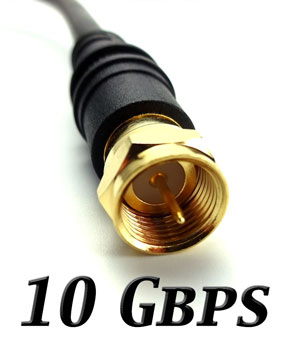
DOCSIS 4.0 offers 10 Gbps over CableWhat is DOCSIS?
DOCSIS is the technology that enables traditional cable TV providers to also offer broadband Internet service on the same cable at the same time. The term is an acronym for Data Over Cable Service Interface Specification. It is the product of Cable Television Laboratories, Inc., CableLabs, a non-profit group supported by the cable system operators.

DOCSIS has evolved along with the Internet. The original spec was DOCSIS 1.0 released in 1997 and defined standards for 40 Mbps download and 10 Mbps upload. VoIP and QoS mechanisms were added by the early 2000’s, along with a boost in upstream data rates to 30 Mbps.

A significant improvement was introduced with DOCSIS 3.0 in 2006. Now cable companies could offer 1 Gbps downstream and 200 Mbps upstream with channel bonding. Support for IPv6 was also introduced at this time. With these improvements, it could be said that cable was a serious competitor to fiber optic services.

DOCSIS 3.1 in 2013 increased maximum downstream capacity to 10 Gbps with 1 to 2 Gbps upstream and is widely embraced by cable operators. DOCSIS 4.0, the latest version, increased the upstream rate to 6 Gbps in 2017. DOCSIS 4.0 is still in the early stages of production testing and deployment. The ultimate plan is to have full duplex symmetrical bandwidth on cable of 10 Gbps.

How Can Copper Cable Run So Fast?
Truth be told, it’s been a lot of years since cable TV networks were built with coaxial copper cable from the antennas at the head-end all the way to individual households and business locations. Virtually all systems of any size now use a technology called HFC or Hybrid Fiber Cable. The core network is fiber optic cable just like fiber network providers operate. The difference is that those companies run fiber right to the demarcation point within the building, while cable service terminates the fiber somewhere in the neighborhood and the makes the final run with the familiar coaxial cable. It was HFC that really enabled cable providers to offer serious broadband service.

Access Cable Fiber Networks Directly
Cable networks serve extensive metropolitan areas and their suburbs. Multi-system operators have fiber that interconnects their networks and connects to the Internet backbone. Major cable companies have gotten into the business of competing directly with competitive fiber optic networks by offering businesses the option to connect to their fiber networks without going through the copper interface.

There are advantages in going the fully fiber route. You may be able to get faster speeds and fully symmetric and dedicated connections by avoiding the cable modem. Remember that cable broadband is an inherently shared service. You are on the same last-mile Internet connection as dozens or hundreds of your neighbors. As such, you may find the the congestion level and speed of service vary throughout the day. It all depends on what everybody else is doing.

This is the reason that businesses, especially those with significant business processes running in the cloud, opt for dedicated Internet access and point to point private lines. You can get those at low speeds with traditional telco services such as T1 lines and higher speeds with DS3 bandwidth, SONET fiber optic services, Ethernet over Fiber and MPLS networks.

What service will meet your needs depends on how sensitive your operations are to line speed and latency, along with jitter and congestion. Cable broadband, especially at the DOCSIS 3.0 and above levels, provides many, many businesses with highly usable and reliable service at excellent pricing levels. Other companies with more sensitive needs may need to access fiber itself and set up more dedicated and private connections to achieve the performance they require for maximum productivity.

Find out now what cable, fiber and twisted pair copper broadband options are available for your business and what each has to offer.

Click to check pricing and features or get support from a Telarus product specialist.


Follow Telexplainer on Twitter


Thursday, January 25, 2018

DOCSIS 3.1 Makes Cable Act Like Fiber

By: John Shepler

Cable broadband, once thought to be a low-end networking option, has been quietly getting a major technological overhaul that makes it competitive with fiber optic bandwidth for many business applications. Companies that once wouldn’t consider cable for more than a backup connection now find the combination of high performance and low cost too compelling to ignore. Let’s take a look at what’s happened behind the scenes and what options cable offers now and in the near future.

Accelerate your Internet speed with DOCSIS cable broadband.

Magic #1: The HFC Cable Plant
When cable started out as cable television, it was little more than a set of really tall antennas feeding tuners and distribution amps at the “head end” to create an equivalent to what you would get off the air…if you could get such good reception. The all-analog collection of signals got boosted and distributed all over town, but what came out the connector on your TV was very much a more potent version of OTA (Over The Air) Television.

Time passes and the handful of OTA channels were augmented by dozens and dozens of non-broadcast channels delivered via satellite to that same head end. These “cable channels” quickly ate up all the capacity of the big coaxial cables that fed the little coax cables that fed the TVs. Cable companies launched rebuilding programs to increase capacity… but not by doing more of the same. Instead, they strung new fiber optic bundles and then connected their existing delivery cables to the new fiber optic trunk lines. This combination is called HFC or Hybrid Fiber-Coax.

The HFC system, combined with all-digital transmission creates a huge increase in capacity to accommodate a hundred or more TV channels with extras that can be used to deliver Internet broadband over the same cable. Note that the cable that connects to your TV or modem looks the same as the old analog cable. It is. But, it only needs to run a short distance before it hooks up with the enormous capacity fiber optic network. You get the best of both worlds… high capacity fiber to the curb plus inexpensive passive coaxial cable for termination of the service in the home or business.

Magic #2: DOCSIS Broadband
DOCSIS is a cable broadband standard that stands for Data Over Cable Service Interface Specification. It was created specifically for cable companies to be able to also deliver Internet. To do that, DOCSIS signals fit into low frequency spectrum not used for TV signals and spare standard television channels on the cable.

The first version, DOCSIS 1.0 was released about the same time as the Internet was taking off, 1997, followed by version 1.1 in 1999. A faster version 2.0 came out in 2001. That’s the one most of us cut our broadband teeth on, after finally running out of patience with dial-up telephone Internet. A few years ago you probably upgraded to a DOCSIS 3.0 modem, which brings the system up to today’s standards.

DOCSIS 3.0 makes cable a serious contender for business broadband service. It supports the latest Internet Protocol version 6 (IPV6) and has a downstream (download) capacity of 1 Gbps with an upstream (upload) capacity of 100 Mbps. In practice, may users run something like 25 to 75 Mbps down and 5 to 7 Mbps up.

Magic #3 DOCSIS 3.1 Thinks It’s Fiber
The newest technical upgrade to HFC systems is called DOCSIS 3.1. It sounds like an incremental change, but the performance jump is enormous. DOCSIS 3.1 offers downstream speeds of 10 Gbps max with upstream of 1 to 2 Gbps max. Cable bandwidth is called asymmetrical because the download speeds are typically 10x the upload speeds. A further enhancement, not yet deployed, is Full Duplex DOCSIS 3.1 that will offer 10 Gbps upload and 10 Gbps download. That’s pretty much the high end of what you’ll get with fiber or by leasing a fiber optic wavelength… at a fraction of the cost.

The Appeal of High Speed Cable Broadband
Cable broadband is the most compelling Internet access for any business that can get it. You do need to be in a location with cable already running down the street, but you stand a much better chance of having cable available than fiber. It’s mostly out in rural areas that neither fiber or cable are available and high speed satellite becomes the service of choice.

The big appeal of cable is how much bandwidth you get for the money. You’ll easily pay 5x to 10x as much for SONET or Ethernet fiber optic services. In some cases, that extra expense is worth it. Cable bandwidth is shared among the pool of users, while higher priced telecom services have dedicated bandwidth for your use only. SONET and Ethernet over Fiber services are symmetrical and come with service level agreements that guarantee a certain level of performance and availability at all times.

If your business is running a server farm in-house or distributing large software packages or video streams, you’ll need a high speed dedicated service. But, if your business uses cloud services, collocated hosting, or has simple needs for web browsing and email, cable broadband may have all the capacity you can use and at bargain rates. You should at least give it consideration before you sign an expensive lease. Our expert consultants can help you make the best decision based on the particular needs of your business. Compare DOCSIS cable with other copper, fiber and satellite bandwidth options available for your business location.

Click to check pricing and features or get support from a Telarus product specialist.


Follow Telexplainer on Twitter

Wednesday, January 23, 2013

Comcast’s 100 Gbps Core Network Supports Business

Major telecom carriers have been in the process of upgrading their core networks from 40 Gbps to 100 Gbps over the last year. Comcast is the latest to make the move, fitting Ciena’s Wave Logic 3 interfaces to their current Ciena 6500 packet optical platforms. Why would a cable company do this and how can it benefit your business?

Check out high bandwidth fiber optic service options for your business...Comcast is best known as a Cable TV company or MSO (Multi-System Operator). They serve over 20 million residential and commercial customers in 40 states and the District of Columbia with video television, high speed Internet and telephone services. You may already know that Comcast broadband service is highly popular for home, home office and small business use. It comes in on a coaxial cable and is highly affordable. But did you also know that Comcast operates one of the largest fiber optic networks in the United States behind the scenes?

Many people think that cable companies still connect everything from their head-end towers and satellite dishes to locations around town using various size coax. That was true in the early days of analog TV cable systems and master antennas for large apartment buildings. The technology has long since moved on. Now everything is digital and the signals ride fiber optic cables most of the distance to your location. It’s that connection from the curb to your building that is still RG-6 coaxial copper wire.

Why? Because it works just fine and the cost of installation has already been paid. DOCSIS 3.0 modems offer broadband Internet in excess of 100 Mbps. That’s is well within the needs of most users. What’s really important to residential, home office and very small business users is low monthly cost combined with adequate performance. The shared asymmetrical bandwidth (higher download than upload speeds) and “best effort” performance is more than adequate for accessing the Internet and downloading documents, pictures and video.

Where HFC (Hybrid Fiber Cable) services run out of gas is when the need for bandwidth is high, dedicated low latency service is needed, symmetrical upload and download speeds are required, and an SLA (Service Level Agreement) is desired. These characteristics are common for traditional telecom services such as T1, DS3 and SONET fiber and the newer Ethernet services such as FastE at 100 Mbps, GigE at 1000 Mbps and 10 GigE at 10 Gbps.

What isn’t as well known is that Comcast operates an enterprise grade fiber optic core network to interconnect their many offices and provide high bandwidth connectivity to businesses. Would you be surprised to learn that Comcast operates a network that covers 147,000 fiber route miles? How about that business class services are available from 1 Mbps on up to 10 Gbps? Their business class services include dedicated Internet access, point to point Ethernet private lines, Ethernet LAN service to interconnect multiple business locations and converged layer 2 centric VPLS to support voice, video and data.

Comcast, like other major fiber optic carriers, recognizes the increasing demand for higher and higher bandwidth services. What’s driving these speed increases is more use of HD video, big data files and a rapid move to cloud computing services. The cloud, especially, present new challenges for businesses used to having all their processing in-house and connected over the corporate LAN. Cloud service providers offer the opportunity to rapidly scale resources up and down, pay only for what you use during the month, and avoid both capital investments and ongoing maintenance costs. The tradeoff is that you now need much higher and very reliable bandwidth to connect your employees to the cloud.

Comcast’s upgrade to 100 Gbps fiber optic bandwidth meets today’s perhaps tomorrow’s needs for their own use and in support of small, medium and large companies. When even this massive capability fills up, the Ciena system they’ve chosen has an upgrade path to 400 Gbps. It’s likely that we’ll see even higher speeds at 1 Tbps and beyond sooner than anyone expects.

Are you running short on bandwidth and wondering how much you can afford as an upgrade? Get multiple competitive fiber optic service quotes for Comcast Business and other high performance fiber optic carriers now. It’s likely that you can turn up your WAN bandwidth at little or no increase over your current monthly least cost.

Click to check pricing and features or get support from a Telarus product specialist.


Follow Telexplainer on Twitter

Monday, May 07, 2012

Why Get Fiber Services From A Cable Company?

When we consider purchasing new or replacement fiber optic services, the first thing that comes to mind is the telecom companies. That is, the telephone companies and the competitive service providers or CLECs. Most bandwidth providers have their own core network facilities but rent lines from the telcos for last mile connections. This is especially true with SONET services that originated in the telephone industry.

Consider getting fiber optic business services from cable as well as telco providers...There is a type of fiber optic service provider that doesn’t use telco facilities at all. That is the cable companies or MSOs (Multi System Operators.) The reason is that cable systems were all built from the ground up to serve a specialized market for television signal distribution to homes and businesses. In fact, most cable systems have been built from the ground up twice. The first implementation used large diameter coaxial cable to transport the combined TV signals picked up from over the air and satellite downlinks. The second implementation was an upgrade to use fiber optic cable for signal distribution to the neighborhoods, while keeping small diameter coax for the final connection.

This system is known as HFC or Hybrid Fiber Coax. Nearly everyone recognizes the 75 ohm coax and F type connector used for Cable TV work. What most people aren’t aware of is the extensive fiber optic infrastructure in place behind the scenes. The larger cable systems have thousands of miles of fiber optic cabling, some cables with 100 or more fiber strands. These cables run all over town and often between towns as well. Nationwide cable companies have nationwide fiber optic networks.

Television is the primary content transported by the cable fiber, but there is also a lot of telephone, Internet and point to point data traffic. Ever since television went digital, there is little difference with how you transport video and how you transport other services. It’s all bits and bytes.

The cable companies have recognized this and recently started marketing their capabilities to businesses. The low end services are delivered over broadband coaxial cable. Some of the most popular services are the shared bandwidth Internet access tiers up to 100 Mbps download and 10 Mbps upload. This service is priced about the same as a T1 line but can serve many more employees using the Internet. Cable broadband is often used to feed WiFi hotspots for restaurants, hotels and other retail locations.

Many businesses, especially larger ones, don’t want the variability and lack of guarantees associated with shared bandwidth services, even at bargain prices. They need rock solid symmetrical bandwidth and guaranteed parameters for latency, jitter, bandwidth, packet loss and availability. The other thing they need is higher bandwidth levels for connecting multiple business locations and cloud services.

Many cable companies are eager for this premium level of business. They’re now in a position to provide it with some unique benefits as well. One major benefit is complete diversity from the telecom system for redundancy needed for business continuity. If you want to protect your connectivity from outages, you need a redundant connection. If that connection goes right to the same central office as the main connection, you haven’t added much redundancy. A fire or equipment at the CO can take out both your connections. So can a cable break if both your fiber strands are in the same bundle.

You won’t have that problem if one of your fiber services comes from a telecom company and one from a cable company. They have nothing in common to be a single point of failure. If the whole town gets wiped out, you may still have a problem. But that needs to be addressed with geographical diversity from multiple business locations.

What can cable providers offer in the way of fiber optic services? Typically, you can get 10 Mbps to 10 Gbps Ethernet over Fiber that is MEF (Metro Ethernet Forum) compliant. That includes point to point private lines, dedicated Internet access and MPLS networks that interconnect multiple locations. Those locations can be in the same metro area or they can be scattered around the country. Many cable companies have NNI (Network to Network Interface) agreements with other companies so that traffic can be passed from system to system.

What is the interface to these cable systems? You can often get your choice of a copper or fiber handoff at the demarcation point in your building. One standard arrangement is for the cable company to install a Gigabit Ethernet port regardless of the bandwidth level you are contracting. That way, if you decide you want a higher bandwidth level they can turn in up by simply making a few keystrokes into the system. No hardware changes will be necessary until you want to move up to a 10 GigE port.

Do cable system fiber optic services make sense for your business? You may well benefit from these providers. Find out by getting competitive quotes for fiber optic network services that meet your business needs.

Click to check pricing and features or get support from a Telarus product specialist.


Note: Photo of fiber optic conduit spools courtesy of Wikimedia Commons.


Follow Telexplainer on Twitter

Thursday, January 12, 2012

Find Fiber On-Net Buildings

Say that you are looking to move your offices to a new location. Assuming that you don’t build, you’ll be looking to buy or rent an existing suite of offices. Everybody compares rents, taxes, floor space, neighborhood, proximity to transportation, parking and so on. What they often forget to consider is where they are going to get their network connections.

Find on-net fiber lit buildings now...It’s trendy to say that bandwidth is a utility, just like gas, electric and water. It should be that way and someday it will. Unfortunately, that day is not today. You can be pretty sure that any office building you’ll consider will have hookups for electricity, water, sewer and likely natural gas. It will also be wired for multi-line telephone service. This is the reason bandwidth is so easily forgotten. Telephone service is a given. Shouldn’t other telecom services be assumed available?

Fiber optic connections are definitely not a given. You’ll be lucky to find one in four buildings on-net with a fiber carrier. On-net means that a particular carrier has already brought fiber into the building and activated it on their network. Far more likely that the building you are looking at will be off-net, especially for your favorite service provider.

It’s not necessarily the end of the world if your building is off-net. In many cases, fiber optic service is nearby and it’s only a short construction run to bring it in. Who is going to pay for that? If you are a big enough user and willing to commit to a long term contract, one or more carriers might just eat the construction costs themselves to get your business. If you are a small operator, you’ll be presented with the option of paying for the construction yourself or going with another option.

What other options are available? Copper-based services are getting faster and faster. Bonded T1 lines can take you to 12 Mbps or so. Ethernet over Copper can extend that to 15, 20 or 30 Mbps. You may be close enough to a provider’s facilities that you can get even higher speeds of 50 or 100 Mbps. The nice thing about copper is that it is already installed. Yes, that multi-line telephone cable contains extra twisted copper pairs that can be used for bonded T1 or Ethernet over Copper service.

A copper service not normally considered is HFC or Hybrid Fiber Coax. This is a bandwidth service provided over the infrastructure of the Cable TV companies. Cable operators have extensive fiber optic backbones and the ability to deliver bandwidth up to 100 Mbps or so over coaxial drops from their fiber runs. This is often fairly inexpensive compared to other solutions, so long as you can use asymmetrical shared bandwidth that fluctuates in speed. For general web access, email, and the like, HFC bandwidth is a great solution for many businesses.

Another option is fixed wireless. Your building needs to be within line of site of your service provider. They install an antenna and radio set on your roof and run that to your offices. It’s possible to get up to 1 Gbps using fixed wireless, if that service is available for your location.

If you are anticipating needing bandwidths of 1 Gbps, 10 Gbps or higher, it is far better to make sure that your building is on-net or can be made so at a reasonable cost before you sign any leases. You can do that by running a search for fiber lit buildings using the GeoQuote online tool. Just enter the address of the building you have in mind and you’ll get a map showing fiber availability and the distances to buildings where fiber optic service is present. From there, it is an easy matter to request competitive price quotes that include construction costs, if any. Copper, HFC and fixed wireless quotes will also be provided upon request.

Click to check pricing and features or get support from a Telarus product specialist.


Follow Telexplainer on Twitter

Thursday, November 10, 2011

Pricing Slashed For Michigan 100 Mbps Business Internet

Businesses in Michigan, like businesses everywhere, are hurting for bandwidth. Between the increased use of video, business automation, and everything moving to the cloud, those aging T1 lines are starting to grind to a halt under the load. Bonded T1 will only take you so far. After that, it’s time to face an order of magnitude price jump to get into fiber optic services. Well, that’s how it was. Now there’s another option that offers fiber bandwidth at T1 prices. Is this for real?

Detroit, Michigan has low cost 100 Mbps Internet available for business.Comcast Business Class 100 Mbps / 10 Mbps service is definitely for real and the answer to a profit squeezed company’s prayers. All of a sudden, that big constriction at the LAN/WAN interface is gone. Files move fast. Web pages pop before your eyes. Email? You could drown in all the email that can flood in at 100 Mbps.

So, how do you get OC-3 or Fast Ethernet bandwidth levels without the high cost of fiber? What you tap into is HFC or Hybrid Fiber Coax. That’s the technical name for the finely tuned network that Comcast has deployed in their vast service area. There are two types of transport technologies that are welded together in HFC. Hence, the hybrid designation. The core of the network is a robust fiber optic backbone that is worthy of any major carrier. The access connections are coaxial copper cable. You know it as TV cable. What you may not realize is just how much bandwidth that coax connection supports.

Cable TV companies started using coaxial cable back when they were little more than enormous master antennas. The same coax that connects from your outdoor TV antenna to the back of your TV set can also bring in a much larger set of channels from your Cable company. Decades ago, it was all analog on Cable and over the air. Now it’s all digital. The RF spectrum on the cable is still channelized, with one digital TV station per slot. There are a lot of TV channels to choose from, but they don’t use all the possible channels that the cable can support. Some of those channels have been set aside for broadband or telephone services.

Besides the analog to digital transition, the other thing that’s changed with Cable operations is deployment of a fiber optic backbone to interconnect the multiple systems that the Cable operator owns and bring all the programming content into the neighborhood. This fiber network has far greater capacity than the old style large diameter coaxial distribution cable.

If fiber is so great, then why not run it directly to homes and businesses? Someday, that’s what will probably happen. Right now, the economics say no. Fiber termination equipment is expensive. Trenching a roll of plastic coated copper coax and connecting it to a wall outlet is cheap. With the ability to deliver television, broadband Internet access and telephone on that inexpensive little line, who wants to pony up for fiber?

You don’t or you’d already have installed SONET OC-3, OC-12, OC-48 or Ethernet over Fiber service for your business. Either the construction cost is a show stopper or the monthly lease fees are more than your budget can handle. Now you have another choice with Comcast’s 100 Mbps business broadband. It’s inexpensive and it can be installed quickly for any business that the Cable infrastructure passes.

What makes this service so affordable? For one thing, the cost of the network is spread over thousands of television and broadband customers. For another, this is not a true telecom service like SONET or Ethernet. Those services are symmetrical in that they have the same upload and download speeds. If you need 100 Mbps in both directions, Comcast’s offering won’t work for you. It’s specified at up to 100 Mbps download and up to 10 Mbps upload. That configuration is exactly what you need for general Internet access, where uploads are few and small but downloads are frequent and massive.

Also note that Cable is shared and not dedicated bandwidth. An OC-3 fiber connection gives you 155 Mbps all to yourself. Whatever you don’t use sits idle until you need it. You are sharing the Cable bandwidth availability with other users so that the network is always in use. This sharing also means that your bandwidth will vary throughout the day depending on what everyone is doing online. Does it matter? It may or may not, depending on how important it is to you to have that 100 Mbps at your disposal at all times.

Finally, there are no service level agreements like you have with T1 lines and the like. This is a “best effort” information service that is offered as-is. Even so, Comcast takes its network seriously and works to keep it as reliable as possible. If you’ve used home Cable broadband and been happy with the way it performed, then you’ll probably be happy with the bigger, faster Business Class service that gives all your employees a similar level of service while accessing the Internet on their desktop computers.

Are you a Michigan business owner or IT manager who’s anxious for high speed Internet access at a very affordable price? Check into prices and availability for 100 Mbps Internet options at your location. Note that Comcast and other fast Internet services are also available for locations other than Michigan.

Click to check pricing and features or get support from a Telarus product specialist.


Note: Photo of Detroit skyline courtesy of Wikimedia Commons.


Follow Telexplainer on Twitter

Thursday, September 22, 2011

Disruptive Metro Ethernet over Fiber Pricing Arrives

Ethernet over Fiber (EoF) has been gaining popularity with large organizations as a replacement for more expensive SONET fiber optic services. For smaller and medium size companies, the mere mention of the term “fiber” suggests pricing that is way over budget. Today that’s all changed. The era of affordable fiber optic bandwidth has arrived.

Disruptive Ethernet over Fiber pricing as arrived to your benefit...What’s responsible for prices per Mbps or Gbps that can be half of what you’d expect to pay or less? It’s a source you would never expect... Cable TV. Cable? Isn’t that for consumers?

Yes it is. But behind the scenes there’s another Cable network you probably didn’t know even existed. It’s a professional fiber optic core network that’s the equal of any carrier and with a service footprint larger than most.

When we think of Cable TV, we think of the coaxial wire that plugs into a set top box or cable modem. At one time, all cable networks were constructed almost completely of copper coax strung on poles around town and trenched through the back yard. That was the era of Analog Cable. What’s happened over the years is that this network architecture has evolved into a combination of fiber optic and copper called HFC or Hybrid Fiber Coax that supports the newer digital services.

HFC uses fiber optics for the long runs that bring service into a business or residential neighborhood. It also runs between cities for large Cable MSOs (Multi-System Operators) like Comcast. Most of the traffic on that fiber is television video, but there is so much bandwidth available that it also easily transports data from 10 Mbps on up to 10 Gbps.

Comcast has recognized that their nationwide network runs past businesses as well as consumers. Many smaller businesses take advantage of the excellent pricing on Cable broadband brought in on coaxial cable to a cable modem. It’s quite possible to get 50 Mbps or even 100 Mbps asymmetrical shared bandwidth for the same pice as a T1 line.

Asymmetrical means that the download speed is much higher than the upload speed. Typically that’s a 10x bandwidth difference. This is common for Internet access, but different from business telecom services that are generally symmetrical or the same speed for both upload and download.

Comcast’s Ethernet over Fiber bandwidth services are symmetrical and intended for Enterprise applications. There are 4 services you’ll be interested in. They are Ethernet Dedicated Internet (EDI), Ethernet Private Line (EPL), Ethernet Virtual Private Line (EVPL) and Ethernet Data Network / Meshed Network (EDN). All of these services are available in bandwidths from 10 Mbps to 10 Gbps.

Ethernet Dedicated Internet gives you the Internet access you need to support large employee user bases and connectivity with customers worldwide. Dedicated means that the bandwidth you order is always available for your use. That differs from shared bandwidth that is common for consumer services and wireline cable modems.

Ethernet Private Line (EPL) is a point to point connection service. You may be using T1 lines for linking two business locations now and wishing you had more bandwidth. EPL using Ethernet over Fiber can give you the higher bandwidth you need immediately with nearly unlimited growth potential for the future.

Ethernet Virtual Private Line (EVPL) is another Ethernet private line service. It is similar to EPL, but allows multiple Ethernet services on the same physical line and UNI (User Network Interface). These come in on EVCs or Ethernet Virtual Connections. What the virtualization does is let you run Ethernet Private Lines out to each of several business locations without having to pay for multiple fiber or wireline terminations at headquarters.

Ethernet Data Network / Meshed Network (EDN) lets you establish a large Metro or Wide Area Network to interconnect LANs for your branch offices or other business locations. As a meshed network, you have any to any connectivity. This is similar to might set up with a Frame Relay or MPLS network.

Are you ready for fiber optic bandwidths but not fiber optic service prices? Depending on locations, you may be in position to benefit from the enormous cost advantage of HFC based Ethernet over Fiber bandwidth services. Get pricing and availability before you sign up for anything else.

Click to check pricing and features or get support from a Telarus product specialist.


Follow Telexplainer on Twitter

Thursday, June 16, 2011

PRI over Cable Cost Savings

Many businesses use ISDN PRI trunking to provide phone service for their organizations. The original motivation to move from analog business lines to PRI was the cost savings that T1 technology offered. Now there is a newer and even better cost option called PRI over Cable.

Save money with ISDN PRI telephone service delivered over Cable.Regardless of the delivery technology, ISDN PRI is a well-established standard for bundling up to 23 business telephone lines on a single digital cable. Why 23? It’s because T1 lines were designed to have 24 channels, each capable of transporting one high quality digitized telephone conversation. One channel is reserved for signaling and Caller ID, leaving 23 channels available for phone calls. Each channel is equivalent to one analog phone line. By bundling them, you can almost always save money over ordering 23 individual phone line.

What’s more, nearly all modern PBX telephone systems and many key telephone systems support the ISDN PRI standard. There is a PRI jack on the back of the system or a plug-in accessory card. Many larger business phone systems accommodate multiple PRI lines so you can have 46, 69, 92 or more outside phone lines if your company is large enough to need this many.

ISDN was designed around T1 lines, but there is no reason that more modern packet switched networks can’t also provide phone lines to meet the ISDN specification. It’s all a matter of hardware and firmware on circuit cards to get the signals formated properly.

Comcast, the largest cable operator in the US, is now offering PRI telephone trunking over their Hybrid Fiber Cable (HFC) system. If you are only familiar with Comcast as a provider of Cable TV service or broadband, you may be surprised to learn that Comcast is the third largest telephone company in the country. The other possible surprise is that Comcast is a business as well as residential service provider.

Coaxial cable has bandwidth capabilities far beyond those of twisted pair copper telephone wiring. This is especially true when most of the network is built on fiber optic cabling and only the last mile or less uses coax. Coax is cheap, reliable and well-proven technology. There is plenty of room on that coax to delivery television, broadband and telephone services, including ISDN PRI.

But isn’t broadband telephone fraught with performance issues? The Internet often isn’t up to traditional telephone standards when it comes to voice distortion and latency, the annoying time delay that makes you pause during two-way conversations. That’s why Comcast keeps their broadband and telephone signals separate. They’re both riding the same cable, but in different channels so they don’t interfere. TV signals are also on the same cable in their own assigned channels.

What makes PRI over Cable a great option for a small to medium size business? Consider that you can get a 6 channel telephone trunk capable of serving up to 24 employees plus 22/5 Mbps broadband Internet service for less than the cost of many T1 lines. Most companies need both telephone and Internet service, and Comcast’s business class Business Class Trunks and Internet with broadband speed up to 22 Mbps download easily fits the need.

Do you need a larger phone system capacity or are concerned that you will in the future? No problem. Comcast lets you add to your PRI service in single channel increments. Many ISDN PRI services now come with a full 23 lines even if you don’t need that many. Having a system that is scalable for both phone lines and Internet bandwidth gives you the ability to buy just what you need now and be able to easily upgrade in the future.

Could you benefit from the flexibility of business telephone service that will grow with your business or just want to see if you can save on ISDN PRI over Cable with or without bundled broadband service? If so, get pricing and installation times for ISDN PRI and bundled services for Comcast Business Class. There are also attractive voice and data plans from competitive carriers where cable services are not available.

Click to check pricing and features or get support from a Telarus product specialist.


Follow Telexplainer on Twitter

Wednesday, April 06, 2011

Redundant Business Internet Connection Using Cable Broadband

Larger businesses have shunned what they consider to be “consumer” grade broadband services out of concern about availability and performance issues. While it is smart to deploy your mission critical business processes over dedicated circuits with service level agreements, you may be missing out on a very cost effective solution to backup your telecom services and improve access speed for Internet usage.

Backup your T1 line with Cable Business Broadband.Cable broadband has experienced a rapid deployment and continued technical development largely due to its popularity as a consumer Internet service. Other options, such as satellite, wireless, dial-up, and fiber optic are either bandwidth limited, costly to install or often unavailable. DSL is a worthy competitor, but sometimes not located nearby.

What DSL and Cable have in common is that they give you a lot of bandwidth for a small price by telecom service standards. The 75 ohm coaxial cable has far more high end capacity than the unshielded twisted pair copper telephone wires used for DSL. Both offer great deals for 10 or 20 Mbps, but Cable is pulling away with DOCSIS 3.0 modems providing 50 or 100 Mbps now and capable of even higher speeds.

Today’s reality is that you can get 100 Mbps Cable broadband for about the same money as 1.5 Mbps T1 line service or 3.0 Mbps Ethernet over Copper. If you suspect there’s a catch, you’re right. The low price of Cable services are a result of sharing the network and the bandwidth with a large number of other users, mostly consumers. That advertised 50 or 100 Mbps goes up and down all day, depending on what your fellow users on the Cable are doing. If they are all casually browsing the Web, you likely have more speed at your disposal than you know what to do with. But when they start downloading movies and large software packages, there’s not so much excess bandwidth left to divvy up.

You don’t see these performance variations with dedicated line services. The term “dedicated” means you get exclusive use of all the bandwidth that line can carry. It’s less speed, but it doesn’t vary. When you aren’t running the line to capacity, the excess goes unused.

The other difference between Cable broadband and Ethernet or T-Carrier services is the service level agreement, also known as an SLA. These documents spell out commitments by the service providers in regard to service availability, performance characteristics such as latency and jitter, and remedies in case something goes wrong. If the line goes down, it is rare for it not to be repaired in a matter of hours.

Cable and DSL are considered “best effort” information services, which is another way of saying there are no guarantees or even promises. Even so, these providers have gotten pretty sophisticated as network operators and make every effort to keep their systems up and running.

The reality is that Cable broadband services can be great in the role of broadband backup. Consider that adding a second T1 line will cost you just as much and may not provide much additional reliability. T1 lines all come in through the same wire bundle and probably go to the same telephone company central office. Yes, if one pair breaks or is cut, you have the other line. But if someone with a backhoe chops through the entire bundle, both T1 lines go out. Cable has no relationship to either telephone wiring or the telephone company offices. True, there’s the possibility that some truck could run into the one pole that carries both the telephone and cable wires and knock out both. But for most of the run, your T1 line and your cable line go their separate ways.

The other thing to consider is that Cable’s high bandwidth may more than offset the variations you experience. You might not be getting 100 Mbps every minute, but you’ll likely not be dipping below 15 Mbps and even that’s 10x the speed of your T1 line. Users browsing the Web, sending email or download PDF files may be unaware of line variations. Data backups to hosted storage services will also benefit more from the higher average line speed than be affected by bandwidth variations, although upload speeds are significantly lower than download speeds on these asymmetrical services.

Are you concerned that you can afford only a single line service that could go down and leave you out of business for who knows how long? Why not protect your interests with Business Cable Broadband Service at a very affordable price?

Click to check pricing and features or get support from a Telarus product specialist.


Follow Telexplainer on Twitter

Thursday, March 24, 2011

D3 vs DS3 Bandwidth Choices

Medium and larger size companies have long chosen DS3 services to obtain the bandwidth they need for broadband Internet access. Now there’s a new player in the marketplace that is looking to complement if not displace the venerable DS3 connection.

Compare D3 with DS3 bandwith options. Click for pricing and availability.If you need business bandwidth higher than you can get by bonding T1 lines, you already know about DS3. But how much do you know about D3?

D3 is short for DOCSIS 3.0, a cable broadband standard that gives HFC (Hybrid Fiber Cable) systems a capability that rivals fiber to the premises. It is now possible to get 50 Mbps for business use from cable systems in many cities. Some have 100 Mbps available and more will have that service offering soon. DOCSIS 3.0 can provide 152 Mbps, with even higher speeds possible. Compare that with DS3 at 45 Mbps and you can see why there is a natural competition between the services.

The raw bandwidth specs don’t tell the whole story, however. D3 and DS3 are different technologies with different characteristics. You may find that one or both of these services make sense for your business.

DS3 stands for Digital Signal, level 3. It was developed as part of the T-Carrier specification by Bell Labs for use by the telephone companies to transport up to 672 simultaneous telephone calls between phone company switching centers. When provisioned over coaxial copper lines, it is called T3 line service. If you suspect that T3 is related to T1, you are right. A T3 line can transport the equivalent of 28 T1 lines on its higher bandwidth.

DOCSIS 3.0 has a Cable TV rather than a telephone company heritage. The DOCSIS standard was developed by CableLabs (Cable Television Laboratories, Inc.) with contributions from other companies serving the cable industry. If you have Cable broadband, you are using a DOCSIS modem. It’s only a question of which version you are using. The original was DOCSIS 1.0, which has been supplanted by DOCSIS 1.1, DOCSIS 2.0 and now DOCSIS 3.0.

DS3 is based on multiplexing 672 channels of 64 Kbps each to create total bandwidth of 43 Mbps. Add the necessary synchronization and control bits and you have a bandwidth of 44.736 Mbps. Why so many channels? Each of those 64K channels is just the right size to carry one telephone call. That’s the telco heritage of DS3. Combine all the channels into one large pipe and you have nearly 45 Mbps of digital bandwidth.

D3 is also based on channels. In this case, each channel is 6 MHz wide. That’s the width of one television channel. Everything on a cable system is treated as a TV channel, so broadband services have to fit into those channels to get through the amplifiers and wiring on the system without interfering with any other channels. A 6 MHz channel can transport a 38 Mbps broadband signal in one direction. Cable operators bond channels together to get higher bandwidths. With 4 bonded channels, DOCSIS 3.0 can deliver a download speed of 152 Mbps.

So, are D3 and DS3 the same beyond their different technology heritages? Not really. The telco heritage of DS3 means that it is a dedicated symmetrical bandwidth service. You get 45 Mbps in both the upload and download directions. That bandwidth never varies. It is called dedicated because it is completely dedicated to your needs. Anytime you don’t use the full 45 Mbps, it just sits there and idles while waiting for more data.

D3 is an asymmetrical shared bandwidth service. You get different speeds in the upload and download directions. Download is faster to reflect the fact that most users download more content from the Internet than they upload. Typical business bandwidth services are 50 Mbps download and 10 Mbps upload or 100 Mbps download with 10 Mbps upload. This bandwidth is shared among many users on the system. Thus, you may experience your access speed varying all over the place depending on what other users are doing. If a lot of them are downloading movies or big software updates, everyone’s speed will be slowed.

DS3 service is generally sold with an SLA or Service Level Agreement that describes the expected performance and availability of the service, plus remedies if the provider doesn’t deliver as promised. D3 is a “best effort” service with no specific performance guarantees. Even so, it is in the provider’s best interest to provide adequate resources and service availability to keep the customers happy.

The difference in services are most dramatic when you look at the pricing. You might pay several thousand dollars a month for DS3 service with an SLA. D3 will probably cost you a tenth of that, with no guarantees. Which will work for your needs depends on if the cable system passes your business and if you can live with the variations in performance and lack of guarantees. Some companies have DS3 or even T1 lines installed for their mission critical or performance sensitive applications and D3 for general Internet access and low cost backup to their telecom services.

Are DS3, D3 or both bandwidth services right for your company? Why not talk to an expert consultant that can provide you with prices and availability of DS3, D3, and other broadband options for your business needs? There is no charge for this helpful service and you may be able to realize a considerable cost savings while achieving the same or better network performance as you have now.

Click to check pricing and features or get support from a Telarus product specialist.


Follow Telexplainer on Twitter

Tuesday, February 08, 2011

HFC Broadband For Business

Many small businesses don’t fall into the category of “residential” users but don’t need or can’t afford the cost of traditional business telecom services, such as T1 lines or Ethernet over Copper. One possible solution is HFC or Hybrid Fiber Coax broadband services.

Coax cable as used in Hybrid Fiber Coax systems.Hybrid what? You may have heard of this as Cable broadband for business. A lot of home based businesses successfully use Cable broadband to manage their websites, access information on the Web and send and receive email. But try to order residential service for a business location and you’ll get turned down flat. That’s because residential broadband is priced for single homes and apartments with few people accessing the service and probably no-one online most of the day. Knowing that, some business owners incorrectly assume that you can’t get Cable run into a business. But you can.

So, what’s available and why the funny name? HFC or Hybrid Fiber Coax refers to the technology used to deploy high speed Internet access, telephone service, and Cable television. You know that Cable TV and Cable broadband are called that because of the coaxial cable that provides the connection to the network. When Cable systems were first deployed, they were constructed from various size coaxial cables. What’s happened in recent years is that the long connection from the Cable office or the “head end” where the signals are picked up and run for miles to various neighborhoods has been replaced by fiber optic cable. The last few hundred feet or so are still copper coaxial cable, also called coax. The result is a system that is a hybrid of fiber optic cable and coax cable known as Hybrid Fiber Coax or HFC.

Why go with a hybrid arrangement rather than just make it fiber optics all the way? It’s mostly a matter of cost. While fiber has a far larger capacity, there is a lot of coax already in the ground. The interface connection at the premises, either a Cable modem or set top box, is much less expensive than the termination equipment needed for fiber. Don’t count that coax down and out yet, either. With digital signals, there is more than enough bandwidth for triple-play services to small and medium businesses as well as consumers.

With an already built-out infrastructure and a high number of users to cover costs, you might expect that HFC services are lower in cost than most telecom services available for the SMB. You’re right, they are. But you need to know the performance tradeoffs to make a smart buying decision.

One excellent use for HFC is broadband Internet access when employee use is primarily Web browsing and email. That includes information research, making purchases, doing simple banking, messaging customers, providing a WiFi hotspot and so on. If most of what you do is similar to the way you use a computer at home, HFC should work just fine. You select a bandwidth tier that offers enough speed to work efficiently and still saves you money over other options. Typical bandwidth for smaller businesses goes up to 15 Mbps download and 2 Mbps upload, although some Cable companies are offering speeds as high as 50 or even 100 Mbps.

You’ll likely be able to get a high speed Internet solution that meets your needs with a lot more bandwidth than a T1 line offers and for a lot less money. But beware. T1 lines are dedicated bandwidth that stays a rock solid 1.5 Mbps all the time. Cable bandwidth is shared among all the users on the Cable and can vary all over the place. That’s one way they hold the cost down. If you are running high traffic ecommerce servers or using business processes that expect constant bandwidth, you might find the speed variations not worth the cost savings. Otherwise, you might be quite happy with both the performance and reliability of HFC broadband.

Another service that Cable companies have gotten into is business telephone, essentially VoIP. One big difference between this service and simply running a third party VoIP service over your broadband connection is that the Cable version never transits the Internet. The voice packets travel over the cable network and are then terminated to the public telephone network by the Cable company or a telephone service provider. By doing it this way, the HFC operator has more control of things like latency, packet loss and network congestion to ensure decent voice quality.

Finally, HFC offers Cable TV channels. After all, that’s why the network was built in the first place. Businesses with waiting rooms, like automotive service centers and doctor’s offices, can put business Cable TV service to good use.

Have you been frustrated by your current choices in network services? Why not compare prices, availability and service features of HFC, T1 and Ethernet so you can make the best buying decision? You may be surprised by the range of options available.

Click to check pricing and features or get support from a Telarus product specialist.


Note: Diagram of coaxial cable construction courtesy of Wikimedia Commons.


Follow Telexplainer on Twitter