Showing posts with label 10 Gbps. Show all posts

Friday, June 21, 2024

AI Is Going to Eat Your Bandwidth

By: John Shepler

We may be nearing the end of the age of person to person communications, or at least human communication dominating the use of telecom resources. The decline began when computers started using our phone lines to exchange data. It’s only accelerated since nearly all computers are now connected to the Internet at broadband speeds. Even so, much of that computer activity is in the service of people accessing websites, messaging and sending email, posting on social media, watching videos, backing up their files and doing their jobs. Not for long. Pretty soon machines will cut us out of the loop and simply talk among themselves.
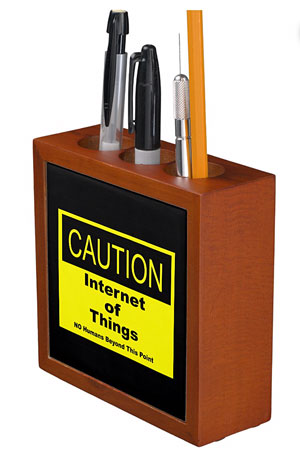
Beware the Internet of Things. Join the fun!The Rise of Artificial Intelligence
The scary thing about artificial intelligence, or AI, is how insidious it is. It’s actually been creeping in for decades, probably since the start of the computer age. There’s a lot of AI in search engines, although we may not think of it that way. Most software, in fact, has been adding analytical and decision making capability deep under the hood. You may not be specifically asked your preferences, but that doesn’t mean the program isn’t figuring things out or selecting what information to display and how.

More recently we’ve seen an explosion of “chat bots”, intelligent assistants such as Siri and Alexa, and some quirky writing and photo capabilities in ChatGPT. In fact, it’s the last one that has fueled an explosion of interest and investment in what is called Generative AI, the tech that “creates” all that new content at the push of a button.

NVIDIA can’t make big enough processors on a large enough scale to sate the demand. Data centers are expanding to host more and more servers and new centers are rapidly under construction. One big worry is where all the energy is going to come from to feed the exponentially demanding power-hungry AI processes. Some data centers are being built right next to power plants to grab and many megawatts as they can.

How Nuts is This Going to Get?
One might suspect that we’re in an AI mania combined with a speculative bubble in anticipation that artificial intelligence will render pitiful human capabilities and their jobs obsolete in the matter of a few years… or less. The computer age has certainly eliminated or greatly reduced some roles, like telephone operators and adding machine clerks (human computers), but added new ones as fast or faster. The new AI fever sees the elimination of writers, graphic artists, analysts, software coders, customer service representatives and even law clerks as imminent.

Not so fast. The chat bots I’ve dealt with are complete simpletons that can’t solve much of any real problem. The writing is tedious. The artwork is artificial at best, and inane at worst (how many extra fingers can you add to a person’s hand?). Self driving trucks? Look out when they come barreling around a curve during an ice storm.

I suspect the AI crazy has hyped up expectations far beyond what is really going to work anytime soon. However, that doesn’t mean there isn’t a real germ of innovation underway. One example is the “Internet of Things” that is being touted as the real driver of 5G wireless. Better, faster, cheaper and smaller electronics makes it possible to add both processing and communications to any device. That can be any tool, any monitor, any control system, and most products. It is only logical that these “things” will communicate with other “things”, including computer systems, without our constant knowledge or intervention. The more of these “robots” that are deployed, the more sophisticated the software needed to keep them employed efficiently.

What to Likely Expect
Yes, technology marches on in the name of progress. We’re not going back to living in mud huts or slaving in dingy factories, and the nature of what we do at work will continue to evolve. The increase in productivity should improve our standard of living if we’re smart about it as a society. At any rate, the demands on technical infrastructure are surely going to accelerate.

You can expect more devices on every network, talking faster and demanding faster results. The “cloud” may become an “overcast.” Both fiber optic and wireless bandwidth requirements will move up another order of magnitude or more. A 100 Mbps connection may have been plenty not long ago. Now we clamor for a Gigabit line, with 10 Gbps an emerging business standard. How long before 100 Gbps is routine and 1 Tbps starts looking like a requirement? Within the data center, this could be tomorrow. For access, maybe the day after tomorrow.

How about your business? Are new tools, processes and devices straining the capability of your data center or WAN network? We can help. Get pricing and support on bandwidth and hosting for your current and future needs right now, before those needs become a crisis.


Click to check pricing and features or get support from a Telarus product specialist.


Follow Telexplainer on Twitter


Note: This article was not generated by any AI. It was written by one human (myself) who only worries about the machines scraping the Internet and regurgitating copyrighted material far and wide without any thought of compensation to the author, a real and present danger.

Tuesday, July 27, 2021

DOCSIS 4.0 Expands 10 Gbps Cable Broadband

By: John Shepler

Fiber Optic service is expanding faster and farther than ever. It’s the gold standard in the quest for unlimited business bandwidth. Many businesses, frustrated by their inability to get fiber lit into their buildings or locked-out by the high cost of fiber construction, turn to their next best option: Cable broadband. Now the latest cable standard, DOCSIS 4.0, brings symmetrical streaming and increased upload speeds to ordinary coaxial copper cable service. Would you believe 10 Gbps download and 6 Gbps upload? Fiber has some serious competition from cable.

DOCSIS 4.0 offers 10 Gbps over CableWhat is DOCSIS?
DOCSIS is the technology that enables traditional cable TV providers to also offer broadband Internet service on the same cable at the same time. The term is an acronym for Data Over Cable Service Interface Specification. It is the product of Cable Television Laboratories, Inc., CableLabs, a non-profit group supported by the cable system operators.

DOCSIS has evolved along with the Internet. The original spec was DOCSIS 1.0 released in 1997 and defined standards for 40 Mbps download and 10 Mbps upload. VoIP and QoS mechanisms were added by the early 2000’s, along with a boost in upstream data rates to 30 Mbps.

A significant improvement was introduced with DOCSIS 3.0 in 2006. Now cable companies could offer 1 Gbps downstream and 200 Mbps upstream with channel bonding. Support for IPv6 was also introduced at this time. With these improvements, it could be said that cable was a serious competitor to fiber optic services.

DOCSIS 3.1 in 2013 increased maximum downstream capacity to 10 Gbps with 1 to 2 Gbps upstream and is widely embraced by cable operators. DOCSIS 4.0, the latest version, increased the upstream rate to 6 Gbps in 2017. DOCSIS 4.0 is still in the early stages of production testing and deployment. The ultimate plan is to have full duplex symmetrical bandwidth on cable of 10 Gbps.

How Can Copper Cable Run So Fast?
Truth be told, it’s been a lot of years since cable TV networks were built with coaxial copper cable from the antennas at the head-end all the way to individual households and business locations. Virtually all systems of any size now use a technology called HFC or Hybrid Fiber Cable. The core network is fiber optic cable just like fiber network providers operate. The difference is that those companies run fiber right to the demarcation point within the building, while cable service terminates the fiber somewhere in the neighborhood and the makes the final run with the familiar coaxial cable. It was HFC that really enabled cable providers to offer serious broadband service.

Access Cable Fiber Networks Directly
Cable networks serve extensive metropolitan areas and their suburbs. Multi-system operators have fiber that interconnects their networks and connects to the Internet backbone. Major cable companies have gotten into the business of competing directly with competitive fiber optic networks by offering businesses the option to connect to their fiber networks without going through the copper interface.

There are advantages in going the fully fiber route. You may be able to get faster speeds and fully symmetric and dedicated connections by avoiding the cable modem. Remember that cable broadband is an inherently shared service. You are on the same last-mile Internet connection as dozens or hundreds of your neighbors. As such, you may find the the congestion level and speed of service vary throughout the day. It all depends on what everybody else is doing.

This is the reason that businesses, especially those with significant business processes running in the cloud, opt for dedicated Internet access and point to point private lines. You can get those at low speeds with traditional telco services such as T1 lines and higher speeds with DS3 bandwidth, SONET fiber optic services, Ethernet over Fiber and MPLS networks.

What service will meet your needs depends on how sensitive your operations are to line speed and latency, along with jitter and congestion. Cable broadband, especially at the DOCSIS 3.0 and above levels, provides many, many businesses with highly usable and reliable service at excellent pricing levels. Other companies with more sensitive needs may need to access fiber itself and set up more dedicated and private connections to achieve the performance they require for maximum productivity.

Find out now what cable, fiber and twisted pair copper broadband options are available for your business and what each has to offer.

Click to check pricing and features or get support from a Telarus product specialist.


Follow Telexplainer on Twitter


Tuesday, May 25, 2021

When You Need Massive Bandwidth

By: John Shepler

Most businesses do just fine with common bandwidth offerings from telco, cable and fiber service providers. Sometimes, though, your application just won’t squeeze through the pipe. You need more than typical WAN bandwidth. You need massive bandwidth.

Find massive bandwidth for your big data. How Massive Are We Talking?
Over the last few decades, mirroring the growth of the Internet, WAN bandwidth needs have multiplied from a paltry T1 level of 1.5 Mbps up to 10 or 20 Mbps for the smaller businesses, at least 100 Mbps for companies with many employees, to a now commonly expected Gigabit per second.

Those bandwidths levels are easily accommodated by most service providers. Copper twisted pair can bring in 20 Mbps or so. Cable broadband is good for at least 100 Mbps and pushing 1 Gbps in many areas. Fiber optic service easily delivers 1 or 2 Gbps and can readily scale to 10 Gbps. Where you might find yourself limited is in rural or underserved locations where your choice is still T1 lines, LTE or 5G wireless, or synchronous satellite broadband.

Massive bandwidth starts at 10 Gbps and goes up from there. Can you reasonably take advantage of 100 Gbps up and down? OK. How about 400 Gbps, 800 Gbps or even a full Terabit per second? Those are carrier level services, but not out of the realm of possibility for the most data or streaming intensive businesses.

Who On Earth Needs THAT Much Bandwidth?
What were absurd levels of bandwidth are now aspirational and may become common sooner than you think. One big driver is the move of everything digital to the cloud. When your data center was just down the hall, nobody worried about bandwidth. You can string as much fiber as you want above the ceiling tiles. Once you pay for installation, usage is pretty much free.

Not so much anymore. When the connection leaves your building you lose control. You’re not going to string any cable across town, much less across several states. For that you need to hand off your traffic to a carrier or service provider. This third party will then lease you the amount of bandwidth you need, or at least can afford, for a monthly fee. The carrier, not you, takes care of all maintenance and reliability between locations.

Some companies get a surprise when they realize that the 30 Mbps Internet connection that was more than adequate when the data center was on premises is now painfully slow when all the applications are in the cloud. One solution is to install a high speed direct line to the cloud service provider and keep the old Internet connection as-is. That solves the bandwidth problem and avoids business critical apps having to deal with the vagaries of Internet performance.

Another application that just won’t play on standard connectivity is content distribution. If you are sending massive amounts of content consistently, you may need to avoid the standard Internet and move over to a purpose built privately run network called a content delivery network. These are designed to handle continuously high levels of video or data without congestion.

Sometimes you only need massive data for a brief time. Say you have Terabytes of disk drives full to the brim and you want to send that to the cloud for safe keeping or to a customer who needs those design or simulation models on their system. Shoving it through a normal connection will take forever. Is there a better option?

Colocation and Cloud Data Centers
If there is one place that you’ll find massive bandwidth already installed and running, it is in cloud and colo centers. Both are massive facilities with nearly unlimited servers, disk drives and bandwidth connections from multiple carriers. The difference between cloud and colo is that cloud centers provide all of the equipment and service needed. A colo or colocation facility lets you bring in your own equipment and set up your own data center in their racks and cages. It’s like what you would have at home, but in a shared building with plenty of space, backup power, HVAC, security and even round the clock staffing.

Some colos will provide a direct fiber hookup between your company and any others located in the same facility. if you need to connect outside, you won’t have to worry about finding a service provider or paying hefty fees to bring in service from afar. They are already inside and serving other customers. You just get a hookup at whatever bandwidth you need.

More Exotic Massive Bandwidth Options
There really is no limit to how much bandwidth you can utilize these days, other than your budget. If you can afford it, consider these options:

Wavelength Services
Most fibers are now lit with DWDM or dense wavelength division multiplexing. That means multiple lasers feeding the same fiber, but on different frequencies or wavelengths. A wavelength can handle perhaps 10 Gbps and each fiber strand can handle perhaps 100 wavelengths. Combine them all and the total bandwidth is mind boggling.

Many carriers are now leasing entire wavelengths for your use. It’s like a fiber within a fiber. Some will combine multiple wavelengths to create 100 Gbps and higher bandwidths for you, or you can lease the wavelengths and multiplex them yourself.

Dark Fiber
The ultimate in bandwidth and control is had by leasing one or more dark fiber strands. Dark means that the fiber is in the cable but totally unused at present. You add the laser termination and multiplexing equipment at each end and “light” the fiber.

Dark fiber is as close to having your own in-house cabling as you can get outdoors. There is nobody else’s traffic to contend with. You decide how much capacity to press into service. Run out of bandwidth? Just upgrade your terminal equipment. Same fiber, more Gbps. You don’t have total control. The carrier still owns and maintains the fiber physical plant, including cabling and repeaters. The rest is up to you.

Are you feeling unduly restricted when it comes to bandwidth to efficiently run your business and take advantage of new opportunities? If so, look into higher bandwidth fiber optic services now. You may find them more affordable than you think.

Click to check pricing and features or get support from a Telarus product specialist.


Follow Telexplainer on Twitter


Tuesday, September 08, 2015

The Lure of Fiber Lit Buildings

By: John Shepler

The mantra of real estate is “location, location, location.” That mantra is being joined by a new mantra for business, “fiber, fiber, fiber.” Everybody wants it and, sooner than you think, everybody will have it. The only question is: “Will they get it in your building or the one next door?”

White light burst blue skyscraper iPhone 6 caseWhat’s So Special About Fiber?
Fiber optic telecommunication lines used to be a niche service for special applications. You’d find them at Internet Service Providers, Fortune 500 companies, scientific labs, video production companies and the like. Only the most technically demanding and well funded operations got fiber. They might even choose to locate closer to where fiber POPs (Points of Presence) were already in-place to minimize construction costs.

This may still be true if you require enormous amounts of bandwidth for your data center or minimal latency for processes like high speed trading. In those cases, the best solution might be to pack up your gear and move it to a “carrier hotel” or “colocation center.” Even when you do that, however, you still have the problem of how to connect your offices to the data center. Yesterday, a few T1 or DS3 lines might have provided this connection. More and more, though, only fiber will do the job now.


Call It a Utility
We’re rapidly approaching the time where fiber optic bandwidth will be on the same level as electricity, water, sewer and gas. Companies just won’t consider locations that don’t provide these basics.

Here’s why. Today’s business operations have become highly automated. Paper documents are disappearing as fast as they can be shredded. Typewriter? What’s that? Everybody has a PC on their desk, a smartphone in their pocket, and probably a tablet to carry around in lieu of a yellow legal pad. Productivity is the name of the game, and that means data moves through the organization in bytes, not printed characters.

The demand for fiber has been pushed to critical proportions by the mass exodus from local data centers to cloud service providers. That means that all that data that used to flow on high speed copper and fiber lines to the data center down the hall now has to go cross-country to get to the new data center in the cloud. This requires much higher MAN and WAN bandwidths, but also low latency to enable interactive business applications and real-time services such as VoIP telephony and video conferencing.

How Much Bandwidth is Enough?
Entry level bandwidths for smaller companies and independent professional offices is now about 10 to 30 Mbps, up from a few Mbps a decade ago. Most medium size companies can make good use of 100 Mbps Fast Ethernet today and will soon need 1000 Mbps Gigabit Ethernet. In fact, Gigabit Internet access is becoming the new ISP standard for both businesses and consumers. Those large and unique applications? They require 10 Gbps and 100 Gbps services.

Fortunately, fiber handles these bandwidths with ease. Copper telecom lines drop off rapidly above 10 Mbps, even with the new Ethernet over Copper transmission technology. If you want 50 or 100 Mbps, you better be located very near to the telco office. The exception is cable broadband, which can go as high as a Gigabit (1 Gbps). The actual cable is only used for the premises connection. The rest of the network is fiber.

Fiber Bandwidth Options
The two major competing technologies for business fiber are SONET and Ethernet over Fiber. SONET is the older, more established, technology developed by the phone companies. Ethernet over Fiber is rapidly replacing SONET because it is more easily scalable and less expensive.

Scalability is important because you never really know how much bandwidth you are eventually going to need. You may start out at 10 Mbps and quickly find you need to up that to 50 or 100 Mbps. Later, you’ll want to take that up to 500 or 1,000 Mbps. Ethernet over Fiber allows you to start off paying for just what you need and then increasing the bandwidth level as needed. No equipment changes are needed as long as you have a port that can handle the highest bandwidth you require.

Getting a Fiber Lit Building
“Lighting” is the term used to describe having fiber installed and turned-up or “lit” by one or more laser sources. Once you have lit fiber in the building, it is generally easy to get all the bandwidth you need. Fiber, itself, has nearly unlimited capacity and can serve many users in the same building.

Competitive carriers are now at a fever pitch to find suitable buildings that are un-lit and get their facilities installed before someone else. Generally, a building is lit by only one competitor, who is there for the long term. All tenants contract with the carrier for the service they desire.

If you are a building owner, it is highly desirable to offer fiber optic bandwidth service as one of the utilities. You’ll need to have the suites wired (with fiber) that connects with the telecom room. Then each tenant can order what they need and pay the bill, just like with other utilities. Some building owners have found it advantageous to order very high bandwidth service themselves and then portion it out to the tenants at a profit. In effect, the building owner becomes the service provider.

Are you a building owner or tenant looking for fiber optic bandwidth service? You can find out quickly and easily if your building or one nearby is already lit with fiber. If not, it may well be worth your while to get your facility lit or work with a carrier as a group to get fiber service installed.

Click to check pricing and features or get support from a Telarus product specialist.


Note: Products with the theme "White Light Burst Blue Skyscraper" shown on this page are available through the Gigapacket Zazzle Store.


Follow Telexplainer on Twitter

Wednesday, August 26, 2015

Cable is the New Fiber?

By: John Shepler

Coaxial cable, the type deployed by the cable companies, has long been thought to be on its way out. After all, how many channels and what Internet speeds can you possibly force through that copper wire? Turns out, it’s a LOT more than anyone might have thought. Can you believe 10 Gbps?

WAN Man At Your Service T-Shirts and more. Check 'em out!There’s Fiber Under the Hood
The secret that makes it possible for ordinary coax to deliver 10 Gbps, high by even fiber standards, is that you only see the cable connector on the wall and the cable jumper to your cable modem. You might think that cable runs all the way back to the cable head-end, like twisted pair telephone lines connect directly to the telco office. That’s an illusion. Once the premises connection is out of sight, the handoff is made to a metro fiber network. The copper part is just a few dozen or a few hundred feet in length. The system is referred to as a hybrid fiber-copper network or HFC.

The Magic Box
With a wire plant that can support bandwidths as high as 10 Gbps, what else is needed is an interface to transmit and receive on the HFC and provide a 10 Gbps Ethernet connection at the user’s end.That interface is the DOCSIS 3.1 Cable Modem.

DOCSIS or Data Over Cable Service Interface Specification is a set of technical standards that describe how to use the standard “TV channels” and other open capacity on cable systems to transport high bandwidth data without conflicting with the television transmissions. It was developed by CableLabs and is supported by many equipment manufacturers.

The original DOCSIS 1.0 came out in March, 1997… just in time to support the big boom in Internet growth. It was quickly upgraded to versions 1.1, 2.0 and the popular current standard, DOCSIS 3.0. It’s a new version, DOCSIS 3.1, that is causing all the excitement for fiber-like cable.

What does DOCSIS 3.1 offer? It is capable of at least 10 Gbps in the downstream direction and 1 Gbps in the upstream direction. That’s about 10x to 30x the capacity of existing cable bandwidth offerings. It is also backwards compatible with earlier DOCSIS versions so it can be seamlessly deployed on existing cable systems. What’s still needed is for cable operators to upgrade their equipment to the new standard and get DOCSIS 3.1 modems installed at customer locations.

The Bandwidth Stampede is On
It’s not a matter of if but when cable companies will embrace DOCSIS 3.1. Verizon has been deploying their FiOS Fiber to the Premises (FTTP) system for years. Google is entering market after market, albeit slowly, with their own fiber optic Internet service. Cable has a chance to protect the investment in the systems they already have by being able to offer Gigabit and 10 Gigabit Internet access with simple equipment upgrades and no need to rewire the city.

Comcast is one major cable operator that has seen the light. They have declared an intent to cover their entire service footprint with DOCSIS 3.1 capability in the next few years.

Is This the Same as SONET or Ethernet over Fiber?
In a word… NO. These are not only different technical standards, they have different performance standards and are targeted at different types of customers.

SONET is the original telephone company standard that was first deployed to transmit thousands of telephone calls on a single fiber. As bandwidth demands escalated to connect data centers and support the backbone of the Internet, SONET was made available to businesses. The lowest service level is OC3 at 155 Mbps. The highest levels are typically OC-48 at 2.5 Gbps, OC-192 at 10 Gbps and OC-768 at 40 Gbps.

A newer technology is Carrier Ethernet. This is directly compatible with the Ethernet that dominates local area networks in nearly all companies. Both copper and fiber implementations of Carrier Ethernet are available, but Ethernet over Fiber is rapidly becoming the more popular standard. Service levels range from 10 Mbps to 10 Gbps, with 100 Gbps available in some areas.

How do Cable DOCSIS, SONET and Fiber Ethernet Compare?
SONET and Ethernet over Fiber (EoF) obviously require fiber optic connections all the way to the premises. Cable only needs the standard coaxial copper cable connection. This provides cable with an advantage as to availability and speed of installation. However, that advantage is not what it once was. More and more competitive carriers are expanding their fiber optic networks and “lighting” more and more buildings for fiber service.

Cable seems to have a big cost advantage compared to the fiber technologies, but this is more a matter of the type of service offered rather than anything to do with copper versus fiber. As proof, consider Google Fiber. It’s priced like cable, but is fiber optic end to end.

SONET and EoF are considered high performance business services and are generally offered with SLAs or Service Level Agreements that define the performance and availability of the service. Cable is considered a “best effort” service and doesn’t come with the same uptime guarantees.

SONET and EoF are what are called dedicated services. That means the assigned bandwidth is dedicated to your organization. If you contract for 10 Gbps, you’ll get 10 Gbps 24/7/365. There are no usage limits. You can drive as much data down those pipes as they’ll take for the entire month. Cable is a shared service. The bandwidth is “up to”, say, 10 Gbps. At any given time, you may have all of that to yourself, or you may be sharing it with a dozen, hundred or thousand other users. Bandwidth for shared services varies, while it is solid for dedicated users.

The other big difference is symmetry. SONET and EoF are symmetrical services. That means you get the same upload and download speeds. Order 10 Gbps service and it will be 10 Gbps in both directions all the time. Cable service is asymmetrical. Download speeds are typically 10x upload speeds. DOCSIS 3.1 maxes out at 10 Gbps download and 1 Gbps upload.

How Do You Choose?
Cable is well matched to typical consumer and small business Internet access, which is download intensive. The “shared” aspect may not make that much difference and the reliability may be high enough that the cost advantage makes it an excellent choice.

However, if you are primarily transferring big files in both directions or dependent on cloud services for critical operations, or if availability of service is critical to what you are doing, you may find that only SONET or Ethernet over Fiber will be satisfactory. Costs for both types of services have dropped dramatically in recent years, with EoF especially cost effective for high performance applications.

Click to check pricing and features or get support from a Telarus product specialist.


Note: Products with the humorous theme "Wan Man" shown on this page are available through the Gigapacket Zazzle Store.


Follow Telexplainer on Twitter

Monday, March 16, 2015

T1, DS3, EoC or Fiber?

if you need more than a Gigabit of bandwidth, you’re down to a choice of fiber or fiber. But what about less demanding network needs? Say you need from 1 Mbps on up to 100 Mbps. Now you have a number of flavors of twisted pair copper and coaxial cable connectivity, as well as fiber optics. What’s the best way to go these days?

I definitely need more bandwidth humorous mousepad. See the full collection here...It’s Important and It Isn’t
What you choose for a bandwidth connection can seem like a critical decision. Relax. The fact is that as long as you choose dedicated Internet access or point to point private lines, you’ll be getting similar performance. What’s different will be the availability of each service and the price.

A Word About Dedicated vs Shared
I should point out that there is a tremendous difference between dedicated and shared bandwidth. You get a lot more bandwidth when you choose something like business cable broadband. But, that bandwidth has different upload and download speeds and you share what’s available with other users. That means your slice of the pie will vary all the time. Even so, when you get up to 10 or 100 times the download bandwidth at the same price, it’s a pretty enticing deal. If it works for your needs, that can be the smart way to go.

T1 vs EoC
T1 lines have traditionally been the entry point for business bandwidth. You get a rock solid 1.5 Mbps x 1.5 Mbps circuit with low latency, jitter and packet loss. Availability is excellent. Even prices have come down dramatically in recent years. The only weakness is that bandwidth level. While 1.5 Mbps used to be pretty decent broadband, it hardly qualifies anymore.

You can bond T1 lines together to create higher connection bandwidths. Two lines give you twice the bandwidth or 3 Mbps. Add more and you can ramp this up to 10 or 12 Mbps. That’s still plenty for many businesses, but it gets a bit pricey as you go up in bandwidth.

A competing technology is EoC or Ethernet over Copper. This service uses the same multiple twisted pair copper, but bandwidths are usually higher. EoC starts about 3 Mbps and easily goes up to 10 or 15 Mbps. Maximum bandwidth capability goes down with distance from the originating office, but close-in you can get 25, 30 or 50 Mbps. Occasionally even higher.

How about the cost comparison between T1 and EoC. EoC is cheaper for the same quality of service. If available, you can often cut you bandwidth costs in half for symmetrical, dedicated private lines or Internet access. The higher the bandwidth, the better the deal.

T1 or EoC vs DS3
The traditional upgrade path from T1 used to be DS3. It’s a jump from 1.5 Mbps (or 12 Mbps bonded) up to 45 Mbps. In some cases you can get fractional DS3 that creates intermediate bandwidth options.

The thing about DS3 is that it really isn’t a completely copper solution. The connection to your equipment is a pair of coax cables. But, most of the distance to the carrier’s office is handled by SONET fiber, typically OC3. That means there needs to be some fiber in the area for DS3 to be available.

Today the upgrade path is from T1 to Ethernet over Copper. DS3 is a possibility, but you need to compare costs to see what is a better deal at your particular location. Any of these technologies will give you reliable high performing connections.

Ethernet over Fiber
Fiber optic service used to mean SONET, the legacy telecom standard. SONET is still available with service levels of OC-3, OC-12 and OC-48. It’s a rock solid service, but doesn’t upgrade quickly or easily and can be pricey by today’s standards.

The new gold standard is Ethernet over Fiber. Most new network services are designed around Ethernet for several reasons.

First, it’s a very easy interface to your local network. Ethernet connects to Ethernet seamlessly. It also enables additional services, such as layer 2 switched LAN to LAN connections.

Second, Carrier Ethernet has been designed to be easily scalable. Instead of a few fixed service levels, you can order just about any bandwidth increment. If you change your mind or have a greater need later, you can get a bandwidth increase with a simple phone call to you provider. In some cases, you can do it yourself via a Web browser.

Third is cost. Ethernet over Fiber is the core of many new service providers with regional, national and international footprints. Even the big legacy carriers are making the move from switched circuit to packet switching technology (Ethernet) because that’s the future. As a result, there are a lot more opportunities for Fiber Ethernet service options than traditional fiber services and greater competition. You’ll generally pay dramatically less for service at the 10, 100 and 1000 Mbps level. Even 10 Gbps is becoming readily available at affordable prices for more demanding needs.

Choosing Your Bandwidth Options
Like every other business decision, the best option is to gather as much information and quotes from as many service providers as possible. You can do this with one simple inquiry to get competitive bandwidth service quotes and expert recommendations.

Click to check pricing and features or get support from a Telarus product specialist.


Note: The humorous mousepad about needing more bandwidth, along with many other items in the same theme, is available from the Gigapacket Zazzle store.


Follow Telexplainer on Twitter


Friday, March 06, 2015

Upgrading to Fiber FAQ

By: John Shepler

The bandwidth solution you’ve had for years is running out of capacity. It’s worked well for you, but now you have no real choice but to upgrade to something faster, more reliable, lower latency, more consistent or all of the above. How about fiber? You’ve always had twisted pair copper or cable. Does fiber make more sense for the future and… can you afford it? Let’s look at some key questions and answers for making this decision.

Red Laser Starburst Stickers. Get some for yourself now!What Can Fiber Do That Copper Can’t?
The real beauty of fiber isn’t necessarily what it will do for you today. It’s the virtually unlimited upgradability down the road that is unique to fiber. Every copper technology runs out of capacity at some level. Technology advancements have expanded copper’s capability and extended its life. However, technology advancements have also expanded fiber capacity beyond what most of us can fathom needing.

I Have a T1 Line Now and Love It. Can’t I just Add Another T1?
You bet you can. The process is called bonding. It makes 2 T1 lines act like a single line with twice the bandwidth. You can bond T1 lines up to 10 or 12 Mbps, which is about the entry level for fiber. One limitation is that you have to get all your lines from the same provider to bond them. A more serious limitation is cost. You may find that 10 Mbps fiber is a lot less expensive than 10 Mbps bonded T1.

What About Ethernet over Copper?
EoC is a competing technology to T1 and uses the same twisted pair copper. You can get higher bandwidths at lower cost than T1, but the technology is distance sensitivity. For 10 to 50 Mbps, you need to be geographically close to the office supplying your service. For higher bandwidths, say 100 Mbps and up, it’s rare to find EoC available. At 1Gbps, it’s pretty much fiber all the way.

Don’t Cable Companies Offer Fiber Bandwidth over Cable?
Yes and no. Yes, you can get hundreds of Mbps, perhaps even Gbps, bandwidth over the same coaxial cable that brings in hundreds of TV channels. This is relatively inexpensive service, but it is a “shared” bandwidth that varies with the number of users online. It’s strictly Internet access, not private line, and has no performance guarantees. For demanding business operations, the Cable companies offer competitive fiber optic service using their core transmission networks. This grade of service is similar to what you get from telecom companies.

OK, But Isn’t Fiber Hard to Get?
Not any more. The first fiber technology, called SONET, is a telephone company product and has been both expensive and limited in availability. A newer technology called Ethernet over Fiber is offered by a wide array of competitive carriers, including many traditional suppliers. Nobody is building out copper plant anymore. It’s yesterday’s news. All of the new network construction is fiber and there is a race among carriers to capture the business market

Where is Fiber Available?
Ethernet over Fiber and SONET are both readily available in major metropolitan areas. Fiber is also often available in suburban areas and smaller cities. There is a big push right now to replace T1 lines with fiber to increase the bandwidth of cell towers from 3G to 4G and, eventually, 5G. That is extending metro fiber networks out into the countryside where they haven’t been before. Eventually, fiber will be everywhere.

What About Now? Where Can I Get Fiber?
Your best bet is to be located in an already “lit” building. That means the building has fiber optic service installed and operating. Once the terminal equipment is in place, adding another customer in the same location is trivially easy for the carriers. If you can’t be in a lit building, you’ll need to be near enough that construction costs are minimal. It’s those long distance runs that need new fiber installed that get expensive.

Note: A popular option for companies that find fiber construction costs too much to consider is to locate their high bandwidth equipment, such as servers, in a colocation data center where multiple fiber options are readily available.

So, Where Are These Lit Buildings?
Lit buildings and nearby fiber optic services can be easily located using the Telarus GeoQuote search engine. This is a tool specifically developed to quickly locate existing fiber services. You can find out in seconds what’s available in your area with no commitment.

Great, I’ve Found Fiber Service. Will It Cost a Fortune?
You may be shocked to find how affordable fiber optic service is today. This isn’t consumer grade FTTH (Fiber to the Home). It’s a business grade service that is installed at commercial locations. Bandwidth generally starts at 10 Mbps, which is the same speed as traditional Ethernet. If you’ve had your T1 line for many years and haven’t negotiated a lower priced contract, you may find that you can get 10 Mbps fiber for about the same price. Yes, you’ll pay more for Ethernet over Fiber than today’s T1 lines or low cost business cable broadband, but you can also expect higher performance.

How Much Bandwidth Makes Sense?
Many smaller businesses can get by with 10 Mbps Ethernet over Fiber. High tech or medium size operations will want 100 Mbps Fast Ethernet. Nowadays, Gigabit Ethernet is well within reason for companies that need highly responsive cloud applications or make extensive use of video. Municipalities and school districts often find that Gigabit Ethernet or GigE is exactly what they need at a reasonable price point.

How Easy Are Upgrades
Legacy T-Carrier (T1, T3) and SONET (OCx) services can take a long time to provision because each bandwidth level has a unique interface. Ethernet over Fiber is designed to be easily scalable. You install a port with the maximum speed you expect to need (usually 100 Mbps or 1 Gbps). Then you pick the bandwidth you want to start out with. Often a quick call to your provider is all it takes to increase or decrease bandwidth within hours or days. Some services even let you make the changes yourself through a Web browser.

What’s the Maximum Bandwidth Available?
It’s not likely you’ll ever run out. Gigabit Ethernet service is common. So is 10 Gbps now. In some locations you can get 100 Gbps business bandwidth. That level will become more widely available in the future, as more bandwidth intensive requirements demand it. If you are a really high bandwidth user or have special protocol or security requirements, you might consider wavelength service. Each fiber can carry dozens of wavelengths. Each wavelength transports up to 10 Gbps.

Are you interested in finding out what fiber optic service options are available for your business location and how much they cost? Get fast quotes with no obligation and complementary expert consulting to help choose the best option for your needs.

Click to check pricing and features or get support from a Telarus product specialist.


Follow Telexplainer on Twitter

Thursday, January 15, 2015

Fiber Optic Bandwidth is Closer Than You Think

By: John Shepler

If you’ve had your telecom line contracts for years, maybe decades, you may not be aware of all the connection options that have become available recently. Some have popped up only in the last few years. Don’t continue to assume that something like T1 lines are all that are available without taking another look. You may be surprised at what you find.

You Need More Bandwidth
Fiber optic bandwidth has been talked about for years at the wave of the future. When you look at the type of applications that are popular with both consumers and businesses, it becomes obvious quickly that nothing else will accommodate the bandwidths that are needed.

You’ve seen it coming. Static web pages have given way to embedded video clips. SD video has been supplanted by HD Video. Now that clamor is for 4K and, soon, 8K video streams.

How about software? Software used to come on tape reels, floppy disks and CD ROMs. Now software is downloaded. The old “packages” are on their way out, if not gone. They’re being replaced by apps that are acquired over the Internet. That takes a lot more than DSL or T1 bandwidth.

Downloadable apps may have a short lifespan, too. There is a mad dash for the “cloud” for both applications and storage. On-site data centers are emptying out. Massive cloud data centers are popping up as fast as they can be built. When you access everything through the cloud rather than over the LAN, your wide area network bandwidth requirements shoot up by orders of magnitude.

Why It’s Got to Be Fiber
The need for increasing levels of bandwidth have not been lost on service providers. In fact, any carrier that is still married to circuit switched architectures and copper connectivity is just marking time until it is no longer needed.

Ethernet over Copper has extended the life of the installed twisted pair copper plant by offering speeds of 10 Mbps to at least 50 Mbps and sometimes higher. DOCSIS 3.0 and 3.1 are doing the same for coaxial cable. Premises connectivity is likely the last bastion of copper. It only needs to stretch to the curb, where it connects to… fiber.

What about wireless? It looks like the world is now standardizing on 4G LTE and looking forward to 5G, as everything we do at the desk also needs to be done while mobile. Even so, capacity limitations dictated by the amount of room in the electromagnetic spectrum will keep wireless primarily as a mobile connection. Perhaps meshed WiFi and pico cells will again multiply the capacity of wireless… but it’s never going to be fiber.

An Avalanche of Fiber Now
The beauty of fiber is that it offers unlimited bandwidth as far as we can tell. Each strand might only support 10 Gbps with todays lasers, but DWDM creates dozens or more of those 10 Gbps channels on a single fiber strand. Why install a single hair-thin fiber when you can bundle 100 or more in a cable about the size of the familiar twisted pair bundles?

Of course multiple strand cables are the only way to go. For awhile it looked like way too much capacity had been installed during at the tech boom of the 90’s. Now those dark fiber strands are being lit up en-masse and more capacity is being installed nationwide.

Google has it right. The future… the near future… is fiber and Gigabit bandwidth is something we won’t be salivating over for long. Soon it will be 10 Gbps and then 100 Gbps. There is no end in sight.

It’s not just Google in selected cities or Verizon’s FiOS. Every incumbent telecom company and all the new competitive service providers are in a race to get to fiber as their standard connectivity for both home and business.

Goodbye SONET, Hello Ethernet
The incumbent telcos and the long line providers built their fiber networks with the SONET protocol, as it was the logical upgrade from TDM copper such as T1 and E1. All the new networks are being built around Carrier Ethernet and the older ones are converting rapidly.

Sometimes the most sensible thing to do is install Ethernet over SONET as an upgrade. When starting from scratch, native Ethernet is the protocol of choice. It’s unlikely we’ll return to a circuit switched world. It’s packet switching as far forward as we can see.

The beauty of Ethernet is that it is directly compatible with the local networks in every home and business, and all of the equipment that connects to them. Carrier Ethernet is designed to be highly scalable, with many more increments in bandwidth than were offered by SONET and fractional SONET services. You can pretty much pick the bandwidth you want, although standard LAN speeds of 10, 100 and 1000 Mbps are popular, with 10 Gbps more in demand every day.

Moreover, Ethernet services are fast and easy to scale. You can generally call your provider and get bandwidth upgrades immediately or within a few days. As long as the installed port for your WAN service can handle it, you can keep upgrading as needed with no change in premises equipment.

How to FInd the Fiber Services Quickly
You can try looking the old fashioned way, by looking in the phone directory for telecom carriers in your area. Or just run an online search. You’ll find some of them for sure, but might miss out on others that are new or not widely publicized.

It makes more sense to use a search engine that is dedicated to finding fiber optic bandwidth and nothing else. That’s the GeoQoute (™) system. How difficult is it to use? Trivially easy, in fact. You simply start by entering some basic contact information and the type of service you want. In a few minutes, the automated system will give you a list of options with budgetary pricing. If you like what you see, a complementary discussion with a product specialist can help you narrow down the choices and find out about limited time special offers that might be an even better deal.

Sound good? Do a fast search for fiber optic network services now and see what you may have been missing for years.

Click to check pricing and features or get support from a Telarus product specialist.


Follow Telexplainer on Twitter

Thursday, October 23, 2014

Easy Migration from T1 to Ethernet

By: John Shepler

A lot of companies that have depended on T1 lines for years, even decades, are getting to the point where the available bandwidth just isn’t enough anymore. What’s the logical upgrade? Right now what makes the sense for most businesses is Ethernet. Fortunately, the upgrade path is easy and cost effective.

Upgrade from T1 to Ethernet quickly and easily.Don’t Write Off T1 Yet
T1 isn’t done, by any means. T1 lines are so entrenched in telco infrastructure that they are almost universally available. This is one of the big draws of T1. It was designed by the telephone industry to serve the telephone industry. When computer communications came along, T1 lines were adapted to connect machine to machine. With 1.5 Mbps bi-directional capacity, T1 has ruled small and even medium business connections. Unfortunately, 1.5 Mbps is barely broadband anymore.

So, do you have to dump your trusty T1 line to get more bandwidth? Actually, no, but it might be advantageous.

Bonding for Higher Bandwidth
You may not realize it, but it is possible to at least double or triple your T1 bandwidth right now. The way you do this is to order additional T1 lines from the same vendor and have them bonded into one larger line service. Bonded T1 ranges from 3 to 12 Mbps. That’s still plenty for many applications. As long as you have additional unused copper telephone pairs coming into your facility, you can likely get more bandwidth.

So, why not just do this upgrade and leave well enough alone? In some cases, this is exactly the right move. Out in the countryside, T1 is often the only professional grade bandwidth available. However, there is a price to be paid. That is, 2x T1 lines cost twice as much as one. Eight T1 lines cost 8 times what you pay now for a single line. That can be more than many budgets can handle.

More Bandwidth For Less Money
Most business locations are within the city or suburbs and have another interesting option. It’s called Ethernet over Copper or EoC. This is the simple upgrade path from T1 because it uses the same twisted copper pair that bring in your T1 lines. Like bonded T1, EoC uses multiple wire pairs to increase bandwidth. The difference is that Ethernet over Copper may be able to give you a LOT more bandwidth.

The basis of EoC is a newer modulation scheme that is more efficient in transporting packets over copper wires. Common bandwidth levels start at 3 Mbps and go up from there. How much higher? Popular choices are 10 to 12 Mbps, 15, 20 and even 50 Mbps in some areas. The hitch is that EoC technology is dependent on distance from the telco office. Distance doesn’t matter much to T1. But, then again, you won’t be getting 20 or 50 Mbps out of bonded T1.

The cost structure is also different. Ethernet over Copper can give you at least twice the bandwidth for the same money. In other words, 3 Mbps EoC costs about the same as 1.5 Mbps T1. As you increase bandwidth, the cost differences are dramatic. You may be able to get 10 Mbps EoC for just a fraction of what bonded T1 would cost.

When 100 Mbps or More is Needed
It used to be that higher bandwidths, including DS3 at 45 Mbps and OC3 at 155 Mbps, were expensive and hard to get. Now DS3 has come down in price so that it is affordable by many smaller and medium size companies. A newer service, Ethernet over Fiber (EoF), starts at 10 Mbps and goes up to at least 10 Gbps capability.

You read that right. The same fiber line can bring you anywhere from an entry level service of 10 Mbps to 100 Mbps Fast Ethernet, 1000 Mbps Gigabit Ethernet, and 10,000 Mbps 10 Gigabit Ethernet. Even 100 Gbps is available in some metro areas.

Where It’s All Going
Fiber is the future. Eventually, all that copper in the ground will be recycled or be left to eventually corrode away. That’s not today, as Ethernet over Copper has given all those old telco lines a new lease on life. However, many businesses are discovering that Ethernet fiber is also both available and quite reasonably priced. They can have EoF installed with a 100 Mbps port and start off paying for only 10 Mbps. A simple phone call to the provider can then speed up the line to 50 or 100 Mbps. Install a Gigabit Ethernet port to begin with and you can get any speed from to 10 Mbps to 1000 Mbps without making any equipment changes.

Are you ready to migrate from T1 to Ethernet to get more bandwidth at a better price? If so, quickly check your copper and fiber Ethernet options now.

Click to check pricing and features or get support from a Telarus product specialist.


Follow Telexplainer on Twitter

Monday, February 24, 2014

The How and Why of 10 Gbps WAN Bandwidth

By: John Shepler

Big data keeps getting bigger. HD video will soon be supplanted by 4K and then 8K video. IT data centers are going dark, one by one, as applications move to the cloud. Where is the bandwidth coming from to handle the demand of ever higher bit rates in the MAN and WAN?

That bandwidth is coming from fiber optic carriers who realize that every organization is going to be upsizing its data pipes or falling behind competitively. A gigabit per second was considered massive bandwidth not that many years ago. Now it’s considered entry level for many medium size and larger companies. Even consumers are anxiously awaiting universal FTTH to satisfy their ever growing media demands. Is 10 Gbps unreasonable for high performance business applications? Not at all.

The next question is how do you go about acquiring 10 Gig bandwidth once you’ve made the determination that nothing less will get the job done. Here’s an overview of the 10 Gigabit Bandwidth Options available for businesses and other organizations.


Note that SONET at the OC-192 level is still a viable option for businesses seeking 10 Gbps bandwidth. It will continue to be a good choice for some time to come because the amount of installed base of SONET/SDH fiber.

However, 10 Gigabit Ethernet is coming on strong and should be looked at carefully as the service of the future. Carrier Ethernet-native networks and those running Ethernet over SONET have big advantages in scalability and ease of deployment compared to the rather rigidly defined SONET OC levels.

The trick is to get a service port installed that is capable of providing the maximum bandwidth you’ll need. If you are considering more than 1 Gbps service, then a 10 Gigabit Ethernet port makes a lot of sense. It will allow you to incrementally scale your service bandwidth from 1 to 10 Gbps without having new terminal equipment installed. The terminal equipment is most likely to be a managed router installed by the carrier as CPE (Customer Premises Equipment).

What if you are going for the whole 10 GigE right from the start? That would merit a discussion on the cost tradeoff (if any) to have a 40 Gbps or 100 Gbps port installed right away. As outrageous as it may seem from the traditional perspective, 40 and 100 Gigabit Ethernet are real service options available today for many business locations. These are likely to become common bandwidth levels as more sophisticated applications move to the cloud.

Does it make sense to opt for wavelengths or dark fiber? It depends on what you’ll be using it for. If you need to be running multiple protocols through a point to point connection, managed wavelength service can be the right move. If you are sophisticated enough to install and maintain your own DWDM equipment, then you might get the best deal by simply leasing dark fiber to the locations you want to connect. For most businesses, though, dark fiber is beyond what they really need.

How can you tell what the best option is when there are multiple choices available? Make sure you are getting competitive quotes for as many different options and carriers as possible. It’s likely that there may at least several serving your location that you may be completely unaware of. You best choice is to work with a bandwidth broker, like Telarus, Inc., to get the best deal on 10 Gigabit or other bandwidth service.

Click to check pricing and features or get support from a Telarus product specialist.


Follow Telexplainer on Twitter

Tuesday, February 15, 2011

New Data Center Networking Solutions

Data management and storage requirements for enterprise level organizations continue to increase. In addition, a majority of enterprise IT departments now replicate data between data centers. This has created a need for new and more cost effective bandwidth services, especially at 10 Gbps and above. Level 3 is addressing these needs with an enhancement of its existing data center networking solutions.

Data center networking solutions are needed by enterprise IT managers.What’s different about data center connectivity compared to other business requirements? Data centers are far more concentrated than other computing resources. This is especially true for storage, a prime driver for offsite data centers in the first place. What this does is increase the need for high bandwidth connections between the concentration of storage and the concentration of users. It also influences the connectivity required.

What you need for last mile connections to an MPLS network or private lines to link business locations can usually be handled by T-Carrier, SONET/SDH or Carrier Ethernet line services. Data centers need higher bandwidth connections, but may also need special SAN protocols including Fibre Channel, Infiniband, ESCON and FICON.

SAN stands for Storage Area Networks. These are large collections of disk drives that connect directly to the application servers. SAN networks have traditionally been very localized, with the disk arrays physically near the servers. But what do you do when you need to duplicate data between data centers?

Many companies operate two or more data centers, sometimes a half-dozen or more. Some of this is due to mergers and acquisitions of formerly independent organizations with their own IT infrastructures. Much is driven by a need for disaster protection and recovery. When your business is critically dependent on its electronic data, normal backup processes aren’t adequate. You can have multiple copies of your files locked up locally and still be put out of business by a fire, tornado, flood, earthquake, hurricane or other disaster that destroys whole buildings and everything in them.

This means that you want to have copies of your critical data dispersed geographically. Establishing independent data centers in two or more cities far apart means than a disaster that takes out one center probably won’t knock out everything. There’s also an advantage to content providers in having the servers and data content located close to the customers. Latency is reduced and performance is increased due to less network congestion. A challenge is how to make sure the data is replicated exactly at all locations.

This is where long distance SAN networking comes into play. You need high levels of bandwidth but also support for SAN protocols to keep everything synchronized. FCoE or Fiber Channel over Ethernet is a popular protocol for transmitting Fibre Channel frames over 10 Gbps Ethernet connections. WDM or Wavelength Division Multiplexing avoids having to layer protocols to connect facilities. Each wavelength in a fiber optic link can be assigned its own protocol, regardless of what is running on other wavelengths in the same beam.

Level 3 Communications has expanded its data center networking portfolio to include SAN fiber channel protocol, dark fiber and managed fiber solutions. This is in addition to dedicated bandwidth services from 1 Gbps to more than 40 Gbps, including 10 Gbps EVPL or Ethernet Virtual Private Line service. They offer low latency route guarantees and an international service footprint, including a presence at key public exchange facilities.

Are you concerned with managing multiple high performance data centers? Would you like to have more options and/or better pricing for all your telecom connectivity needs? If so, get complementary consulting help and pricing and availability for high bandwidth networking services.

Click to check pricing and features or get support from a Telarus product specialist.


Note: Photo of data center servers courtesy of WikimediaCommons


Follow Telexplainer on Twitter