Showing posts with label rural broadband. Show all posts

Wednesday, March 25, 2026

Rural Business Broadband is Getting Better

By: John Shepler

Businesses located in cities and suburbs have a wealth of choices in connectivity, including Internet access and private lines. Out in rural areas, not so much. In fact, until recently it might be what former FCC Chairman Newton Minnow referred to as a “vast wasteland”, although he was talking about television content. Rural broadband has really been a scarce resource… but it is getting better; A lot better.
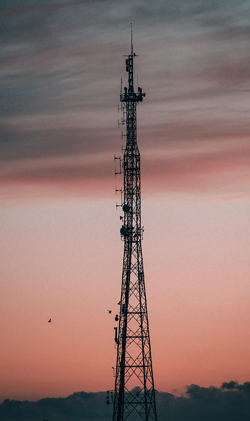
Rural broadband options now include fixed wireless, satellite and fiber What is Driving Rural Broadband Expansion
The biggest factor driving broadband expansion is broadband itself. The technology is mature and the defacto standard for Internet access. The Internet has also matured and expanded to include nearly every business and consumer in the United States and most worldwide.

Speeds have multiplied and multiplied again. Dial-up is long gone. T1 lines available for rural business are woefully inadequate for most purposes as they are capped at 1.5 Mbps. Even if still available, they won’t be for long. Telcos are abandoning their copper wireline assets as quickly as they can.

Part of the problem in getting high bandwidths into rural areas is the cost per user. Cities with dense populations can easily support hookups to metropolitan area fiber networks. In the countryside, there may be miles and miles between paying customers. The infrastructure costs have been just too high for the revenue generated to support… until recently.

What’s changed? One big change is the advancement of cell phone standards to 4G LTE and 5G. The Internet connectivity supported by these standards just can be satisfied by even multiple copper T1 lines. So, the phone companies have been pulling fiber optic cables and adding microwave relays to remote tower sites.

Another change is a national initiative to get everyone connected, much the same way as rural electrification and universal telephone service interconnected the entire country. This initiative is called BEAD for Broadband Equity, Access and Deployment. It will be underway for maybe another five years before Internet Service Providers can hookup everyone, everywhere. The preferred solution is fiber optics for expandability far into the future.

Multiple Technologies Fill the Broadband Gaps
Fiber is slowly but surely making its way past every business, home, farmstead and cell tower. Those cell towers can do double-duty as Internet Service Providers. With 5G blanketing the country, an easy solution to remote access is to use a Fixed Wireless Access modem plugged into your broadband router. This device is a smartphone without the keys, display and apps. As long as you can get cell service, you can get full time broadband.

In essence, FWA is expanding on the idea of WISPs or Wireless Internet Service Providers. Those operate in limited service areas and deliver broadband from a tower to antennas mounted on your home or business in a direct line of site.

Another source of broadband is straight up to the sky. LEO (low Earth orbit) satellite constellations like Starlink and the upcoming Amazon Project Kuiper and Blue Origin TeraWave are designed to deliver high bandwidths at low latencies to mimic fiber optic broadband but pretty much anywhere no matter how remote.

The next step is direct to phone service that will act as cell towers in space and orbiting data centers powered by solar arrays. It’s likely that some mix of satellites, cell towers and fiber will give us all the connectivity we need for the foreseeable future.

Are you having difficulty getting broadband in a rural or remote area? Opportunities are more available than ever before. Find out what rural broadband solutions are available for your business right now.


Click to check pricing and features or get support from an expert technology specialist.


Follow Telexplainer on Twitter


Monday, August 29, 2016

Can Satellite Be The Answer to Your Business Broadband Needs?

By: John Shepler

You’re totally frustrated. Doing business today needs an Internet connection even if you only sell to local customers. You’ve checked out cable and DSL options. No way. Not where you are located. Hey, it’s not like you’ve left civilization. There must be SOME way to get high speed Internet… isn’t there?

In most cases, the answer is yes. You just have to forget about cables and fiber lines. If they aren’t already connected or very near by, it will cost a fortune to bring them in. Instead, look to the sky! Here’s a quick video that explains why:


Here are 10 key points to remember:

1. Satellite Internet for business can provide both primary and backup connectivity.

2. Available satellite broadband speeds have increased to surpass traditional T1 lines and DSL, even to rival fractional DS3 and cable carriers. Exede offers up to 15 Mbps download with 4 Mbps upload capability.

3. Since service is delivered via dish antenna, not even a traditional telephone line is needed, much less high speed telecom infrastructure. That makes it possible to have broadband connections to fishing camps, farms & ranches, rural agri-businesses, and any other enterprise that isn’t served by even 3G or 4G cellular. All you need is enough power to run the satellite receiver/modem, and that can come from power mains or a solar/battery & inverter off-grid system.

4. Primary 15/4 business Internet is available throughout the eastern half of the USA, plus the west coast and partial coverage in Arizona and Colorado. National coverage and higher speeds are coming with a new satellite in 2017. Lower speed 5/1 redundant services is available now in nearly all of the continental USA.

5. Installation can be completed in just 3-5 business days. No need to wait for massive construction projects.

6. Business data plans are available from 20 GB to 200 GB/month with the option to purchase additional data. For many smaller business operations, this is more than enough, although not suitable for frequently streaming HD movies and other video entertainment.

7. Latency is greater than you’d experience with land based fiber, wireless and optical services due to the 22,000 mile path up to the geosynchronous satellite. This may or may not be noticeable depending on how you use the Internet. VoIP telephone works over the satellite, but you need to allow a half second or so between speakers.

8. You’ll need a clear view of the southern sky about half way up from the horizon for the dish to “see” the bird.

9. Pricing is similar or even less than what you’d pay for a dedicated Internet line running 1.5 Mbps upload/download or many of the business cable broadband plans.

10. Don’t think that you are left out of the world of ecommerce or unable to interconnect your many branch offices or stores due to lack of telecom support. Satellite might be just the answer.

Learn more about VSAT satellite broadband Internet service and other available broadband options for your business location now.

Click to check pricing and features or get support from a Telarus product specialist.


Follow Telexplainer on Twitter

Monday, January 05, 2015

T1 is Your Rural Broadband Solution

By: John Shepler

While metro areas enjoy a plethora of broadband Internet services, those outside the city limits or living on farms or ranches have little to pick from. Often all that seems available is smartphone 4G and two-way satellite. But, wait! There’s another option you may not be aware of that could be perfect for your rural business, farmstead or work from home. It’s T1 dedicated Internet access.

Rural farm silo in a blue sky Kindle folio. Get one for yourself now.T1 is Everywhere
T1 line service is available just about anywhere you can get ordinary POTS analog phone service. That’s because T1 runs on standard telephone company twisted pair copper wiring. The same cable that brings in telephone service probably has a couple of unused pairs available for a T1 line.

T1 is a digital service designed by Bell Labs with regenerators to boost the signal. You can get service even if you are miles out in the countryside.

No Data Caps
The biggest limitation for wireless services, like 4G and satellite, is that the airwaves have only so much capacity to serve all their customers. This is why providers enforce data caps. Such caps used to be laughably low, but now are typically 5, 10 or 15 GB per month. That’s probably enough for a single user of email and web browsing. Your quota gets used up quickly with high def video, software downloads, cloud applications and data backups.

What happens when you hit the cap limit? It varies among providers. The cellular companies will charge you overages on a per GB basis. Satellite providers will either throttle down your bandwidth or cut you off until you buy more capacity.

T1 lines have no data caps. The line runs at a constant speed all the time. You can choose to load it up 24/7 and get as many bytes through the pipe per month as you can at 1.5 Mbps, or just use it as-needed during business hours. The full capacity is always there available for your use.

Dedicated, Not Shared
Another reason that some services have data caps is that the bandwidth is shared, not dedicated. T1 lines are also known as dedicated Internet access or DIA. The dedicated part means that the line is for your use exclusively. There are no other users.

That may sound obvious, but it’s not what you have with satellite, 3G & 4G wireless, or even cable and DSL. All of these are shared bandwidth services. They are typically priced lower than equivalent telecom wireline services because the bandwidth at any given time is divvied up among the users who are online. If you are the only one, you get the full capacity of the system. Usually, you are sharing the available capacity with dozens, hundreds or thousands of other users. This is why these services advertise their bandwidth as “up to” so many Mbps.

T1 lines are a fixed dedicated bandwidth. It’s not “up to 1.5 Mbps”. It’s 1.5 Mbps all the time.

Minimal Latency
Shared bandwidth services that get congested with too much traffic and all geosynchronous satellite channels have a particular issue called latency. Latency is a time delay between when a packet is sent and when it is received. If you are only dealing with 10 mSec or or so of line latency you’ll probably never notice it. However, when that latency rises to 100, 200, or even 500 mSec you’ll really notice it.

Satellite links have the highest latency simply because even light takes a millisecond to travel each 186 miles. That’s the familiar physics constant of 186,000 miles per second. When the signal has to travel 23,000 miles up to the satellite and another 23,000 back down you’ve lost about a quarter of a second. TCP/IP needs to be acknowledged, which doubles this latency. Add a little for ground and satellite equipment processing and you’re easily at 500 mSec or half a second best case.

Now you know why television reporters have to pause before the anchor can ask a question and vice-versa. You’ll have the same effect using VoIP telephony on a geosynchronous satellite link. Plan on treating your phone conversations like you were using a walkie-talkie or other two-way radio. Only one person at a time can talk or you’ll be talking over each other.

T1 lines have minimal latency. It’s pretty much determined by the length of the connection plus a little added for equipment processing. We’re talking tens and not hundreds of milliseconds. That works perfectly for VoIP or ISDN phone trunks, two-way video conferences, and just about anything you want to do on the Web, including working remotely or using cloud hosted applications.

Symmetrical Bandwidth
Shared bandwidth services are typically asymmetric. That means they have much higher download than upload speeds. Usually a factor of x10. That works fine for accessing websites or downloading files or video. It’s not so great for uploading files or backing up data to remote sites.

T1 lines are symmetric. They have 1.5 Mbps download and an equal 1.5 Mbps upload speed.

VPN Compatible
Some services, especially satellite broadband, don’t work well with the VPN or virtual private networks used by remote workers to connect to their employers. Satellite companies may even warn you that their service doesn’t play well with VPN because of the signal processing in their system. T1 has no such limitations. It’s a good match for VPN applications.

Highly Reliable
T1 lines were developed by the telephone companies for their own use in transporting bundles of phone calls. The technology is robust and well-proven. Outages are rare. If someone cuts the cable or a piece of network equipment fails, T1 lines get fast attention and quick repair. Often you can get a SLA or Service Level Agreement that spells out the mean time to repair as well as other characteristics such as latency, jitter and packet loss.

Broadband Options
While 1.5 Mbps may be as much as many users need for small business operations or working remotely, its not high bandwidth compared to many other services. One option is to bond two or more T1 lines together to get double, triple or even higher speed. Another option is to use a related technology called Ethernet over Copper (EoC). This service has similar characteristic to T1 but much higher bandwidth available. Unlike T1, EoC isn’t available everywhere and speed decreases with distance from the originating office.

Reasonable Costs
The final factor is cost. You can expect to pay more for dedicated T1 line service than you will for the consumer and other shared bandwidth services. There used to be a huge difference is price, but T1 costs have come down dramatically in recent years while other services have chosen to increase bandwidth and raise prices accordingly. If you have a serious need for connectivity and are frustrated by the lack of options or lack of performance in the options you do have, then you should give T1 a serious look. It might be a very good match with your needs.

Click to check pricing and features or get support from a Telarus product specialist.


Follow Telexplainer on Twitter

Friday, December 30, 2011

The Next Decade of Bandwidth - Part V

Wireless is the bandwidth service that gets most of the press these days, but there are big developments afoot in the wired world as well. We’ll wrap up our look into the next decade of bandwidth with what’s going on with copper and fiber optic services.

The future of computing is in the cloud...It’s no surprise that fiber optic networks are expanding. Some of this expansion is prompted by American Reinvestment and Recovery Act that appropriated $7.2 billion to expand broadband access across the country. Rural areas that have been largely ignored by commercial interests are especially targeted. With funds available for middle-mile fiber runs, competitive carriers are taking advantage of the opportunity to expand their networks.

While fiber is being trenched through the countryside to provide broadband delivery to Wireless Internet Service Providers (WISPs) that serve sparsely populated areas, even more fiber is being routed through metropolitan areas to hookup businesses of all sizes. Government incentives aren’t needed here. Businesses hungry for increased bandwidth either foot the bill for hookups to metropolitan fiber networks or commit to service levels that justify carriers to “light” their buildings for fiber service.

Why the interest in fiber optic connections? It’s not just mobile bandwidth that’s straining at the limits. T1 lines may have been all the bandwidth a small or even medium size business needed to handle email, general web browsing and communication with its website servers hosted elsewhere. Now, 1.5 Mbps seems a bit quaint and inadequate for all the smallest operations. What drives business now is cloud connections, Software as a Service, video conferencing, hosted VoIP and other bandwidth demanding applications.

The transition from 3G to 4G wireless also means that cellular carriers themselves are strained for fast enough backhaul connections. T1 lines works great to connect towers that handled voice calls. When users expect 10 or 15 Mbps of broadband service, fiber optics look like the ideal solution. The cost of construction, once a show stopper, becomes another part of the upgrade investment that’s paid once and offers almost unlimited upgrades for future needs.

Cloud computing is a major attraction for many businesses who find that pay-as-you-go is much easier to justify than requisitions for million dollar data center improvements. No need for racks and racks of servers, the environmentally controlled building to house them, the backup power generators, or the round-the-clock technical staff to keep everything running smoothly. Outsourcing that to a cloud service provider gets rid of those headaches, but adds a new one. How to you connect to the cloud? Low bandwidth, high latency connections will bring your operations to a grinding halt. What you need now is high bandwidth along with low latency, jitter and packet loss as a backbone to your virtual servers on the other side of the country. That means fiber optic lines and probably two of them for redundancy.

Fiber technology hasn’t been static during this expansion. Until recently you had a choice of SONET services from OC3 to OC12 and perhaps OC48. That was it. Now, Ethernet over Fiber is coming on strong as a direct competitor. Carrier Ethernet more closely matches the LAN networks that feed it. It is more scalable to meet changing business needs. Best of all, Ethernet services tend to cost less, often considerably less, than equivalent SONET fiber optic services.

But, wait! The era of copper is far from over. Just when carriers were thinking about decommissioning their twisted pair copper to let it corrode in the ground or be sold for scrap, Bonded T1 and Ethernet over Copper gain favor as business bandwidth options. While a single T1 line may be too constrained for many uses, multiple T1 lines can be bonded into a single larger bandwidth service up to 10 or 12 Mbps. Ethernet over Copper (EoC) technology uses the same twisted pair bundles as bonded T1, but a more advanced modulation scheme. EoC bandwidth is distance sensitive, but can easily deliver 10 or 20 Mbps to most businesses and 30, 50 or even 100 Mbps for short runs. Continuing development incorporating wireless techniques such as MIMO (Multiple Input, Multiple Output) for crosstalk cancelation is pushing the limits of copper into the hundreds of Mbps and even to a fiber-like Gigabit per second bandwidth.

The next decade of bandwidth is likely to be dominated by massive fiber optic build-outs for fixed locations, such as office and industrial parks, along with copper solutions to bridge the gaps where fiber doesn’t yet connect. Wireless is clearly headed for a common 4G LTE nationwide infrastructure. Compatibility will be built into portable and mobile devices, perhaps as prolifically as WiFi is now. There may be some surprises in store, such long range and interconnected WiFi hotspots or whitespace transmitters as wireless competitors, high bandwidth satellites covering rural areas better than spotty fiber and cable construction, and the development of much higher microwave frequencies (60 GHz and above) and even infrared mesh networks as new service options.

I hope you’ve enjoyed this speculative look into what’s likely to happen in the next 10 years or so, as our appetite for higher bandwidth Internet and private network connections demand satisfaction. There are many good options available right now to support your current business needs. You may not even be aware of how much development has been going on in your area to increase service levels and reduce costs. This would be an excellent time to get competitive options and quotes for business bandwidth services.

See what's available now in the way of T-carrier and Ethernet copper, SONET and Ethernet fiber, fixed wireless and Hybrid Fiber Cable (HFC). Get instant bandwidth pricing up to 1 Gbps and fast quotes on other services.

Click to check pricing and features or get support from a Telarus product specialist.


This has been a 5 part series on bandwidth. If you’ve missed any part of it, you can access Part I, Part II, Part III, or Part IV to catch up at any time.


Follow Telexplainer on Twitter

Tuesday, October 18, 2011

Fiber Lit Towers Improving Rural Broadband

Anyone situated beyond the city limits knows the frustration of living in a bandwidth-free zone. Consumers and small businesses may be near enough to a cell tower to get 3G wireless and certainly two-way satellite is an option, but with severe download restrictions on both. Business sites and farmsteads can probably get T1 lines at 1.5 Mbps and maybe bonded T1 lines to improve a bit on that. How about high bandwidth wireless? Forget it. Fiber optic Ethernet connections? Are you nuts?

Rural towers lit with fiber optic bandwidth mean high speed service beyond the city limits...Rural America is truly at a disadvantage compared to the telecommunications resources found in cities and suburbs. The best options are found in the core of large metropolitan business districts. Move downtown in a big city and you’ll find such niceties as Gigabit Ethernet and even 10 Gig E connections. You may even be able to get Ethernet over Copper at 100 to 400 Mbps. Fixed wireless services easily deliver 50 to 100 Mbps bandwidth. If a shared bandwidth solution is OK for what you are doing, it’s hard to beat the Cable MSO prices.

Why the big discrepancy between metropolitan and rural service options? It’s all about infrastructure - the infrastructure that was never installed. Well, that’s in the process of changing right now. Level 3 Communications, one of the premier international telecom carriers, has established a program called EON or Extended On-Net sites. What they are doing is building out 500 additional access points to their fiber optic network. They are mostly in small and rural markets where there are few service options available. This is a wholesale, rather than retail, service intended to give local service providers access to high bandwidth carrier services.

Even with fiber optic gateways in the boonies, you still need a way to get the signals to the businesses and consumers without having to spend a fortune creating the remainder of the needed infrastructure. One technology that makes excellent sense for thinly populated areas is fixed wireless. WiMAX is an example of wide area coverage with significant service speeds. What you need, then, is access to the carrier-class fiber bandwidth plus a tower to transmit that bandwidth wirelessly to users scattered far and wide.

This sounds like a perfect opportunity for a combined effort and such a deal has been made. 52Eighty, a provider of tower infrastructure, has entered into an agreement with Level 3 to create 200 new wireless tower access sites situated near Level 3’s EON gateways. 52Eighty will take care of tower construction. Level 3 will provide transport and services that include private line, Ethernet and wavelength services. EON also offers backhauls that include Internet, VPN and voice services.

If this sounds a lot like what has been called the rural broadband initiative, it’s because that’s exactly what is going on. Level 3 is a key “middle mile” provider in bringing high speed network access to rural areas where local service providers can connect. They were awarded $13.7 million this summer through the American Recovery and Reinvestment Act and matched it with $4.2 million of their own funds to create dozens of middle mile connections in rural California, Florida, Georgia, Kansas, Tennessee and Texas.

Does this mean that relief is coming to disconnected consumers and businesses in Rural America? It’s certainly on the way. In fact, many carriers are expanding their wireline, broadband and fiber bandwidth services to garner new customers. If your ISP or business has been unable to get connectivity in the past, now is a good time to check availability and prices online for fiber optic lines to 1 Gbps, plus T1, ISDN PRI and other bandwidth services. You may be surprised by what has become available recently.

Click to check pricing and features or get support from a Telarus product specialist.


Follow Telexplainer on Twitter

Wednesday, August 24, 2011

Wireless Internet Access For Farms

There are many advantages to living and working on a farm, but one of the disadvantages is that broadband Internet access is harder to come by. No, DSL and Cable broadband probably aren’t in your future. But there are options available at reasonable prices right now.

Fixed wireless offers cost and performance advantages for rural broadband...It’s true that DSL and Cable are popular with independent professionals, small businesses and home-based occupations. You get a decent amount of bandwidth at a reasonable cost. The one hitch is that these services are distance limited. DSL signals decrease rapidly as you get a mile to two from the telephone company central office. Cable is a wired service that goes only where the Cable company has decided that there is enough population density to justify stringing the coaxial cable. Unfortunately, those factors keep Cable and DSL within or close to the city limits.

What you really want are either line services that don’t have distance restrictions or wireless services that don’t require stringing or burying cable of any type. There are several options that meet this description.

First is T1. This is a telco digital line service first used between telephone company switching centers. The beauty of T1 is that it is designed to be provisioned on two pair of ordinary telephone wires, available just about everywhere. The second advantage is that it was designed to work with regenerator boxes that clean up and boost the signal so that it can go another mile. You can generally get T1 line service miles from the nearest town, although it gets more expensive as you get farther out in the country.

Second is satellite. Satellite broadband service comes from above and needs no wires. All it requires is AC power that can even come from a gas generator or solar panels and an inverter. Disadvantages include the need to get a professionally installed two-way satellite dish installed on your roof and a half-second or so of latency due to the long path up to the stationary satellite. For many email and Web uses, this slight delay from issuing a command to getting data back is no big deal.

A third option is wireless terrestrial Internet service. Many communities have WISPs or Wireless Internet Service Providers. These tend to be locally owned and have a very limited service area. More often than not, WISPs target rural subdivisions and small towns to get enough customers to justify the cost of the equipment and bandwidth.

One of the most exciting new services is fixed wireless or cellular broadband. This service uses the data channels that every cell phone carrier has available for mobile phones and laptop computers. Accel Networks is a leader in this field and has contracts with the major carriers (AT&T, Verizon and Sprint) to connect with their broadband data channels. By combining the coverage areas of multiple carriers, Accel can pretty much blanket the nation except for mountainous and remote areas of the West where there is no cell phone coverage. If you can get a decent cell phone signal, you can probably get fixed wireless service.

The way this works is that Accel Networks customizes their standard interface box and antenna to optimize the signal strength for your particular location. That gives you a really good chance of getting a solid signal that will deliver decent bandwidth. How much bandwidth? This service is competitive with T1 lines with a minimum rate of 750 Kbps download and 250 Kbps upload, bursting up to 1 Mbps on downloads. This is more than adequate for most farm uses, such as getting agriculture reports, using email, general Web surfing and even watching video clips. It’s not intended for high intensity usage like downloading HD movies or running a server.

What makes fixed wireless broadband service so popular in rural areas is that it is readily available and costs half the price of a T1 line or less. Is this the right service for your farm, ranch or rural business? Get pricing, availability and complete details on fixed wireless broadband now. Installation is fast, often within a matter of days.

Click to check pricing and features or get support from a Telarus product specialist.


Follow Telexplainer on Twitter

Wednesday, August 04, 2010

T1 Broadband For Rural Business

Rural broadband is the subject of government stimulus dollars. It’s widely accepted that rural residential broadband users have been generally ignored by service providers due to low population densities. But what about businesses in rural areas? Are they also bandwidth starved?

Get T1 for Business in Rural Areas. Click to inquire.For the most part, there is no reason that a business in rural America need be deprived of broadband Internet access any more than they are deprived of multi-line telephone service. In fact, the same copper pair that transport telephone calls are also used to bring in broadband service.

Now, it’s true that low cost business DSL services are largely unavailable much beyond city limits. That’s because DSL is a distance limited technology. It’s very fast near the telephone company central office and drops off in speed as line length increases. Beyond a few miles there just isn’t anything left.

That problem doesn’t plague T1 lines. T1 service also uses twisted copper pair, usually in the same bundle with lines providing telephone service to business and residential users. But T1 was designed as a long-haul service to begin with. It is the foundation technology that telephone companies used to transform their office to office connections from analog to digital. Yes, the high frequency signals used by T1 do degrade with distance. But unlike DSL, T1 signals can be regenerated every mile or so to make them good as new.

If your business is located out in the sticks, you should still be able to get T1 service. T1 lines can bring in as many as 24 telephone calls for your PBX telephone system. They can provide a private point to point connection between multiple business locations. Or they can carry broadband Internet service at 1.5 Mbps for both upload and download. Note that T1 service is symmetrical. The upload and download speeds are the same. That’s almost never true with consumer broadband or many business DSL services.

While 1.5 Mbps is more than adequate for many small businesses, what if you need more? That’s also possible through a process called bonding. Bonding T1 lines together combines their bandwidth. For instance, with 2 T1 lines you get 2x the bandwidth or 3 Mbps. With 3 lines it moves up to 4.5 Mbps. Bonding 4 T1 lines gives you 6 Mbps, and so on. The practical limit to this is somewhere around 10 to 12 Mbps.

You should also be aware that Ethernet broadband services may be available in your area. Ethernet over DS1 or EoDS1 basically turns T1 lines into Ethernet transport lines. It’s not a universally available service at this time, but there might be cost or performance advantages if you can get it.

How much does all of this cost? Much less than ever before and perhaps a lot less than you’ve been thinking. There’s a good way to find out for sure. Get quotes for T1 and Ethernet broadband now. You may be surprised at your options.

Click to check pricing and features or get support from a Telarus product specialist.


Follow Telexplainer on Twitter

Wednesday, July 07, 2010

Is There a Broadband Stimulus Job For You?

The government is deploying another $795 million of the broadband stimulus funding, and just in time. The United States has been lagging other countries, including Japan and Korea, when it comes to the amount of bandwidth available to businesses and consumers at any reasonable price. At the same time, we are in what has been dubbed “The Great Recession,” with unemployment stuck at unreasonably high levels. Could there be a win-win here?

Get the government broadband stimulus to work for you.It looks like there may well be benefits for both today’s jobseekers and the long term prosperity of the United States. One report estimates
that the new high speed internet build-outs will create as many as 5,000 jobs right away. That may sound like a pittance, considering the millions looking for work, but it’s a move in the right direction. It’s also likely that the benefit from these jobs will multiply as new broadband resources come online. Once the bandwidth is available, there will be the urge to put it to good use. That means more computers, more wireless networks, more demand for video, more cloud services, and so on. It’s the nature of investment. There’s a multiplier effect as we gain new capability.

I deal mostly with business bandwidth. Since getting involved in this field nearly 7 years ago, I’ve seen a steady increase in demand for higher and higher speeds at lower prices. I originally launched T1Rex.com to sell competitively priced T1 lines. These have been the staple of small and even some medium size businesses. But a T1 line tops out at 1.5 Mbps. Seven years ago that was still considered a goodly amount of bandwidth. Now many, many businesses are moving up to 10 Mbps Ethernet. The pricing is similar to what T1 lines used to cost and the bandwidth is high enough to support rapid file transfers, fast Internet browsing and real-time video. What’s just as attractive as the speed and the price is the fact that 10 Mbps Ethernet can be delivered on existing copper wiring.

We’ve got a copper-based infrastructure that needs to move to a fiber infrastructure. All that copper is thanks to an earlier government initiative to ensure that every business and home had access to reasonably priced telephone service. All that’s happened is that those analog phone lines have been re-purposed for digital transmission. It’s the same copper. Some of it has been in the ground for a century.

But copper has its limits. Ethernet over Copper is good for up to 50 Mbps if you are within a mile or so of the central office. If you are out in the boonies or have the need for more bandwidth, you really need fiber. That’s no problem downtown. It’s a big problem as you move away from the densely packed city cores. Why no fiber where there’s lots of copper? It’s because the lower the population density, the more expensive per drop it becomes to bring in fiber optic services. It quickly becomes too expensive for businesses and ridiculously expensive for consumers.

This is what the broadband stimulus is intended to help fix. The idea is to build out what is called the “middle mile.” That’s the span from the provider’s main points of presence to smaller towns, neighborhoods and industrial parks. From there, it’s not so costly to hook up the “last mile” to actual users. That last mile or fraction thereof might be fiber, wireless, or even high speed copper.

We really need to think of our broadband infrastructure as a standard utility. No one thinks twice about expecting electricity and telephone service to be available. In most areas, water, sewer, and natural gas hookups are a given. Fiber optic lines need the same status. Bring in a bundle with both copper and fiber strands and you’ll have the best of both worlds. What’s more, our nation will have the 21st century resource to continue being a leader in science, business, education, and health care. It’s what we’ll need if we expect to maintain our lifestyle in a world where other nations are deploying broadband Internet as a strategic resource.


Follow Telexplainer on Twitter

Friday, July 24, 2009

Is Dial-Up Internet Doomed?

Once the undisputed ruler of the Internet, dial-up service, seems to be facing a bleak future. It's become a broadband world, with every technology from WiFi hotspots to DSL to two-way satellite to Cable Internet to Fiber to the Home to cellular WAN clawing at each other's users in hopes of getting them to switch services. Where does the once cutting edge 56K dial-up service fit in? Or does it?

If you are a heavy broadband user, you may be shocked to hear that as many as 20 or 30 million people in the U.S. still log-in to the bloodcurdling scream of the connecting telephone modem. Are these people Luddites? Masochists? Or do they live way out yonder where the cable lines don't go?

Actually, dial-up Internet users fall into two categories. Those who would switch to broadband in a second if there was a low priced alternative available and those who use the Internet so little that they loathe to pay anything at all. Dial-up works just fine for them, thank you.

Hey, it wasn't that long ago that dial-up worked just fine for all of us. You remember the last century, don't you? I'm so old I can fondly remember getting my first 2400 bps modem bundled with Prodigy service for the Mac. This was pre-Internet, but offered web-like pages that were actually generated by the software installed in the computer. The latest news and other information automatically downloaded from the service as needed to fill in the blanks.

The US Robotics 56K modems that came later were plenty fast enough for surfing text-heavy Web pages, sending and reading email, and even building your own site. As a regular modem upgrader, I came to expect constant performance improvements. But it all stopped at 56K. Why? Because that's all an analog telephone connection can handle. To be truthful, I never got the full 56 Kbps or anything close on our noisy lines. Connections at 36 to 48K were common, but completely usable.

I've had a cable broadband service for almost 10 years now. But I only gave up my dial-up account last year. Why? Because I was still getting significant traffic on that first website and the cable has only become dependable since Comcast took it over a couple of years ago. I cut the cord since my old faithful Web site faded into obscurity and the plethora of free WiFi hotspots nearby serve as an adequate backup ISP.

So if someone who is an avowed heavy Internet user hung on to dial-up service until just recently, it doesn't really surprise me that there are millions of casual users out there who don't feel the need for speed. It could be that email is their killer app. It could be that they only log-in occasionally. It could be that they are social users, not developers, and that the sites they visit aren't that resource demanding. How much speed do you really need for Google searches, Wikipedia, or Twitter?

Suffice it to say that the $9.95 a month dial-up service from NetZero looks really good compared to broadband prices. For $14.95 you can get an accelerated dial-up service that doesn't cram bits down the phone line any faster but gives the effect of faster loading pages by caching, reducing image sizes, pre-fetching and other technical tricks.

Even so, is NetZero destined to be the last dial-up ISP standing? There are forces afoot that might make it so. Most significant is the new rural broadband stimulus that is using public funds to bring at least 640 Kbps broadband to the hinterlands. If prices fall well below $20 a month for broadband, many dial-up stalwarts will be tempted to move on up to watching online videos and hanging out in resource demanding websites.

Frustrated rural residents who have their choice between pricey two-way satellite Internet or cheap dial-up will jump to low cost broadband in the blink of an eye. So will urban dwellers of modest incomes who need cheaper broadband for school work or launching their own online businesses.

There is also a whole class of users who get all the Internet access they need or want on their cell phones. The new touchscreen models with 3G connectivity can message, email, and bring up Web pages as efficiently as PCs running on typical broadband services. A recent entry, the netbook, is a notebook computer that runs on cellular broadband. Get used to one of these and the thought of having a wire connected to your computer just so you can access the Internet will seem quaint, indeed.

Dial-up is far from dead, and its demise may be extended well into the future by the crush of the current recessionary economy. But sooner or later the symbiotic relationship between dial-up modem and analog telephone line will be done for, as both technologies fade into the history of technology along with the telegraph, coal furnaces, and the Victrola.


Follow Telexplainer on Twitter

Thursday, July 09, 2009

Rural Broadband Stimulus Hopes To One-Up Dial-up

Just before the 4th of July holiday, the long-anticipated rural broadband stimulus funding was launched with release of the official government "Notice of Funds Availability (NOFA) and solicitation of applications."

If you want to get in on the action, you best get a move on. Applications are only being accepted between July 14 and August 14 of this year, 2009.

As a potential user rather than a provider of broadband services, you'll have to wait awhile longer before you can expect a nearby on-ramp to drive your buggy onto the information superhighway. Yes, buggy not sports car. If you've been eagerly anticipating FTTF (Fiber to the Farmstead), you may find the definition of broadband a bit disheartening. The bar has been set at a breathtaking speed of 768 Kbps download and 200 Kbps upload to meet the criteria of "broadband" Internet service.

Why such a poky broadband standard when AT&T and Verizon are slugging it out to see who can deliver 50 & 100 Mbps to the most residential users where their U-verse and FiOS services, respectively, are in a feverish construction phase? Simply because some people way-out-there are lucky to get 56 Kbps dial-up modem service on their telephone line. The idea is to get universal digital service in the same way that we've finally gotten universal telephone service and rural electrification.

The one difference is that electricity and telephone service standards are the same everywhere. There isn't one set of standards for city dwellers and another for those in the boonies. But broadband is a different animal. It's always been tiered service, with those who live in denser populated areas and willing to pay more getting to go first class.

Perhaps this is the natural difference between mandated universal service and the workings of the competitive marketplace. I've argued before that broadband should be treated like a utility. Even more than that, it should be considered a strategic infrastructure for the country. Broadband is a lot more than the amusement value of YouTube and Twitter. It's about the commercial value of online shopping, working remotely, and creating value with new Web services. It's about the educational importance of having an immense library at your fingertips that would have stunned Andrew Carnegie, as valuable as the bricks and mortar libraries he donated were to earlier generations. It's about the democracy of collaboration to advocate for a cause or support a political candidate on the other side of the state or the country.

The commercial marketplace will never be all-inclusive. It's profit driven. Where the numbers look good, the infrastructure will be built and the head-to-head competition will be brutal. Areas where the population is too thin to recover capital costs in a timely manner are simply passed over. You can see this today even with cellular phone service. In the city there may be a carrier branded cell phone store on nearly every corner. But drive out where the highway turns into a cow path and you'll find gaping holes in the service footprint. No bars in these places unless they're country taverns.

The opportunity that may be missed here is the chance to lift the entire population to a new plateau. That may sound a bit fanciful, but consider the downward slope we've been on as a society from our post-WWII productivity and world dominance high. The national debt is through the roof. The auto industry nearly died this summer. The banking system had to be brought back from death's door this spring. Anyone looking to "upgrade" their house or job this year? Hanging-on is the new moving up.

We've been told repeatedly by industry and government officials that we're competing in a new world marketplace. Just what tools do we have to compete with? If this is the long anticipated information age, many of us are going to miss it. We going to miss the knowledge jobs. We're going to miss the massive productivity multiplier that instantaneous collaboration offers. We're going to miss the opportunity to live where it's beautiful and still participate in the 21st century economy. We're going to miss the next leg up in technological progress that will be based on video instead of text. We're going to miss it because 768 Kbps is a pittance, not a stimulus.

Hopefully, the minimum will not become the standard and the builders of the rural broadband initiative will exceed expectations, giving us something of real value for our $7.2 billion. Perhaps your company will be one of those that wins a grant to trench fiber or put up a WiMAX tower. If so, I hope you'll think big and set the performance standard high. As a society on the edge, we truly need the best you can possibly do.


Follow Telexplainer on Twitter

Monday, April 27, 2009

Yes, There IS Rural Broadband For Businesses

One of the most anticipated provisions in the economic stimulus plan has been funding to build-out rural broadband solutions. But did you know that you can already get the bandwidth you likely need for your rural business location?

Rural areas have long been ignored by most broadband Internet service providers. It's not that a rural office, factory, warehouse or farm is any less important than businesses in the city. It's that the cost of running new coaxial cables or fiber optic bundles can't be amortized over very many users. When providers run the numbers, they wince and then set aside the whole idea of expanding their service footprints. That's why you don't see Cable TV or DSL services promoted out in the countryside. But that doesn't mean there isn't broadband service.

Does your business qualify? Do you have telephone service? It's really that simple. Thanks to 100 and some years of standardized phone lines and a mandate for universal telephone service, most every business location you can imagine can get dial tone over ordinary copper pair wiring. Those same copper pair can be pressed into service to carry digitized T1 line service instead of analog phone service. It's takes two pair per T1 line, but you get either 24 digital phone lines or 1.5 Mbps of Internet access.

In fact, most businesses have "binders" with many pair of copper wires brought in so that they can have multiple phone lines. Every two pair can support a T1 line. Those don't have to be completely separate lines, either. They can be combined or "bonded" to create high bandwidth services. A 2x T1 bonded service gives you 3 Mbps, 4x is good for 6 Mbps and so on, up to a practical limit of 10 or 12 Mbps. Honestly, do you really need more bandwidth than that? If so, you'll probably have to wait for fiber optic service to come your way.

Another way to drop-in broadband Internet to even the most remote of locations is to use two-way satellite broadband. Speeds are similar to T1 and bonded T1 lines, although there is a limit on how much bandwidth you can use in any given period of time. That's due to capacity limitations of the satellites. However, if satellite broadband works for you it can be less expensive than wireline solutions in rural areas.

Wireless line of sight broadband service have also been popping up in rural areas, mostly to serve new subdivisions where there are enough houses and businesses to justify the cost of erecting a tower and feeding it with, you guessed it, bonded T1 line service. There's no national network of these there way there is with wireline and satellite, so it really depends on exactly where you are located as to what service is available.

Do you have a rural or remote business location? Do you have a need for broadband Internet service? Then find out which rural broadband solutions are already available for you.

Click to check pricing and features or get support from a Telarus product specialist.


Follow Telexplainer on Twitter

Wednesday, April 01, 2009

Economic Woes Drive Rural Telegraphy Initiative

The ongoing deterioration in economic activity has caused a complete rethinking about how to bring digital communications to rural areas. It's no secret that Internet access and even cell phone service is hard to come by out in the boonies. That's what the rural broadband initiative in the economic stimulus plan was designed to correct. But in a cruel twist of fate, it's been discovered that the monies intended for trenching fiber optic cable down country lanes has instead been appropriated by city hedge fund managers.

As one of the fund managers, Robb M. Blihnd, explained: "The need for hedges to separate adjoining properties in densely packed urban and suburban landscapes is critical to public safety. People are getting testy and going after their neighbors over little things like barking dogs, smoke from barbecue cookouts and children straying into adjacent properties. We need the money for planting hedges to clearly identify property boundaries and provide a natural barrier against intrusions. The demand for hedge fund financing is clearly more critical in metro areas than out in the country where the population is more dispersed. That and our executive bonuses, of course."

Semiautomatic Telegraph Key used to send Morse Code.The dearth of funding has sparked renewed interest in an alternative technology well suited to rural communications. With minimal construction costs and low bandwidth requirements, telegraphy may the answer to doing "something" for the long ignored rural constituency without Congress having to come up with additional funding. Samuel F. B. Morse's telegraph was America's first telecommunication technology and designed to work in the frontier environment of the 19th century. Sometimes referred to as the "The Victorian Internet", there are eerie parallels to today's messaging technology. Users known as "telegraphers" networked across the country to exchange messages at will. Simple battery power energized both transmission and reception, much the way cell phones use batteries today.

Jon Dehre is owner of the first TSP or Telegraph Service Provider to apply for federal funding under the massively scaled down Rural Telegraphy Initiative. According to Jon: "Wiring for a telegraph system is easy out in the country. Most farms have barbed wire fencing that works great as a conductor to carry the signal for miles. Of course, you have to watch out for those electrified fences. We zapped a few operators before we learned to test for high voltage by throwing a wet tarp on the wires. We go through tarps pretty fast, but there seems to be plenty of tarp financing available."

The resuscitated telegraph technology should have a special appeal to younger users who are addicted to texting. Only a single finger is needed to tap out the dots and dashes of the Morse Code using a standard telegraph key. Power users can upgrade to a semi-automatic keyer, also known as a "bug." These require the use of two fingers, but leave one hand completely free to act as an unpowered "green" printer for writing down incoming messages.

Telegraphy solutions may also be appropriate for some businesses with little technology need and even lower expectations. For those that require a true broadband solution, it should be noted that T1 lines are available at reasonable rates through Sheep For T1, a website designed to support businesses located beyond metropolitan areas. In addition, satellite broadband is available for residential users in nearly all USA locations. No fooling.

Click to check pricing and features or get support from a Telarus product specialist.


Follow Telexplainer on Twitter

Monday, March 16, 2009

Bandwidth Stimulus For The Boonies

Things are changing out there among the amber waves of grain. Rural America is about to get plugged-into the Internet in a big way. This is the goal of the new broadband stimulus program that has $7.2 Billion to spread among the states on programs that speed up our access to the Internet.

Well it's high time for high speed. At a time when the South Koreans have announced plans to provide Gigabit broadband connections to their citizens, too many Americans go begging for 1/1000 of that. It's really two problems in one. First, sparsely populated areas have few Internet options compared to metropolitan areas. Second, broadband is pretty pricey and out of the range of many low income budgets.

It's not that rural America has NO Internet service. Dial-up Internet at a maximum of 56 Kbps can be had most anywhere there is a telephone. Thanks to universal telephone initiatives of past administrations, standard telephone service really is available just about everywhere. Prices of dial-up access have matured to where you can get a service such as NetZero HiSpeed for under $10 a month. That includes an accelerator to improve Web page download times.

Who still wants dial-up? You may be surprised at how many people really don't live their lives on the Internet. For them, checking email once or twice a day and being able to browse the news headlines or do a Google search for information is all they really want. Others may feel frustrated by slow loading multimedia content sites and little access to online video, but ten bucks a month is all they've got. The computer they picked up second hand may not be up to high bandwidth applications anyway.

You actually can get broadband just about anywhere you live. How? The same way you get TV - by satellite. HughesNet and Wild Blue satellite broadband Internet use a separate dish with a transmitter mounted on the feed so that you can both upload and download from the "bird" without having to use a phone line. Speeds are similar to DSL levels, from 512 Kbps to 1.6 Mbps. But prices from $55 to $80 a month plus equipment purchase or rental are well above most DSL services. With limited satellite capacity, fair use policies will cause the provider to cut your bandwidth if you do an excessive amount of uploading or downloading. There is also a half-second delay called latency that makes satellite unsuitable for activities needing instant response or VoIP telephony.

Businesses in rural areas can order T1 lines or bonded T1 lines to get increments of 1.5 Mbps dedicated bandwidth that comes with a service level agreement. Since T1 is provisioned over standard telephone wiring and can be boosted with regenerators, it is available in most business locations that have phone service. T1 is priced at business, not consumer, levels and even bonded lines are limited to 10 to 12 Mbps.

So what with the new stimulus plan do to change the bandwidth / pricing situation? The intent is to build out line and wireless services to cover as many people as possible with as much bandwidth as possible, while making higher bandwidths affordable in rural and low income metropolitan areas.

Why focus on broadband? The fact is that the Internet is to this century what other utilities such as electricity, telephone, and roads were to the development of the 20th century. Most jobs now involve some computer usage. We search online instead of running down to the library for research. More and more shopping is done on websites every year. If you are looking for a job, you'll likely search and post your resume online. Email messages have pretty much replaced personal letters. Most business now have an online presence and those that don't are few and far between.

The reality is that high speed Internet access, perhaps even to the Gbps level, is an enabler of higher productivity and commercial growth as well as personal potential. The stimulus package will make an impact over the next couple of years to advance our capabilities, but it will likely be just a good boost to an already expanding industry. Hopefully the infrastructure installed during this period will be enhanced and expanded in the future as what we consider high bandwidth today becomes low bandwidth by tomorrow's standards.


Follow Telexplainer on Twitter

Thursday, May 01, 2008

Fiber to the Boonies

Rural broadband has been something of an oxymoron ever since dial-up Internet service started to go the way of the buggy whip. Major metropolitan areas were the first to get an entire smorgasbord of connectivity options from DSL to Cable broadband to T1 to SONET fiber optic rings to FTTH to DS3 and Ethernet over Copper to GigE and even point to point Wireless. Out in the sticks it's been dial-up or satellite all along, although T1 line prices have finally become reasonable for business users. Fiber Optic services down country lanes? Not a chance. Everybody knows that it's uneconomical to provide fiber optic connections in rural areas. Or do they?

It seems that conventional wisdom has been turned on its head according to the director of an organization that's actually deploying fiber optic broadband in Vermont's Upper Valley. Dr. Timothy Nulty's ValleyFiber is doing what they said couldn't be done. They're bringing fiber to rural families and businesses. I guess we better add a new acronym to the technology lexicon: FTTB - Fiber to the Boonies.

So what's the magic here? Are these people onto something or are they going to go broke when the great fiber optic buildout bubble bursts in maple syrup country? Looking at the numbers in the story reported by Telephony Online, I think they've discovered a sweet spot in the broadband marketplace. The cost for FTTP connections is said to be $1,600 in Vermont cities and $1,800 in rural areas. That's less than a 15% premium for those farmsteads. What gives?

Ah, it's not the cost of connections that the real killer. It's the cost of passing the homes. The number of houses per mile in rural areas is about 12% of the density in town. That means lots and lots of fiber miles to provide universal service. But there are mitigating circumstances. Ever notice all the telephone poles when you're driving on those country roads? They were put there for universal telephone service, but there's plenty of pole space to carry fiber optic cables as well. That's cheaper than trenching or trying to find some way to pull cables in built-up urban areas.

The other magic is in the subscription rates. When your other choices are dial-up and satellite, fiber broadband looks mighty attractive. In Vermont they're seeing pre-subscription rates of 50% which is expected to go as high as 80% upon deployment. That's so high that ValleyFiber is considering installing drops to every home as they deploy the fiber cables.

Perhaps this is the wake-up call that the age of broadband has finally arrived. Perhaps the light will come on, either over our heads or on the router, that digital connectivity is a utility just like electricity and telephone service. The government got behind rural electrification, but rural broadband access has been largely ignored. If universal electric service makes the country stronger, then it stands to reason that today's crying need for universal broadband service is also a national asset.

Fortunately, it looks like local areas and regions within states can leapfrog most of today's broadband services and get themselves hooked up with something that has enough bandwidth to support what they'll need for the foreseeable future. Triple-play telephone, television and broadband Internet are a nice place to start. Medical imaging, TelePresence, and colocation services could soon follow. Wouldn't it be ironic if entrepreneurs chose their start-up locations in rural Vermont just to get reasonably priced bandwidth. Makes that country air smell all the sweeter, doesn't it?

Click to check pricing and features or get support from a Telarus product specialist.


Follow Telexplainer on Twitter

Tuesday, April 01, 2008

I, Router

One unexpected blessing from the advance of technology is the development of fabrics that can generate electric power using only the normal motion of the wearer. It does this using nanowires coated with zinc oxide that convert mechanical energy into electrical energy. There's no weird perpetual motion invention here. This is basic high school science that says energy is neither created or destroyed, but can be converted from one form to another with a little effort.

The inventor of this fantastic new product suggests using the technology to make shirts and shoes to power iPods or medical implants. The power density is 80 milliwatts per square meter of fabric. But that's just today. Who knows what future developments will be able to squeeze out of the shirt on your back. A Watt per T-Shirt? Several Watts per lumberjack shirt? This just assumes normal movements. If you happen to have a nervous tic, you could be a walkin' jerkin' generatin' station.

The idea of recharging an iPod while dancing down the street is a good one. Who knows how many tons of CO2 can be spared from the ever-warming atmosphere by lightening the load on those putrid coal fired power plants. But why not go a step further and save our dwindling oil supplies by recharging your hybrid car as you sit at stop lights, jumping to the beat of the latest dance music. In fact, why not just plug yourself in at home and give back to the grid? After all, it's given to us all these years.

Energy independence and environmental protection are excellent applications for the future "power" dresser. But all this electricity on the hoof may help solve a myriad of other societal problems, too. I'm thinking big. I'm thinking universal broadband.

Even at the current state of nanotechnology, we can conceptualize the wearable integrated circuit. Anyone who's enjoyed the soothing warmth of an electric blanket knows that they've been weaving wires into cloth for decades. Now it's time to add a little circuitry. The circuit designs for 802.11a, b, g, and n WiFi transceivers are certainly mature at this point. In fact, they have been miniaturized to fit into cell phones and PDAs. So, too, have mesh networks been perfected. The One Laptop Per Child (OLPC) computer includes this capability so that children in undeveloped countries can interconnect their laptops to create a huge wireless network. Only one computer needs to be close to a wireless access point. The others route their packets from computer to computer to share that connection.

The big problem with deploying large scale mesh networks that could provide wide area wireless broadband coverage is the darn power supplies. You either need to mount these on light poles and divert power from the streetlights like municipal WiFi networks do. Or, depend on batteries that are constantly looking for a recharge. The OLPC approach also offers the option of turning a crank to keep the computer running. But how long can you keep every kid doing that before their arms fall off? It would be a great physical fitness program in the United States, except that the chubbiest kids are always the ones who are rich enough to afford MacBook Pros and won't lift a finger beyond opening the lid anyway.

Now, marry the technology of miniaturized wireless transmitters and receivers with power generating fabric and you have as many mobile WiFi nodes as you can get people to wear clothes. Dress 'em up. Send 'em out and the network comes to life. In cities and towns everywhere, available bandwidth comes on line as the day begins. It's densest during the work and school day when the demand for capacity is highest. As night falls and people change into their casual and party clothes, new nodes come on line. Dance clubs and sports arenas may generate enough excess bandwidth to allow couch potatoes the luxury of downloading HD videos as they relax, powerlessly.

With these mesh networks, no man is an island but everyone is a power station, a two-way radio and a router. Being called a "dynamo" has always been a compliment. Now it can really ring true. Referring to someone as "hot" may simply mean that they are active in the network.

Further integration of power, circuitry and fabric could lead to additional technology applications. It's long been a dream of VoIP advocates to bypass the public telephone network and make all their calls for free over the Internet. Why not include network voice features within electronic clothing? Your next coat could be much more than a soft jacket. It could be a softswitch.

And then there is the issue of sparsely populated areas where broadband communications options are needed the most. This is where our friends in the animal kingdom could lend a hoof or paw. Just look at the surface area on a cow's back and you can see the potential for high power transmissions. Polar Bears would be perfect to deploy "white space" transmitters above the Arctic Circle, if Google can get the FCC behind the idea. Other bears could help bring broadband access to the National Parks. Then again, how difficult will it be to get bears to wear jackets? The whole process seems... grizzly at best.


Follow Telexplainer on Twitter

Thursday, March 27, 2008

Looking For Spectrum In All The White Spaces

Now that the winners of the recent 700 MHz spectrum auction are being announced, a cold chill is descending over the wireless industry. It's gone. It's all gone. Once the analog TV transmitters are shut down and the auction winners claim their new slices of the electromagnetic spectrum, there will be no decent place to go for over-the-air real estate. Like beach-front property, it's all bought up and they ain't makin' any more of it. Or is it?

Instead of a land-rush that's over with all property staked out and registered, think of the spectrum as more like choice territories in the Cretaceous period, some 65 million years ago. Those T-Rex's, the guys with the big teeth, each ruled their piece of territory to the exclusion of all others. Think of each powerful TV station as one of these T-Rex's. Once they've multiplied to the capacity of the land, there's really no room for any new predators. They'll be stomped-and-chomped as soon as they stick their heads up. Or will they?

While it's true that the spectrum seems full of thunder lizards, there is really lots of territory available if you are small and nimble like a furry little mammal. You have the world at your disposal as long as you are smart enough to stay out of the way of those ferocious big guys. This is what advocates of using the "white spaces" in the TV band are thinking. It should be OK to squat on any frequencies that aren't being blasted with RF from those thundering over-the-air digital TV stations.

Google is the latest to point out that the broadcast television bands are not fully occupied. Part of the reason is the legacy of analog television standards that divide the spectrum into 6 MHz channels. In any given area, you won't find TV stations on adjacent channels. There's always at least one blank channel separating TV transmissions. That's because early tuner designs based on coils and capacitors weren't so precisely selective. For a receiver to pull in a powerful station on one channel and completely reject an equally powerful station on the next channel over was too much to ask in the age of vacuum tubes and rabbit ears. Even today, you can sometimes see a TV station bleeding into an unused adjacent channel if you are close enough to the transmitter.

When channels 2 through 13 in the VHF band filled up, the FCC simply opened up a new UHF band with 56 more channels. It was no problem, because those ultra high frequencies weren't much in demand right after WWII. Over the decades, the UHF band also began to fill up. But it never filled up entirely. The construction, operating and programming costs for high power television stations became less attractive after cable and satellite delivery gained popularity. So much so, that the FCC felt justified in carving off the chunk of UHF spectrum from channels 52 to 69 and putting them up for auction to the wireless companies.

Even what's left of the broadcast spectrum won't be fully occupied with high power TV transmissions or even low power repeaters and translators or limited coverage stations. Right now it's as full as it's going to get, with each broadcaster spreading out with an analog transmitter on one channel and a digital transmitter on another. But half of those are going bye-bye next February 17 when the analog transmitters get shut down for good. The auctioned spectrum is given to the winners for other uses and the broadcasters settle into their assigned DTV channels. The channels that aren't assigned or are used as "guard" channels between local broadcasters will sit there empty. These are the white spaces that might be pressed into service.

What could this white space spectrum be good for? How about meshed networks of WiFi hotspots that could spread to provide broadband service in rural areas? WiFi currently has just a handful of channels available and they are located in the 2.4 GHz and 5 GHz bands where they don't carry or propagate very far. The VHF band from 54 to 216 MHz and reduced UHF band between 470 and 698 MHz can penetrate buildings much easier. Why not press those white space frequencies into service and essentially get a new "free" WiFi band?

Broadcasters are suspicious. They fear that thousands of unlicensed transmitters operating right next to their signals or, worse, right on top of their signals will ruin their over the air business completely. There are a couple of work-arounds to prevent this. First, load a database of all licensed and occupied channels into each white space transmitter along with a GPS receiver. The transmitter will then avoid channels known to be in use in a given area. Another approach is to use "spectrum sensing" to listen for transmissions on a channel before using it yourself. The sensing would have to be done a level that ensures any receivable digital TV signal would be left alone.

Early implementations of proposed white space transmitters failed miserably and were withdrawn from consideration. But that's more of an engineering development problem than a fatal flaw in the theory. With demand for new wireless applications increasing and available spectrum being locked up by carriers with deep pockets, it seems reasonable to at least seriously consider getting the most value from every MHz out there. With Google now advocating for white space usage, the idea has a good chance of picking up steam and getting the nod for deployment in the next few years.

Do you find yourself in search of more bandwidth at lower prices? Our team of experts has wireless, wireline, fiber optic, and satellite services available for business locations at better prices than you might think.

Click to check pricing and features or get support from a Telarus product specialist.


Follow Telexplainer on Twitter