Showing posts with label WAN network. Show all posts

Thursday, November 14, 2024

5 Gig Internet Business Fiber

By: John Shepler

You can see it for yourself. Bandwidth needs are climbing higher every day. That Gigabit Ethernet Dedicated Internet Access service you installed a few years ago is already hitting its limit. A GigE to the cloud isn’t enough to completely avoid congestion anymore. Clearly, it’s time to move on up.
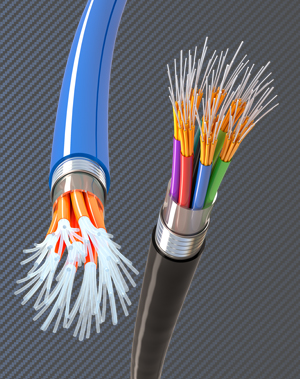
Order 5 Gbps Internet or private line fiber optic bandwidth5 Gig is the New Gigabit
What’s the next logical level for business bandwidth? Actually, you can have pretty much anything you want in 1 Gbps increments. However, some levels are more popular than others. An emerging standard is 10 Gig. You may not need or want to pay for that much right now. A good intermediate level is 5 Gigabit for Internet or private lines.

Why 5 Gig? It gives you breathing room for business applications running in the cloud, e-commerce Internet connections, remote file storage and access, and lots of video content. The more users you have accessing the same WAN connection, the more bandwidth you need to avoid congestion slowdowns, broken VoIP conversations and jerky video conferencing. Real time applications need fat pipes.

Dedicated Internet Access vs Private Lines
There are two basic types of network connections: Private and shared. The Internet is by design a shared network that connects everybody to everybody else with nobody having priority. You can improve your Internet connection performance by avoiding shared access and using Dedicated Internet Access. That gives you a private link from you business to your Internet Service Provider. The last mile is where most of the congestion and variation problems originate.

A private line is just that. Your company is the only user on the connection that runs from point to point. There is no contention with other businesses or consumers. If you have a 5 Gigabit fiber link, you have 5 Gbps available at all times. Whatever bandwidth you don’t use at the moment is there for headroom. You’ll only experience congestion and the latency it creates when you exceed 5 Gigabits per second momentarily or for an extended time.

Connecting Multiple Business Locations Privately
A private fiber optic network can be set up point to multipoint or mesh as well as a direct cloud link or dedicated line between business locations. You can also employ an MPLS network to span regional, national or international sites for a cost savings. MPLS networks are run by a private provider who guarantees bandwidth, latency and packet loss even though there are multiple users on the network. Everybody thinks they are the only user.

Other High Bandwidth Options
Fiber future-proofs your network and generally offers symmetrical bandwidth so that upload and download speeds are the same. Cable broadband speeds are often above 1 Gbps, with 5 Gbps offered in some areas. The bandwidth is asymmetrical and the last mile connection is shared, but the cost savings may well outweigh the advantages of fiber in less critical applications. Fixed wireless can also offer high bandwidths using a small antenna on your building and are a great alternative where fiber and cable are not available.

Are you running out of capacity on your Gigabit fiber connection? If so, consider an expansion to 5 Gbps with a growth path to 10 Gbps when you need it. You’ll love the extra breathing room.


Click to check pricing and features or get support from a Telarus product specialist.


Follow Telexplainer on Twitter


Friday, December 07, 2012

Why 10 Mbps Ethernet is Replacing T1

There is a big technology shift in progress right now that involves many small to medium size businesses. It involves your broadband and private line WAN connections. The classic T1 line that has served this business market so well for so long is quietly going extinct. Let’s see how that can be and what is replacing those lines.

Check prices and availability for T1 to EoC upgrades...T1 was the first truly broadband network connection offered to business users. Before T1, you were dealing with dial-up over analog phone lines or fairly low speed digital lines running something like 64 Kbps. What T1 brought to the table was 1.5 Mbps of rock solid symmetrical bandwidth. As a synchronized line, it also supported digital telephony with up to 24 digitized phone conversations per T1 line. In fact, that’s the origin of T1. Bell Labs devised it to support efficiently transporting telephone conversations between switching offices.

The reason that T1 has become so popular is that it is a mature, reliable technology that is nearly universal available. T1 comes into your building on two pair of ordinary phone wire that is installed for multiple business lines. Even today, T1 lines are still being ordered by smaller businesses that need a dependable dedicated Internet or private line service but don’t have high bandwidth demands. Pricing has plunged over the years from well over a grand a month down to something in the range of $200 to $300. You may even find lower prices in highly competitive metropolitan areas.

So if T1 service is so wonderful, why would companies replace it with something else?

The problem is bandwidth. Over the last few decades, business processes and the applications that enable them have become much more sophisticated. Casual Web browsing and online ordering is still done, but now a lot of content is video and “big data” moving over the networks. The last straw is probably the move to cloud-based services. Before the cloud, your network traffic ran on your own LAN between users and servers. Now, all of that traffic has to traverse the WAN network. Only the smallest cloud implementations are satisfied by a mere 1.5 Mbps pipe.

T1 technology does accommodate higher bandwidths through a process known as bonding. Two bonded T1 lines double the available bandwidth to 3 Mbps. Bond four lines together for 6 Mbps. You can continue this expansion up to 10 or 12 Mbps before it becomes impractical.

The real limit to bonding T1 lines is affordability. There is no economy of scale. Each T1 line needs to be individually installed and costs the same. Therefore, you pay double for 2x bonding and quadruple the monthly lease price for 4x bonding with perhaps some small discount for multiple lines.

What’s moved in to replace T1 is a newer technology called Ethernet over Copper or EoC. Ethernet over Copper uses the same telco twisted pairs that support analog telephony and T1 lines. The modulation scheme is more efficient, though, and supports higher line speeds. It’s not at all unusual to get 10, 20 or 30 Mbps over copper lines.

Ethernet over Copper is also priced much lower per Mbps than T1 lines. Typical entry level is 3 Mbps EoC for the same price as a T1 line. That’s double the bandwidth for the same money. Even more attractive is 10 Mbps EoC for 2x to 3x the cost of a T1 line, depending on location.

The 10 Mbps bandwidth service level is becoming the most desirable price point. While you pay more for a10 Mbps EoC connection than a T1 line if both are ordered today, most companies ordered their T1 service years ago. They may have paid more than necessary because they only investigated one or two vendors. The result is that you may well be able to get 10 Mbps Ethernet over Copper for the same lease price as you have been paying for longstanding T1 service. Making the move to EoC can give you the higher bandwidth you need today without having to increase your monthly telecom budget.

Does your company really need more bandwidth to operate efficiently in today’s marketplace? If so, consider trading in your T1 lines for Ethernet over Copper or the higher speed Ethernet over Fiber service. The cost is probably much lower than you expect.

Click to check pricing and features or get support from a Telarus product specialist.


Follow Telexplainer on Twitter

Tuesday, March 20, 2012

5 Ways to Access An MPLS Network

MPLS networks have become a highly desirable option to expensive proprietary WAN networks or the public Internet with its performance and security issues. Let’s take a look at what MPLS networks have to offer and the variety of options that you can use to gain access.

Check pricing and access options for MPLS business networking...You might think of an MPLS network as something of a private Internet for business. MPLS networks are privately owned and operated and don’t offer resources or connectivity for residential users. MPLS is a B2B or Business to Business service. There are numerous service providers, each with their own MPLS networks having regional, national or international service footprints. In addition, there are service providers who specialize in interconnecting MPLS networks to create an even larger reach. The result is a multiple-MPLS or MPLS Mesh network.

MPLS is often the core network of a major service provider. The reason is the versatility offered by this technology. The underlying network is either IP native or SONET/SDH fiber optic service at 10 Gbps or higher. Many networks are now migrating from 40 Gbps to 100 Gbps, which is considered state of the art. What makes the network MPLS is a unique switching and routing scheme that is protocol-agnostic.

The name MPLS is an acronym for Multi-Protocol Label Switching. Multi-Protocol means that the network will accept Voice, Data or Video IP, SONET, T-Carrier or other traffic types. At any given time, the network may be transporting a wide variety of protocols without corruption or interference. Label Switching is the technique that wraps each packet that enters the network with a tag that is used only to forward that packet to the correct destination with an appropriate class of service. Those labels are removed as the packets exit the network in exactly the same state as they arrived.

Think of MPLS networks as private superhighway systems and access as the on and off ramps. A major advantage of procuring MPLS network service for long haul transport is that you only need to worry about getting your traffic to and from the network. The network operator optimizes performance of the MPLS network to ensure adequate bandwidth with low latency, jitter and packet loss. You need the means to get to and from that network with your traffic intact.

EarthLink Business offers a nationwide access-agnostic MPLS network with Service Level Agreements (SLA) based on Class of Service (CoS). They offer 5 different access technologies based on what makes sense at each business location. Note that you can easily mix and match access methods and still maintain complete CoS right up to your own network edge. Here’s what you have to pick from.

The classic and still most popular access method is T1 lines. They are almost universally available over common twisted pair telco wiring that is already installed to most business locations. T1 lines offer 1.5 Mbps symmetrical bandwidth that can be increased by bonding more T1 lines together. EarthLink boasts 4 hour mean time to repair (MTTR) private T1 lines if there is ever a link problem.

Many companies have looked to DSL as a lower cost alternative to T1. ADSL is an asymmetrical bandwidth service with higher download than upload speeds. Earthlink is the first provider to offer CoS traffic management over DSL, making this access method viable for serious business use.

Ethernet over copper (EoC) and fiber (EoF) is a strong competitor to T1, DS3 and higher speed SONET fiber services. Ethernet is a better match to IP traffic than switched-circuit oriented TDM (Time Division Multiplexing) technologies. Ethernet is highly scalable and lower in cost on an Mbps basis, where available.

Wireless access works for companies with new location that need rapid provisioning and for low cost access where DSL is unavailable. 3G and 4G cellular-based bandwidth is often available in rural areas and offers T1 and better speeds without the landline. Fixed wireless microwave transmission offers higher speeds that can be an effective alternative to fiber.

Another unique service from EarthLink is MPLS IPsec. You may recognize IPsec or IP SECurity as a VPN technology used to make connections over the Internet secure. The security comes from using the 3DES encryption algorithm (168 bit). That’s the finance industry standard for network layer encryption. IPsec allows businesses to procure Internet access from a local provider in outlying areas and connect securely to the corporate MPLS network.

Is MPLS a good fit for your business networking needs? Which access methods are right for your various locations? You can easily find this out with a complementary set of MPLS network and access service quotes to compare with your current WAN solution. You may be surprised by the savings possible.

Click to check pricing and features or get support from a Telarus product specialist.


Follow Telexplainer on Twitter

Thursday, December 15, 2011

Handle Big Data With Big Bandwidth

We are said to be entering the age of big data. Just what is big data, why is it different than any other type of data, and what are the ramifications of having big data on our networks?

Big data is exactly what it sounds like. It refers to datasets that are so huge that they overwhelm normal database management tools. We’re not talking megabytes or gigabytes here. Those are easily handled by off the shelf tools. Big data is terabytes, petabytes, exabytes and zettabytes. If you don’t know what those are, just know that each named step up in size represents an increase of 1,000 times.

Where is all this big data coming from? It’s not the sort of thing you generate typing on your PC. Big data comes from computer generated simulations, process and financial modeling, research projects and sensor data acquisition and processing. Computer animation and video processing in high definition and beyond can spit out terabytes faster than you know what to do with them.

What is all this big data going to do to your network, especially your WAN network? Check out this video from Level 3 Communications to get a feel for what’s on the way and how you can deal with it...


As you can see, WAN bandwidth is likely to be the big choke point for big data. It’s because we’re used to dealing with relatively small files and modest applications such as video conferencing and VoIP. We're also used to handling incremental growth in bandwidth needs by scaling up bandwidth services we are already using.

Big data is going to change that. Instead of incremental change, we’re talking step changes. Bonding more T1 lines or moving up to a DS3 service isn’t going to do the trick. You’ll need fiber, and likely a fiber optic solution that has a lot of room for growth.

Fortunately, there a lot more fiber options available today than even a short while ago. These include Ethernet over Fiber to 1 Gbps, 10 Gbps and even 40 Gbps. Carrier core networks are now moving to 100 Gbps as quickly as they can. Other options include wavelength services over Dense Wavelength Division Modulation (DWDM) at up to 10 Gbps per wavelength and dark fiber that you can light yourself.

Are you feeling the pinch of too little WAN bandwidth right now, or see it coming in the near future? If so, this is a good time to check out your options from carriers that have the capacity to support your big data network needs. Get competitive fiber optic bandwidth options and prices for whatever capacity your business needs.

Click to check pricing and features or get support from a Telarus product specialist.


Follow Telexplainer on Twitter

Tuesday, November 15, 2011

Level 3 Network Connections Into Mexico

If you do business in Mexico or are a multi-national company with a strong presence in Mexico, Level 3 Communications has good news for you. They’ve launched a major initiative to bring high bandwidth packet network services to business locations within Mexico.

Level 3 expands MPLS network services to Mexico...Level 3 sees a business opportunity in Mexico that may be missed by carriers other than the incumbent, Telemex. it helps greatly that Level 3 recently acquired international bandwidth competitor Global Crossing, which already had significant network connectivity in Latin America. One of those assets is a 3,484 km fiber optic ring that connects Monterrey, Mexico City, Mazatlan and Guadalajara. From there it connects to the Pan-American Crossing submarine cable that runs from South America and Central America to the United States. There’s another connection at Tijuana, with a landing at Grover Beach near San Luis Obispo to connect to the California backbone and trans-Pacific submarine cables.

The Mexico ring is capable of providing Terabits per second of bandwidth capacity for transporting voice, data and multimedia services. Among the network services that Level 3 is now offering in Mexico are EtherSphere, Managed IP VPN, High Speed IP, Dedicated Internet Access, Wavelength Services and Private Line Service.

EtherSphere is a worldwide Ethernet-based WAN service, connecting Ethernet transport services from 150 locations that support 26 cities around the globe. EtherSphere offers Virtual Private LAN services (VPLS) specifically intended for companies with geographically dispersed business locations. VPLS is a mesh network technology running on the Level 3 MPLS (Multi Protocol Label Switching) core network. It’s also called Transparent LAN Service. The idea is to connect multiple Ethernet LANs together as if they are one bridged network serving all locations.

EtherSphere is a comprehensive VPLS service that supports six Classes of Services to prioritize traffic and enable network convergence on a large scale. You can easily scale bandwidth in various increments between 1 Mbps and 2 Gbps, although the system does support bandwidth above 2 Gbps. You have a choice of service types through the network that include multipoint to multipoint (mesh), point to multipoint (hub and spoke) and point to point connectivity similar to Ethernet private lines.

Level 3’s IP VPN service runs on their converged MPLS backbone rather than the public Internet. This gives you six-level Class of Service (CoS) for high performance voice and video transport as well as data connections. Level 3 owns more than 100,000 fiber miles connecting 450 markets in more than 45 countries. Your last mile connection can be anything from T1 through Gigabit Ethernet.

Level 3 is one of the world’s most connected Internet Service Providers. Their Dedicated Internet Access offers IP port speeds from DS-1 (1.5 Mbps) to 10 Gigabit Ethernet. High bandwidth users can opt for High Speed IP (HSIP), a dedicated wholesale high speed Internet service.

For the ultimate in high bandwidth service, Level 3 Wavelength service offers high performance, low latency fiber optic wavelength services over their high speed DWDM network. Available speeds are GigE, 2.5 Gbps, 10 Gbps, 10 GigE and 40 Gbps. You can order both protected and unprotected point to point configurations. Native Fiber Channel and FICON protocols are supported.

Level 3 Private Line services are available worldwide in over 45 countries. These connections are delivered over proven SONET and SDH architectures that are protocol independent. You can transport IP, voice, data and video as Layer 2 or Layer 3 traffic.

Do you have connectivity needs that include service to locations within Mexico or other international destinations from the United States? If so, get prices, features and availability for International fiber optic network services.

Click to check pricing and features or get support from a Telarus product specialist.


Note: Map of Mexico courtesy of Wikimedia Commons.


Follow Telexplainer on Twitter

Wednesday, March 16, 2011

Meshed MPLS Forms a Cloud of Clouds

MPLS networks have risen to prominence lately as replacements for old-school Frame Relay networks that link multiple business locations. MPLS networks are highly popular because of their ability to transport nearly any protocol with high quality and reliability. One remaining wish has been the ability to use a multitude of carriers at various locations and still have them interconnected by a managed MPLS network. That desire has now been realized.

Consider a meshed MPLS network solution to ties your locations together.AireSpring, one of the fastest growing and most innovative competitive carriers, is now offering what they call a Meshed MPLS Network. Just what does such a networking scheme do and how is it different from the meshed network connections inherent in any MPLS network?

MPLS networks can be thought of as classic clouds. You connect each of your locations to the cloud by means of a last-mile access network and then instruct the MPLS network operator how each location should connect to the others. These can be private point to point links, a star network with corporate headquarters at the center, or a meshed network arrangement. The meshed approach is highly popular because it allows any location to communicate with any other location at will. You don’t have to be actively managing or even monitoring the network, as the service provider takes care of that.

The one fly in the ointment is that you need to contract with one MPLS network provider for all your connections. That service provider will take care of getting the access connections, even if it means subleasing copper or fiber from another carrier. But what if you already have contracts with carriers to provide MPLS mesh networks for particular geographical territories?

This can happen easily if your company grew by mergers and acquisitions. It can also happen in decentralized organizations or conglomerates of businesses that haven’t traditionally had a need to connect with each other. Not all carriers have a nationwide footprint. It’s common for some carriers to be strong in parts of the country and not have a presence at all in others. All of this results in the head-scratching problem of how you tie together disparate WAN networks.

This is the problem that AireSpring’s Meshed MPLS Network solution addresses. Their MPLS Mesh (tm) creates a NNI (Network to Network Interface) that ties together multiple carrier solutions running at T-1 or higher speeds into one MPLS Virtual Private Network. You then have the choice of linking all of your sites into a single IP network or segmenting your data into multipole secure networks. Note that the segmenting can now be logical and not geographical.

Meshed MPLS technology gives companies a flexibility that they haven’t had before. You can now pick and choose which carrier you want to serve which locations to minimize your telecom costs. Quality of Service (QoS) mechanisms ensure that you can converge your entire network for voice, data and video. Your critical business applications will get the prioritization that they need for high quality performance.

Are you frustrated with your current hodge-podge of disparate telecom services that don’t quite perform the way you need and cost you a small fortune? It’s time to take a look a consolidating all that with a more advanced networking solution. Get MPLS network service pricing and features for all your business locations now. You’ll likely find you can have higher performance and lower cost at the same time.

Click to check pricing and features or get support from a Telarus product specialist.


Follow Telexplainer on Twitter

Tuesday, November 16, 2010

Managed Hosting PBX Gets You Out Of The Telephone Business

Many companies aren’t just in the business space they target. They’re also in some peripheral businesses simply because they can’t get out of them. For instance, how many companies wind up in the phone business because they need phones to do their job? It’s something that we may just shrug and accept, but it doesn’t have to be that way anymore.

Hosted PBX service gets you out of the telephone business. Check cost savings now.What got businesses into the phone business was the need to manage anywhere from dozens to thousands of telephone sets within their organization. Why so many? Because the productivity that comes from each individual having their own telephone and phone number exceeds the cost of the equipment and service.

Back when most of us worked on the farm, one crank phone in the house was plenty. When we all became factory workers, a wall phone that you used on breaks served the need. Now that we’re in the information age, interpersonal communications is both necessary and frequent. We all need to talk to customers, suppliers and co-workers. The more efficiently we do this, the more profit the company makes.

This is how we got to telecom departments within companies. The telecom department manages the PBX, which is nothing more than a small version of a telephone company central office switch. All those handsets plug into the PBX and the PBX then connects them together like the phone company does. The PBX also manages outside lines for calls that enter and leave the company premises. In most cases, you dial outside with a one number access code just like you would call long distance anywhere else.

What the telecom department does is manage all those handsets. If one breaks, it has to be replaced. If someone changes desks, their phone number must be re-routed to their new location. That might even involve making some wiring changes. People are always coming and going, and their phone service needs to be accommodated too.

Some companies have two separate departments. One is just for telephones. The other is for computers and the company LAN. In a smaller company, one department might manage both networks. A very small company might outsource one or both functions to a contractor. But the cost of the activity is always there, no matter how you handle it.

The cost being in the phone business is both the cost of handling all those moves, adds and changes on a daily basis and the capital expense of all that equipment. The PBX system itself is an expensive piece of equipment. When it becomes too small to handle the number of extensions or too old to be easily maintained, you need to take out a loan and do what’s called a “fork lift upgrade” to haul out the old system and bring in the new one.

Now, what if there was an easy way to have all the communications ability you have now, and more, but not have to be in the phone business? There is such an option available and it’s called a hosted PBX. What “hosted” means is that someone else has the responsibility of managing the PBX equipment using their people at their facility. What you have is a big empty space where the PBX system used to sit and lots and lots of telephone sets.

When this is done right, an employee in your company won’t know or care where the PBX is. Their phone works just the same either way. In fact, it may work better because their old “dumb” phone has been replaced by a “smart” phone that connects to the computer network and has processing power built-in. The phone and the computer may work together or you may even have a “soft phone” as an application that runs on the computer.

It’s the ubiquity of the company computer network connected to every desk that makes the hosted PBX possible. By adapting telephones to transmit and receive Ethernet packets instead of analog voltages, they can piggyback on the broadband network that every company has anyway. That network invariably connects to the outside world or WAN, which can include a connection to a service provider hundreds or thousands of miles away. That service provider bears the capital cost and operating expense and performs the move/add/change function for you. They’re more efficient at doing this because that’s all they do, and they do it on a much larger scale than you did. In effect, we’re back to telephone as a service or, in today’s terms, voice as a service.

Are you reluctantly in the telephone business? If so, why not compare costs and features and see if a managed PBX hosting solution would be a better option for your company? There are more and better options available today than ever before.

Click to check pricing and features or get support from a Telarus product specialist.


Follow Telexplainer on Twitter

Wednesday, October 27, 2010

Ethernet Ports In a Data Storm

You may have noticed that your WAN network requirements are getting hard to predict. In times of economic instability, it’s hard to know whether you have the right amount of bandwidth for your business activities next year or even next quarter. What makes this especially unnerving is the historically long provisioning times for telecom service upgrades. What you need is a way to pay for just the bandwidth you need today while ensuring that you can rapidly increase network speed if the need suddenly arises.

Ethernet port service. Check prices and availability now.That capability is yours with an Ethernet service port. You have such a port installed by a service provider at your location. Often, this is in the form of an RJ45 jack or a fiber optic connector on the back of a managed router. You simply plug your LAN network into this WAN port and you have connectivity to the outside world. Because it’s a managed connection, you can have nearly any bandwidth level up to the capacity of that installed port.

Let’s contrast that with what’s standard practice for other telecommunication services. The popular T1 line is generally provisioned on what’s known as a “smart jack” This is a RJ48 socket mounted on a small electronics box. You connect from the smart jack to the T1 card in your router that contains special CSU/DSU circuitry to decode the T1 signals. What’s important to note about this setup is that it has a fixed bandwidth of 1.5 Mbps. It’s possible to get what’s known as fractional T1 at less than 1.5 Mbps, but this is rarely cost effective anymore.

What happens when you have a T1 line and run out of bandwidth? You call up your service provider and order another T1 line. These lines can be bonded to produce a 3 Mbps data line. The entire process involves ordering and installing another telecom service, however long that takes in your area.

Now, let’s see what happens when you have 10 Mbps Ethernet delivered on a 50 Mbps port. Like the situation with a congested T1 line, you run out of bandwidth on your 10 Mbps service. Unlike the previous scenario, however, you call up your service provider and tell them you want to increase your bandwidth to 20 Mbps. They say “fine” and simply turn up your service to 20 Mbps. You can often do this with nothing more than a phone call. Nobody needs to come and drill holes or string more wires. It’s all done with software commands to your Ethernet CPE or Customer Premises Equipment.

The thing to remember about Ethernet ports is that the speed of the port is the maximum speed that it can handle. If you top out at the max port speed, you will likely need an equipment change to get more bandwidth. For that reason, be sure you order a port that has some growth potential even though you don’t need it right now. Some bandwidth headroom gives you an agility to ramp up WAN network speed incrementally as business increases.

Are you ready for a bandwidth increase, but feeling stifled by the limitations or cost of the telecom options you have now? Check prices and availability of Ethernet ports and bandwidth for your business location. Save money now and be ready for when you need a service upgrade quickly.

Click to check pricing and features or get support from a Telarus product specialist.


Follow Telexplainer on Twitter

Tuesday, August 31, 2010

Cloud Recovery Mirrors Your Servers and Data

Redundancy is a time honored way to protect what is valuable, especially what you need to run a business. That’s why we do periodic backups. You just never know when those flying heads are going to crash into the disk platter and destroy thousands, even millions of dollars worth of valuable data. But how about the entire operation of your business? Do you have that protected?

Just having a backup disk in the company safe won’t be much help if your servers smoke or a tornado comes along and leaves nothing but a concrete pad where your building once stood. With so much of most businesses depending on computer automation, it makes sense to replicate everything. All you need is a completely duplicate IT infrastructure.

Sounds good, but where do you come up with the capital to replicate your server rooms, applications, complete data set in real time, and the glue that ties all this together? Relax, you don’t really have to. Qwest will take now take care of that for you.

What’s new is Qwest Real-Time Application Recovery. It’s a partnership with Geminare, a company that has pioneered RaaS or Recovery as a Service. Qwest has the WAN network structure and robust data centers to host a copy of your business. Geminare has the technology to make the process seamless to the user.

One thing you don’t need is a big capital budget. In fact, you don’t need any additional hardware on-site at all. This is a cloud based service that’s fully managed by Qwest. They replicate your servers, applications and data on a real-time basis. When disaster strikes, availability to access your data and applications continues uninterrupted. Your office building can be blown away, flooded or burned down. The business goes on as if nothing ever happened. Thus is the magic of the cloud.

How do you pay for this? There’s a monthly fee for the service. For that you get automatic failover, continued access to applications and data, immediate remote operational capability, complete data protection, platform and application support, real-time disaster recovery tests and 24/7 support. There’s near-zero down time, no capital expense, no technological lock-in and no administrative costs. Qwest takes care of all those details. It’s like they are a duplicate IT center that you rent by the month.

Is cloud recovery something that could mean the difference between staying in business or going under in the event of a major disaster? Is it worth what it costs when you consider the implication of lost business or the capital and operating expense of doing this yourself? Why not find out quickly and easily. Get competitive quotes on cloud recovery, networking and other services now. Don’t wait until you are in real trouble. It would be too late then.

Click to check pricing and features or get support from a Telarus product specialist.


Follow Telexplainer on Twitter

Tuesday, July 13, 2010

Ethernet In The First Mile

Both legacy telco and competitive fiber optic networks worldwide are in the midst of a major upgrade from switched circuit to packet switched networks. With IP core networks proliferating, it seems natural that Ethernet WAN services have become more available and lower in cost. But, what is it you are using to connect to Ethernet transport services and private IP-based cloud networks? It’s not T1, DS3 or SONET telco-based connections, is it?

Ethernet over Copper offers lower cost higher bandwidth for first mile connectivity.In many cases, that’s exactly what businesses are using. There’s nothing wrong with any of these switched-circuit time division multiplexing technologies. They’re highly reliable and much less costly than they were even a few years ago. But, you should know that there are advantages to using Ethernet itself in the first mile.

The first mile, also called the last mile, connection is often the most costly and hardest to come by. This is the physical wire, optical fiber, or wireless circuit that connects your building to your service provider’s closest point of presence. T1 lines have been highly popular because they need only two pair of ordinary twisted copper phone line to bring in the service. Even small business locations have a couple extra pair of copper in the bundle that connects them to the telco central office.

Did you know that Ethernet is also available using the same twisted pair copper that supplies your T1 service? A big reason to switch to Ethernet is that higher bandwidth may be available to you over copper. Common speeds are 3 Mbps and 10 Mbps Ethernet. Higher speeds of 20 Mbps up to 50 Mbps may also be available, depending on how close you are to the carrier POP (point of presence). The lower speeds up to 10 Mbps are readily available, but above 10 Mbps you need to be within a mile or so of the POP. Higher speeds degrade rapidly as distance increases.

The next step up is fiber optic Ethernet. EoF or Ethernet over Fiber offers speeds from 10 Mbps right on up to 10 Gbps. That’s a huge range and it’s scalable. You simply make sure that you install a port that is capable of handling the highest speed you anticipate needing. Then, you order service over that port that is only what you need right now. Say you have a 100 Mbps port installed. You might start out with 20 or 40 Mbps and then upgrade when business needs justify the increase. Since the port is capable of 100 Mbps, you can often get up to this level of bandwidth by simply placing a phone call to your service provider.

In addition to bandwidth, Ethernet offers simplified interfaces that are similar to what you are using on your LAN already. Most often this is a common RJ-45 jack provided by the carrier. Just plug in and go. But best of all, Ethernet tends to be the most cost effective competitive bandwidth service you can buy. You can choose to get more bandwidth for the money you are spending now or run at the same bandwidth and get a cost savings.

Sound good? Why not investigate First Mile Ethernet Services for your business? There are multiple carriers that would like to bid on your connection and you’ll get those bids fast.

Click to check pricing and features or get support from a Telarus product specialist.


Follow Telexplainer on Twitter

Thursday, May 27, 2010

Fixed Wireless Broadband Services For Business

We’ve come to think of business grade telecom services and copper wireline and fiber optic services. That’s why IT managers may cringe when someone says they’ve got to have new high bandwidth Internet access, point to point transmission or VoIP telephone service right this minute. We all know that there is no such thing in WAN networking as right this minute. Or is there?

Fixed wireless services for your business. Click for more informationAn option that’s becoming increasingly available is fixed wireless service. Think of getting the same bandwidth services you have now delivered without the wires. This is quite different from cell phone service designed for mobile use or wireless access points that have a range of only a few hundred feet. It’s also not satellite broadband, which has such long latencies and limited bandwidth that you can’t really use it for any but the most limited applications.

This fixed wireless service uses outside antennas that communicate over a range of some miles. Airband, a leader in this field, has installed base stations in 14 major cities. Each base station can communicate with customers up to 5 miles away, forming a service footprint of 78 square miles. Each customer has a subscriber unit (SU) that provides a two-way radio connection with the base station and a simple Ethernet connection to the LAN.

What services can Airband offer? Broadband Internet is a popular choice. You can get speeds from 2 Mbps to Gigabit Ethernet. Yes, you can get replacement service for T1 lines and DS3 connections. But there is also the standard Ethernet speeds of 10 Mbps, 100 Mbps and 1000 Mbps. Plus you can choose any bandwidth in-between to scale your service to exactly what you need. Don’t worry about picking the wrong bandwidth level and needing an upgrade quickly. Upgrades are made by network software changes and can be accomplished in hours. Installation itself can be completed in just days. What’s that quote you got to bring in fiber? Six months? Outrageous!

Being wireless, can’t anyone just stick up an antenna and intercept your datastream? They won’t have much luck. Airband uses 128 bit AES encryption to keep your data safe. They also offer a 100% uptime guarantee, with service level guarantees on jitter, latency and packet loss.

With such tight control on network parameters, this fixed wireless solution can be used with confidence for VoIP as well as point to point data, business Internet and private IP VPN. There are several options available. You can simply replace your existing ISDN PRI trunk lines (or add new ones) using a SIP trunk with PRI interface. The newer IP PBX systems can often connect directly to a SIP trunk. Or let Airband own and manage the hosted PBX system and just have telephone sets at your location. This is all done on a private IP network so that the quality of your voice communication is assured.

Does this sound like the quality of service you need with the speed of installation and avoidance of copper and fiber line construction costs you require? If so, you may be delighted with how little you have to pay to enjoy fixed wireless services from Airband and other providers. Get details on fixed wireless costs and availability now.

Click to check pricing and features or get support from a Telarus product specialist.


Follow Telexplainer on Twitter

Thursday, February 18, 2010

Covad Offers A Nationwide MPLS VPN Network For Business

Businesses with many office locations nationwide are getting a new secure networking option. Covad has just completed its Intelligent Network Platform designed to expand WAN networking capabilities at lower costs than you may be used to paying.

Connect your business locations with an MPLS VPN Network.Covad has designed its MPLS VPNs for the small to medium size businesses and larger distributed enterprises that need to solve the problem of how to interconnect multiple business locations. That may be franchises, field offices, warehouses, retail locations, factories, hotels and other buildings. There are two problems to be addressed with any multi-location networking scheme. First is how you reliably and securely link all of the sites together. Second is how you do that cost effectively.

MPLS is becoming the new standard in private line communications. Previous solutions have included Frame Relay networks and T1 point to point telecom lines. MPLS stands for Multi-Protocol Label Switching, which hints at its power. This is a system that will transport whatever protocol you require, be that switched circuit telephone calls, enormous data downloads, or broadcast video. It’s a network cloud in the sense that it has the capability to connect any location to any other location. You simply specify what that connectivity is going to be and the network operator takes care of enabling those connections.

Covad describes its MPLS network as a VPN or Virtual Private Network. Being a privately run network, it is inherently more secure than a public utility such as the Internet. You can’t get data on or off the network unless you are a Covad customer. MPLS is not the same technology as the Internet. Special label switching routers are needed at every ingress and egress point to attach and remove the labels that are used to get data packets where they are intended.

Another advantage of MPLS networks is that they offer a means to prioritize packets to establish CoS Class of Service and QoS Quality of Service for traffic management. You know that if you send voice or video down the Internet, you are taking your chances on the quality of the real time transmissions. That’s because every packet is treated like every other packet and it’s just your bad luck if some node become congested and disrupts your data flow. As a managed network, MPLS networks can ensure that each packet gets the bandwidth and minimized latency that ensures high quality voice and video transport.

Do you need to network multiple locations with ensured quality at reasonable costs? If so, you need to investigate your options with Covad and other MPLS VPN Networks for Business.

Click to check pricing and features or get support from a Telarus product specialist.


Follow Telexplainer on Twitter

Wednesday, November 18, 2009

Ethernet Internet For Your Business

There’s a new broadband connection service for business locations, and it’s one that is well worth a look. What is Ethernet Internet? I’ve prepared a short presentation on YouTube that explains the key points. Check out the Ethernet Internet business presentation on the YouTube site, or view it right here:


As the presentation states, Ethernet offers advantages in both price and performance at the same time. That’s nearly unheard of in most business products and services. But this is new technology on a fast moving learning curve. Look for Ethernet Internet to expand beyond its metropolitan roots and permeate every nook and cranny of the country. In rural areas, this may mean wireless delivery. In town, provisioning will be over copper for speeds up to 10 Mbps or so and fiber optics for the higher speeds.

Would you like to get more bandwidth for less money? You may very well be in a position to do so. Take a minute or so to use our GigaTrunks Ethernet Internet Finder to see what services and pricing is available for your specific location. To get maximum advantage, be sure to discuss your needs with a Telarus expert consultant. They have knowledge of the latest short term special offers that may not show up on the automated listings.

Click to check pricing and features or get support from a Telarus product specialist.


Follow Telexplainer on Twitter

Wednesday, January 21, 2009

DS3 Speed Challenged By EoC

Once a company has outgrown its T1 lines, the standard upgrade has been to move to DS3 for more bandwidth. But DS3 is typically delivered over fiber optic SONET connections. That can mean significant construction costs unless your building is already lit for fiber optic services. But now a new service offers DS3 speeds over standard copper telco wiring. Can this be a money saver? You bet it can.

The new service is called EoC or Ethernet over Copper. What it gives you is higher bandwidth services, even up to the DS3 level of 45 Mbps, without fiber optic cabling. But if DS3 requires fiber optics, why doesn't EoC?

The explanation is in the technology. DS3 is a signal level definition developed for the original T-Carrier digital telephone standard. It was originally deployed over coaxial copper cable called T3 lines. But coaxial copper has given way to fiber optic cable with its much higher bandwidth capability. Nowadays DS3 is most often deployed over SONET fiber optic services. The usual SONET service starts at OC3 or 155 Mbps. But the way the T-Carrier and SONET signal levels were defined, DS3 and even DS1 (the signal level for T1) are easily multiplexed and demultiplexed onto SONET carriers.

Ethernet over Copper, EoC, is something else entirely. It's not based on any of the earlier telco standards. But it uses telco wiring. The way that works is that the Ethernet provider leases the wires running to your building from the local phone company. Only the wires are leased. There's no dial tone or other services provided by the telco. Bare lines like this are called "dry pairs." The Ethernet provider hooks specialized termination equipment at each end of the dry pairs to transport the Ethernet signals. Usually a number of pairs are connected or "bonded" so that the system has enough capacity to deliver significant bandwidth.

The mechanics of how this is done are technically interesting, but are not something that you as a user need to deal with. The service provider will install customer premises equipment at your location to provide the interface between the copper telco pairs and the RJ45 connector that provides the WAN network signal to your local area network.

Nearly all businesses are already wired with multipair telephone cables used for traditional office telephone service. Some of the wires in these cables will be pressed into service to deliver your Ethernet service. But you should know that EoC is a limited range service. In other words, you need to be located within a few miles of a carrier office or POP (Point of Presence) to take advantage of this service. The closer you are to the POP, the higher the bandwidth you can get. Bandwidths of 5, 10, 20 and up to 45 Mbps are available depending on location.

Speed is one of Carrier Ethernet's advantages. The other is cost. Ethernet services tend to not just rival DS3 pricing, but can be considerably less costly as well. You can attribute that to aggressive new competitive providers as well as the technology. You may well find yourself paying less for EoC service for point to point data connections or dedicated Internet service that you would going with traditional DS3 over SONET. That's especially true if you don't need the full 45 Mbps but require more than the 1.5 Mbps you get from T1 lines.

Will Ethernet over Copper work for your business? Find out now what Ethernet services are available for your location.

Click to check pricing and features or get support from a Telarus product specialist.


Follow Telexplainer on Twitter

Tuesday, February 26, 2008

Burstable Bandwidth Offers Flexibility

You're used to buying WAN bandwidth to support voice and data services. For most companies, that's dedicated service. But there's another option you should know about that can save you money. It's called burstable bandwidth.

Let's look at business broadband service. DS3 dedicated Internet access gives you a solid 45 Mbps of bandwidth in both the download and upload direction. That full capacity is available at all times. If you want to transmit a large image or backup your files to remote storage you max out at 45 Mbps. When you are not using the full capacity of the line, it simply idles waiting for more packets.

With the recent price reductions in DS3 bandwidth, most medium to large size companies will simply order DS3, Fast Ethernet, or higher levels of fiber optic line service. But smaller companies with only occasional needs for large amounts of bandwidth are in a pickle. Do they order a full DS3 to accommodate their peak needs? Or do they go with a fractional DS3 service that costs less but is limited to speeds much less than 45 Mbps?

The compromise solution is burstable DS3. You order a line with the capacity to accomodate the full 45 Mbps of dedicated DS3 Internet access. But you only pay for a fraction of that amount, say 5, 10 or 20 Mbps. As long as you stay under your committed rate, you pay just the cost of the fractional DS3 service. But for those times when you need to transfer large amounts of data such as a video stream, software package download or engineering dataset, the line will run up to its full capacity.

Dedicated services are sold on a flat lease charge regardless of actual usage. Burstable services are monitored by the service provider. During periods when your traffic bursts above the committed rate, you'll pay additional charges based on the overage. A typical industry standard is the "95th Percentile" method. Traffic levels are monitored in 5 minute increments. The highest 5% readings are thrown out for billing purposes. You'll pay the rate for the highest bandwidth you used during the other 95% of the time.

Burstable bandwidth is commonly available in colocation hosting centers. It allows a company to operate its Internet servers without worrying about running out of bandwidth. A Website might normally generate a consistently low traffic level. But if there is an unexpected increase in demand, the line can burst to a higher rate to accommodate the sudden influx of customers or inquiries.

Which bandwidth solution is right for your company? Fractional, full rate or burstable? Let out team of expert consultants help you pick the T1, DS3, Ethernet or OCx bandwidth service that is most cost effective for your needs.

Click to check pricing and features or get support from a Telarus product specialist.


Follow Telexplainer on Twitter